The Beekman




1 Michelin Key · Star Wine List · Forbes Recommended
Two James Beard Award-winning chefs, Tom Colicchio and Daniel Boulud, anchor its dining program, and 287 rooms occupy a restored Renaissance Revival shell that went untouched for decades before a Gerner Kronick + Valcarcel-led reconstruction brought it back.

Pearl is the En Primeur Club membership app, where members save venues, book tables and use the concierge.
A Building That Earns Repeat Visits Before You Even Check In
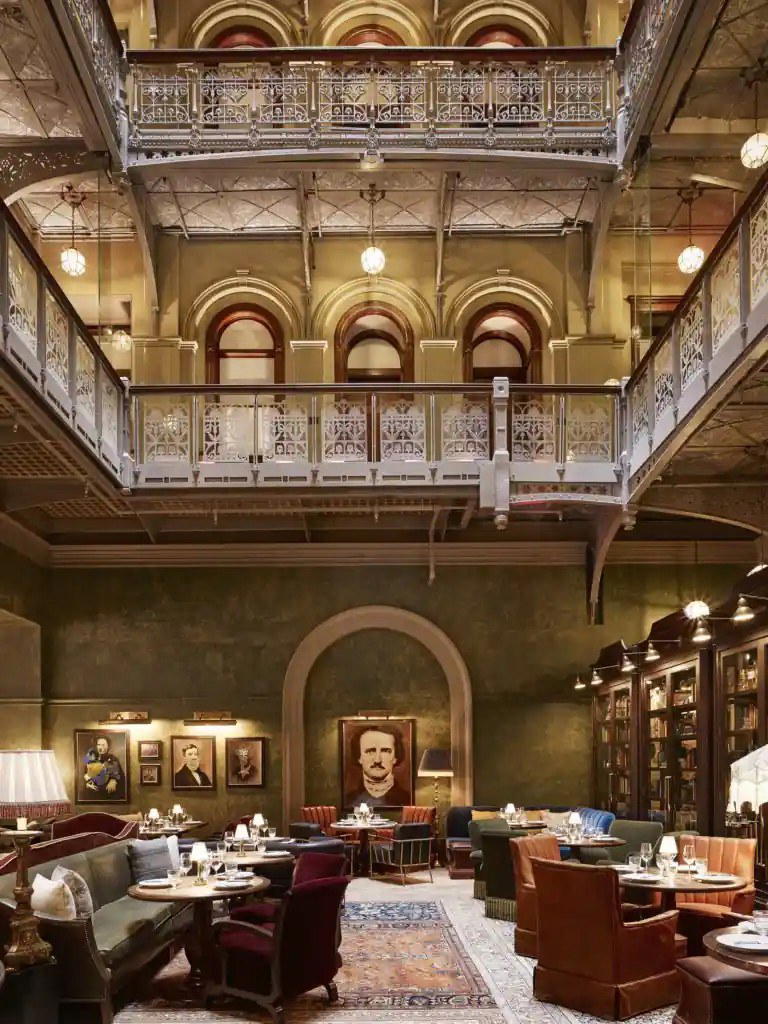
Walk into 123 Nassau Street and the first thing that stops you is the atrium. Nine stories of terraced red brick rise around a pyramidal glass skylight, flooding the central hall with diffused light that shifts through the day from pale morning grey to a warm amber late afternoon. The structure dates to 1881, when this part of Lower Manhattan was commercial rather than residential, and the bones of that era, high ceilings, wide windows, solid masonry, are exactly what give the rooms their character. Three years of restoration directed by Gerner Kronick + Valcarcel, Architects and interior design led by Martin Brudnizki put the building back in service without erasing the features that made it worth saving. That decision, to treat the architecture as the product rather than the backdrop, is what places The Beekman in a different register from the glass-tower hotels that dominate Midtown.
The atrium does not get old. Neither do the rooms, which run to 287 keys including 38 suites and two duplex garret penthouse suites with roof access. Earth tones, aged oak floors, custom-designed oak beds with leather headboards, sateen Sferra linens, and marble-tiled baths with rain showers make these spaces feel assembled rather than outfitted from a brand standard. Barn-style bathroom doors and dedicated cocktail tables carry a modern-vintage register that suits the building without forcing a period recreation.
Where Lower Manhattan Places This Hotel Among Its Peers
Downtown New York's luxury hotel market runs thinner than Midtown's, which works in The Beekman's favour. Properties like The Greenwich Hotel and Crosby Street Hotel occupy the same general downtown-character bracket, prioritising architectural identity over brand scale. The Beekman earns its Michelin One Key (2024) in that context, competing less with the large-footprint Midtown addresses, Aman New York, The Carlyle, The Mark, The Fifth Avenue Hotel, and more with properties where the building itself is the primary credential. The rate starts at approximately $850 per night, which positions it below the top tier of Manhattan luxury without conceding much on physical quality.
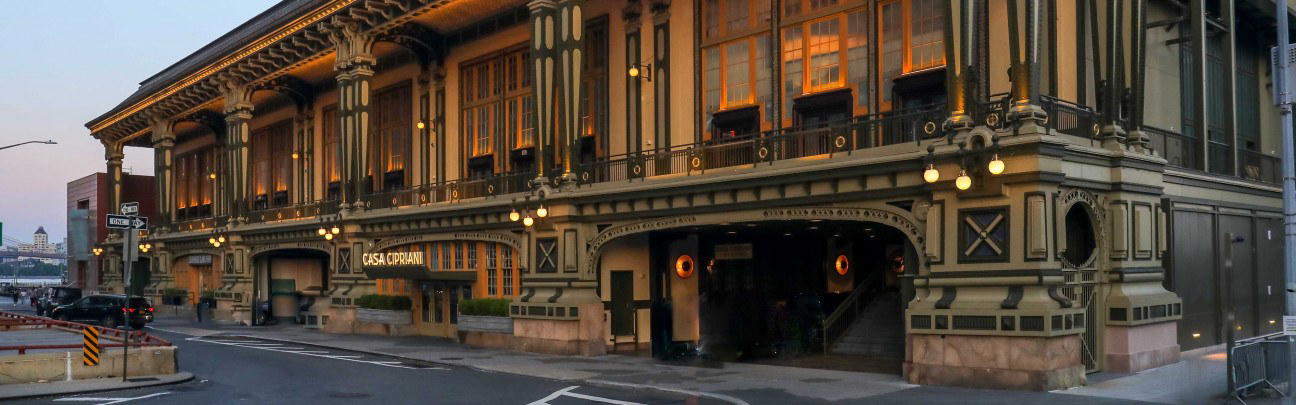
The neighbourhood reinforces the draw for repeat guests. The World Trade Center, City Hall, the Brooklyn Bridge, and South Street Seaport are all within walking range, making the location practical for guests visiting Lower Manhattan on business as well as those who treat the area as a cultural itinerary. Cipriani Wall Street and Mr. Chow are among the nearby dining options for evenings when guests leave the property. The hotel also offers a courtesy car upon request for those not inclined to walk, which matters in a district where subway coverage is less dense than in the central boroughs. For shopping, Hermès and Salvatore Ferragamo are within reach, alongside smaller boutiques. A dual-level fitness centre with Peloton studio spin bikes rounds out the on-property amenities.
The Dining Anchor: Two James Beard Winners Under One Roof
What keeps regulars from considering alternatives is often the dining. Hotel restaurants in New York split between those that serve guests as a convenience and those that draw a neighbourhood clientele on their own terms. The Beekman belongs to the second category. Tom Colicchio's Temple Court operates as the signature restaurant and also handles room service, bringing a James Beard Award-winning perspective to modern American cuisine. Daniel Boulud's Le Gratin takes a different direction, working through French classics in a format that sits comfortably in Boulud's wider New York program alongside his more formal uptown addresses.
Having two chefs of that calibre operating within the same building is unusual in the hotel dining category. Most properties anchor around one name. The arrangement here means that regular guests have genuine variation without leaving the building, and the dining quality functions as a retention mechanism independent of the rooms. For anyone tracking the broader trend of hotel dining moving from afterthought to destination, The Beekman is a useful data point: the Colicchio and Boulud pairing predates the current enthusiasm for hotel F&B; and has had time to settle into a genuine neighbourhood fixture rather than a marketing announcement.
The Literary History and the Art Program
The building's previous life as the home of the Mercantile Library Association gives the current hotel's art program a specific reference point. Writers including Ralph Waldo Emerson and Edgar Allan Poe are documented as having frequented the location, and the curated art collection draws on that lineage. This is not the generic local-artist hotel gallery format; the references are specific and the connection to the structure's actual history is traceable. For guests who return partly for that layered sense of place, the art program reinforces what the architecture already communicates: that the building has a biography worth knowing.
That quality, a building with a documented past that the restoration chose to acknowledge rather than paper over, distinguishes The Beekman from properties that manufacture atmosphere through design alone. It also explains why a certain kind of guest, one who might otherwise consider Casa Cipriani New York or The Whitby Hotel, finds The Beekman's Lower Manhattan address and 1881 bones more compelling than a newer build with equivalent amenity levels.
Planning Your Stay
The Beekman sits at 123 Nassau Street in the Financial District, with rates from approximately $850 per night across 287 rooms. The Michelin One Key recognition (2024) and the Colicchio-Boulud dining pairing mean the property functions as a credentialed choice for guests who want a downtown address with a serious food program already in place. The hotel is a Thompson Hotels property, which signals a consistent standard across public spaces and service without the rigidity of a larger brand. For travellers building a wider American itinerary, the same editorial register applies to properties like Troutbeck in Amenia, SingleThread Farm Inn in Healdsburg, or Post Ranch Inn in Big Sur, buildings and places where the physical setting carries as much weight as the service program. Internationally, comparable architecture-led stays include Aman Venice and Badrutt's Palace Hotel in St. Moritz. For the full picture of where The Beekman fits within New York's wider hospitality and dining scene, see our full New York City guide. Other US properties worth considering for context on the luxury tier include Auberge du Soleil in Napa, Four Seasons at The Surf Club in Surfside, Hotel Bel-Air in Los Angeles, Amangiri in Canyon Point, Little Palm Island Resort & Spa in Little Torch Key, Raffles Boston, Canyon Ranch Tucson, Kona Village, A Rosewood Resort in Kailua Kona, Sage Lodge in Pray, and 1 Hotel San Francisco. For a newer-build contrast in the luxury segment, Bvlgari Hotel Tokyo offers a useful point of comparison across the architecture-as-credential model in a different market.
Just the Basics
Comparable venues nearby, for context on price, style, and recognition.
| Venue | Price | Awards | Notes |
|---|---|---|---|
| The BeekmanThis venue (the venue you are viewing) | Not listed | 1 Michelin Key · Star Wine List | Not listed |
| The Wall Street Hotel | $200–300 | 1 Michelin Key · Preferred Hotels L.V.X. Collection | Financial District-Battery Park City, luxury boutique hotel with residential feel |
| The Twenty Two New York | Not listed | 1 Michelin Key · Mr & Mrs Smith Seal of Approval | Midtown South-Flatiron-Union Square, Luxurious members' club in a historic Edwardian brownstone blending heritage glamour with contemporary tastemakers. |
| The Peninsula New York | Not listed | 1 Michelin Key · La Liste Top Hotels | Midtown-Times Square, Historic luxury landmark with modern ornate renovations |
| The Mercer | Not listed | 1 Michelin Key | SoHo-Little Italy-Hudson Square, Loft-style luxury boutique in historic SoHo building |
| 1 Hotel Central Park | $300–500 | 1 Michelin Key | Midtown-Times Square, Rustic-chic boutique hotel blending industrial design with sustainable luxury, emphasizing natural materials and environmental consciousness. |
Recognition history
Dated appearances from independent guides and award organizations, with the underlying list record or original source where available.
Michelin 1 Key
Michelin
Star Wine List
Star Wine List
Forbes Recommended
Forbes
Virtuoso Luxury Hotel Partner
Virtuoso
Full recognition history (7 entries)
Forbes Recommended
Forbes
Michelin 1 Key
Michelin
Michelin 1 Key
Michelin
Continue exploring
More in New York City
Hotels in New York City
All hotels in New York City →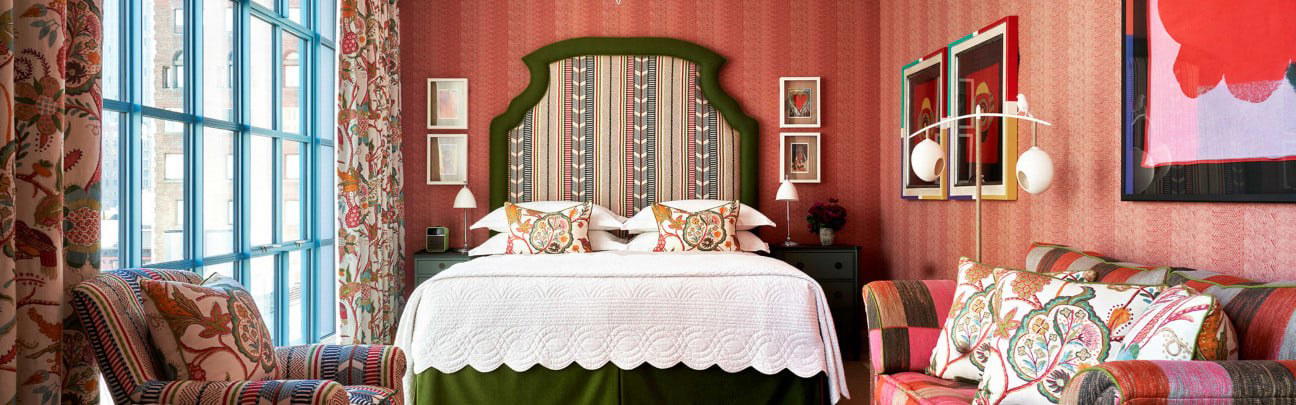
Bars in New York City
All bars in New York City →




Details
- Elegant
- Sophisticated
- Historic
- Well Known
- Ornate
- Romantic Getaway
- Business Trip
- Anniversary
- Celebration
- Historic Building
- Rooftop
- Terrace
- Panoramic View
- Fitness Center
- Spa
- Room Service
- Concierge
- Valet Parking
- Skyline
- Wheelchair Accessible
- Step Free Entrance
- Elevator
Vintage design with stained-glass windows, high ceilings, plush furnishings, and a dramatic multi-story atrium creating an elegant, timeless atmosphere.