On Große Elbstraße, where Hamburg's wholesale fish trade once defined the waterfront, Fischbeisl occupies a stretch of river-facing address that still carries the weight of that history. The name signals its register: a Beisl is a neighbourhood tavern, and fish is the kitchen's orientation. For a city whose relationship with the North Sea shapes how it eats, that combination is less a novelty than a logical endpoint.
Pearl is the En Primeur Club membership app — saves, bookings, and concierge access live there. Same editors, same standards.
- Address
- Große Elbstraße 131, 22767 Hamburg, Germany
- Phone
- +4949403907275
- Directions
- Get directions
 Saves & bookings on Pearl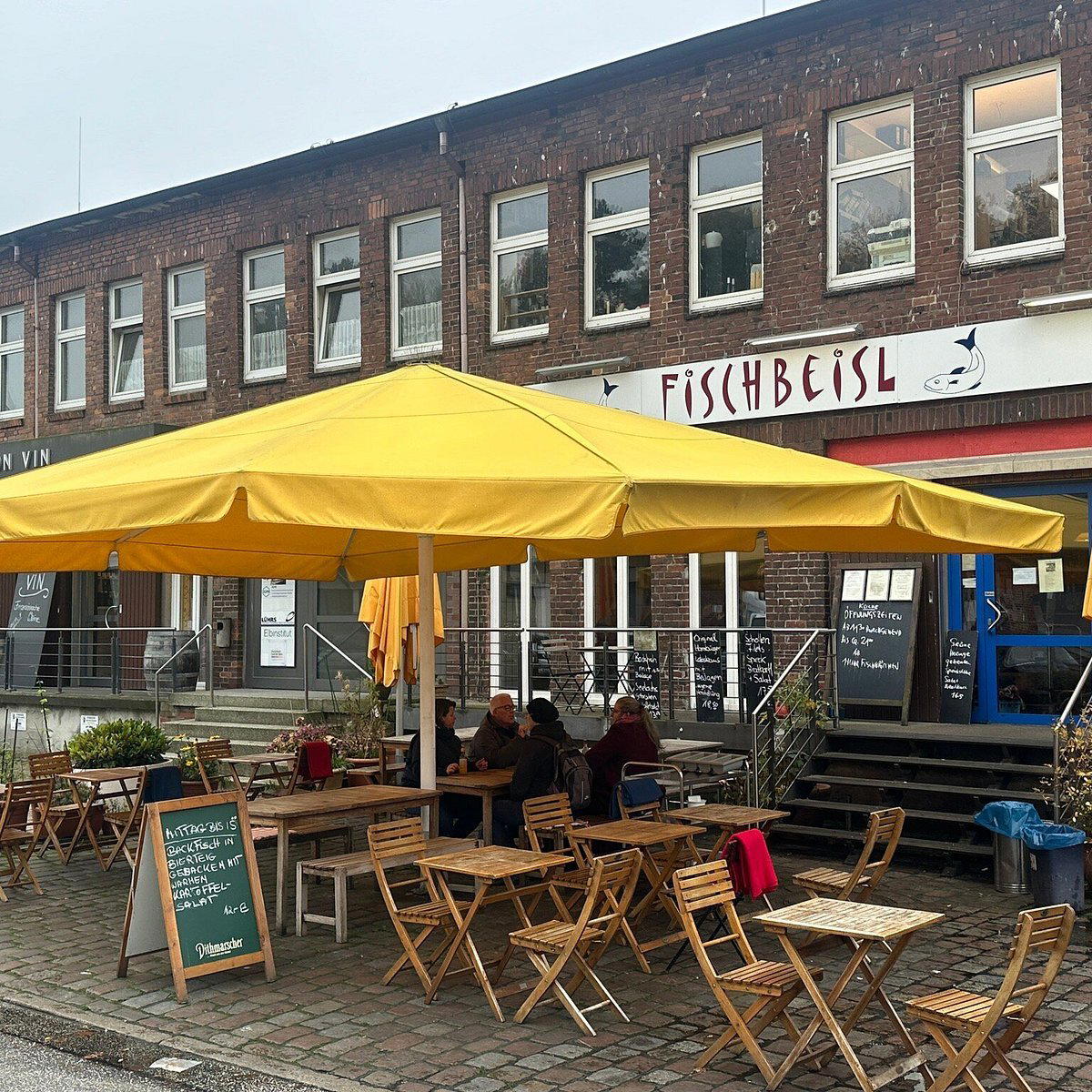
The Elbe Waterfront and What It Demands of a Fish Kitchen
Große Elbstraße runs along the southern bank of the Elbe in Hamburg's Altona district, and for anyone who knows the city's food geography, the address alone carries a particular expectation. This stretch was, for generations, the commercial artery of Hamburg's wholesale fish trade, lined with auction halls and ice merchants before the industry shifted and the buildings began to fill with restaurants drawing on that same tidal logic. A kitchen here is implicitly in conversation with that history — with the idea that proximity to the source should mean something on the plate.
Fischbeisl sits on that street at number 131, and the name itself makes an editorial statement before you walk through the door. A Beisl is a Central European term for a modest neighbourhood tavern, unpretentious in register, rooted in the local. Attached to Fisch, it suggests a place whose ambitions are specific rather than sweeping: fish, handled well, in a format that doesn't perform more than it delivers. In a city where the fine-dining conversation is dominated by addresses like Restaurant Haerlin and The Table Kevin Fehling, a name that deliberately invokes the tavern tradition is positioning, not modesty.
A Waterfront District Where Sourcing Is the Argument
The broader conversation around sustainability in European restaurant kitchens has, over the past decade, shifted from a marketing badge to an operational discipline. In Hamburg's fish-focused restaurants, that shift carries specific weight. The North Sea fisheries supplying the city's kitchens are among the most scrutinised in Europe, with certification bodies, catch limits, and seasonal restrictions forming the real texture of what any ethical seafood kitchen can actually put on the menu in a given month.
For a restaurant with a name as declarative as Fischbeisl, the sourcing question is not peripheral. The Beisl tradition, rooted in Austrian and German tavern culture, carries with it an expectation of directness: local suppliers, seasonal menus that shift with what is available rather than what is convenient, and an absence of the kind of luxury-import reflexes that drive some fine-dining fish programs toward farmed or long-haul alternatives. Hamburg's wholesale fish infrastructure, historically concentrated around the Altona fish auction hall just minutes from Große Elbstraße, gives a kitchen in this location real access to short-supply-chain North Sea product. Whether a kitchen chooses to honour that access is a different matter, but the geography makes it possible in a way that kitchens in other European cities would pay considerably more to replicate.
The German restaurant scene more broadly has been working through this tension. Addresses like Schwarzwaldstube in Baiersbronn and Aqua in Wolfsburg operate at a price point and with a supplier infrastructure that makes rigorous sourcing a standard expectation. At the tavern end of the market, the economics are tighter, which makes genuine sourcing discipline more meaningful when it exists — it represents a structural commitment rather than an easy spend.
Hamburg's Fish Dining at Different Price Points
Hamburg's fish dining scene is not monolithic. At the top of the market, tasting menus at bianc and Lakeside treat seafood as one element in a broader creative program, often sourcing beyond the North Sea for narrative or textural reasons. At the other end, the fish sandwich stalls around the Fischmarkt operate on volume and accessibility. Fischbeisl's positioning, as the name suggests, falls somewhere between: a restaurant with clear culinary intentions, operating in a format that retains the social ease of a tavern rather than the ceremony of a tasting menu room.
That middle register is arguably where Hamburg's most interesting fish cooking happens. It allows for a menu that changes with the catch rather than with a chef's quarterly reprint, and it places the kitchen in a direct relationship with what the North Sea is actually producing at any given time. Spring brings herring in its prime season, a fish with deep cultural resonance in Hamburg and one that tests a kitchen's confidence in simplicity. Autumn shifts the argument toward richer cold-water species. A kitchen anchored to that seasonal logic is making a different kind of promise than one that delivers the same twelve-course structure year-round.
For readers tracking Hamburg's wider dining options, 100/200 Kitchen represents another point on the city's creative-format spectrum, while our full Hamburg restaurants guide maps the city's dining character across price tiers and neighbourhoods. Further afield in Germany, JAN in Munich, Vendôme in Bergisch Gladbach, CODA Dessert Dining in Berlin, Victor's Fine Dining by Christian Bau in Perl, ES:SENZ in Grassau, Schanz in Piesport, Waldhotel Sonnora in Dreis, and Bagatelle in Trier illustrate the range of serious cooking happening across the country. Internationally, fish-forward kitchens like Le Bernardin in New York City and format-led operations like Lazy Bear in San Francisco set different benchmarks for what a seafood-centred or community-format restaurant can look like at its most deliberate.
What the Altona Address Means in Practice
The Altona district has undergone the familiar post-industrial transformation that has reshaped waterfronts across Northern Europe, but it retains enough functional infrastructure, the fish market still runs on weekend mornings, the wholesale trade still moves through the area, to give restaurants here a different relationship to their supply chain than those in Hamburg's more polished Hafencity development to the east. A kitchen at this address that chooses to engage with that infrastructure rather than simply borrow its aesthetic is making a genuinely different operational choice.
For visitors approaching from central Hamburg, the walk along the Elbe from the Landungsbrücken is one of the city's better approaches to a restaurant, the river widens, the working port comes into view, and the logic of a fish kitchen on this particular stretch becomes self-evident in a way that a city-centre address never quite achieves.
Know Before You Go
- Address: Große Elbstraße 131, 22767 Hamburg, Germany
- District: Altona, Hamburg
- Hours: Not listed, verify before visiting
- Price range: Not listed, contact the venue for current pricing
- Getting there: S-Bahn to Königstraße or Altona, then a short walk along the river toward Große Elbstraße
Nearby-ish Comparables
| Venue | Cuisine | Price |
|---|---|---|
| FischbeislThis venue — the venue you are viewing | This venue | Not listed |
| The Table Kevin Fehling | Creative | €€€€ |
| bianc | Modern Mediterranean, Mediterranean Cuisine | €€€€ |
| Lakeside | German Lakeside | €€€€ |
| Heimatjuwel | German, Creative | €€€ |
| Landhaus Scherrer | Modern European, Classic Cuisine | €€€€ |
Continue exploring
More in Hamburg
Restaurants in Hamburg
Browse all →
Bars in Hamburg
Browse all →
Hotels in Hamburg
Browse all →
Wineries in Hamburg
Browse all →
At a Glance
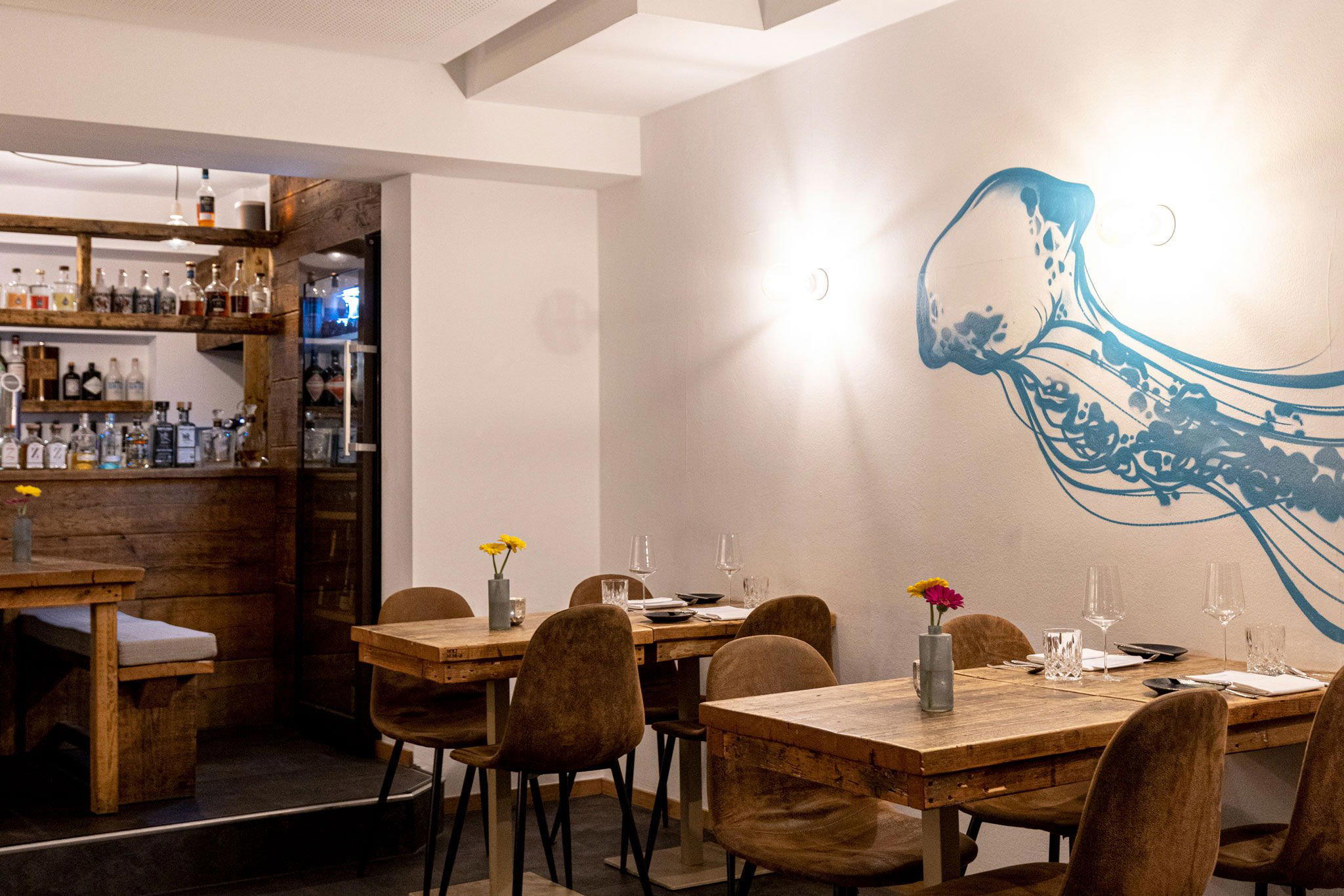
- Lively
- Rustic
- Cozy
- Casual Hangout
- Open Kitchen
- Local Sourcing
Current opening hours
- Monday
- 11:30 AM–9:30 PM
- Tuesday
- 11:30 AM–9:30 PM
- Wednesday
- Closed
- Thursday
- 11:30 AM–9:30 PM
- Friday
- 11:30 AM–9:30 PM
- Saturday
- 11:30 AM–9:30 PM
- Sunday
- 11:30 AM–9:30 PM
Hours can change for holidays and private events. Last verified .
Maritime, casual atmosphere with white tiles, open kitchen smells of fresh frying, and picnic tables outside.
Know Before You Go
- Getting there
- Große Elbstraße 131, 22767 Hamburg, Germany