On a quiet street in Madrid's Centro district, FIERA occupies the kind of address that rewards those who pay attention to neighbourhood patterns rather than tourist circuits. The kitchen works at the intersection of indigenous Iberian produce and technique drawn from beyond Spain's borders, placing it in a cohort of Madrid restaurants redefining what modern Spanish cooking looks like in practice.
Pearl is the En Primeur Club membership app — saves, bookings, and concierge access live there. Same editors, same standards.
- Address
- Costanilla de Capuchinos, 3, Centro, 28004 Madrid, Spain
- Phone
- +34648526920
- Website
- fieracocina.com
- Directions
- Get directions
 Saves & bookings on Pearl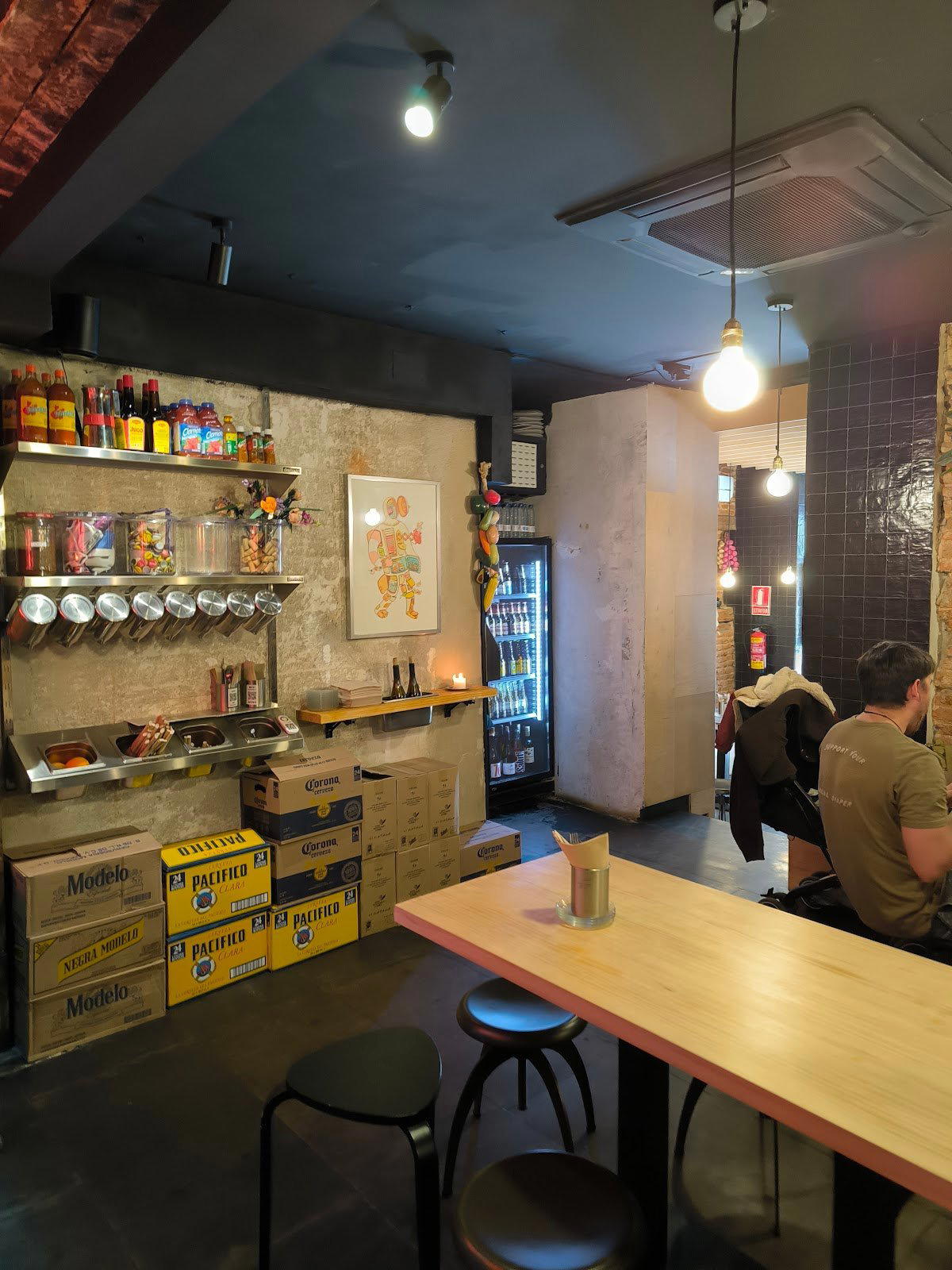
A Street That Sets the Tone
Costanilla de Capuchinos is the kind of Madrid street that doesn't announce itself. The Centro district here sits between the well-trodden corridors of Chueca and the grittier edges of Malasaña, occupying a residential register that most visitors pass through rather than stop in. Addresses on streets like this one tend to operate for a local audience first, which is often a reliable indicator of intent: the kitchen has to earn its keep on repeat custom rather than tourist throughput. FIERA sits in that context, in a neighbourhood where the dining room dynamic is shaped by people who live within walking distance.
That local accountability matters more than it might seem. Madrid's central districts have seen a wave of concept-driven openings in the past decade, many of them calibrated for visibility on international platforms rather than neighbourhood coherence. The restaurants that hold ground over multiple years in these streets tend to have a clearer sense of what they are and who they are cooking for.
The Intersection That Defines Contemporary Madrid Cooking
The broader pattern that FIERA represents is one of the more interesting structural shifts in Spanish cooking over the past fifteen years: the systematic application of techniques developed outside Spain to ingredients that are entirely, specifically Iberian. This is distinct from fusion, which implies a blending of equal parts. What happens in Madrid's more considered kitchens is closer to a methodology transfer — precision fermentation, extended cold-aging, emulsification approaches, or controlled oxidation borrowed from French, Japanese, or Nordic frameworks — applied to produce whose identity is irreducibly local. Castilian lamb, Extremaduran pork, Cantabrian anchovies, Manchego-region saffron, Galician percebes: the ingredient list reads as a map of the peninsula, while the technique behind any given preparation might trace back to a stage in Copenhagen or a season in Lyon.
This is the culinary tradition that connects FIERA to a wider cohort operating in Madrid right now. DSTAgE has built a two-Michelin-star reputation on exactly this logic, using Diego Guerrero's international training as a lens through which Spanish product is reinterpreted without being aesthetically diluted. Deessa, at the Mandarin Oriental Ritz, positions Quique Dacosta's three-star sensibility within a hotel context but maintains the same product-forward discipline. Paco Roncero has operated at the top of Madrid's creative tier for long enough that his kitchen now functions as a reference point for the generation that followed him. FIERA, operating at a smaller scale and with a more residential address, belongs to this same intellectual tradition without necessarily competing for the same press cycle.
How Madrid's Creative Tier Is Structured
Understanding where FIERA sits requires a working map of Madrid's restaurant tiers. At the top of the creative bracket, DiverXO holds three Michelin stars and prices accordingly, operating as the city's most internationally referenced address. Coque sits just below that ceiling, with two stars and a format built around an extended tasting experience that moves through different spaces. These are destination restaurants in the most precise sense: the booking, the occasion, and the cost are all part of the proposition.
Below that tier, a second cohort operates in what might be called the serious-without-spectacle bracket. These are kitchens where the cooking is technically ambitious but the format is less theatrical, the room less designed for ceremony, and the pricing more accessible to a regular dining frequency. This is where addresses like FIERA function most naturally, and it is arguably the more interesting tier to track: it is where cooking ideas circulate fastest, where menus change most readily in response to seasonal availability, and where the kitchen-to-guest ratio often allows for a more direct relationship between what is produced and what is communicated.
Spain's creative cooking conversation extends well beyond Madrid, of course. El Celler de Can Roca in Girona, Mugaritz in Errenteria, Arzak in San Sebastián, and Azurmendi in Larrabetzu have each established frameworks that Madrid kitchens have absorbed and responded to. Aponiente in El Puerto de Santa María remains the most rigorous example of the local-ingredient, global-method approach applied to a single product category. Quique Dacosta in Dénia and Ricard Camarena in València operate from the Mediterranean side of that same tradition. What Madrid adds to the conversation is scale and density: more kitchens, more formats, more price points, all within a city large enough to sustain genuine dining culture across multiple nights a week.
The international reference points extend further. Le Bernardin in New York represents the model of technique in absolute service of product; Atomix, also in New York, demonstrates how Korean-trained precision can reframe an ingredient-first philosophy for a cosmopolitan audience. Both are instructive for understanding what Madrid's more serious kitchens are reaching toward.
Planning Your Visit
FIERA is located at Costanilla de Capuchinos, 3, in Madrid's Centro district, postcode 28004. The address sits within walking distance of Chueca metro station on Line 5, and the surrounding streets are direct to reach from most central accommodation. For the wider Madrid creative dining scene, see our full Madrid restaurants guide. Additional Spanish reference points include Cocina Hermanos Torres in Barcelona, Martin Berasategui in Lasarte-Oria, and Atrio in Cáceres for those building a broader Iberian itinerary.
| Venue | Price Range | Style | Format Signal |
|---|---|---|---|
| FIERA | Not confirmed | Local product, global method | Neighbourhood-scale |
| DiverXO | €€€€ | Progressive Asian, Creative | 3 Michelin stars, destination format |
| Coque | €€€€ | Spanish, Creative | Multi-room tasting experience |
| DSTAgE | €€€€ | Modern Spanish, Creative | 2 Michelin stars |
| Paco Roncero | €€€€ | Creative | Established creative reference |
| Deessa | €€€€ | Modern Spanish, Creative | Hotel setting, Dacosta concept |
How FIERA Madrid compares with similar nearby venues.
| Venue | Cuisine | Price |
|---|---|---|
| Gioia | Italian | €€€ |
| Hortensio | Spanish | Not listed |
Continue exploring
More in Madrid
Restaurants in Madrid
Browse all →
Bars in Madrid
Browse all →
Hotels in Madrid
Browse all →

At a Glance
- Lively
- Trendy
- Energetic
- Casual Hangout
- Group Dining
- Open Kitchen
- Craft Cocktails
- Local Sourcing
Current opening hours
- Monday
- Closed
- Tuesday
- 11 AM–11:30 PM
- Wednesday
- 11 AM–11:30 PM
- Thursday
- 11 AM–11:30 PM
- Friday
- 11 AM–12:30 AM
- Saturday
- 11 AM–12:30 AM
- Sunday
- 1:30–5 PM
Hours can change for holidays and private events. Last verified .
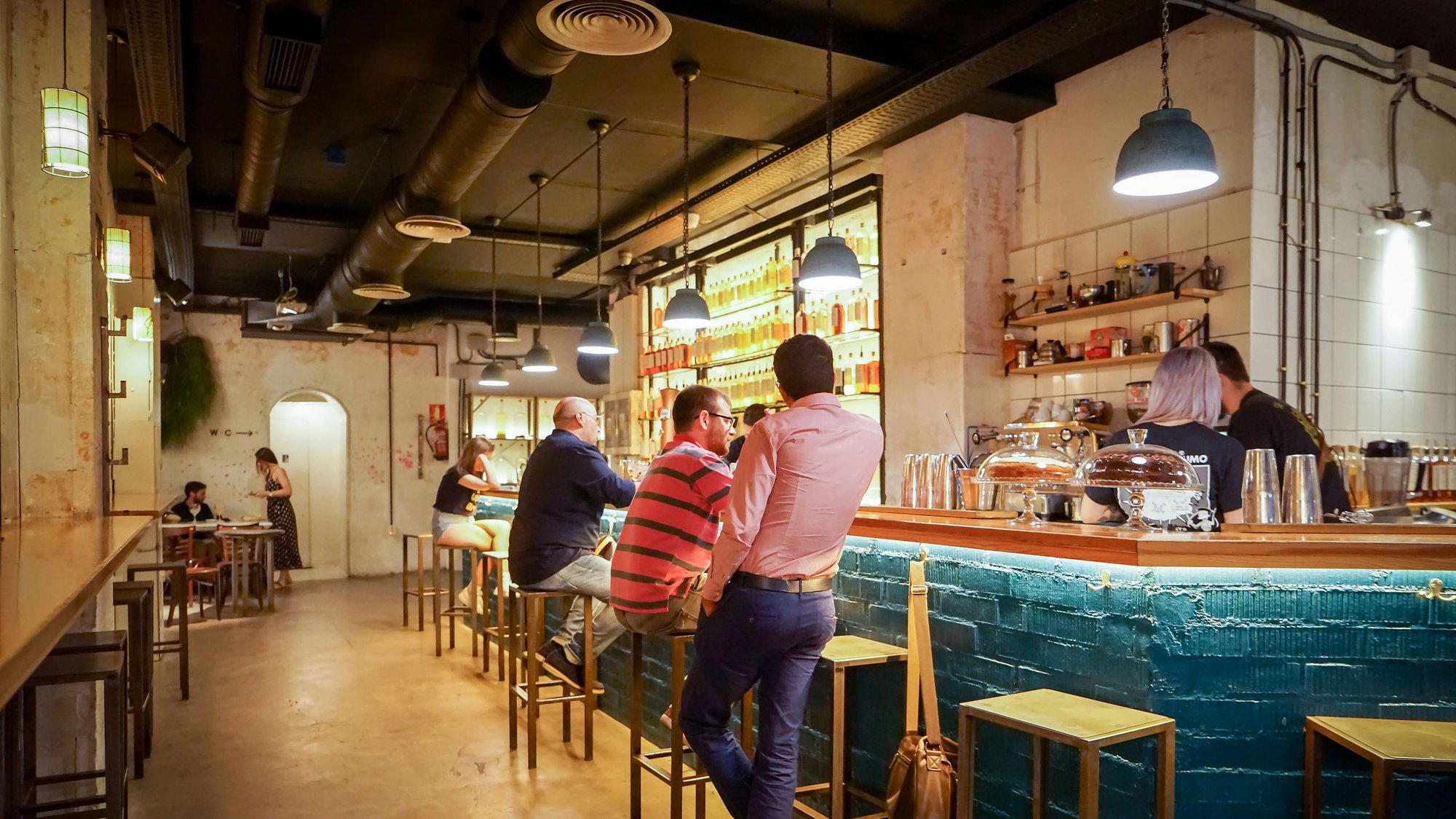
Lively and convivial atmosphere with bar seating near the kitchen for an engaging dining experience.
Know Before You Go
- Getting there
- Costanilla de Capuchinos, 3, Centro, 28004 Madrid, Spain