

1 Michelin Star · Guía Repsol 1 Sol
Our verdict
Ferpel Gastronómico holds a Michelin star in Ortiguera, a coastal Asturian village where the Eo estuary meets the Cantabrian hills. Chef Elio Fernández works from a two-menu format anchored in hyper-local sourcing: grey mullet, estuary oysters, sea urchin, and regional charcuterie. The dining room sits above the kitchen, with views that frame the rural setting the cooking is built around.

Pearl is the En Primeur Club membership app, where members save venues, book tables and use the concierge.
Where the Asturian Coast Feeds a Michelin Kitchen
Rural Asturias has always maintained a particular relationship with its food: proximity between ingredient and table is not a marketing concept here but a practical reality shaped by geography. The Eo estuary, which marks the boundary between Asturias and Galicia, delivers shellfish to coastal villages with a directness that urban fine dining struggles to replicate regardless of logistics budget. Ferpel Gastronómico, set along the Carretera Al Puerto outside the village of Ortiguera, operates at the intersection of that geographical advantage and the discipline of contemporary technique. Its 2024 Michelin star signals something the guide has increasingly recognised across Spain's northern coast: that ingredient sourcing at this level of specificity, handled with restraint rather than elaboration, produces a category of cooking that belongs on the same map as the country's urban fine-dining circuit, even when the restaurant itself sits well outside any urban context.
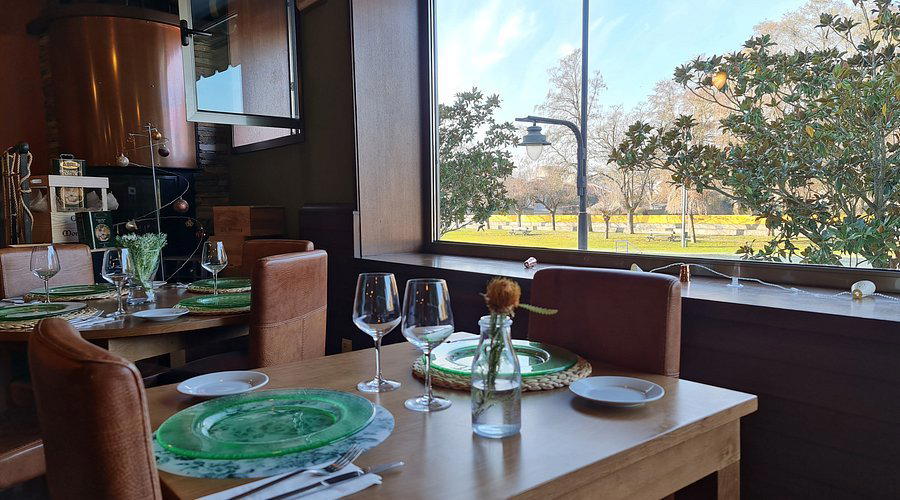
Arriving at Ferpel, the setting registers before the food does. The building sits against a rural Asturian backdrop where the coastal hills compress toward the estuary, and the dining room on the upper floor faces outward onto that terrain. This is not incidental design: the views are the first argument the restaurant makes for its sourcing philosophy. What you see from the table is, approximately, where the food comes from. Oysters pulled from the Eo estuary a short distance away, grey mullet from the same coastal waters, sea urchin harvested locally, the geography visible through the window and the geography on the plate overlap in a way that few fine-dining rooms, however carefully decorated, can manufacture.
The Logic of Sourcing at This Level of Specificity
Across Spain's contemporary fine-dining tier, sourcing narratives have become standard. What separates rigorous practice from marketing language is specificity and traceable provenance. At Ferpel, the sourcing is granular in a way the Michelin commentary corroborates directly: oysters are identified not merely as Galician or Asturian but as coming from the Eo estuary specifically, an inlet whose salinity, temperature, and tidal patterns produce shellfish with a particular flavour character. Grey mullet, often undervalued relative to sea bass or bream in fine-dining contexts, appears as a primary ingredient rather than a supporting one, reflecting the kitchen's willingness to work with what the local waters yield rather than importing prestige species.
The San Lorenzo sausages, a traditionally produced Asturian charcuterie, extend the sourcing argument inland. Asturian cured meats occupy a respected but rarely fine-dining-adjacent position in Spanish food culture. Using them in a Michelin-starred context is an editorial choice that positions Ferpel within a broader movement in northern Spanish cooking: the revaluation of regional charcuterie and preserved goods as ingredients worthy of serious kitchen treatment. The approach shares conceptual ground with what kitchens like Arzak in San Sebastián and Azurmendi in Larrabetzu have done with Basque regional products, though Ferpel operates at a very different scale and without those restaurants' decades of institutional recognition behind it.
Sea urchin, the third frequently cited ingredient, is among the more technically demanding products in the northern Spanish pantry. Its flavour is intensely iodic and seasonal, and its quality degrades quickly after harvest. Sourcing it locally and using it promptly is the only way to work with it at a level that justifies its presence on a tasting menu. That Ferpel treats it as a standard kitchen ingredient, rather than an occasional showpiece, says something about the consistency of its local supply relationships.
The Menu Structure and Service Format
Ferpel operates two named menus: El Ribeiro (referenced in earlier Michelin documentation as a format option) and A Figueira, along with a Clásico format noted in updated guidance. The multi-menu structure at a single-star level in rural Spain is a considered commercial decision as much as a culinary one: it allows the kitchen to serve guests at different price points and appetite levels while maintaining the sourcing and technique standards that justify the award. Spain's broader single-star tier frequently uses this format, from Ricard Camarena in València to more recently recognised regional addresses.
The service sequence at Ferpel is structured in a way the Michelin commentary describes with some precision. The meal begins in the pastry section with appetisers, where bread baked each morning is part of the opening ritual. The kitchen itself is then the next space, where the owner-chef serves guests directly. The dining room upstairs is the final destination. This progression through the building is a format choice that several contemporary kitchens have adopted to give guests physical access to the production process before they sit down to eat. At El Celler de Can Roca in Girona the kitchen tour is a celebrated part of the format; at Ferpel the equivalent is more intimate and less choreographed, in keeping with the scale of the operation.
Rural Asturian restaurants at this price tier attract a visitor profile that skews toward deliberate, often well-travelled diners willing to drive a significant distance for the meal. A sustained 4.7 at volume suggests the experience is consistent rather than dependent on exceptional nights.
Ferpel in Spain's Broader Fine-Dining Picture
Spain's Michelin map is heavily weighted toward the Basque Country and Catalonia, with the northern Atlantic coast representing a smaller but growing cluster of recognised addresses. The comparison set for a restaurant like Ferpel is not DiverXO in Madrid or Cocina Hermanos Torres in Barcelona, both operating at three-star level with urban audiences and international profiles. It is not even Aponiente in El Puerto de Santa María, where Ángel León's three-star seafood kitchen has become a destination in its own right with a global following. Ferpel belongs to a different category: rural, single-star, hyperlocal, and running on a lunch-dominant schedule that reflects the rhythms of the region rather than the expectations of international food tourism.
That positioning is increasingly interesting as Spanish fine dining diversifies away from its established urban centres. The Asturian coast offers a model of ingredient-led cooking where proximity to source is a structural advantage rather than a talking point, and Ferpel sits within that model in a way that few restaurants at any price tier in the region can match in terms of documented recognition. For context on the wider Spanish scene, our Martin Berasategui, Mugaritz, Quique Dacosta, and Atrio profiles map the range of regional approaches across the country's starred tier. Internationally, César in New York City and Jungsik in Seoul represent contemporary formats operating at similar price points in very different urban contexts.
Planning Your Visit
Ferpel is open Tuesday through Saturday for lunch, with service running 1:30 PM to 3:30 PM. Saturday adds an evening service from 8:30 PM to 10:00 PM. The restaurant is closed Sunday and Monday. For a single-star address in rural Asturias operating at the €€€€ price tier, reservations should be made well in advance, particularly for Saturday evening, which is the only dinner slot available across the week. The address on the Carretera Al Puerto outside Ortiguera requires a car; public transport connections to this part of Asturias are limited. If you are building a longer Asturian itinerary around the meal, see our full Ortiguera restaurants guide, hotels guide, bars guide, wineries guide, and experiences guide for the area.
Frequently asked questions
Is Ferpel Gastronómico expensive?
Pricing at Ferpel Gastronómico is listed as €€€€.
At-a-Glance Comparison
| Venue | Cuisine | Price | Awards | Notes |
|---|---|---|---|---|
| Ferpel GastronómicoThis venue (the venue you are viewing) | Contemporary Spanish Fine Dining | $100–150 | 1 Michelin Star · Guía Repsol 1 Sol | Not listed |
| Aponiente | Avant-Garde Marine Seafood | $200–300 | 3 Michelin Stars · World's 50 Best #84 | Progressive - Seafood, Creative |
| Arzak | Contemporary Basque Fine Dining | $300–500 | 3 Michelin Stars · World's 50 Best #31 | Modern Basque, Creative |
| DiverXO | Avant-Garde Spanish Tasting Menu | $300–500 | 3 Michelin Stars · World's 50 Best #4 | Progressive - Asian, Creative |
| El Celler de Can Roca | Creative Catalan Fine Dining | $300–500 | 3 Michelin Stars · World's 50 Best #2 | Progressive Spanish, Creative |
| Quique Dacosta | Avant-Garde Spanish Fine Dining | $300–500 | 3 Michelin Stars · World's 50 Best #65 | Creative |
Recognition history
Dated appearances from independent guides and award organizations, with the underlying list record or original source where available.
Michelin 1 Star
Michelin
Guía Repsol 1 Sol
Guía Repsol
Full recognition history (4 entries)
Michelin 1 Star
Michelin
Michelin 1 Star
Michelin
Continue exploring
More in Ortiguera
Details
- Elegant
- Sophisticated
- Intimate
- Date Night
- Special Occasion
- Open Kitchen
- Local Sourcing
- Street Scene
- Tasting Menu
- Gluten Free Options
Current opening hours
- Monday
- Closed
- Tuesday
- 1:30–3:30 PM
- Wednesday
- 1:30–3:30 PM
- Thursday
- 1:30–3:30 PM
- Friday
- 1:30–3:30 PM
- Saturday
- 1:30–3:30 PM, 8:30–10 PM
- Sunday
- Closed
Hours can change for holidays and private events. Hours as of .
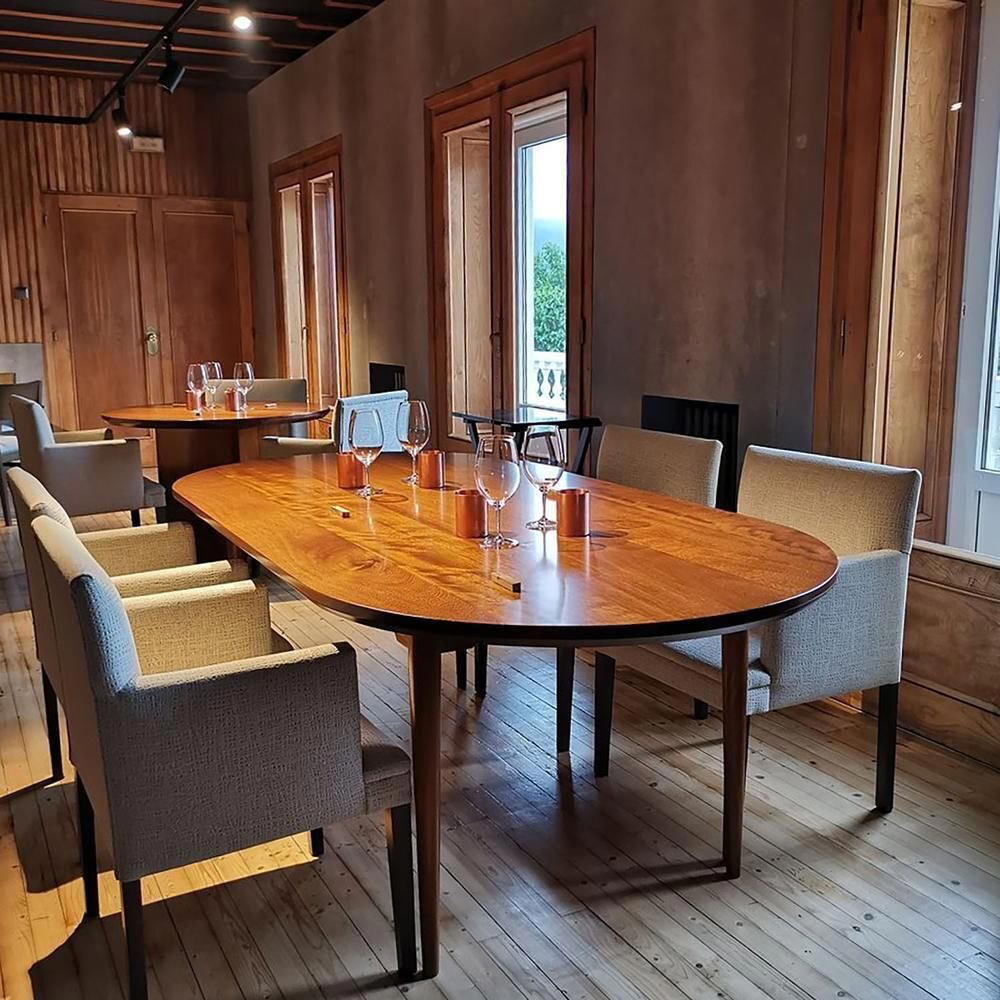
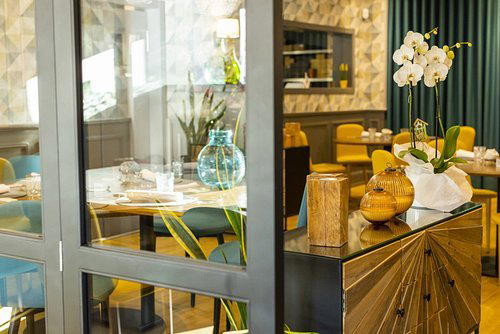
Sobria y elegante decoration in a glass-enclosed upstairs dining room with far-reaching sea views, offering a serene and hospitable atmosphere.