NM occupies a designer dining room inside Oviedo's El Vasco shopping complex, where chef Nacho Manzano holds a Michelin star for creative cooking grounded in Asturian produce. Two tasting menu formats trace a seasonal path through the region's meadows, mountain larder, and the family's market garden in Narbasu. At the €€€€ tier, it represents the clearest argument for what contemporary Asturian cooking can do at full stretch.

A shopping centre with a Michelin star: understanding NM's context
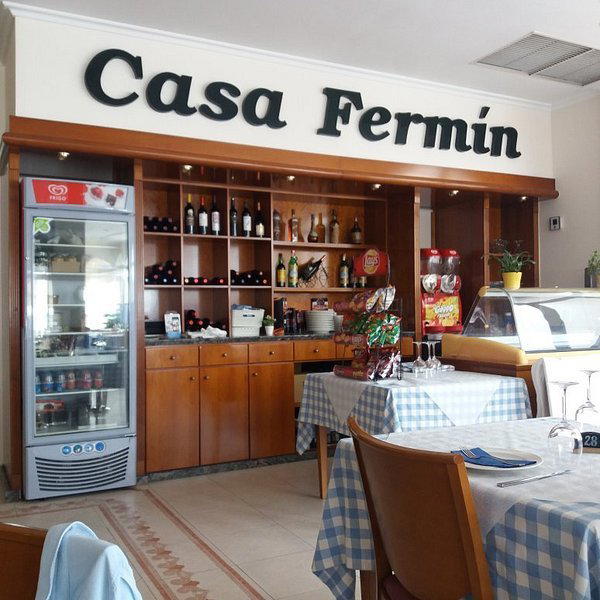
Oviedo's fine-dining scene is modest in scale but punches above the city's size. The Asturian capital has a handful of rooms that take regional cooking seriously at a higher price point — Casa Fermín and Cocina Cabal anchor the traditional end of that tier at €€€, while Ca'Suso and Gloria work the more accessible contemporary register. NM sits above all of them in price, at €€€€, and holds the only Michelin star in the city as of the 2024 guide. That single fact reshapes how you should think about the value equation here.
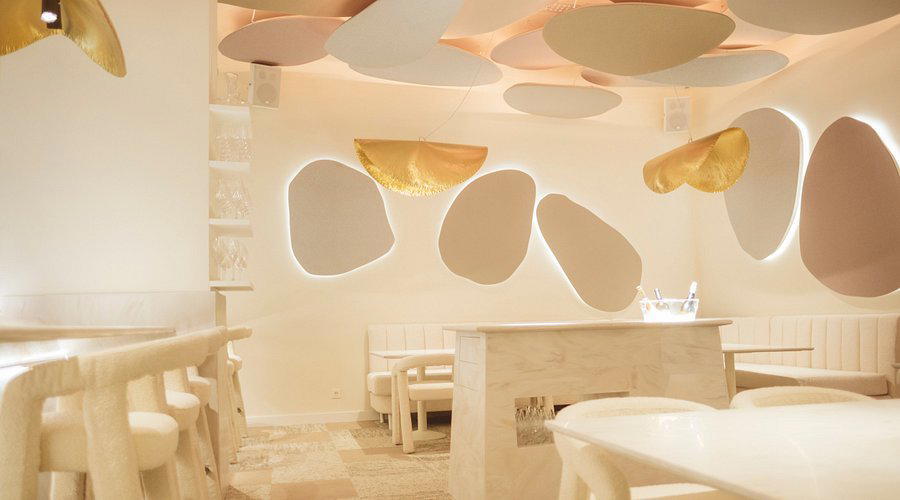
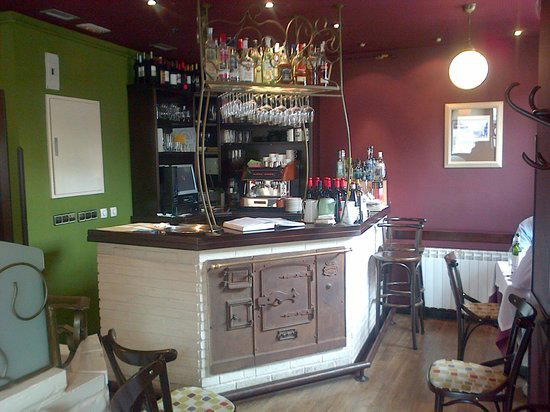
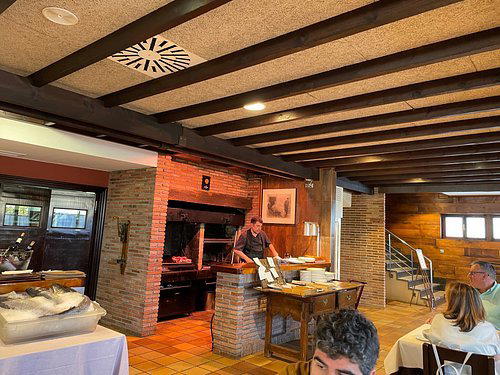
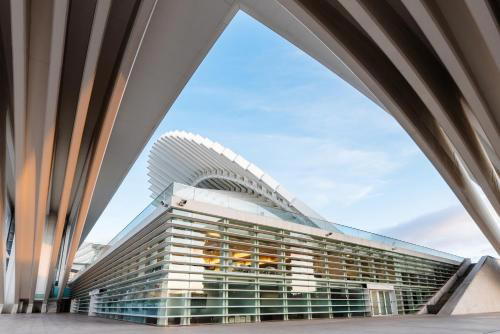
The physical setting requires some recalibration on arrival. NM occupies a space called Nastura inside El Vasco, a shopping complex on Víctor Chávarri 2 that dedicates an entire floor to food and dining. The instinct to treat a mall address as a downgrade is worth resisting. The dining room is a purpose-built, designer space, and the bar counter integrated into its layout can serve as a dining position in its own right — a format that suits solo diners or those who prefer watching the kitchen's rhythm up close. The architecture of the room separates it clearly from the surrounding retail context; once you are seated, the logic of the space is entirely its own.
What creative Asturian cooking means at this level
In Spain's broader contemporary fine-dining conversation, creative cooking tends to position itself in one of two ways: as a system of radical technique applied to any available ingredient, or as a regionalist project that uses technique as a tool for precision rather than transformation. NM belongs to the second category, and that choice has direct consequences for what arrives on the table. Asturias is one of the most ingredient-rich regions in northern Spain , a coastline backed by mountains, dairy pastures of uncommon quality, and a woodland larder that includes chestnuts, wild mushrooms, and game. The discipline of working from that larder, rather than importing ideas from outside it, gives a kitchen both a constraint and a clear identity.
Chef Nacho Manzano, who holds the awards credentials behind NM, applies contemporary technique to extract precision from those regional materials. The emphasis, according to the restaurant's own framing, is consistency and the preservation of the flavours and aromas specific to this territory. That is a harder brief than it sounds. Cooking to amplify what is already there, rather than to impose a new flavour architecture, demands that ingredient selection is non-negotiable , and the sourcing here extends to the family's own market garden in Narbasu, which supplies produce directly to the kitchen.
For comparison, some of Spain's most recognised creative restaurants , Arzak in San Sebastián, El Celler de Can Roca in Girona, Disfrutar in Barcelona, Quique Dacosta in Dénia, Azurmendi in Larrabetzu, Aponiente in El Puerto de Santa María, and DiverXO in Madrid , have built their creative identities around specific regional or conceptual axes. NM's axis is Asturian terroir, and the Michelin recognition in 2024 confirms that the approach carries weight within Spain's competitive fine-dining framework. Internationally, the creative-restaurant model that grounds technique in regional produce has equivalents at venues like Alléno Paris au Pavillon Ledoyen and Enrico Bartolini in Milan, each working within a different national tradition but with the same underlying commitment to ingredient-led precision.
Two menus, one decision to make before you arrive
NM runs a seasonal tasting menu format with two lengths: a shorter option and a longer one. The structure is not unusual at this level of Spanish fine dining, where a choice between five-to-seven and ten-to-twelve courses has become the standard offer across one-star and above rooms. What matters here is that the decision is made at booking, not at the table. When you reserve, you state your menu preference, and the kitchen plans accordingly. That logistical detail is worth noting for groups with different appetites or time constraints.
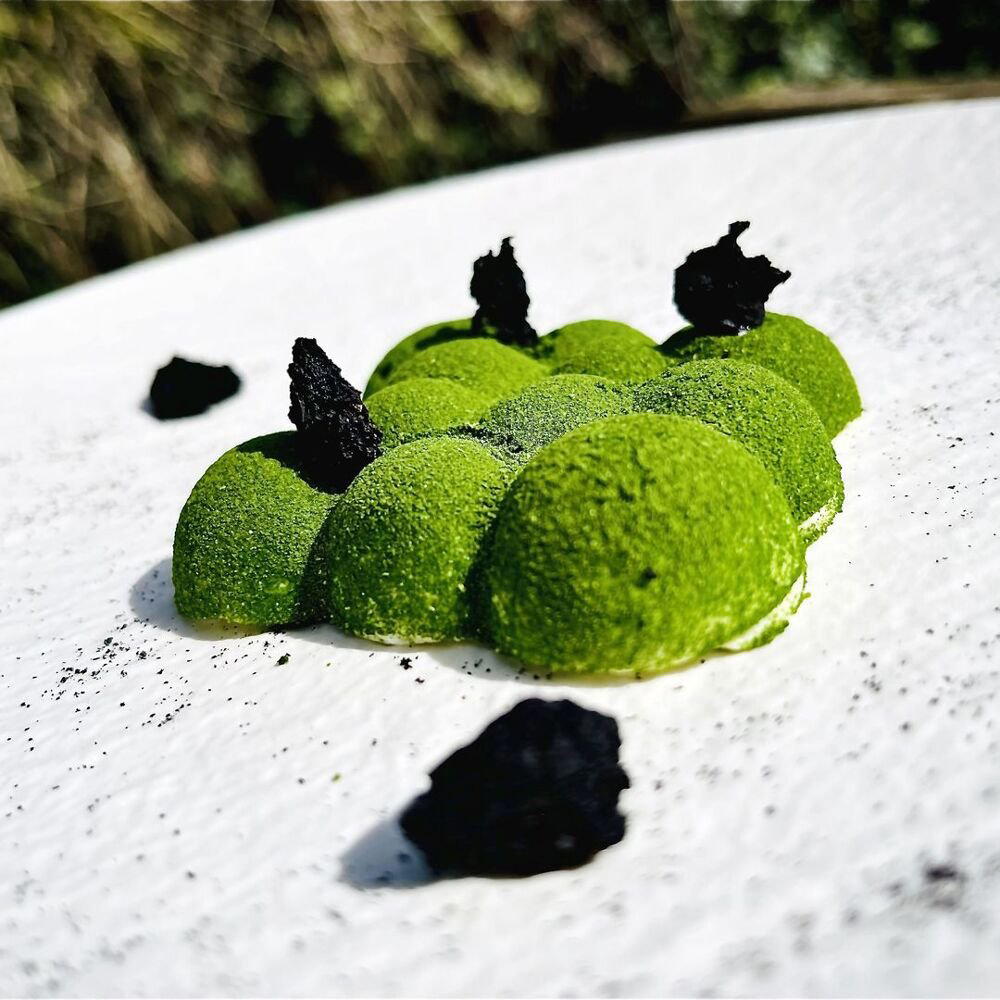
The menu traces what the restaurant describes as the meadows, woods, and mountains of the region , a geographic framing that doubles as a sourcing map. Cantabrian coastal influence appears alongside the agricultural produce of the Asturian interior, and the market garden in Narbasu contributes directly to the seasonal variation. Because the menu changes with the seasons, the specific dishes on any given visit will shift; what does not shift is the regional anchor and the kitchen's consistency of execution, which is the explicit quality signal the restaurant has built its identity around.
The value case at €€€€ in Oviedo
At the €€€€ price point, NM sits in a different bracket from the rest of Oviedo's notable restaurants. The question worth asking at that tier is whether the gap in price corresponds to a gap in what you receive, and here the answer is reasonably clear. A Michelin-starred tasting menu in a purpose-designed room, sourced from a dedicated family garden and a well-mapped regional larder, with a chef whose awards credentials are documented and current, represents a different category of offer from the €€ and €€€ rooms in the same city. The comparison is not just local: one-star tasting menus in northern Spain at comparable price points in San Sebastián or Bilbao operate in much denser competitive environments. In Oviedo, NM occupies its tier without meaningful competition, which means the price reflects its position as the reference point for the city rather than a premium over immediate alternatives.
The bar counter seating also changes the value calculation for single diners or pairs who prefer a shorter commitment. Counter dining at tasting-menu restaurants often collapses the formality of the room without reducing the kitchen's output, and the integrated bar at NM appears designed to serve that purpose rather than as an overflow option.
When to go and how to book
NM operates Tuesday through Saturday, with a lunch service from 1:30 PM to 3:30 PM and dinner from 8:30 PM to 10:30 PM. The restaurant is closed on Mondays and Sundays. Given that it holds the only Michelin star in Oviedo, demand during peak travel periods , particularly the Asturian summer from July through August and around local festivals , will exceed the room's capacity. Booking in advance is the practical approach, and as noted above, stating your menu preference at the time of reservation is a requirement rather than a courtesy.
Víctor Chávarri 2 is in central Oviedo, within walking distance of the old city. For those building a broader visit around the dining offer, the full Oviedo restaurants guide covers the range of options across price tiers, and the Oviedo hotels guide maps accommodation to the city's neighbourhoods. If you are planning an evening that extends beyond the table, the Oviedo bars guide and experiences guide fill the before and after. Wine explorers planning a wider Asturian or northern Spanish itinerary can consult the Oviedo wineries guide for regional producer context.
Reputation Context
A compact peer snapshot based on similar venues we track.
| Venue | Awards | Cuisine | Notes |
|---|---|---|---|
| NM | Michelin 1 Star | Creative | This venue |
| Ca'Suso | Contemporary | Contemporary, €€ | |
| Casa Fermín | Traditional Cuisine | Traditional Cuisine, €€€ | |
| Gloria | Regional Cuisine | Regional Cuisine, €€ | |
| Cocina Cabal | Traditional Cuisine | Traditional Cuisine, €€€ |