
Michelin Selected
A Michelin Selected hotel occupying a converted 19th-century palace in central Oviedo, the Eurostars Palacio de Cristal sits within one of northern Spain's most architecturally coherent historic city centres. The property brings period grandeur into contact with the Eurostars group's mid-to-upper tier positioning, making it a credible base for those exploring Asturias's capital and its serious dining scene.

Pearl is the En Primeur Club membership app — saves, bookings, and concierge access live there. Same editors, same standards.
- Address
- C. Policarpo Herrero, s/n, 33006 Oviedo, Asturias, Spain
- Phone
- +34 985 96 47 77
- Website
- eurostarshotels.com
- Directions
- Get directions
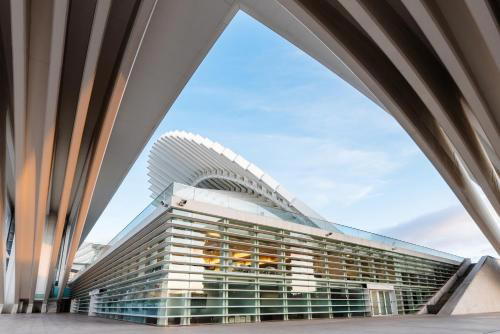
A Palace Repurposed: Architecture as the Starting Point
Oviedo occupies an unusual position in Spanish travel: a compact, walkable city of Romanesque churches, pre-Romanesque UNESCO heritage sites, and a food culture built on cider houses and the full weight of Asturian tradition, yet consistently underrepresented in the international hotel conversation dominated by Madrid and Barcelona. Into that context, the Eurostars Palacio de Cristal addresses a specific gap: a hotel that presents something physically distinctive, inside a city where the built environment is half the reason to visit.
The property takes its identity directly from the structure it inhabits, a 19th-century palace on Calle Policarpo Herrero whose architectural lineage connects it to the prosperous industrial and merchant class that shaped Oviedo's expansion in that period. Asturian modernisme and eclectic historicism produced some of the peninsula's most ornate civic and private buildings in the late 1800s and early 1900s, and Oviedo holds a disproportionate share of them. The Palacio de Cristal belongs to that layer of the city's fabric. Where many conversions strip period structures back to a neutral contemporary interior, the Eurostars model here has been to preserve the visual weight of the original, working the inherited architectural language rather than replacing it.
That approach produces an atmosphere that reads differently from the international hotel chains that cluster in Madrid's Salamanca district or Barcelona's Eixample. Arriving through the façade onto Policarpo Herrero, there is a deliberate formality to the exterior that signals the building's origins before anything else. The interior follows that lead: high ceilings, the proportion of rooms sized for a domestic grand floor rather than a purpose-built hospitality box, and circulation spaces that carry the logic of the original plan. This is the category of hotel where the architecture frames the stay rather than being something to move past on the way to a designed room.
Where Palacio de Cristal Sits in the Spanish Heritage Hotel Category
Spain has a deep supply of heritage hotel conversions, from the state-run Paradores network to privately owned manor houses and urban palaces. The Eurostars Palacio de Cristal occupies a middle tier in that spectrum, sitting between the Parador model (institutional, nationally standardised) and the higher-investment boutique conversions that have redefined the category in Spain over the last fifteen years. For a comparable approach to architectural preservation combined with chain-group backing, properties like Caro Hotel in València and Hotel Mercer Sevilla operate in adjacent territory, each using a historically significant shell as the primary identity driver.
At the more invested end of the Spanish palace hotel market, properties such as Mandarin Oriental Ritz in Madrid represent a different scale of restoration and a corresponding difference in nightly rate and service infrastructure. The Eurostars Palacio de Cristal's Michelin Selected status for 2025 positions it as a credible entry in the quality-recognised tier without claiming parity with those higher-cost alternatives. Michelin's hotel selection programme focuses on quality of experience across accommodation, hospitality, and environment; inclusion signals that the property meets a verifiable baseline, not just a marketing claim.
For those travelling along Spain's northern coast and comparing properties, Akelarre in San Sebastián and Pepe Vieira in Poio represent the gastronomy-first model where the hotel exists in service of a culinary programme. The Palacio de Cristal's proposition is reversed: the architectural identity is the primary draw, and the surrounding city carries the food and culture offer.
Oviedo as Context: Why the Location Matters
Choosing a hotel in Oviedo is inseparable from choosing to spend serious time in Asturias, a region whose food culture is among the most coherent and place-specific in Spain. The city functions as a base for the pre-Romanesque churches of Santa María del Naranco and San Miguel de Lillo on the hillside above, for the coast at Gijón and Cudillero within an hour's drive, and for a cider culture that means the evening ritual of escanciado, the high-pour cider service, is visible in every traditional sidrería in the old town. The concentration of Asturian cooking, from fabada to cachopo, within walking distance of the Palacio de Cristal is the practical case for the location.
Oviedo's historic centre is compact enough that the hotel's address on Policarpo Herrero places guests within reach of the cathedral, the covered market, and the main cider-house streets without requiring a car. For a broader Oviedo orientation, our full Oviedo restaurants guide covers the current dining scene in more depth. The city receives significantly less international hotel competition than San Sebastián or Bilbao, which means that a Michelin Selected property here carries more relative weight in its local context than the same recognition would in a more densely contested market.
Booking and Practical Considerations
The Eurostars group operates as a mid-to-upper tier chain across Spain and Europe, with the Palacio de Cristal representing one of its more architecturally distinctive Spanish properties. Reservations are handled through the standard Eurostars booking infrastructure, which means competitive third-party rate availability and a loyalty programme for frequent guests. Oviedo operates on a seasonal pattern aligned with Spanish national holidays and the Asturian summer, with August and the San Mateo festival in September representing the highest-demand periods locally. Travelling in late spring or early autumn gives access to the full cultural programme of the city with lower accommodation pressure.
For those building a wider Spanish itinerary around heritage hotel architecture, Atrio in Cáceres extends the conversation into Extremadura's walled medieval city, while Abadía Retuerta LeDomaine takes the converted monastery model in a winery direction. At the island end of the market, Hotel Can Cera in Palma and Hotel Can Ferrereta in Santanyí represent the Mallorcan equivalent of the period building conversion approach. For those whose travel extends beyond Spain, Badrutt's Palace in St. Moritz and Hôtel de Paris Monte-Carlo occupy the upper register of the same palace-hotel tradition across Europe.
Quick Comparison
Comparable venues nearby, for context on price, style, and recognition.
| Venue | Cuisine | Price | Awards | Notes |
|---|---|---|---|---|
| Eurostars Palacio de CristalThis venue — the venue you are viewing | Contemporary luxury design hotel integrated into a conference center complex, emphasizing architectural innovation and technological sophistication. | $1–100 | Michelin Selected | Not listed |
| One Shot Puerta Ruzafa | Contemporary boutique honoring nature through art and architecture | Not listed | Michelin Selected | Ruzafa |
| Hotel Boutique Can Sastre | rustic-meets-luxury historic boutique | Not listed | Michelin Selected | Ciutadella old town |
| Las Colinas Golf & Country Club | Exclusive residential golf resort with low-density housing integrated into natural landscape; modern amenities blended with Mediterranean environment. | Not listed | World Travel Awards | Dehesa de Campoamor |
| Eurostars Bilbao | Premium urban four-star hotel in a restored landmark riverside building, positioned for comfort-focused city stays. | Not listed | Not listed | Deusto |
| Parador de Baiona | Historic fortress-palace hybrid combining medieval fortification with 19th-century Neo-Gothic architecture, operated by Spain's prestigious Paradores chain. | $100–200 | Michelin Selected | Monterreal Peninsula |
Recognition history
Dated appearances from independent guides and award organizations, with the underlying list record or original source where available.
Michelin Selected
Michelin
Continue exploring
More in Oviedo
Hotels in Oviedo
Browse all →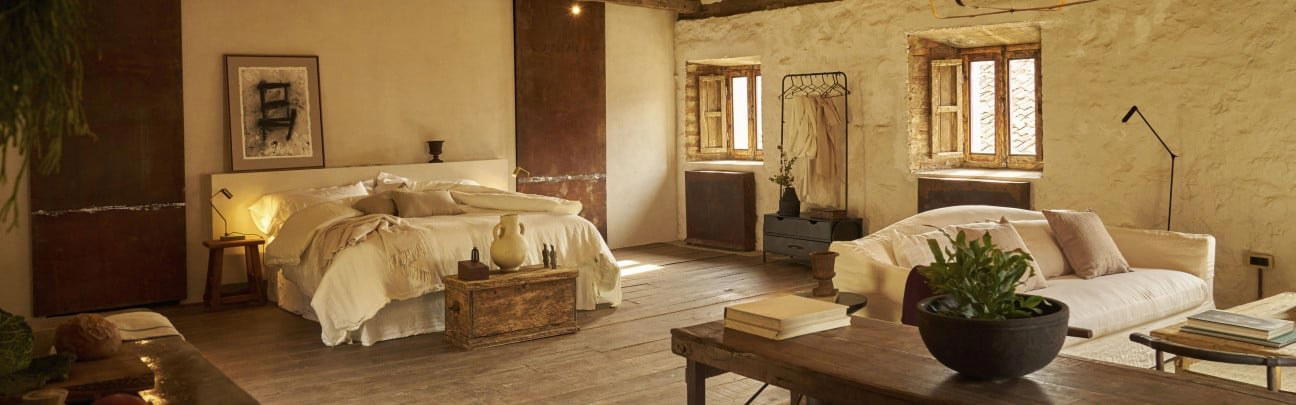
Details
- Modern
- Minimalist
- Elegant
- Well Known
- Business Trip
- Weekend Escape
- Celebration
- Design Destination
- Panoramic View
- Historic Building
- Garden
- Wi Fi
- Fitness Center
- Spa
- Business Center
- Restaurant
- Bar
- Room Service
- Concierge
- Laundry Service
- Mountain
- Skyline
- Wheelchair Accessible
- Elevator
- Accessible Restroom
Light-flooded minimalist interiors with floor-to-ceiling windows, clean modern aesthetic, and dramatic architectural elements creating a sophisticated yet inviting atmosphere.