El Castillo De Jagua Restaurant
On Rivington Street in the Lower East Side, El Castillo De Jagua Restaurant represents the kind of long-standing neighborhood institution that anchors a block without advertising itself. Rooted in the Dominican and Latin traditions that shaped this stretch of Manhattan, it occupies a specific place in a city where heritage dining rooms increasingly share space with higher-priced newcomers.
Pearl is the En Primeur Club membership app — saves, bookings, and concierge access live there. Same editors, same standards.
- Address
- 113 Rivington St, New York, NY 10002
- Phone
- +1 212 982 6412
- Website
- castillodejagua.com
- Directions
- Get directions
 Saves & bookings on Pearl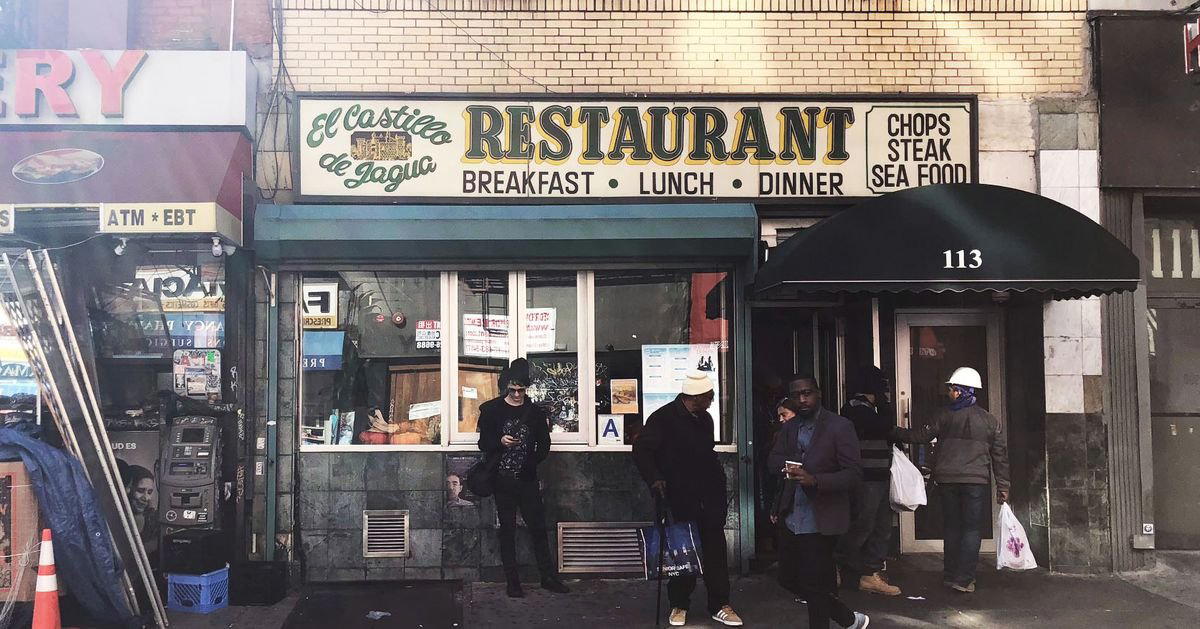
Rivington Street and the Latin Dining Tradition It Carries
The Lower East Side has never been a single neighborhood. It has been successive neighborhoods layered over each other, each wave leaving its food behind. Jewish appetizing shops, Puerto Rican lunch counters, and Dominican kitchens all took their turn along these blocks, and the ones that survived did so not through reinvention but through consistency. El Castillo De Jagua Restaurant on Rivington Street belongs to that surviving cohort. The address, 113 Rivington St, sits at 113 Rivington St, New York, NY 10002. If anything, the gentrification pressure around it clarifies why places like this matter to the neighborhood's continuity.
In a city where the dining conversation trends toward omakase counters and tasting menus with Michelin pedigree, venues like Le Bernardin, Atomix, or Masa occupy a different borough of the imagination entirely, the category of neighborhood institution rarely gets the same editorial attention. That gap in coverage does not reflect a gap in quality. It reflects a gap in the kind of dining that gets written about. El Castillo De Jagua is the sort of place that regulars guard without meaning to and newcomers discover by walking past.
The Arc of the Meal: How Dominican Cooking Sequences Itself
Dominican cuisine, like much of the broader Caribbean tradition, organizes a meal around texture and sustenance more than it does around European-style progression. The logic is not less sophisticated, it is differently sophisticated. Where a tasting menu at Eleven Madison Park or Per Se builds through contrasts of temperature and technique across a dozen courses, a well-executed Dominican spread builds through complementary weight: stewed proteins absorb into rice and beans, fried plantains cut through richness, and broths carry the meal's opening logic before the heavier plates arrive.
At a kitchen operating in this tradition, the sequence of eating is meaningful even when it is not formally choreographed by a tasting menu structure. You move from a broth or soup, sancocho, the slow-cooked stew that functions as the Dominican kitchen's centerpiece on weekends, through rice and beans cooked with sofrito, to proteins that have been braised or fried. The meal has an internal momentum that does not require a sommelier explaining each transition. The ingredients do that work themselves.
This kind of cooking also rewards eating at the right time. Weekend lunch service at Dominican restaurants across New York typically carries the densest, most labor-intensive preparations, the dishes that require overnight marinating or hours of braising that kitchens do not sustain through a full seven-day-a-week format. That timing logic applies to the broader category of which El Castillo De Jagua is a part. Arriving mid-week at midday is a different experience from arriving on a Saturday when the kitchen has been running its longest preparations.
The Lower East Side Context: What the Block Is Now
Rivington Street in 2024 sits at a specific tension point. The blocks around it have absorbed high-end cocktail bars, boutique hotels, and the kind of single-ingredient-focused small plates restaurants that cluster wherever rents hit a certain threshold. The Dominican and Latin institutions that predate those arrivals now function as de facto anchors, they provide the block with continuity and a reason for long-term residents to stay connected to the neighborhood's older social geography.
That context is not sentimental. It is economically legible. Neighborhood institutions that survive multiple cycles of gentrification do so because they serve a function that new arrivals cannot immediately replicate: they have the regulars, the family relationships, and the institutional memory of the block. El Castillo De Jagua occupies that position on Rivington. For visitors coming from outside the neighborhood, that status is itself a form of curation, a restaurant that has remained through the shifts has been pressure-tested in ways that a two-year-old opening has not.
Placing El Castillo De Jagua in a National Frame
The tradition of long-standing, neighborhood-anchored Latin restaurants is not exclusive to New York. Across the United States, cities have produced their own versions of this kind of institution, places built on community relationships and regional cuisine rather than on tasting menu formats. Emeril's in New Orleans represents a different register of that community-rooted approach, while more technique-driven formats like Lazy Bear in San Francisco or Smyth in Chicago show how progressive kitchens have built their own forms of institutional loyalty. The farm-driven models at Blue Hill at Stone Barns in Tarrytown or Single Thread Farm in Healdsburg pursue durability through a different set of values entirely.
What all of these share, at whatever price point, is the quality of having a reason to exist beyond the trend cycle. El Castillo De Jagua's reason is the Dominican community of the Lower East Side and the cooking tradition that community brought with it. That is a different kind of credential from a Michelin star, but it is not a lesser one. Other serious American dining destinations, The French Laundry in Napa, Providence in Los Angeles, Addison in San Diego, The Inn at Little Washington, Frasca Food & Wine in Boulder, have built their authority through years of consistent output. The same accumulative logic applies here, at a modest price register and with a different audience in mind.
A kitchen that draws from a specific geographic and cultural tradition, and maintains that fidelity over time, develops authority that concept-driven restaurants cannot shortcut.
Know Before You Go
| Address | 113 Rivington St, New York, NY 10002 |
|---|---|
| Neighborhood | Lower East Side, Manhattan |
| Cuisine | Dominican / Latin |
| Price Range | About $20 per person |
| Reservations | Recommended |
| Leading Timing | Daily service, with Friday and Saturday running until 10 PM |
| Phone / Website | Not listed, verify locally before visiting |
Comparable Spots
Comparable venues nearby, for context on price, style, and recognition.
| Venue | Cuisine | Price | Notes |
|---|---|---|---|
| El Castillo De Jagua RestaurantThis venue — the venue you are viewing | Authentic Dominican | $$ | Not listed |
| Paladar | Authentic Hispanic Latin Cuisine | $$ | Lower East Side |
| Mamajuana Cafe Inwood | Nuevo Latino & Dominican | $$ | Inwood |
| Imani | Caribbean (Jamaican) | $$ | Fort Greene |
| Kiosko 787 | Authentic Puerto Rican | $ | Carroll Gardens-Cobble Hill-Gowanus-Red Hook |
| Amor Cubano | Authentic Cuban | $$ | East Harlem (North) |
Continue exploring
More in New York City
Restaurants in New York City
Browse all →
Bars in New York City
Browse all →
Hotels in New York City
Browse all →








At a Glance
- Cozy
- Classic
- Casual Hangout
- Family
- Brunch
- Standalone
Current opening hours
- Monday
- 8 AM–9 PM
- Tuesday
- 8 AM–9 PM
- Wednesday
- 8 AM–9 PM
- Thursday
- 8 AM–9 PM
- Friday
- 8 AM–10 PM
- Saturday
- 8 AM–10 PM
- Sunday
- 8 AM–9 PM
Hours can change for holidays and private events. Last verified .
Warm, home-style atmosphere with a neighborhood feel, evoking traditional Dominican dining.