Amor Cubano
Our verdict
Amor Cubano has anchored East Harlem's Cuban dining scene at 2018 Third Avenue for years, serving the neighborhood as a gathering point for traditional island cooking in a city where that tradition competes against far flashier formats. Compared to Midtown's tasting-menu circuit, it operates in a different register entirely: communal, direct, and rooted in the customs of the Cuban table.

The menu
What to order
- Ropa vieja
- Paella
- Mojitos
East Harlem and the Cuban Table in New York City
Cuban cooking occupies a specific position in New York's restaurant geography. It is not the cuisine that fills the pages of fine-dining shortlists alongside Le Bernardin or Atomix, nor does it chase the tasting-menu format that defines destinations like Eleven Madison Park or Per Se. Instead, Cuban restaurants in New York operate as neighborhood institutions, with a dining ritual built around sharing, unhurried pacing, and the kind of table customs that predate plating trends by generations. East Harlem, historically one of the city's most concentrated Latin communities, has long supported that tradition. Amor Cubano, at 2018 Third Avenue, sits within that lineage.
The neighborhood context matters here. El Barrio, as East Harlem is widely known, has sustained Latin American food culture at a community scale through decades of demographic change and real estate pressure. The Cuban table ritual that Amor Cubano represents belongs to a broader dining culture where the meal is structured around arrival, warm food shared across the table, and the expectation that no one is being rushed toward a second seating. That etiquette is less common in Manhattan's higher-priced formats, where counters like Masa calibrate the pace of service around the chef's rhythm rather than the table's. At Cuban restaurants in East Harlem, the guest sets the tempo.
The Dining Ritual: How the Cuban Meal Unfolds
The customs of the Cuban meal are worth understanding before you arrive. Unlike the structured procession of a tasting menu or the competitive small-plates format that defines much of contemporary New York dining, the Cuban table tends to organize around a few central dishes, each arriving in quantity sufficient to share. Rice and beans are not garnishes; they are the meal's foundation. Plantains, in their sweet and savory preparations, arrive as a matter of course rather than as a deliberate choice. The protein, whether roasted pork, chicken, or beef, is typically braised or slow-cooked to a texture that rewards patience in the kitchen.
This format has its own etiquette. Ordering individually from a Cuban menu is possible but misses the point. The meal is designed for distribution across the table, with each dish contributing to a composite whole rather than standing as a solo statement. That approach to eating together is deeply embedded in Cuban food culture, and restaurants that carry it into New York's dining scene preserve something that the city's more individualized formats cannot replicate. For readers accustomed to restaurants like Blue Hill at Stone Barns or Smyth, where the chef's composition governs the experience from start to finish, Amor Cubano represents an inversion: the table composes the meal, not the kitchen.
The communal rhythm also affects timing. Drinks arrive early, often before the full order is placed. Conversation is assumed to be part of the experience, not a gap to be filled with amuse-bouches. The meal ends when the table decides, not when the check arrives uninvited. These are the structural features of the Cuban dining ritual, and they are as relevant to understanding Amor Cubano as any individual dish description.
East Harlem in New York's Broader Restaurant Map
For visitors building a New York itinerary around dining, East Harlem sits above the Upper East Side's restaurant corridor, accessible by subway on the 4, 5, and 6 lines to 116th Street. The neighborhood occupies a different tier from Midtown and the Flatiron, where the city's most-awarded addresses are concentrated, but it offers something those corridors do not: the experience of eating in a neighborhood that still functions as a residential community rather than a dining destination engineered for visitors. That distinction shapes how a meal at Amor Cubano feels relative to, say, the calibrated environments of The French Laundry in Napa or Providence in Los Angeles.
Within New York's Cuban and Caribbean dining scene, Third Avenue between 116th and 125th Streets represents one of the city's more concentrated stretches of Latin American cooking. Amor Cubano's address places it within easy reach of this corridor. For a fuller picture of where Cuban dining fits within New York's restaurant map, EP Club's full New York City restaurants guide maps the city's dining geography across neighborhoods and price points.
Placing Amor Cubano in a direct comparison with New York's fine-dining tier would misread what it represents. It is the cluster of Cuban and Latin Caribbean restaurants that have maintained a neighborhood foothold in East Harlem and the broader upper Manhattan corridor, where the dining ritual operates on community terms rather than critical ones. That said, Cuban cooking in New York has attracted renewed interest as the city's food media has paid more attention to outer-borough and uptown cuisine after years of Midtown-centric coverage. Amor Cubano occupies a space where that critical attention and the neighborhood's own dining culture overlap.
Restaurants maintaining similar community-anchored formats in other American cities include places like Emeril's in New Orleans and Frasca Food and Wine in Boulder, which, though different in cuisine, share the characteristic of operating as gathering points with a defined sense of place rather than as expressions of a chef's individual creative program.
Planning Your Visit: A Comparison of Logistics
| Venue | Neighborhood | Price Tier | Format | Booking |
|---|---|---|---|---|
| Amor Cubano | East Harlem | Moderate | Communal Cuban table | Walk-in or call ahead |
| Le Bernardin | Midtown West | $$$$ | French seafood tasting | Advance reservation required |
| Eleven Madison Park | Flatiron | $$$$ | Vegan tasting menu | Advance reservation required |
| Per Se | Columbus Circle | $$$$ | French contemporary tasting | Advance reservation required |
| Atomix | Midtown East | $$$$ | Modern Korean tasting | Advance reservation required |
Frequently asked questions
Is Amor Cubano a family-friendly restaurant?
Cuban dining in New York has traditionally operated as a family-oriented format, and East Harlem restaurants in this tradition typically welcome groups across ages. At a moderate price point, Amor Cubano sits well below the tasting-menu tier of New York's fine-dining circuit, making it accessible for larger family groups who would find venues like Masa or Per Se impractical for mixed-age gatherings. The communal table format that defines Cuban dining is inherently suited to groups.
What kind of setting is Amor Cubano?
Amor Cubano operates in East Harlem, a neighborhood with a deep history as New York's primary Latin community, distinct from the award-circuit addresses of Midtown or the Flatiron. The setting reflects that neighborhood character: a Cuban restaurant embedded in a residential corridor rather than a purpose-built dining destination. Unlike the formal room design that distinguishes places like Le Bernardin, the atmosphere here is shaped by the community it serves.
What's the signature dish at Amor Cubano?
What can be said with confidence is that Cuban cooking in New York centers on slow-cooked proteins, rice and beans as primary components, and plantain preparations. These are structural features of the cuisine rather than individual chef choices, and they apply to the Cuban table format broadly. For current menu details, visiting the restaurant directly is the reliable approach.
Can I walk in to Amor Cubano?
Walk-in dining is more viable at neighborhood Cuban restaurants in East Harlem than at the heavily pre-booked fine-dining addresses in Midtown, where venues like Eleven Madison Park and Atomix require advance reservations weeks out. Amor Cubano's format and price tier suggest a more accessible door policy, though calling ahead for larger groups or weekend evenings remains practical. No booking data is confirmed in EP Club's database.
What makes Amor Cubano worth seeking out?
The case for Amor Cubano is not built on Michelin recognition or a chef's tasting program. It is built on what Cuban dining in East Harlem represents as a format: communal, unhurried, and shaped by a food culture that predates the city's contemporary restaurant scene. For readers whose New York itinerary already covers the tasting-menu tier, Amor Cubano offers a different structure of dining experience, one governed by the table rather than the kitchen. That shift in format is itself informative for anyone interested in how New York's broader restaurant geography works.
Does Amor Cubano serve traditional Cuban cocktails alongside its food?
Cuban dining culture traditionally pairs food with rum-based drinks, including mojitos and daiquiris, which function as part of the meal's opening ritual rather than as an afterthought. East Harlem Cuban restaurants in this tradition typically maintain a bar program that reflects those roots. EP Club's database does not contain confirmed beverage menu details for Amor Cubano, but the format and neighborhood context make a classic Cuban bar program plausible. Confirming current offerings directly with the restaurant is advised before visiting.
A quick peer list to put this venue’s basics in context.
| Venue | Cuisine | Price | Awards | Notes |
|---|---|---|---|---|
| Amor CubanoThis venue (the venue you are viewing) | Authentic Cuban | Not listed | Not listed | Not listed |
| Le Bernardin | French Seafood Fine Dining | $300–500 | 3 Michelin Stars · World's 50 Best #13 | French, Seafood |
| Atomix | Modern Korean Tasting Menu | $300–500 | 2 Michelin Stars · World's 50 Best #7 | Modern Korean, Korean |
| Per Se | French Fine Dining Tasting Menu | $300–500 | 3 Michelin Stars · World's 50 Best #40 | French, Contemporary |
| Masa | Traditional Japanese Omakase | $500+ | 2 Michelin Stars · World's 50 Best #27 | Sushi, Japanese |
| Eleven Madison Park | Contemporary Plant-Based Fine Dining | $300–500 | 3 Michelin Stars · World's 50 Best #4 | French, Vegan |
Continue exploring
More in New York City
Restaurants in New York City
All restaurants in New York City →
Bars in New York City
All bars in New York City →

Details
- Lively
- Cozy
- Energetic
- Trendy
- Date Night
- Group Dining
- Casual Hangout
- Late Night
- Live Music
- Craft Cocktails
- A La Carte
- Mojitos
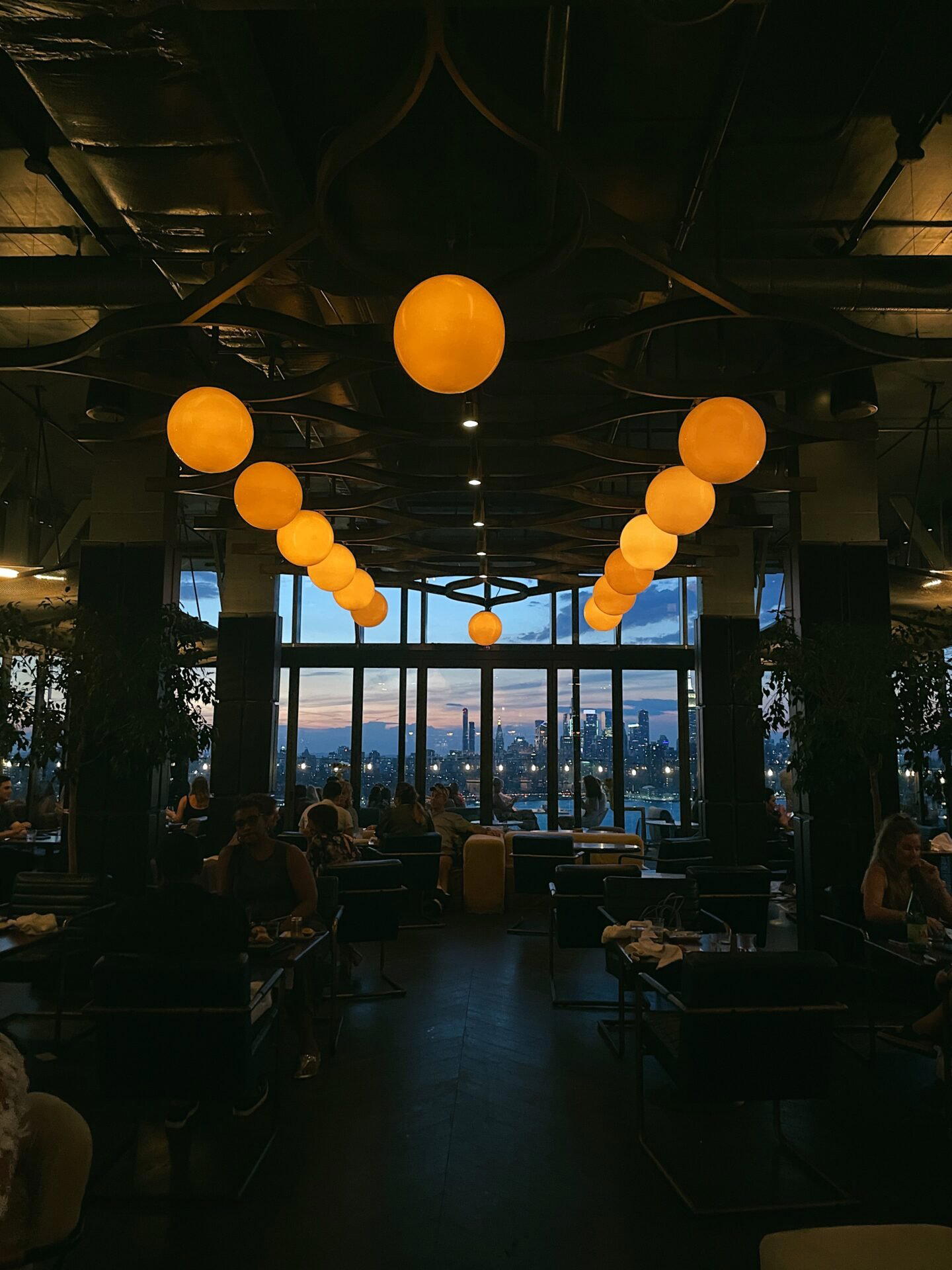
Warm with soft candlelight, Cuban memorabilia, and lively energy from live bands.