Echigo Home cook
On Valencia Street in the Mission District, Echigo Home Cook occupies a corner of San Francisco's most contested dining corridor, where Japanese home-cooking traditions meet the Bay Area's hyper-local sourcing culture. The format skews intimate and producer-conscious, placing it alongside a growing tier of sustainability-minded restaurants that treat supply-chain transparency as a core part of the dining proposition.
 Discover on Pearl
Pearl is the En Primeur Club membership app — saves, bookings, and concierge access live there. Same editors, same standards.
- Address
- 870 Valencia St, San Francisco, CA 94110
- Phone
- +14158237573
- Website
- echigohomecookca.com
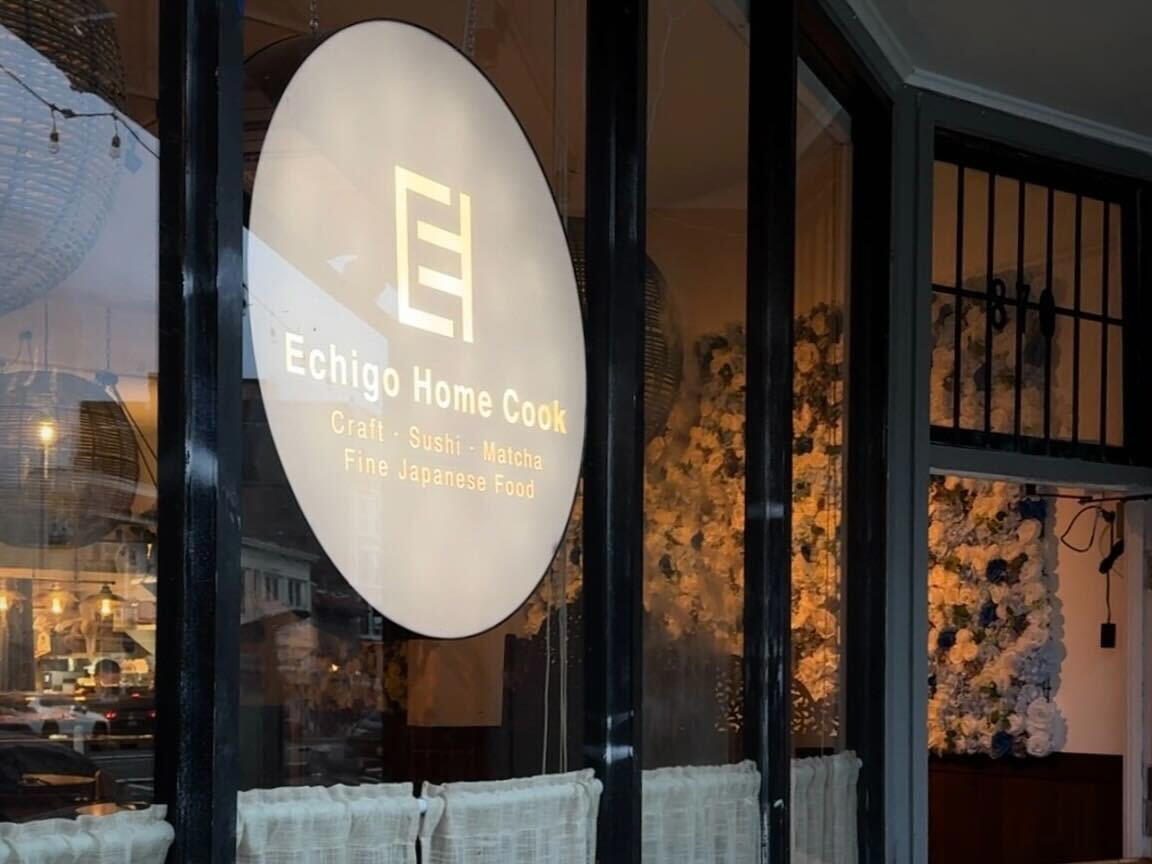
Where Valencia Street's Sustainability Conversation Gets Personal
Valencia Street has spent the better part of a decade sorting itself into tiers. At one end sit the maximalist operations, loud, high-volume, optimised for throughput. At the other, a quieter cohort has emerged: smaller rooms, shorter supply chains, menus shaped by what the season and the source will actually allow. Echigo Home Cook is a Japanese sushi and izakaya restaurant at 870 Valencia Street, San Francisco, with a 4.2 Google rating from 191 reviews. It operates in that second register. The address places it inside one of San Francisco's most watched dining corridors, where ingredient provenance and kitchen waste reduction have shifted from talking points to baseline expectations.
The name carries a deliberate signal. "Home cook" in the Japanese culinary tradition does not mean casual or unambitious. Echigo, a former province in what is now Niigata Prefecture, has a cooking culture built around cold-climate agriculture, preserved foods, and disciplined restraint, a tradition that maps naturally onto the Bay Area's own fixation with fermentation, seasonality, and minimal-waste kitchens. That convergence of Japanese home-cooking ethics and California's producer-first sourcing culture is what gives this address its editorial weight.
The Sustainability Frame That Shapes the Menu
San Francisco's most closely watched restaurants have been moving in a consistent direction for several years: tighter relationships with fewer farms, menus that shift based on what growers can actually deliver, and kitchen practices that treat waste as a design problem rather than an operational footnote. Saison built its reputation on live-fire technique and direct sourcing from Northern California ranches. Lazy Bear runs a progressive American format where the seasonal supply chain is as much part of the narrative as the plate. Single Thread Farm in Healdsburg takes that logic to its endpoint, with a farm operation feeding directly into the restaurant.
Echigo Home Cook does not operate at those price tiers or with that level of institutional infrastructure, but the underlying orientation is the same. Japanese home cooking, at its most considered, already embeds sustainability practices that Western fine dining has had to retrofit: mottainai (the ethic of zero waste), dashi made from whole kombu and katsuobushi with the solids repurposed, rice bran used in pickling. These are not restaurant innovations, they are inherited household disciplines. A kitchen that takes the "home cook" label seriously is already working from a waste-conscious baseline that more complex tasting-menu formats often struggle to match.
Nationally, this argument has been made most forcefully at places like Blue Hill at Stone Barns in Tarrytown, where the farm-to-table connection is literal and the menu exists to express what the land produces rather than the other way around. In Europe, Atelier Moessmer Norbert Niederkofler in Brunico has taken an entire regional cuisine and restructured it around Alpine-only sourcing. Echigo Home Cook's position on Valencia Street places it in conversation with both traditions, the American farm-to-table movement and the Japanese home-cooking canon, without trying to resolve that tension artificially.
The Mission District Context
The Mission has always been San Francisco's most contested dining neighbourhood, and Valencia Street is its most watched block. The corridor runs through a community with deep Latino roots and a longstanding independent-restaurant culture, and it has absorbed wave after wave of newcomers without losing its operational density. What makes the current moment distinct is how many of the newer openings are explicitly structured around supply-chain ethics rather than maximalist menus.
Restaurants like Atelier Crenn and Benu operate at significant remove from this neighbourhood, both geographically and in terms of format, Michelin-starred destination dining with extensive wine programs and tasting-menu price points. Quince occupies yet another register, Italian-inflected and formal in a way that bears little resemblance to the Mission's working-room character. The point is not that Echigo Home Cook competes with these addresses, it does not, by any measure, but that San Francisco's sustainability dining conversation happens across all price tiers and neighbourhoods simultaneously. Echigo participates from the grassroots end of that conversation.
The neighbourhood also functions as a practical filter. Valencia Street diners tend to be return visitors with strong opinions about what they want, and the area's independent-first culture means that sourcing stories and kitchen ethics carry genuine weight with the local audience. A restaurant identifying itself through the lens of home cooking and place-based tradition is making a readable argument to that audience.
How This Compares Across American Cities
The home-cook format as a fine-dining or considered-casual proposition has developed differently in different American cities. In New York, Atomix has made Korean culinary tradition the basis for a serious tasting-menu program, with sourcing discipline central to the kitchen's identity. Smyth in Chicago runs an urban farm program that feeds the kitchen directly. Providence in Los Angeles has built its sustainability credentials around responsible seafood sourcing. Addison in San Diego works within a Southern California producer network. And at the institutional end, The French Laundry in Napa maintains on-site kitchen gardens that feed the menu directly.
What these operations share is a conviction that the supply chain is part of the dining proposition, not just a backstory. Echigo Home Cook, in its name and its address, makes the same argument from a different entry point: the disciplined frugality of Japanese home cooking, transplanted to a San Francisco street that is already predisposed to hear it. For readers tracking how sustainability ethics are expressed across formats and price tiers, this address is a useful data point in that wider pattern.
See our full San Francisco restaurants guide for context on how the city's sustainability-minded dining scene maps across neighbourhoods and price tiers, alongside destinations like Le Bernardin in New York City, Emeril's in New Orleans, The Inn at Little Washington, and Frasca Food & Wine in Boulder.
Planning Your Visit
Address: 870 Valencia Street, San Francisco, CA 94110. Reservations: Reservations are recommended. Dress: smart casual. Budget: price tier 2. Timing:
Credentials Lens
Comparable venues nearby, for context on price, style, and recognition.
| Venue | Cuisine | Price | Awards | Notes |
|---|---|---|---|---|
| Echigo Home cookThis venue — the venue you are viewing | Japanese Sushi and Izakaya | $$ | , | |
| Wayo Sushi Restaurant | Authentic Japanese Sushi | $$ | , | Nob Hill |
| Ebisu | Authentic Japanese Sushi | $$ | , | Inner Sunset |
| Ryoko's Japanese Restaurant & Bar | Lively Japanese Sushi Bar | $$ | , | Nob Hill |
| Ebisu Restaurant | Authentic Japanese Sushi | $$ | , | Inner Sunset |
| Matsuyama Shabu House | Japanese Shabu-Shabu | $$ | , | Pacific Heights |
Continue exploring
More in San Francisco
Restaurants in San Francisco
Browse all →
Bars in San Francisco
Browse all →

Hotels in San Francisco
Browse all →






At a Glance
- Intimate
- Cozy
- Date Night
- Casual Hangout
- Sake Program
Inviting atmosphere with a slightly upscale casual vibe and moderate noise levels.