Our verdict
Dulcerna occupies an address on Calle Alcalá in Madrid's Cdad. Lineal district, sitting outside the central creative-dining cluster but within a city that has built one of Europe's most competitive restaurant scenes. The practical details on booking windows, format, and meal timing are the variables that shape how to approach a visit here.

Pearl is the En Primeur Club membership app, where members save venues, book tables and use the concierge.
The menu
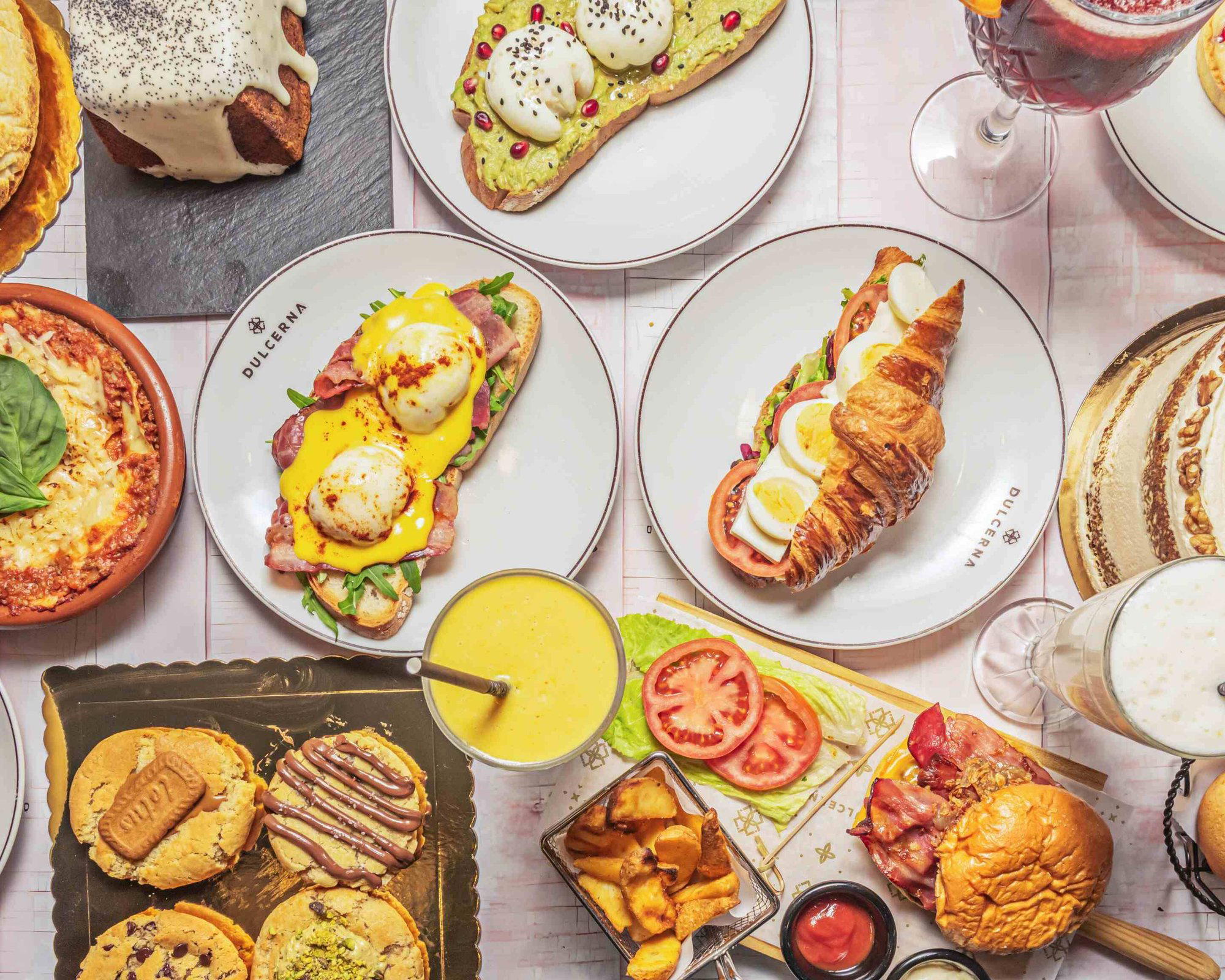
What to order
- Croissant de Bacon
- Waffles de Avena
- Caja de 8 Mini Croissants
- Croissant de Mantequilla
- Tostada de Bacon
Madrid's East–West Dining Divide
Madrid's most-discussed restaurants DiverXO, Coque, Deessa, DSTAgE, and Paco Roncero, cluster in and around the central barrios, drawing visitors and local high-spenders who treat a restaurant booking as the main event of an evening. Dulcerna's position on Calle Alcalá 379, in Cdad. Lineal to the northeast, places it at a different remove from that circuit. That geography matters: restaurants outside the centro tend to serve a more neighbourhood-anchored clientele, and the rhythm of service in those rooms often shifts noticeably between a midday sitting and an evening one. In Madrid's outer districts, lunch remains the dominant social meal for locals, a pattern that holds more firmly here than in the tourist-facing core.
The Lunch–Dinner Divide in Madrid's Outer Districts
Across Madrid's broader dining culture, the split between lunch and dinner service is not simply a question of timing. Lunch in the Spanish capital, particularly outside the centro, operates under a distinct social contract. Tables fill between 2pm and 4pm, courses arrive without urgency, and the meal functions as a midday anchor rather than a prelude to the evening. By contrast, dinner in the same rooms often runs leaner: fewer covers, a different pace, and occasionally a shorter format. For a venue positioned on the Alcalá corridor away from the tourist-facing dining cluster, this rhythm is likely to shape both the energy in the room and the practical calculus of when to go.
Spain's broader restaurant culture has long assigned the tasting menu its natural home at dinner, when the multi-hour commitment is easier to absorb. But at neighbourhood-level restaurants, those drawing primarily from the surrounding residential catchment rather than from visiting diners, the lunch service can carry as much culinary ambition as the evening. The distinction is more about crowd composition than kitchen effort. Midday at a well-regarded local address in Madrid often means a room of professionals on a two-hour break, eating purposefully and well; dinner at the same address might attract a smaller, more mixed group arriving later than their central-city counterparts.
For a visitor deciding when to book Dulcerna, that structural difference is the most useful variable. Lunch positions the experience within a local social context that the city's central creative-dining addresses rarely offer. Evening service, where the room is quieter, tends to suit those who want more space and less ambient energy. Neither is categorically preferable, the choice depends on what the reader is optimising for.
Where Dulcerna Sits in Madrid's Creative-Dining Spectrum
Madrid now hosts more three-Michelin-star restaurants than almost any European capital outside Paris, with DiverXO holding that tier alongside a dense cluster of one- and two-star addresses. The city's creative-dining bracket, roughly the cohort that sits above neighbourhood staple and below the flagship tasting-menu circuit, is where the most interesting competitive pressure currently plays out. Venues in this range price and present themselves against peers rather than aspirationally against the top tier, and they often serve as the entry point through which a diner develops a longer relationship with a city's food culture.
Spain's broader fine-dining network extends well beyond Madrid. El Celler de Can Roca in Girona, Mugaritz in Errenteria, Arzak in San Sebastián, and Martin Berasategui in Lasarte-Oria define the northern Basque axis. Along the Mediterranean, Quique Dacosta in Dénia, Ricard Camarena in València, and Cocina Hermanos Torres in Barcelona pull in a different direction. The south adds Aponiente in El Puerto de Santa María. And in Extremadura, Atrio in Cáceres operates as one of the country's more architecturally coherent destination restaurants. Against that national geography, Madrid's own scene, anchored in the capital but reaching outward into districts like Cdad. Lineal, reads as a city still expanding its dining footprint beyond its historic core.
Internationally, the format questions that apply to Dulcerna mirror debates happening at addresses like Le Bernardin in New York and Lazy Bear in San Francisco, both of which have navigated the tension between daytime accessibility and evening formality at their own respective price points. The lunch-versus-dinner framing is not a uniquely Spanish question; it is one that most serious restaurants in major cities are actively working through.
Planning a Visit: What to Know Before You Go
Calle Alcalá 379 is accessible from the Madrid metro network, with stations along the Alcalá corridor serving Cdad. Lineal. The address sits east of the Ventas bullring, outside the walking radius of central Madrid's main hotel cluster, which means most visitors will factor in a taxi or metro journey. That transit time is worth accounting for when planning meal timing, particularly for a lunch booking where the midday window runs roughly 2pm to 4pm by Spanish convention.
| Venue | Price Tier | Booking Lead Time (typical) | Format |
|---|---|---|---|
| Dulcerna | Not confirmed | Not confirmed | |
| DiverXO | €€€€ | Several weeks to months | Tasting menu only |
| Coque | €€€€ | 2–4 weeks | Tasting menu |
| Deessa | €€€€ | 1–3 weeks | Tasting menu / à la carte |
| Paco Roncero | €€€€ | 1–2 weeks | Tasting menu |
For a broader map of where Dulcerna sits within Madrid's full restaurant offering, the EP Club Madrid restaurants guide covers the city's dining districts with neighbourhood-level detail.
Frequently asked questions
Where do I go for Dulcerna?
Dulcerna is located at C. Alcalá, 379, Cdad. Lineal, 28027 Madrid, Spain, Madrid.
Is Dulcerna a good option for dining in east Madrid away from the tourist circuit?
Dulcerna's address on Calle Alcalá 379 in Cdad. Lineal places it well outside the central barrios where Madrid's most-visited and most-awarded restaurants concentrate. The corridor is served by the Madrid metro, making it accessible without a taxi from Retiro or Sol. For visitors specifically seeking a dining experience rooted in a working residential district rather than the Salamanca or Malasaña scenes, this east-axis location is the distinguishing factor.
Budget and Context
Comparable venues nearby, for context on price, style, and recognition.
| Venue | Cuisine | Price | Notes |
|---|---|---|---|
| DulcernaThis venue (the venue you are viewing) | Spanish Bakery & Café | $10–20 | Not listed |
| Restaurante Taiga Madrid | Traditional Spanish | $20–30 | El Viso, Traditional Spanish |
| Casa Maravillas | Traditional Madrid Cocido & Tapas | $20–30 | Goya, Traditional Madrid Cocido & Tapas |
| Lola 09 | Modern Spanish Tapas | $30–50 | Chueca, Modern Spanish Tapas |
| El Jardín del Mar | Seafood and Mediterranean Grill | Not listed | Arapiles, Seafood and Mediterranean Grill |
| Portomarín | Galician Spanish | $20–30 | Lavapies, Galician Spanish |