
1 Michelin Star
Our verdict
A Michelin one-star restaurant in a converted hay barn in Borgonato, at the heart of Franciacorta wine country. Due Colombe holds to the agricultural cooking traditions of northern Lombardy, slow-cooked meats, local polenta, and Lake Iseo fish, across three tasting menus, with a wine programme drawing on producers from the surrounding DOCG region.

Pearl is the En Primeur Club membership app, where members save venues, book tables and use the concierge.
The menu
What to order
- Home Made Tagliatelle with 12 Hours Rabbit Ragout
A Converted Hay Barn in Franciacorta Wine Country
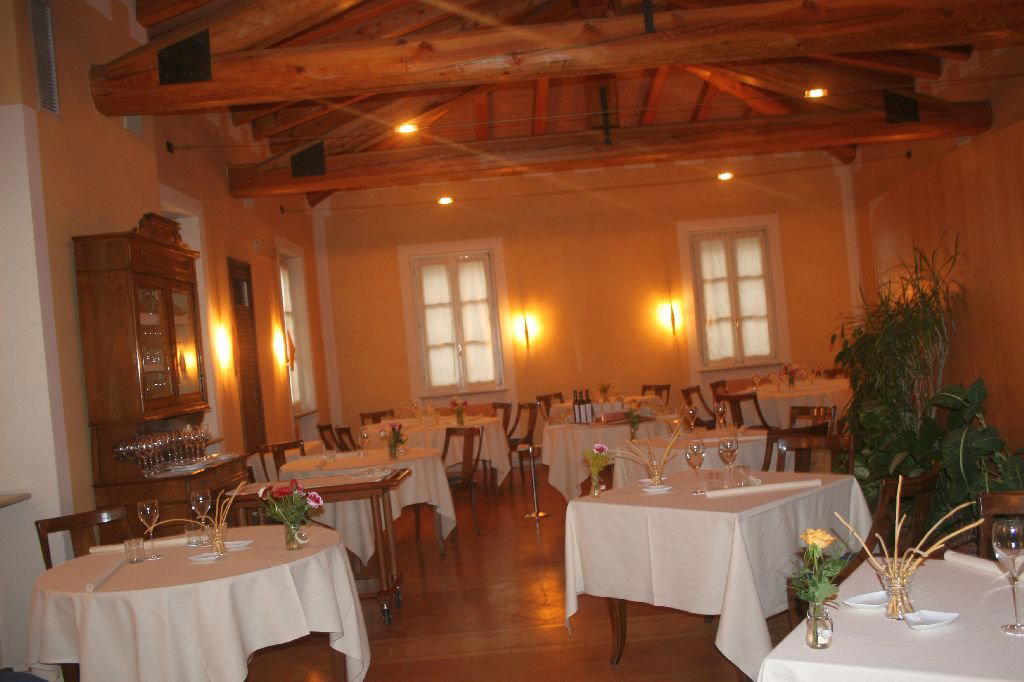
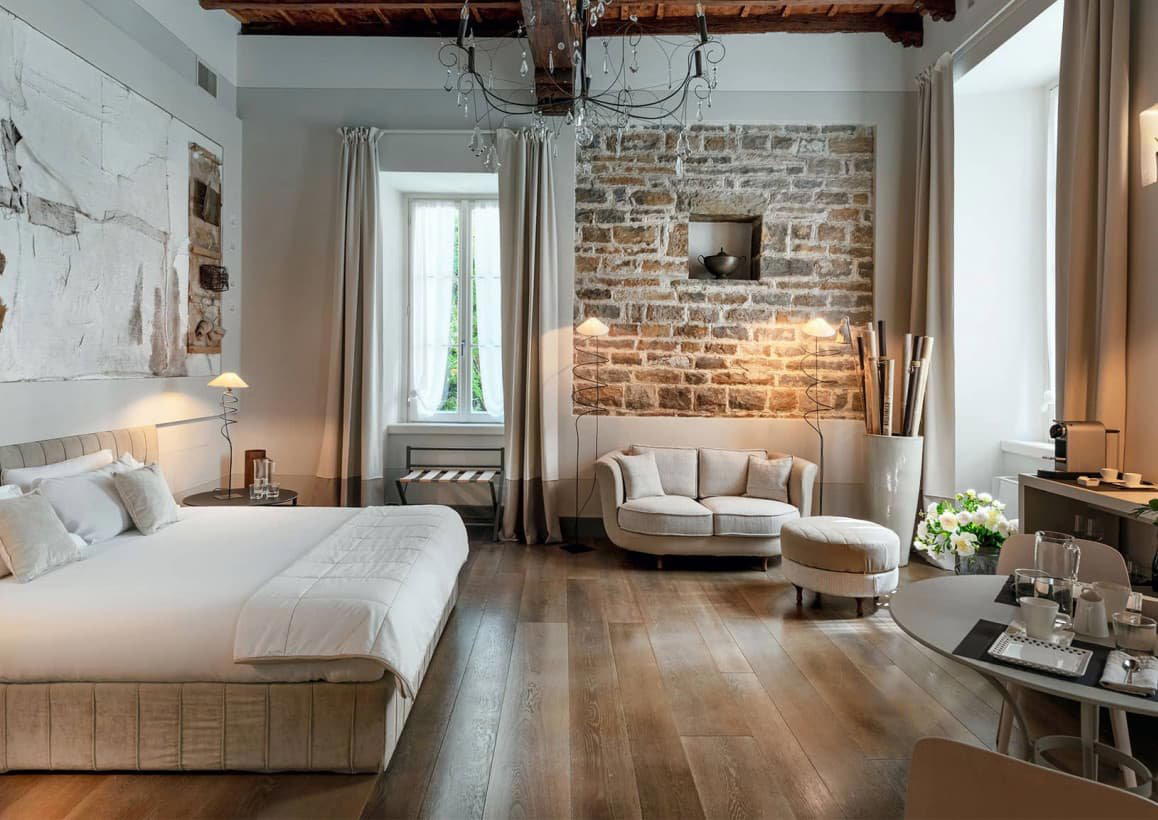
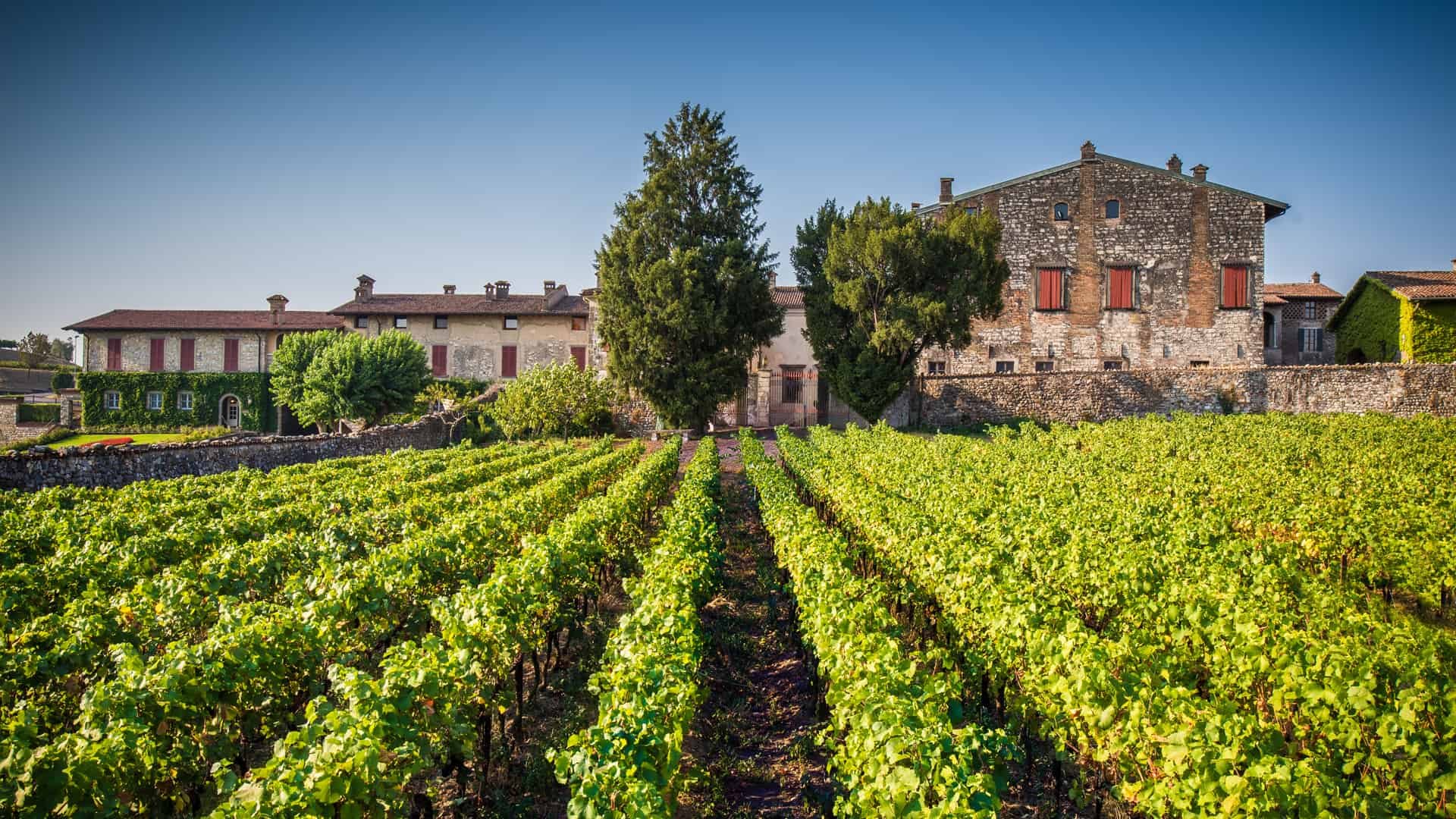
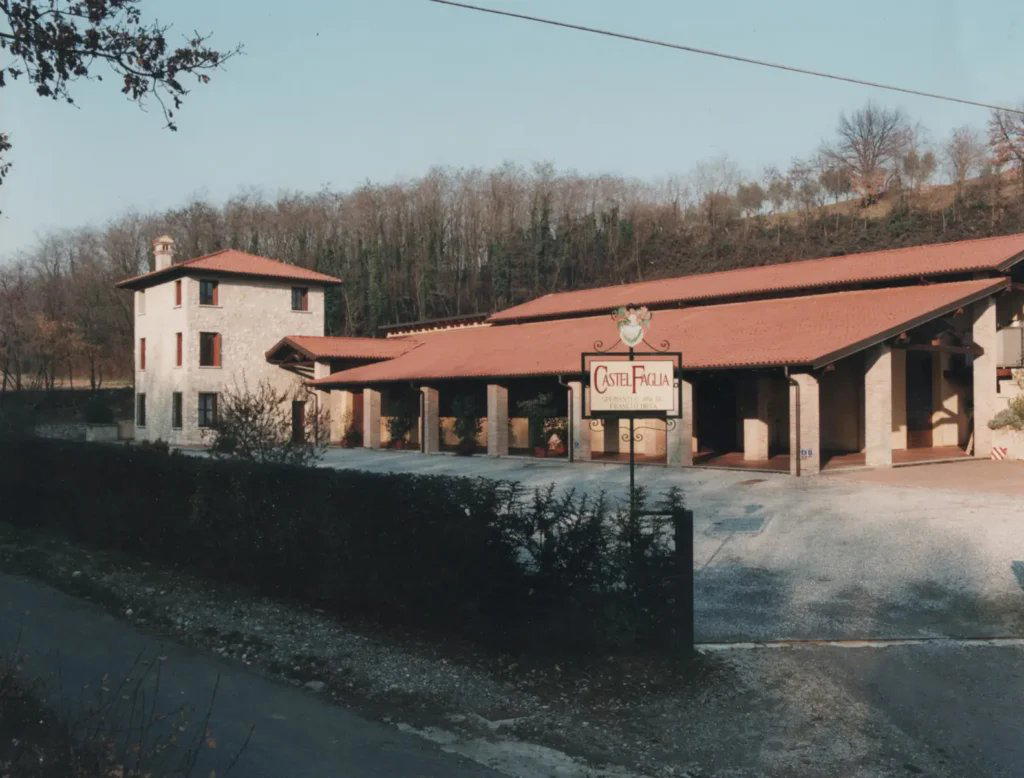
The approach to Borgonato, a quiet village tucked into the Franciacorta wine corridor southeast of Brescia, gives little indication of what awaits inside Due Colombe. Stone walls, wooden ceiling beams, and a parquet floor occupy the former hay barn that now serves as the main dining room, a setting that signals something about the kitchen's priorities before the first course arrives. This is a region where wine and land are inseparable, and a restaurant housed in agricultural architecture is not making that choice accidentally. The physical space at Due Colombe places it firmly within a tradition of northern Italian dining rooms where the building itself is a statement about rootedness.
Franciacorta is leading known internationally for its sparkling wine, produced under DOCG rules and often compared favourably to Champagne in structure and method. What the region offers beyond the glass is a specific kind of agricultural density: fish from Lake Iseo, livestock raised on the surrounding plains, polenta-grade maize grown in conditions that have barely changed across generations. Kitchens that pay attention to this geography operate differently from urban restaurants importing prestige ingredients. The sourcing logic at Due Colombe, a Michelin one-star since at least 2024, is inseparable from the address.
What the Ingredient Geography Tells You
Northern Lombardy's country cooking tradition is built around long-cooked proteins, preserved foods, and grain-based accompaniments, polenta above all. These were not choices born of abundance but of climate and necessity, and the recipes that survived are the ones that worked. Polenta made from locally grown maize, cooked low and slow, paired with braised or slow-roasted meat: this is the structural logic of the region's table, and it appears throughout Due Colombe's menus in forms that make clear the kitchen is not reaching for it as a nostalgic gesture.
The beef cooked with olive oil and served with polenta is the clearest illustration of the kitchen's sourcing philosophy. The recipe traces to the post-war period, when resourcefulness shaped what appeared on tables across rural Lombardy. That connection to a specific moment in local food history gives the dish a documentary function alongside its gastronomic one: it records how people in this region ate when ingredients were rationed and nothing was wasted. Kitchens in other countries frame similar dishes as "heritage" or "grandmother's cooking" as a marketing position. Here the framing is more literal, the dish exists because it worked then, and the kitchen keeps making it because it continues to work.
For readers considering how Due Colombe sits relative to other Italian addresses with Michelin recognition, the comparison is useful. Restaurants such as Dal Pescatore in Runate or Andrea Monesi - Locanda di Orta in Orta San Giulio operate within a similar register: Michelin-recognised, rural, rooted in regional tradition, and not primarily competing with urban contemporaries. These are restaurants whose competitive set is defined by geography and tradition rather than metropolitan dining trends. Osteria Francescana in Modena or Le Calandre in Rubano operate at the technical and conceptual frontier of Italian cooking; Due Colombe occupies different ground, one where continuity with a specific place and its food history is the primary editorial statement.
Three Menus and a Wine Programme That Earns Its Region
Three tasting menus give the kitchen space to move across the range of Franciacorta's seasonal and historical larder. The format is standard for restaurants at this recognition level, and it works here because the ingredient geography is rich enough to sustain variation without forcing the kitchen toward imported prestige. Fish dishes from Lake Iseo appear alongside the meat and polenta preparations, giving the menus a breadth that reflects the actual range of the region rather than a curated highlight reel.
The wine programme is the expected entry point for a restaurant in Franciacorta wine country, and the sommelier's depth in local producers is a practical asset that goes beyond regional loyalty. Franciacorta DOCG sparkling wine made by the traditional method, from producers whose vineyards are sometimes visible from the restaurant, represents a pairing logic that is hard to replicate in a city restaurant with even an extensive cellar. The recommendation is to engage with the sommelier's guidance rather than arriving with a fixed selection in mind, the local range carries knowledge embedded in it that a list alone cannot convey.
Readers exploring the broader Italian fine-dining scene will find useful contrast at Enoteca Pinchiorri in Florence, whose cellar runs in a different direction entirely, or at Enrico Bartolini in Milan, where the wine programme pairs with a more technically ambitious kitchen. Atelier Moessmer Norbert Niederkofler in Brunico represents perhaps the closest conceptual neighbour in northern Italy, mountain and alpine sourcing translated into Michelin-level cooking, though the cuisine traditions diverge.
Where Due Colombe Sits in the Lombardy Dining Picture
Lombardy's restaurant scene spans a wide price and format range, from the three-star ambition of addresses in Milan and Bergamo down to osterie where the food has barely changed in half a century. Due Colombe, at the €€€ price tier with one Michelin star, occupies a middle position that is worth understanding clearly before booking. It is not a casual regional trattoria, nor is it the kind of maximalist tasting experience associated with La Pergola or Il Pagliaccio. It is a restaurant where the cooking takes tradition seriously and prices accordingly, but where the atmosphere works against ceremony.
Restaurants that accumulate that volume of feedback at that rating are usually doing the reliable things reliably: the room is comfortable, the service is attentive, and the food delivers on the terms the kitchen has set for itself. Due Colombe has set those terms in a specific register, regional, historically grounded, ingredient-led, and the sustained rating suggests it meets them.
For comparison within the country cooking category in northern Italy, 21.9 in Piobesi d'Alba works in a similar format further west in Piedmont. Both restaurants speak to a version of Italian fine dining that is less interested in international reference points than in translating a specific place and its agricultural logic onto the plate.
Planning Your Visit
Due Colombe is located at Via Foresti 13, Borgonato, in the province of Brescia, about 25 kilometres east of Brescia city centre and roughly an hour from Milan by road. The restaurant opens Thursday evenings and Friday, Saturday, and Sunday for both lunch and dinner, closing entirely Monday and Tuesday. Dinner service runs from 7:30 PM to 10:30 PM on open evenings; lunch from 12:30 PM to 2:00 PM on Friday, Saturday, and Sunday. The limited weekly schedule, combined with Michelin recognition, means advance booking is advisable, particularly for weekend lunch. Given the wine region context, arriving by car or with a designated driver is the practical choice, the Franciacorta vineyards are leading explored before or after the meal, and the local producers add a full day's worth of context to any visit.
Readers building a broader Lombardy itinerary will find additional reference points across EP Club's regional coverage. The full Rome restaurants guide covers the capital's Michelin tier in detail, alongside the Rome hotels guide, bars guide, wineries guide, and experiences guide for broader trip planning. For restaurants operating in related creative territory, Acquolina, Enoteca La Torre, and La Palta offer further points of comparison across the Italian fine dining spectrum.
Frequently asked questions
What's the must-try dish at Due Colombe?
The beef cooked with olive oil and served with polenta is the dish most closely tied to the restaurant's identity. The recipe has been in continuous use since the post-war period and connects directly to the agricultural history of Franciacorta, slow-cooked beef paired with locally sourced polenta, made today following the same method as the original. It illustrates what the kitchen does most distinctively: hold a regional preparation to a high technical standard without reframing it into something it is not.
Cuisine and Credentials
A quick peer list to put this venue’s basics in context.
| Venue | Cuisine | Price | Awards | Notes |
|---|---|---|---|---|
| Due ColombeThis venue (the venue you are viewing) | Modern Italian Fine Dining | $150–200 | 1 Michelin Star | Not listed |
| La Pergola | Modern Italian Fine Dining | $500+ | 3 Michelin Stars · La Liste Top Restaurants | Italian, Mediterranean Cuisine |
| Enoteca La Torre | Modern Italian Fine Dining | $200–300 | 2 Michelin Stars · La Liste Top Restaurants | Creative |
| Il Pagliaccio | Modern Italian-Japanese Fusion Fine Dining | $150–200 | 2 Michelin Stars · La Liste Top Restaurants | Contemporary Italian, Creative |
| Aroma | Modern Roman Fine Dining | $200–300 | 1 Michelin Star · Falstaff Restaurant - 93 Falstaff Points | Modern Cuisine |
| Idylio by Apreda | Modern Mediterranean-Asian Fusion | $150–200 | 1 Michelin Star · La Liste Top Restaurants | Modern Italian, Italian Contemporary |
Recognition history
Dated appearances from independent guides and award organizations, with the underlying list record or original source where available.
Michelin 1 Star
Michelin
Full recognition history (3 entries)
Michelin 1 Star
Michelin
Michelin 1 Star
Michelin
Continue exploring
More in Rome
Restaurants in Rome
All restaurants in Rome →
Bars in Rome
All bars in Rome →
Hotels in Rome
All hotels in Rome →

Details
- Elegant
- Sophisticated
- Intimate
- Special Occasion
- Date Night
- Historic Building
- A La Carte
Current opening hours
- Monday
- Closed
- Tuesday
- Closed
- Wednesday
- Closed
- Thursday
- 7:30–10:30 PM
- Friday
- 12:30–2 PM, 7:30–10:30 PM
- Saturday
- 12:30–2 PM, 7:30–10:30 PM
- Sunday
- 12:30–2 PM
Hours can change for holidays and private events. Hours as of .
Sophisticated and intimate atmosphere in an old building with high-quality, creative presentation of dishes.