



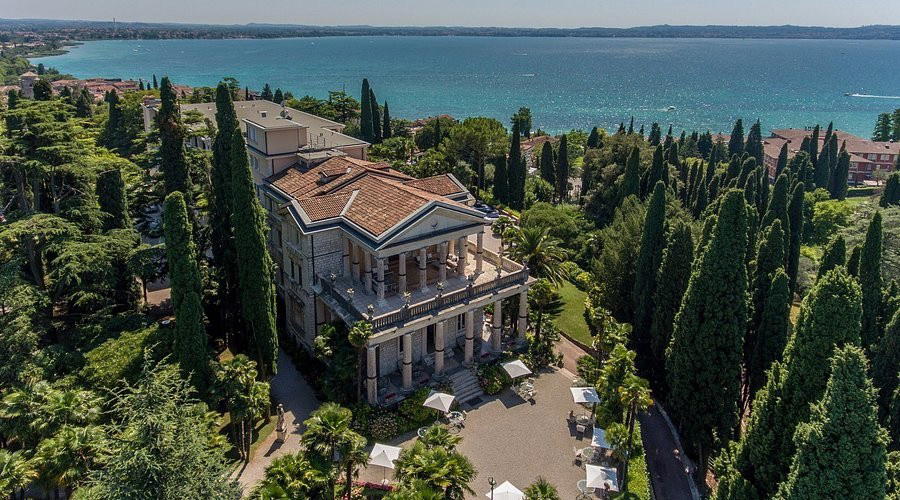
A two-Michelin-starred villa on the outskirts of Brescia, Miramonti l'Altro has anchored Lombardy's fine dining conversation for decades by weaving French technique and Alpine ingredients into a distinctly Italian framework. Chef Philippe Léveillé's Franco-Italian kitchen sits inside a classic villa setting, with garden-facing tables and a cheese cart that draws as much discussion as the menu itself. Rated 90 points by La Liste in both 2025 and 2026, this is one of northern Italy's most consistently decorated tables.
Pearl is the En Primeur Club membership app — saves, bookings, and concierge access live there. Same editors, same standards.
- Address
- Via Crosette, 34, 25062 Concesio BS, Italy
- Phone
- +39 030 275 1063
- Website
- miramontilaltro.com
- Directions
- Get directions
 Saves & bookings on Pearl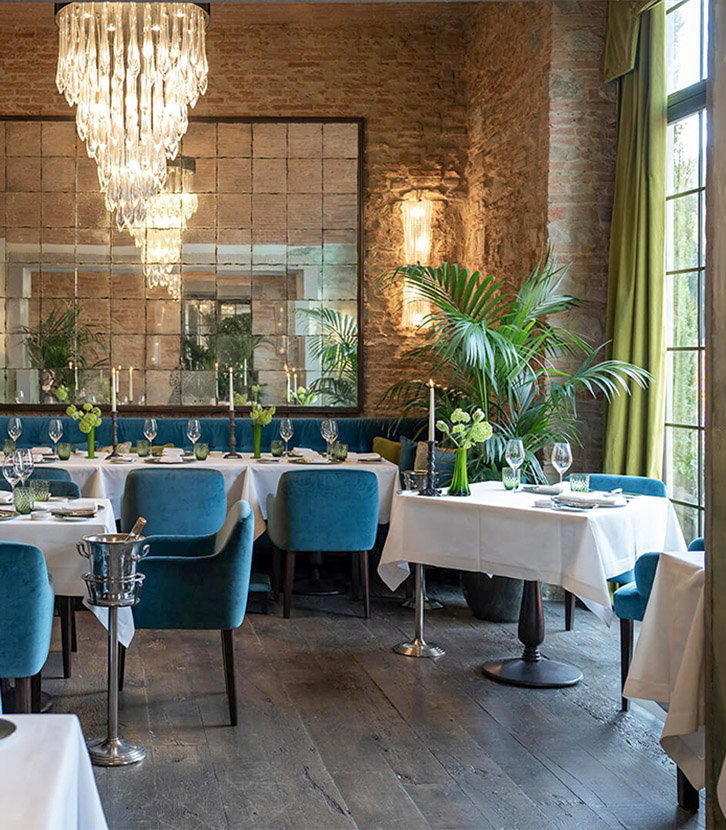
A Villa at the Edge of Brescia, and What It Represents
The road from central Brescia into Concesio is the kind of short drive that resets expectations. Within minutes of leaving a provincial city with serious Roman foundations and a local wine culture that includes Franciacorta on its doorstep, you arrive at a villa setting where the dining room looks out over a garden through bay windows. The physical shift mirrors the culinary one: Miramonti l'Altro has spent decades positioning itself not as a local institution serving regional food, but as a northern Italian table that draws as much from what lies north of the Alps as from what grows south of them. That cross-border logic is the editorial fact worth understanding before you sit down.
Lombardy's fine dining identity is more contested than Tuscany's or Emilia-Romagna's. The region has no single gastronomic narrative the way Bologna commands its surrounding province, or the way Rome anchors centuries of cucina romana. What Lombardy has instead is a cluster of high-performing restaurants that each argue a different thesis: Dal Pescatore in Runate argues for conservative Italian classicism; Enrico Bartolini in Milan argues for modern creative ambition in an urban context. Miramonti l'Altro argues for something less common: that a Franco-Italian hybrid, executed consistently over time, earns its own place in the regional hierarchy.
The Franco-Italian Synthesis at This Latitude
Italy's relationship with French culinary technique is complicated and old. For most of the twentieth century, French influence in Italian professional kitchens was a marker of aspiration, sometimes of insecurity. The better two-star tables in France still carried more cultural weight than their Italian counterparts well into the 1990s. That gap has largely closed, with Osteria Francescana in Modena and Enoteca Pinchiorri in Florence representing opposite poles of how Italian fine dining resolved its identity questions. What Miramonti l'Altro chose was a third path: rather than suppress the French dimension or treat it as a historical residue, the kitchen treats it as an active source of ingredients and technique, placed alongside reinterpretations of Italian regional dishes, including Mediterranean preparations that sit well outside Lombardy's traditional culinary territory.
Chef Philippe Léveillé's French origins function here as a structural element of the kitchen's identity, not simply as biographical colour. The La Liste citation for both 2025 and 2026 specifically notes the introduction of fine French ingredients from across the Alps, alongside Italian classics. That kind of consistency in how an outside institution reads a restaurant's positioning tells you something useful: the Franco-Italian framing is not a marketing gloss but a genuine culinary architecture that peer reviewers take seriously. The restaurant holds two Michelin stars in both 2024 and 2025, and an Opinionated About Dining Classical in Europe ranking of #365 in 2024, following a recommended listing in 2023. Those credentials place it firmly within the tier of Italian two-star kitchens operating with sustained international recognition.
The Cheese Cart as a Signal
In French fine dining, the cheese trolley is a standard fixture, the final savoury moment before dessert. In Italian fine dining, it is less common, and a well-curated one is relatively rare outside of establishments that maintain deliberate connections to the French tradition. The cheese cart at Miramonti l'Altro is specifically flagged by La Liste as something not to overlook, described as extraordinarily well-stocked. This is not a decorative gesture toward Gallic convention. A cheese program at this level requires supplier relationships, careful temperature management, and service knowledge that matches the cooking ambition. Its presence here reinforces what the kitchen is arguing through the menu: that the border between French and Italian fine dining can be a productive space rather than an awkward compromise.
Comparable cross-traditional operations elsewhere in Italy tend to resolve the tension differently. Le Calandre in Rubano leans into Italian-rooted creativity with international technique. Piazza Duomo in Alba works explicitly within Piedmontese identity. Reale in Castel di Sangro operates from central Italian landscape. The restaurant's willingness to hold the Franco-Italian line across decades, rather than resolve it in one direction, is its most distinctive editorial position within the national peer group.
The Villa Setting and Its Competitive Context
The physical format matters in interpreting what kind of experience this is. A classic villa atmosphere on the outskirts of a mid-sized Italian city occupies a specific niche: it is not urban, not remote, and not resort-attached. That positioning sits closer to establishments like Casa Perbellini 12 Apostoli in Verona, which operates within a historic format in a comparably scaled northern Italian city, than to destination restaurants in rural or coastal settings such as Quattro Passi in Marina del Cantone or Uliassi in Senigallia.
The garden-facing tables in bay windows are a practical detail with editorial implications. This is a room designed for extended meals in a setting that earns its occasion-restaurant status through environment as much as through plate. Brescia is roughly 90 minutes from Milan by car, making Concesio viable as a day trip for serious diners based in the city, and an easy stop for anyone routing through the Brescia-Lake Garda corridor. The restaurant operates Wednesday through Sunday, with both lunch sittings at 12 to 2 pm and dinner from 8 to 9:30 pm; Monday and Tuesday are closed. The price range is €€€€, consistent with comparable two-star operations across the country.
Where Miramonti l'Altro Sits Within the Wider Conversation
Italian fine dining's most internationally visible names tend to cluster in Emilia-Romagna, Piedmont, and the major cities. The Lombardy hinterland, which includes Brescia and its province, operates in a slightly lower register of international attention despite maintaining high technical standards. Atelier Moessmer Norbert Niederkofler in Brunico demonstrates how northern Italian restaurants at the Alpine margin have built international profiles on the back of local identity; the restaurant's approach differs by explicitly importing rather than exclusively local sourcing.
For readers calibrating where this sits globally, the Franco-Italian synthesis has precedents in other contexts. Le Bernardin in New York City represents how French technical rigour can be transplanted and sustained across decades in a non-French environment. The difference in Concesio is that the transplant runs in the opposite direction: French origins shaping an Italian-rooted kitchen rather than French cooking holding its ground in an American city. The tension is generative in both cases.
Booking is essential given the limited service windows. The Wednesday-to-Sunday schedule means availability compresses further than at operations running six or seven days. For diners travelling specifically from Milan or elsewhere in northern Italy, the lunch sitting on a weekend is one logistically direct option, allowing a full afternoon drive back without the time pressure of an evening service.
Comparable Venues
Comparable venues nearby, for context on price, style, and recognition.
| Venue | Cuisine | Price | Awards | Notes |
|---|---|---|---|---|
| Miramonti l'AltroThis venue — the venue you are viewing | Italian Contemporary with French Influences | $$$$ | Michelin 2 Star | Not listed |
| I Mori | Traditional Italian Seafood | $$$ | Michelin Plate | Concesio |
| Terra The Magic Place | Modern Italian Regional Fine Dining | $$$$ | Michelin 2 Star | Sarentino |
| Famiglia Rana | Modern Italian Fusion Fine Dining | $$$$ | Michelin 2 Star | Vallese di Oppeano |
| San Domenico | Classic Italian Fine Dining | $$$$ | Michelin 2 Star | Imola |
| Il Piccolo Principe | Modern Italian Seafood Fine Dining | $$$$ | Michelin 2 Star | Passeggiata di Viareggio |
Recognition history
Dated appearances from independent guides and award organizations, with the underlying list record or original source where available.
Falstaff Restaurant - 95 Falstaff Points
Falstaff
La Liste Top Restaurants
La Liste
Michelin 1 Star
Michelin
La Liste Top Restaurants
La Liste
Michelin 2 Stars
Michelin
Michelin 2 Stars
Michelin
Opinionated About Dining Classical in Europe Ranked #365
Opinionated About Dining
Opinionated About Dining Classical in Europe Recommended
Opinionated About Dining
Continue exploring
More in Concesio
Restaurants in Concesio
Browse all →
Bars in Concesio
Browse all →
Hotels in Concesio
Browse all →

At a Glance
- Elegant
- Classic
- Intimate
- Sophisticated
- Special Occasion
- Celebration
- Date Night
- Business Dinner
- Private Dining
- Extensive Wine List
- Garden
Current opening hours
- Monday
- Closed
- Tuesday
- Closed
- Wednesday
- 12–2 PM, 8–9:30 PM
- Thursday
- 12–2 PM, 8–9:30 PM
- Friday
- 12–2 PM, 8–9:30 PM
- Saturday
- 12–2 PM, 8–9:30 PM
- Sunday
- 12–2 PM, 8–9:30 PM
Hours can change for holidays and private events. Last verified .
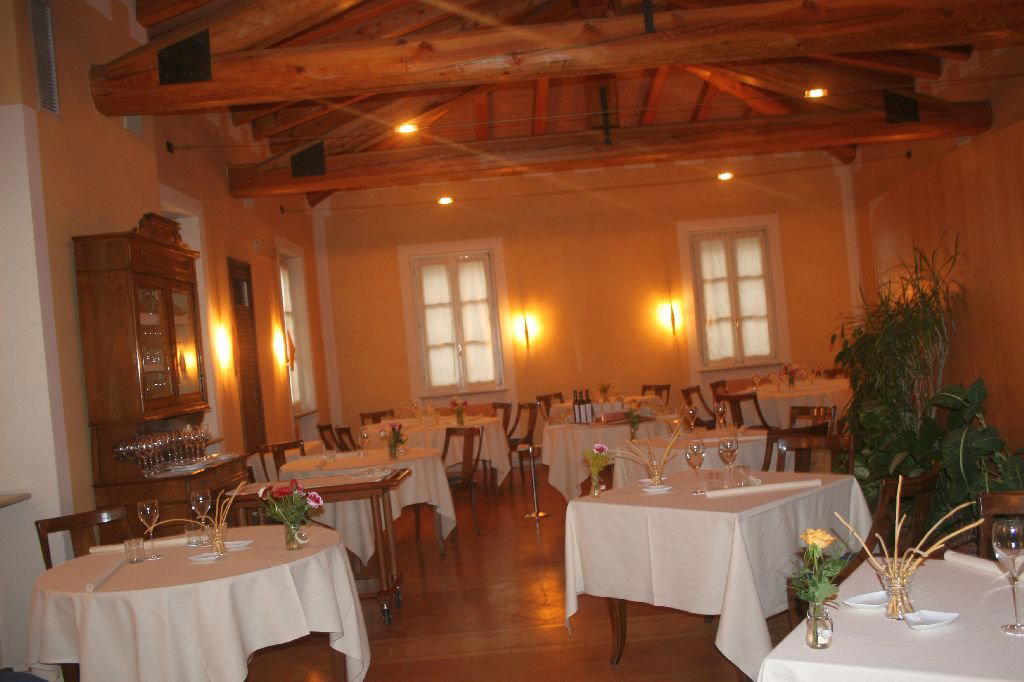
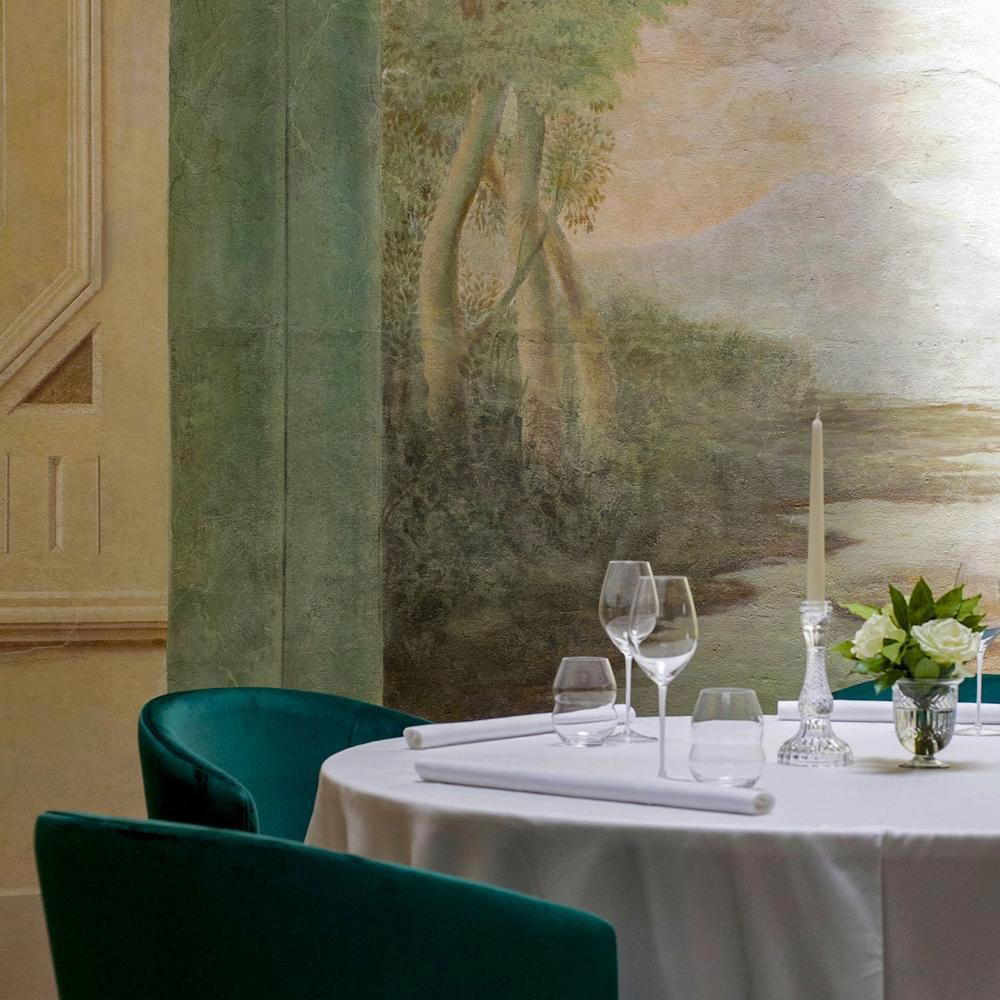
Classic and charming villa atmosphere with polished order, bay windows overlooking the lush garden, and harmonious lighting.