
Din Tai Fung's Xinyi Road basement location in Taipei's commercial core has held Michelin Bib Gourmand recognition in both 2024 and 2025, a signal that the guide's inspectors consider its price-to-quality ratio among the city's most consistent. The kitchen operates in the Shanghainese tradition, with xiao long bao as the anchor and a wider menu of noodles, dumplings, and rice dishes completing the picture. Booking and queue strategy matter here more than at most comparable Taipei addresses.
Pearl is the En Primeur Club membership app — saves, bookings, and concierge access live there. Same editors, same standards.
- Address
- 110, Taiwan, Taipei City, Xinyi District, City Hall Rd, 45號B1
- Phone
- +886 2 8101 7799
- Website
- dintaifung.com.tw
- Directions
- Get directions
 Saves & bookings on Pearl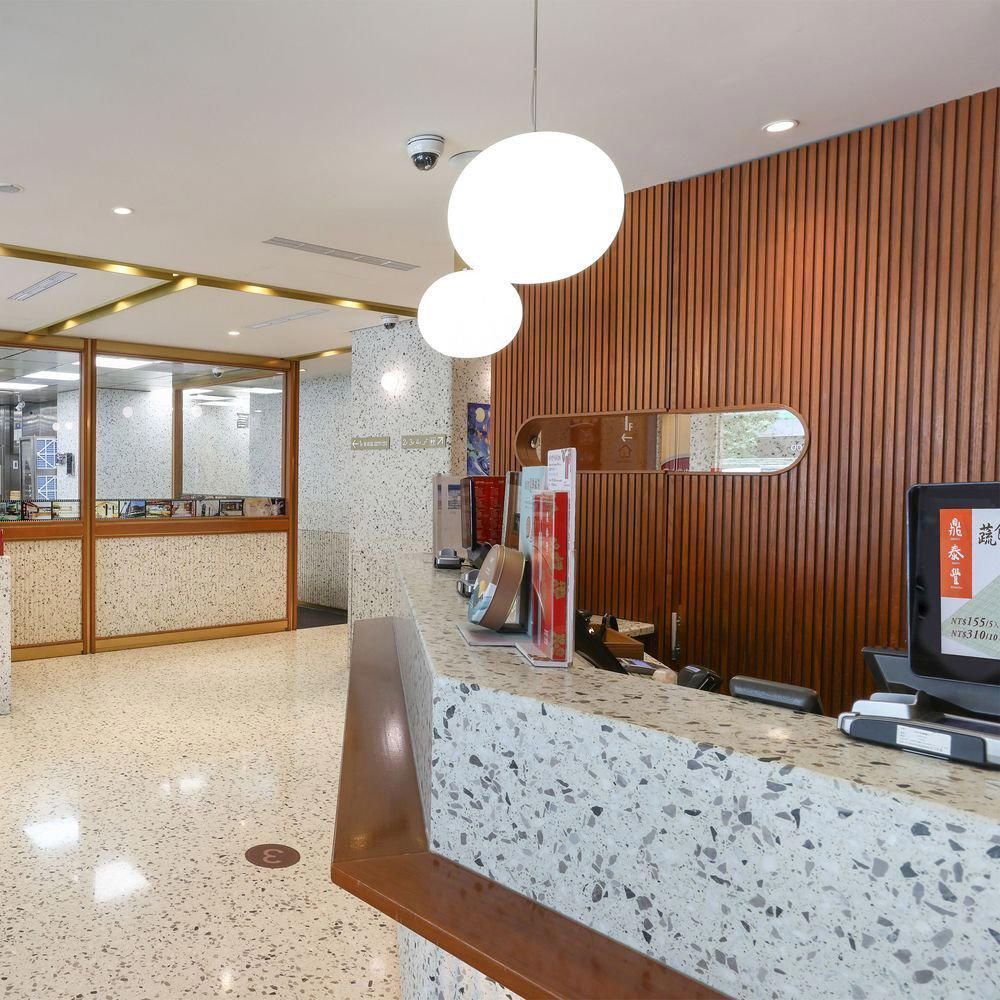
Taipei's Dumpling Standard, Set Basement-Level in Xinyi
The approach to Din Tai Fung's Xinyi Road outpost involves descending to a basement floor beneath one of Taipei's most active commercial precincts, City Hall Road cutting through a district that has become shorthand for the city's modern commercial identity. At street level, the neighbourhood is mid-rise glass and department store retail. Below it, through glass panels that have become the brand's architectural signature in many locations, the dumpling-folding stations operate in full view of the queue. The transparency is deliberate: the folding count per wrapper, the weight tolerances, the identical pleating on every xiao long bao. It is a kitchen that runs as demonstration as much as production.
Shanghainese cuisine arrived in Taiwan with the waves of mainland migration that reshaped the island's food culture through the mid-twentieth century. The xiao long bao, the soup dumpling, became one of its most durable exports, moving from its origins in Shanghai's suburban Nanxiang district into restaurant kitchens across Taiwan, then globally. Din Tai Fung's Xinyi Road branch operates in that long tradition, but with a precision-oriented interpretation that Michelin's Bib Gourmand panel has found consistent enough to award recognition in both 2024 and 2025. The Bib Gourmand category is specific: it identifies cooking that offers a genuinely satisfying meal at a price point below what the starred tier commands. With a $$ price band,609 reviews, the Xinyi Road location holds its position in a competitive tier of Taipei dining where value per dish is measured carefully.
Noodles and the Shanghainese Kitchen
The xiao long bao, which receives greater attention in most coverage of Din Tai Fung globally, remains the centerpiece here. The Shanghainese kitchen that informs this menu is also a noodle kitchen, and noodles carry a different set of craft signals than dumplings. Where dumpling quality is assessed through wrapper thickness, pleat count, and broth volume, noodle quality is read through texture, sauce adhesion, and the interplay between the cut or pull of the noodle and the weight of whatever accompanies it.
Regional Chinese noodle traditions divide broadly across wheat and rice, and further across pulled, hand-cut, and extruded forms. The Shanghainese branch of that tradition tends toward wheat noodles with a denser, chewier character than the lighter pulled varieties associated with Lanzhou or the wide knife-cut cuts of northern Shanxi cooking. In a Taipei context, those noodles compete on a menu that also carries Taiwanese beef noodle soup, a dish with its own devoted following and a long local history. That the Shanghainese noodle format continues to hold serious dining relevance in a city with its own strong noodle culture speaks to how thoroughly the mainland culinary inheritance became Taiwanese over generations.
For diners arriving primarily for dumplings, the noodle section of the menu offers a useful second register: where the xiao long bao performs through broth and skin, the noodle dishes perform through sauce and chew. Both reward close attention.
Where Xinyi Road Sits in Taipei's Restaurant Spectrum
Taipei's full-service restaurant tier is wide. At the upper end, addresses like Le Palais (Cantonese, Michelin three stars) and Taïrroir (Taiwanese contemporary, Michelin three stars) represent the city's most formally ambitious cooking. Tasting-menu focused addresses such as logy (Modern European/Asian Contemporary, Michelin two stars) and L'Atelier de Joël Robuchon Taipei occupy the high-price counter-dining tier. Molino de Urdániz brings Spanish contemporary cooking to a city that has absorbed diverse international formats with more consistency than most Asian capitals.
Din Tai Fung Xinyi Road operates in an entirely different bracket: high-volume, accessible pricing, and a format built around shared dishes rather than set menus. Its comparable set is not the starred table, but the well-run, award-recognised Taiwanese restaurant where the cooking is tight and the queue management is predictable. Michelin Bib Gourmand recognition in 2024 and 2025 places it within the guide's value-recognition tier.
For comparisons with Shanghainese cooking in other cities, Cheng Long Hang in Shanghai and Fu 1015 in Shanghai represent the tradition at its Shanghai source, while Shanghai Cuisine in Beijing shows how the food travels within mainland contexts. The Xinyi Road kitchen occupies a distinct position: Shanghainese technique as it has been refined and slightly localised through decades of Taiwan practice.
Planning a Visit: Queues, Timing, and the Xinyi Context
The Xinyi District location places Din Tai Fung at 45號B1, City Hall Rd, Taipei. The basement address at 45號B1, City Hall Road, Xinyi District is within reasonable proximity of MRT City Hall station, which connects directly to Taipei's wider metro network. For visitors combining a Din Tai Fung meal with broader Taipei restaurant exploration,
Queue lengths at high-volume Taiwanese restaurants follow predictable seasonal and daily patterns. Weekend lunch and the early-autumn visitor peak, when international tourism to Taiwan typically increases, produce the longest waits. Weekday openings, particularly mid-morning or before the main lunch surge, tend to offer faster entry. The Xinyi location's basement format means queue management happens in a relatively contained space; arriving with a clear second-half-of-morning window on a weekday represents one time-efficient approach for visitors without flexibility. The restaurant is open daily from 10:45 AM to 8:30 PM.
Beyond Taipei, Taiwan's dining scene extends into compelling territory. JL Studio in Taichung and GEN in Kaohsiung represent the kind of serious cooking that makes a multi-city Taiwan itinerary worthwhile. In the south, A Cun Beef Soup in Tainan offers a different register of Taiwanese noodle culture, a useful point of comparison for anyone tracking how noodle traditions vary across the island. Akame in Wutai Township and Volando Urai Spring Spa and Resort in Wulai District provide departure points for dining beyond the metropolitan core.
Peers You’d Cross-Shop
Comparable venues nearby, for context on price, style, and recognition.
| Venue | Cuisine | Price | Notes |
|---|---|---|---|
| Din Tai Fung (Xinyi Road)This venue — the venue you are viewing | Taiwanese Xiao Long Bao | $$ | Not listed |
| Hsiao Cho Chih Chia | Contemporary Taiwanese | $$ | Xinzhuang |
| Chi Chia Chuang (Changchun Road) | Traditional Taiwanese Chicken Cuisine | $$ | Zhongshan |
| Shin Yeh Shiao Ju | Modern Taiwanese | $$ | Sanzhong |
| Mai Mien Yen Tsai | Traditional Taiwanese Qiezai Noodles | $ | Nanfang |
| Chang Hung Noodles | Traditional Taiwanese Noodles | $ | Fumin |
Recognition history
Dated appearances from independent guides and award organizations, with the underlying list record or original source where available.
Michelin Bib Gourmand
Michelin
Michelin Bib Gourmand
Michelin
Michelin Bib Gourmand
Michelin
Continue exploring
More in Taipei
Restaurants in Taipei
Browse all →
Bars in Taipei
Browse all →
Hotels in Taipei
Browse all →
Wineries in Taipei
Browse all →
At a Glance
- Well Known
- Lively
- Modern
- Family
- Group Dining
- Casual Hangout
- Open Kitchen
- Sake Program
Current opening hours
- Monday
- 10:45 AM–8:30 PM
- Tuesday
- 10:45 AM–8:30 PM
- Wednesday
- 10:45 AM–8:30 PM
- Thursday
- 10:45 AM–8:30 PM
- Friday
- 10:45 AM–8:30 PM
- Saturday
- 10:45 AM–8:30 PM
- Sunday
- 10:45 AM–8:30 PM
Hours can change for holidays and private events. Last verified .
Bright, efficient, and bustling atmosphere with open kitchen views and quick, polite service amid crowds.