
Diekmann on Meinekestraße brings classic French cooking to Berlin's Charlottenburg, holding a Michelin Plate in both 2024 and 2025. The room sits within a residential-scale street near the Kurfürstendamm, positioning it as a calm counterpoint to the district's grander dining rooms. Expect a structured French menu where technique and sequence matter more than spectacle, backed by.
Pearl is the En Primeur Club membership app — saves, bookings, and concierge access live there. Same editors, same standards.
- Address
- Meinekestraße 7, 10719 Berlin, Germany
- Phone
- +49 30 8833321
- Website
- diekmann-restaurant.de
- Directions
- Get directions
 Saves & bookings on Pearl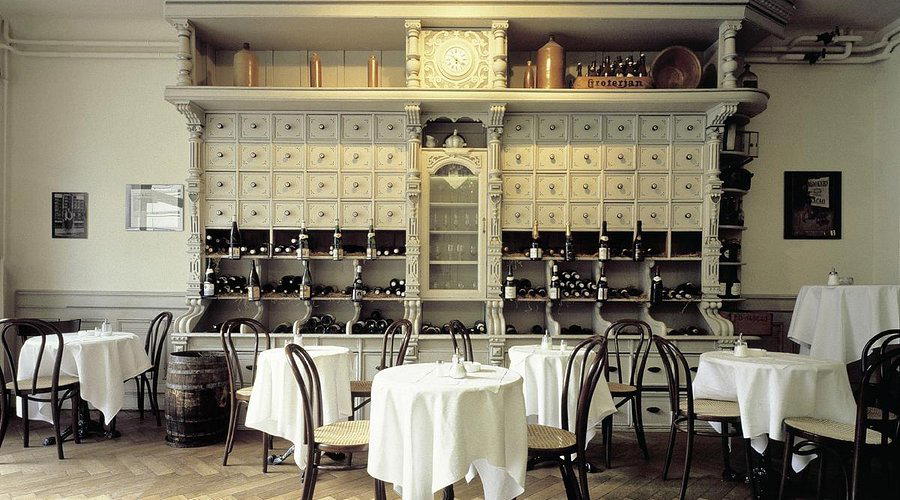
French Classicism in Charlottenburg
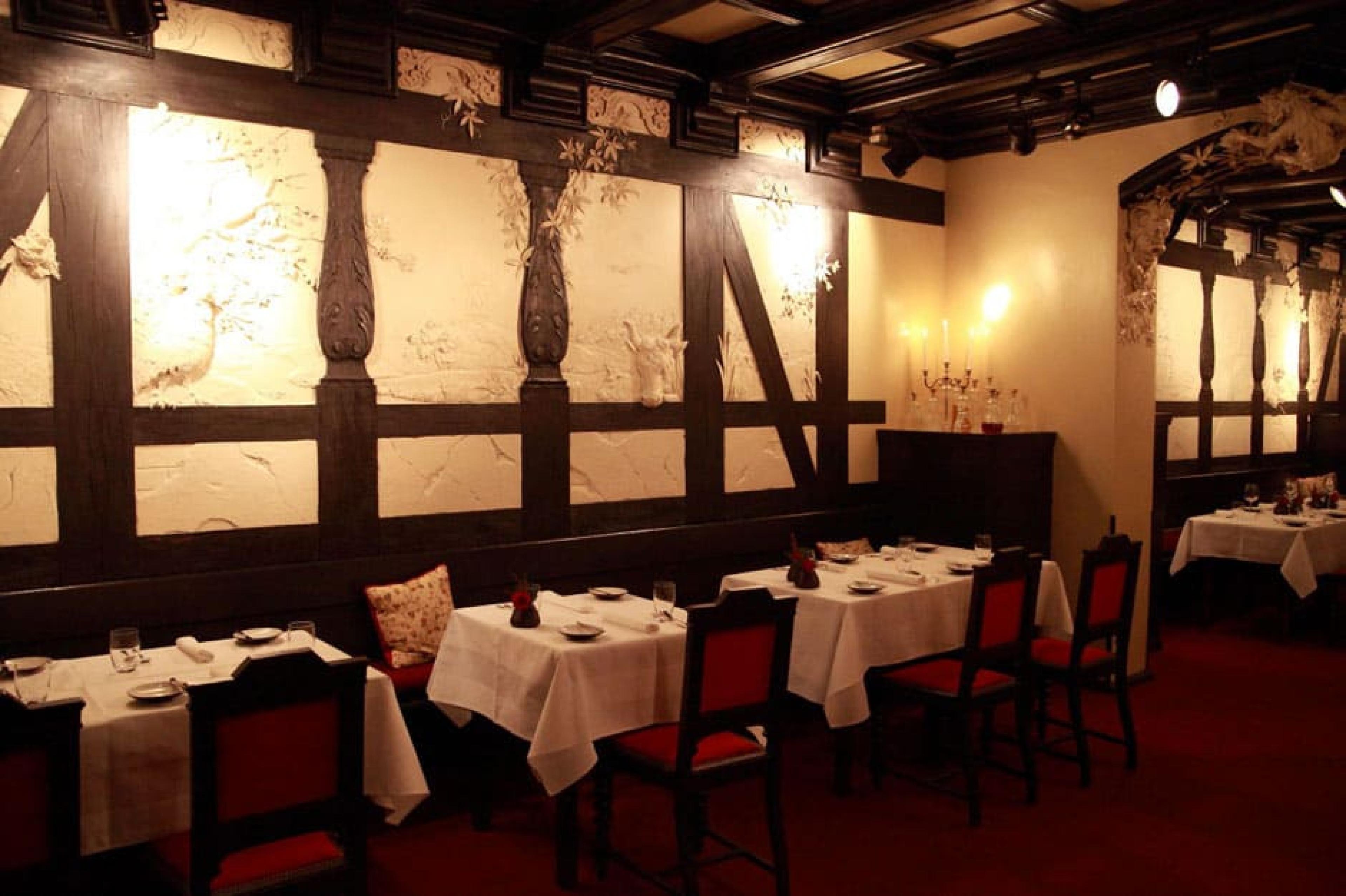
The street-level approach to Meinekestraße 7 sets a particular register before you reach the door. This stretch of Charlottenburg, a short walk from the Kurfürstendamm, carries a residential composure that larger west Berlin dining rooms rarely manage. The immediate neighbourhood runs on a different frequency to the broad commercial boulevard nearby: quieter facades, narrower footfall, a sense that the meal ahead is meant to be taken seriously rather than witnessed from a terrace. Diekmann fits that context with some precision, operating as a French kitchen that reads more like a settled institution than a concept in search of attention.
Berlin's French dining contingent is a smaller niche than the city's modern German and pan-European scenes, and it occupies a specific position in the pecking order. At the visible end sit operations tied to chef-celebrity infrastructure, such as Brasserie Colette Tim Raue, where the French format is filtered through a well-known German culinary personality. Closer to the traditional brasserie register sits Brasserie Lamazère. Diekmann occupies a third position: a kitchen that holds Michelin Plate recognition in consecutive years, 2024 and 2025, without reaching for the theatrical or the celebrity-adjacent.
How a French Meal Sequences Here
Classic French cuisine is structurally argumentative. The logic of a well-built French menu runs forward: each course advances the meal's internal logic, moving from lighter preparations toward richer proteins, then drawing back to something cleaner at the end. Kitchens that understand this treat the menu as a cumulative experience rather than a list of dishes that happen to arrive in order. The Michelin Plate classification for Diekmann, sustained across two consecutive years, implies a kitchen operating with sufficient consistency that this sequencing holds up across services.
The price bracket here, €€€ on a three-tier scale, positions Diekmann as a serious but not rarefied proposition. For comparison, most of Berlin's starred restaurants at the upper end, including Rutz at three Michelin stars and CODA Dessert Dining at two, operate at €€€€. That gap is meaningful: the €€€ tier in Berlin allows for multi-course French cooking without the investment required for the city's most demanding tasting menus, which makes Diekmann a practical entry point for classical French sequencing in the capital.
French cooking at this level typically organises itself around a small number of courses built from product quality and classical technique: the cleanness of a consommé, the precision of a sauce, the way a protein is rested and portioned. These are the signals that Michelin's inspectors are calibrating when they return to a room year after year.
Charlottenburg and the French Tradition in Berlin
There is a reason that west Berlin, and Charlottenburg specifically, continues to host classical European kitchens that would feel less naturally placed in Mitte or Prenzlauer Berg. The district carries the infrastructure of an older bourgeois dining culture: established clientele, residential density, proximity to the Kurfürstendamm's commercial spine without the full noise of it. French restaurants in this context tend to attract diners who understand what they are ordering rather than those testing an unfamiliar format for the first time. That baseline fluency in the room changes the atmosphere.
Across Germany, French-influenced cooking has embedded itself in a specific tier of the fine dining scene. Houses such as Vendôme in Bergisch Gladbach and Schwarzwaldstube in Baiersbronn represent one decorated end of that tradition, operating with multiple Michelin stars in a format where French classical training is the organising logic. At JAN in Munich and Aqua in Wolfsburg, French-rooted technique is similarly embedded at the starred level. Diekmann in Berlin sits earlier in that spectrum, Plate-recognised rather than starred, but participates in the same national tradition of French classicism adapted to a German dining room.
Beyond Germany, the tradition has its reference points in venues such as Hotel de Ville Crissier in Switzerland and L'Effervescence in Tokyo, where French training is the foundation even when local ingredients and sensibilities reshape the output. Diekmann is the Berlin expression of that same lineage, at a scale and price point suited to the neighbourhood.
The Room and the Reader
French restaurants at this price tier with fewer reviews can swing on a small number of outliers; Diekmann's rating has been shaped by a much larger pool, which gives it more weight as a reliability signal.
The practical framing for the right reader: Diekmann fits leading for those who approach a French menu as a structured progression rather than a collection of à la carte choices, who are comfortable spending at the €€€ level in a room without the additional formality or theatre of a starred tasting menu environment, and who would rather eat in Charlottenburg's quieter residential register than in one of Berlin's more high-traffic dining corridors. It is not trying to compete with Restaurant Tim Raue's high-intensity format or with Rutz's ambitious modern European programme. The proposition is narrower and more classical, which is precisely the point.
For German fine dining beyond Berlin, ES:SENZ in Grassau and Restaurant Haerlin in Hamburg represent the starred tier in different regional contexts.
Diekmann is located at Meinekestraße 7, 10719 Berlin, in the Charlottenburg district. The address places it within walking distance of the Kurfürstendamm and the Uhlandstraße U-Bahn station on the U1 line, making it direct to reach from central Berlin without requiring a car. Reservations are advisable given the consistent review volume, and the €€€ price positioning means budgeting accordingly before arrival.
What Should I Eat at Diekmann?
Diekmann holds a Michelin Plate for 2024 and 2025, which within the French cuisine format typically signals classical technique applied consistently across the menu rather than a single showpiece dish. The kitchen's French identity points toward preparations where sauce work, protein handling, and course sequencing carry more weight than novelty. One reliable approach is to treat the menu as a progression and follow the kitchen's recommended sequence rather than selecting individual plates in isolation.
Accolades, Compared
Comparable venues nearby, for context on price, style, and recognition.
| Venue | Cuisine | Price | Awards | Notes |
|---|---|---|---|---|
| DiekmannThis venue — the venue you are viewing | Franco-German Bistro | $$$ | Michelin Plate | Not listed |
| Macionga | Modern German with French influences | $$$ | Michelin Plate | Wilmersdorf |
| TISK | Modern German Bistronomic | $$$ | Michelin Plate | Neukolln |
| The CORD | Modern German Grill & Contemporary | $$$$ | Michelin Plate | Schoneberg |
| POTS | Modern German | $$$ | Michelin Plate | Tiergarten |
| Michelberger Restaurant | Modern European Farm-to-Table | $$$ | Not listed | Friedrichshain |
Recognition history
Dated appearances from independent guides and award organizations, with the underlying list record or original source where available.
Michelin Plate
Michelin · 2026 Michelin Plate
Michelin Plate
Michelin
Michelin Plate
Michelin
Continue exploring
More in Berlin
Restaurants in Berlin
Browse all →
Bars in Berlin
Browse all →
Hotels in Berlin
Browse all →

At a Glance
- Cozy
- Elegant
- Intimate
- Classic
- Date Night
- Business Dinner
- Special Occasion
- Extensive Wine List
- Local Sourcing
Current opening hours
- Monday
- 12–10 PM
- Tuesday
- 12–10 PM
- Wednesday
- 12–10 PM
- Thursday
- 12–10 PM
- Friday
- 12–10 PM
- Saturday
- 12–10 PM
- Sunday
- Closed
Hours can change for holidays and private events. Last verified .
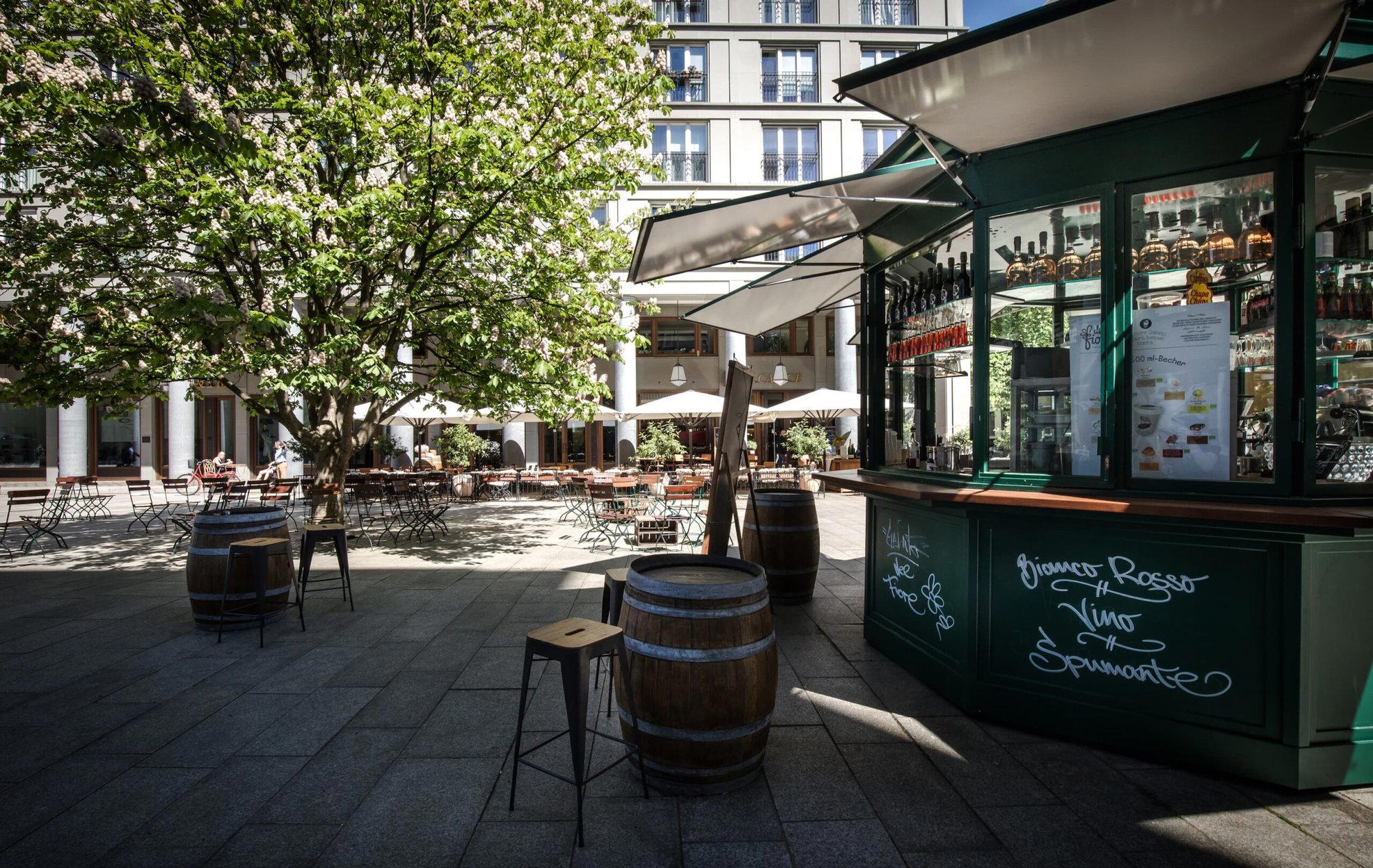
Cozy bistro atmosphere with decorative wine racks, high tables around a free-standing oyster bar, and purist minimalist space with 1870s furniture.