Our verdict
De'Savanna Restaurant sits along the Puncak corridor in Cisarua, Kabupaten Bogor, where West Java's highland dining tradition draws weekenders from Jakarta seeking cooler air and familiar flavours. The address on Jl. Raya Puncak places it within one of Indonesia's most travelled leisure routes, making it a reference point for regional cuisine in the Bogor highlands.

Pearl is the En Primeur Club membership app, where members save venues, book tables and use the concierge.
The menu
What to order
- Bancakan
- Sate Maranggi
- Nasi Liwet
- Korean steamboat
The Puncak Corridor and What It Means for Highland Dining
The road that runs from Bogor toward Puncak Pass is one of the most food-saturated stretches in West Java. On weekends, Jakartans make the ascent in numbers that turn the two-lane highway into a slow procession, and the restaurants that line Jl. Raya Puncak have built their identities around that captive audience. The cooler air at elevation, the mist that rolls down from the tea plantations above Cisarua, and the slower pace of a highland stop all shape what diners expect here: hearty Sundanese and West Javanese cooking, generous portions, and a sense of arrival after the grind of the city below.
De'Savanna Restaurant occupies an address on this corridor at Jl. Raya Puncak - Gadog No.601, Cisarua, placing it squarely within this tradition. It is not a Jakarta fine-dining outpost relocated to the hills, nor a concept restaurant chasing a trend. The Puncak strip rewards restaurants that understand their role in a broader ritual of weekend escape, and De'Savanna sits within that framework. For context on the wider Bogor dining scene, our full Bogor restaurants guide maps the range from city-centre options to highland stops across the region.
Sundanese Cuisine and the Cultural Logic of the Highlands
Sundanese food, the dominant culinary tradition of West Java, is built around rice, freshwater fish, raw vegetables served as lalapan, and sambal in forms that vary from village to village. It is one of Indonesia's most coherent regional cuisines, with a logic rooted in the agricultural range of the Priangan highlands. The practice of eating with hands from banana-leaf arrangements, the preference for bitter and astringent greens alongside grilled proteins, and the central role of fermented shrimp paste in sambal all reflect a food culture that predates the colonial spice trade's influence on coastal Javanese cooking.
The Puncak region sits within this Sundanese heartland, and restaurants along the corridor typically draw on this tradition even when their format leans toward comfort dining for urban visitors. The expectations that accompany a meal here are culturally specific: ikan bakar over charcoal, ayam goreng kampung with its particular texture from free-range birds, karedok with its peanut dressing, and the kind of nasi timbel wrapped in banana leaf that acts as both vessel and flavour component. These are not menu choices so much as cultural anchors.
This context matters when placing De'Savanna within the Cisarua dining picture. Restaurants at this postcode compete less on innovation than on the quality of execution within a known tradition, on ambience that justifies the drive, and on the reliability that repeat weekend visitors require. For a reference point on how Indonesian restaurants at a different price and ambition level approach the same cultural material, Kahyangan in Gondangdia offers a useful comparison in how Sundanese and Javanese culinary heritage is framed for a Jakarta audience.
Where De'Savanna Sits in Bogor's Restaurant Spectrum
Bogor's dining options divide broadly between the city centre, where mall-anchored restaurants and neighbourhood warungs coexist, and the highland corridor, where the audience is primarily weekend leisure traffic. In the city, options like Agreya Coffee Bogor and Madame Djeli serve a different function, oriented toward daily local trade. The Japanese-format restaurants Kotei Restaurant and Kotei Restaurant Air Mancur and the fast-casual format of Pepper Lunch Express Botani Square point to how international formats have entered the Bogor market alongside local cuisine.
De'Savanna's Cisarua address places it in a different competitive tier entirely: it is playing for the weekend leisure diner making the Puncak ascent, not the weekday lunch crowd. That distinction shapes everything from opening-day volume to the kind of group sizes the kitchen is calibrated to handle. Comparisons to city-centre restaurants in Bogor are less useful than comparisons to other Puncak-corridor establishments with a similar positioning.
Further afield in Indonesia, the conversation about how regional cuisine is presented to a contemporary audience has advanced considerably. Locavore NXT in Ubud and August in Jakarta represent the end of the spectrum where Indonesian ingredients are refracted through a fine-dining lens. Moksa in Bali and Cafe Organic Canggu approach the same material through a plant-forward framework. CARANO Masakan Padang in Bekasi shows how a different West Sumatran tradition occupies a parallel lane. De'Savanna is not in competition with any of these: it occupies the comfort-dining, leisure-drive tier that has its own logic and its own measure of success.
For those interested in the broader Indonesian fine-dining reference frame, Sarong Bali in Canggu, Rumari in Jimbaran, Cuca Restaurant in Badung, and Jungle Fish Bali in Gianyar collectively illustrate how Bali has developed a distinct premium hospitality layer that West Java's highland corridor has not replicated. The comparison with international benchmarks like Le Bernardin in New York City or Lazy Bear in San Francisco underlines how different the category is: the Puncak corridor operates on a logic of regional comfort and weekend ritual, not tasting-menu prestige.
Planning Your Visit
De'Savanna Restaurant is located at Jl. Raya Puncak - Gadog No.601, Cisarua, Kabupaten Bogor, Jawa Barat 16750. The Puncak corridor is subject to heavy traffic on Saturday and Sunday mornings from Jakarta, and the return journey on Sunday afternoon can extend considerably. Visitors from Jakarta typically allow two to three hours for the drive in peak weekend conditions. Arriving early or timing a visit for a weekday significantly reduces travel time.
Frequently asked questions
Where is De'Savanna Restaurant in Bogor?
De'Savanna Restaurant is located at Jl. Raya Puncak - Gadog No.601, Cisarua, Kec. Cisarua, Kabupaten Bogor, Jawa Barat 16750, Indonesia, Bogor.
Where exactly is De'Savanna Restaurant on the Puncak road, and what does that mean for traffic timing?
De'Savanna is at Jl. Raya Puncak - Gadog No.601 in Cisarua, which places it near the Gadog junction, one of the first major points on the ascent from Bogor toward Puncak Pass. That location means it is reachable before the corridor's worst congestion zones, but the Puncak road still sees severe weekend gridlock from Friday evening onward. Midweek visits or early Saturday mornings significantly reduce travel time from Jakarta.
What should I order at De'Savanna Restaurant?
Confirmed menu data is not available for De'Savanna, but the restaurant sits on the Puncak corridor in Cisarua, Kabupaten Bogor, where Sundanese cooking dominates. That regional tradition centres on freshwater fish, rice, raw vegetable plates served as lalapan, and sambal in multiple forms. Those categories are a reasonable starting framework when the menu is in front of you.
What's the best way to book De'Savanna Restaurant?
The Puncak corridor draws heavy Jakarta weekend traffic, particularly on Saturdays, so arriving without a prior arrangement on those days carries real risk.
What's the defining dish or idea at De'Savanna Restaurant?
What the address at Jl. Raya Puncak - Gadog No.601 does signal is a dining context shaped by the highland corridor: cooler air, a Sundanese culinary framework, and a format built around the Jakarta-to-Puncak weekend flow rather than destination-only tasting menus.
Can De'Savanna Restaurant adjust for dietary needs?
No dietary accommodation data is confirmed for De'Savanna. Sundanese cuisine does include naturally plant-forward elements, including lalapan and tempeh-based dishes, which gives vegetable-focused diners some working room. Specific allergen or dietary requests are worth confirming directly with the restaurant before visiting.
Is De'Savanna Restaurant worth it?
That depends on what you are after. De'Savanna's position near the Gadog junction on the Puncak road, Cisarua, Kabupaten Bogor, places it at the lower end of the highland ascent, making it accessible without committing to the full Puncak Pass drive. For Jakartans wanting cooler temperatures and regional West Java food in a single trip, the corridor itself justifies the journey as much as any single venue on it.
Budget Reality Check
Comparable venues nearby, for context on price, style, and recognition.
| Venue | Cuisine | Price | Notes |
|---|---|---|---|
| De'Savanna RestaurantThis venue (the venue you are viewing) | Authentic Indonesian and Sundanese | $10–20 | Not listed |
| Madame Djeli | Indonesian Peranakan | Not listed | Bogor, Indonesian Peranakan |
| Agreya Coffee Bogor | Bogor Utara, Indonesian Coffee Shop | $1–10 | Not listed |
| Kotei Restaurant Air Mancur | Japanese Sushi & Beverages | Not listed | Bogor, Japanese Sushi & Beverages |
| The Kluwih Heritage - Sentul City | Modern Indonesian Heritage (Sundanese/Nusantara) | $20–30 | Sentul City, Modern Indonesian Heritage (Sundanese/Nusantara) |
| Pepper Lunch Express Botani Square | Japanese Teppanyaki Steakhouse | $1–10 | Botani Square, Japanese Teppanyaki Steakhouse |
Continue exploring
More in Bogor
Restaurants in Bogor
All restaurants in Bogor →
Bars in Bogor
Browse all →
Details
- Lively
- Scenic
- Family
- Group Dining
- Casual Hangout
- Open Kitchen
- A La Carte
- Family Style
Current opening hours
- Monday
- Open 24 hours
- Tuesday
- Open 24 hours
- Wednesday
- Open 24 hours
- Thursday
- Open 24 hours
- Friday
- Open 24 hours
- Saturday
- Open 24 hours
- Sunday
- Open 24 hours
Hours can change for holidays and private events. Hours as of .
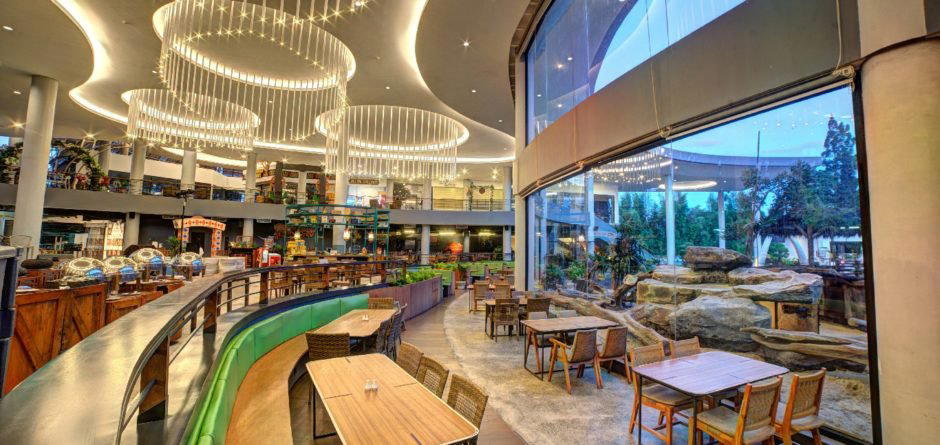
Light & bright concept with panoramic savanna background, elegant rattan and bamboo furnishings, and colorful kids dining area creating an immersive African savanna atmosphere.