Delicatessen
On Prince Street in SoHo, Delicatessen occupies a corner of lower Manhattan where the neighbourhood's retail-heavy character gives way to something more grounded. The restaurant draws a steady local crowd alongside visitors working through the area's dense dining options. Its address places it inside one of New York's most competitive casual dining corridors, where longevity itself carries weight.
Pearl is the En Primeur Club membership app — saves, bookings, and concierge access live there. Same editors, same standards.
- Address
- 54 Prince St, New York, NY 10012
- Directions
- Get directions
 Saves & bookings on Pearl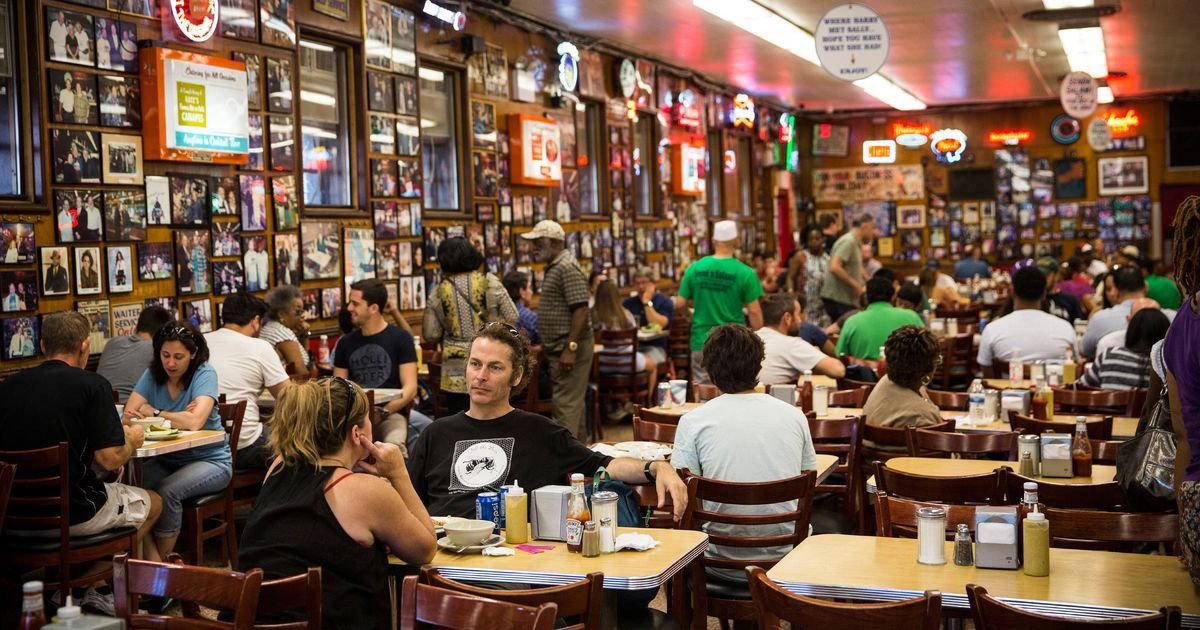
Prince Street and the SoHo Dining Context
SoHo's dining scene has always operated under particular pressure. The neighbourhood draws foot traffic from retail, tourism, and a residential base that skews toward people who eat out frequently and have strong opinions about where. That combination produces a competitive filter few cities can match: restaurants that survive here do so because locals return, not because a single wave of opening-week coverage carries them. The corner of Prince Street, where Delicatessen sits at 54 Prince St, is near the intersection of several forces that define lower Manhattan dining, proximity to Nolita's tighter, chef-driven spots to the east, the broader SoHo retail corridor to the west, and the slow northward drift of downtown energy from Tribeca.
For context, the blocks surrounding Prince Street have cycled through enough openings and closures to make longevity a credible signal in itself. Restaurants that plant themselves in this corridor and hold are typically doing something right at the operational level, whether that means consistent execution, a format that works across multiple dayparts, or a room that reads well to both regulars and first-timers. Delicatessen's address puts it inside that test.
Visitors working through New York's full range of dining should note that SoHo occupies a different register from Midtown's formal dining tier. The tasting-menu circuit, Le Bernardin, Per Se, Eleven Madison Park, Atomix, Masa, clusters further north and operates on a different reservation logic and price architecture. SoHo tends toward formats that accommodate walk-ins and mid-week spontaneity alongside weekend reservations, and the dining rooms here are generally set up for that flexibility.
What the Address Signals About the Experience
The physical approach to any SoHo restaurant carries context before you arrive. Prince Street runs east-west through a district defined by cast-iron architecture, wide sidewalks, and the particular ambient energy of a neighbourhood that has been photographed more than almost any other in Manhattan. The surrounding blocks have an unusual mix of flagship retail and independent food businesses that have survived successive waves of rent pressure. That pressure is not incidental to the dining experience, it shapes which operators stay and what kind of operation they need to run to do so.
Restaurants in this zip code that maintain a dining room, a kitchen brigade, and consistent service in a neighbourhood with SoHo's real estate costs are, by definition, working at commercial scale. That doesn't preclude quality; it just means the format needs to be legible and executable at volume. The more intimate, hyper-seasonal tasting formats tend to cluster in spots with lower overhead or ownership structures that allow for thinner margin tolerance. If you're comparing SoHo operators to, say, Blue Hill at Stone Barns outside the city or the farm-driven precision of Single Thread Farm in Healdsburg, you're comparing across fundamentally different models, not just different menus.
How Delicatessen Fits the SoHo Pattern
The name itself positions the restaurant inside a particular American food tradition: the deli as democratic institution, a format built around abundance, accessibility, and the idea that good eating shouldn't require a reservation booked weeks in advance or a dress code. New York's deli heritage is well-documented, and restaurants that reference it, even loosely, are drawing on one of the city's most durable culinary identities. Whether Delicatessen hews closely to that tradition or uses it as a looser point of departure is a question the menu answers, and the menu details available are limited here. What the name and address together suggest is a room calibrated for the neighbourhood: sociable, capable of handling volume, and likely positioned in a price tier that makes repeat visits possible for the local residential base.
SoHo's mid-tier dining, the layer below the omakase and prix-fixe category and above the fast-casual corridor, is where the neighbourhood does most of its daily work. Operators in that band face a specific challenge: they need to be interesting enough to compete for attention against the city's broader dining noise while being reliable enough to function as a regular's spot. The restaurants that manage both tend to have menus with clear identity, rooms with a consistent atmosphere, and kitchens that execute the same dishes accurately across services. That's a harder standard than it sounds in a city where the competition at every price point is dense.
Placing Delicatessen in the Wider New York Map
New York's dining geography rewards visitors who think in clusters. SoHo and Nolita together form a zone dense enough to support multiple meals across a visit without significant travel. From Prince Street, the walk to the broader Nolita corridor takes minutes, and the transition to the West Village or Tribeca is manageable on foot. For visitors building an itinerary around the city's full dining range, from the formal precision of Midtown's tasting rooms to the neighbourhood grain of downtown, SoHo functions as a useful base.
For comparison across American cities, the equivalent of SoHo's mid-tier dining culture shows up in different forms elsewhere: Lazy Bear in San Francisco operates in a different format register entirely, while Smyth in Chicago and Providence in Los Angeles represent the fine-dining tier of their respective cities. Emeril's in New Orleans, Addison in San Diego, Frasca Food and Wine in Boulder, and The French Laundry in Napa each anchor their local scenes in ways that help calibrate expectations across markets. The Inn at Little Washington and internationally, Atelier Moessmer Norbert Niederkofler in Brunico and Dal Pescatore in Runate, show how place-driven dining operates outside the American context.
Know Before You Go
Address: 54 Prince St, New York, NY 10012
Neighbourhood: SoHo, Manhattan
Nearest Transit: Spring St (C/E) and Prince St (N/R/W) subway stations are within walking distance of the address
Reservations: recommended
Price Range: Price tier 2
Hours: Mon: 8 AM-11 PM; Tue: 8 AM-11 PM; Wed: 8 AM-11 PM; Thu: 8 AM-11 PM; Fri: 8 AM-11:30 PM; Sat: Open 24 hours; Sun: 12 AM-11 PM
Where the Accolades Land
Comparable venues nearby, for context on price, style, and recognition.
| Venue | Cuisine | Price | Notes |
|---|---|---|---|
| DelicatessenThis venue — the venue you are viewing | American Fusion Bar | $$ | Not listed |
| Morgenstern's BANANAS | Artisanal Soft Serve & Non-Dairy Ice Cream | $$ | Lower East Side |
| Joe Allen | Classic American Brasserie | $$ | Hell's Kitchen |
| Fanny | Classic American Deli | $$ | East Williamsburg |
| Inès | Fresh American Breakfast & Lunch Café | $$ | Upper East Side-Lenox Hill-Roosevelt Island |
| Ainsworth Brooklyn | Classic American Gastropub | $$ | East Williamsburg |
Continue exploring
More in New York City
Restaurants in New York City
Browse all →
Bars in New York City
Browse all →
Hotels in New York City
Browse all →





At a Glance
- Modern
- Trendy
- Brunch
- Late Night
- Casual Hangout
Current opening hours
- Monday
- 8 AM–11 PM
- Tuesday
- 8 AM–11 PM
- Wednesday
- 8 AM–11 PM
- Thursday
- 8 AM–11 PM
- Friday
- 8 AM–11:30 PM
- Saturday
- Open 24 hours
- Sunday
- 12 AM–11 PM
Hours can change for holidays and private events. Last verified .
Sophisticated with great design and lighting.