Da Damiano occupies a address on Marzellenstraße in Cologne's city centre, placing it within reach of the cathedral quarter and the broader dining corridor that has made this part of the city a reference point for serious Italian cooking in Germany.
Pearl is the En Primeur Club membership app — saves, bookings, and concierge access live there. Same editors, same standards.
- Address
- Marzellenstraße 66, 50668 Köln, Germany
- Phone
- +4949221123662
- Website
- da-damiano.de
- Directions
- Get directions
 Saves & bookings on Pearl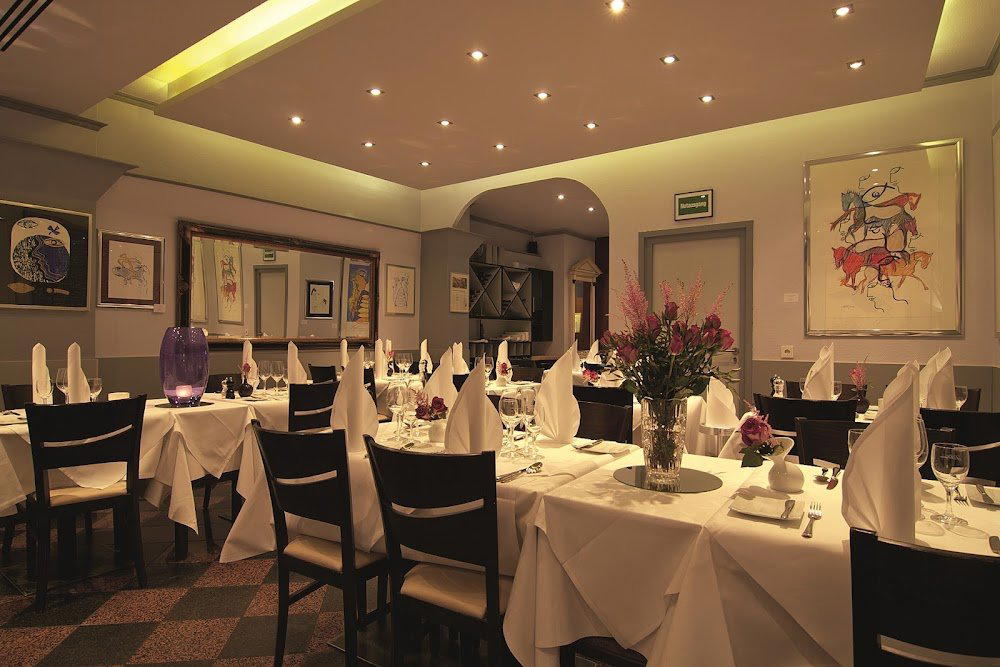
Italian Dining in Cologne: Where Tradition Holds Its Ground
Restaurants here operate in a different register than the cathedral-adjacent venues designed for passing trade. Da Damiano, at number 66, fits that pattern.
Cologne's restaurant scene has split into distinct tiers. At the upper end, venues like Ox & Klee and La Cuisine Rademacher pursue progressive tasting menus with Michelin recognition. In the middle, places like La Société and maiBeck hold a bistro-influenced, ingredient-led position. Da Damiano occupies a different corner of that map: the neighbourhood Italian format, where the measure of quality is consistency over time and the depth of a regular clientele rather than critical accolades or seasonal menu pivots.
The Logic of a Meal at Da Damiano
Italian restaurants in Germany that have earned long-term local loyalty tend to operate on a similar logic: the menu does not change radically, the pacing is unhurried, and the progression from antipasto through pasta to secondi follows a structure that is almost architectural in its predictability. That predictability is not a weakness; it is the format's primary value proposition. A meal here is not designed to surprise. It is designed to deliver a known sequence well, with ingredients that justify a return visit rather than a one-time curiosity.
This model contrasts sharply with the tasting-menu arms race visible at the upper end of German fine dining. Houses like Schwarzwaldstube in Baiersbronn or Aqua in Wolfsburg operate in a register defined by novelty and progression across a dozen or more courses. The neighbourhood Italian format favors fewer courses, greater familiarity, and a kitchen whose skill shows in execution rather than invention. The antipasto sets the kitchen's tone. The pasta course, in any credible Italian restaurant in this tier, is where technique becomes visible, whether fresh or dried, the texture, timing, and sauce coherence separate the competent from the serious.
The secondi and any dessert course that follows tend to be quieter chapters in this format, consolidating rather than escalating. This is a structural choice common to Italian trattorias and mid-range ristoranti across northern and central Italy: the meal peaks in the middle, not at the end. Dessert, if ordered, reads as a coda rather than a climax, a pattern that operators like CODA Dessert Dining in Berlin have explicitly inverted to make a full editorial statement.
Cologne as a Context for Italian Cooking
Germany's relationship with Italian cuisine is longer and more layered than it is often given credit for. Post-war Italian immigration brought trattorias to cities across the country decades before the current wave of chef-driven fine dining. Cologne, as one of Germany's larger and more internationally connected cities, developed a particularly dense Italian restaurant population. The result is a competitive environment where longevity itself functions as a signal: restaurants that have held their position through multiple economic cycles, shifting food trends, and the pressure of newer openings are doing something right at the level of hospitality, consistency, or value.
That environment also means the city's Italian addresses occupy clearly differentiated tiers. At the leading end, Italian-influenced technique feeds into the broader fine dining conversation alongside French-trained kitchens and the modern German sensibility of places like Vendôme in Bergisch Gladbach or JAN in Munich. Below that, the mid-market Italian sits in a tier defined by honest product, regional Italian references, and a wine list weighted toward Italian appellations. The restaurant's position in Cologne's dining geography places it in that second category, where the competitive pressure comes not from Michelin-chasing neighbours but from other longstanding neighbourhood restaurants within walking distance.
The cathedral quarter and its immediate surroundings offer a density of options that ranges from tourist-trap pricing to genuine local value. Understanding which restaurants operate for residents versus which operate for visitors determines whether a meal will feel like a transaction or a place. For a broader survey of where to eat across the city,
Placing Da Damiano in the Wider German Fine Dining Conversation
The Italian trattoria format sits at some distance from the headline venues that define Germany's international fine dining reputation. Addresses like Victor's Fine Dining by christian bau in Perl, ES:SENZ in Grassau, Schanz in Piesport, Waldhotel Sonnora in Dreis, and Restaurant Haerlin in Hamburg operate in a different universe of price point, format, and ambition. The comparison is not invidious; it simply clarifies what the restaurant is and is not. Internationally, the neighbourhood Italian model has analogues across every major city, from the regulars-only rooms near Le Bernardin in New York City to the counter-format intimacy of places like Lazy Bear in San Francisco, though those comparisons illuminate format philosophy rather than cuisine type. What connects them is the primacy of return visits over first impressions.
Locally, the more direct frame of reference is the Le Moissonnier Bistro model: a Cologne address with a clear culinary identity, a loyal regular base, and a format built for repeat visits rather than occasion dining. That is the competitive set that matters for understanding what the restaurant is trying to do and whether it succeeds.
Planning a Visit
The restaurant is located at Marzellenstraße 66 in central Cologne, within easy reach of the main train station and the cathedral on foot. Given the restaurant's profile as a neighbourhood-facing address rather than a high-profile destination, booking practices likely follow the informal-to-moderate reservation model common to Italian restaurants in this tier, a phone call or walk-in on quieter evenings, with advance reservation advisable for weekend service. Hours run Mon: Closed; Tue-Sat: 12-2:30 PM and 6:30-10:30 PM; Sun: Closed. Reservations are recommended.
Cuisine-First Comparison
Comparable venues nearby, for context on price, style, and recognition.
| Venue | Cuisine | Price | Notes |
|---|---|---|---|
| Da DamianoThis venue — the venue you are viewing | Modern Italian | $$$ | Not listed |
| Marcellino Pane e Vino | Authentic Italian with Sicilian Influences | $$$ | Neustadt/Nord |
| Bar Trattoria Celentano | Authentic Sicilian Italian Trattoria | $$ | Neustadt/Nord |
| Pizza LAB Napoli | Neapolitan Pizza | $$ | Nippes |
| Ristorante Etrusca | Sardinian-Italian | $$$ | Neustadt/Süd |
| Büdchen am Südpark | Neapolitan Pizza | $$ | Marienburg |
Continue exploring
More in Cologne
Restaurants in Cologne
Browse all →
Bars in Cologne
Browse all →
Hotels in Cologne
Browse all →

At a Glance
- Cozy
- Elegant
- Intimate
- Business Dinner
- Date Night
- Special Occasion
- Historic Building
- Extensive Wine List
Current opening hours
- Monday
- Closed
- Tuesday
- 12–2:30 PM, 6:30–10:30 PM
- Wednesday
- 12–2:30 PM, 6:30–10:30 PM
- Thursday
- 12–2:30 PM, 6:30–10:30 PM
- Friday
- 12–2:30 PM, 6:30–10:30 PM
- Saturday
- 12–2:30 PM, 6:30–10:30 PM
- Sunday
- Closed
Hours can change for holidays and private events. Last verified .
Cozy and intimate atmosphere resembling a wine cellar with warm lighting and welcoming family service.