On a quiet street in Tienen's modest city centre, Cotto represents the kind of neighbourhood restaurant that Flemish Brabant does quietly well: a focused kitchen, a local following, and a sense of place that larger cities often trade away for volume. For visitors working through the region's dining options, it sits between the farm-forward simplicity of De Refugie and the formal ambition of Melchior.
Pearl is the En Primeur Club membership app — saves, bookings, and concierge access live there. Same editors, same standards.
- Address
- Spiegelstraat 11, 3300 Tienen, Belgium
- Phone
- +3216735537
- Website
- cotto.be
- Directions
- Get directions
 Saves & bookings on Pearl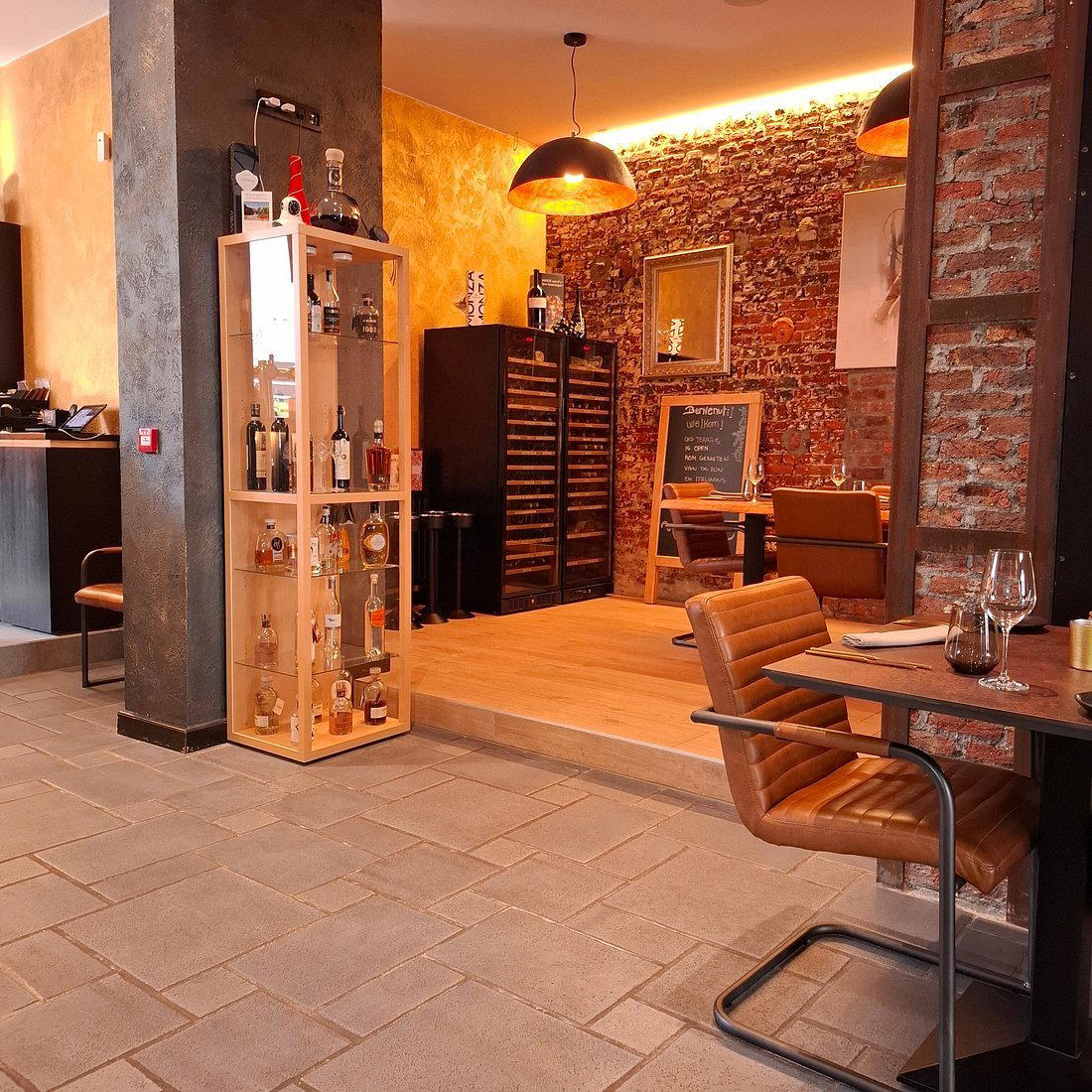
A Street-Level Address in a Town That Earns Its Reputation Slowly
Tienen is not the kind of Belgian city that announces itself. Roughly 30 kilometres east of Leuven along the E40 corridor, it sits in sugar-beet country — flat agricultural land that has shaped the local economy for over a century and continues to define what ends up on plates in the town's better kitchens. Spiegelstraat, where Cotto occupies number 11, is a short residential street close to the Grote Markt, the kind of address that rewards walkers who stay off the main commercial drag. The physical approach is low-key: no canopy signage, no pavement theatre, just a door on a quiet street that opens into something considered.
That restraint is not unusual for this part of Flemish Brabant. The region's most serious restaurants tend to operate without the promotional noise of Ghent or Antwerp, relying instead on word-of-mouth and repeat trade from a local population that knows what it wants. Cotto fits that pattern.
Ingredient Sourcing and the Agricultural Context of Tienen
The area around Tienen has a relationship with the land that is more direct than most Belgian cities of comparable size. Sugar beet processing brought industrialisation to the region, but the agricultural infrastructure that surrounds it — small farms, market gardens, and the broader Hageland growing belt, also means that seasonal, locally sourced cooking is less of a positioning statement here and more of a default condition. Kitchens in this part of Flemish Brabant are physically close to their supply chains in a way that urban restaurants elsewhere have to work harder to replicate.
This matters editorially because it places Cotto within a regional tradition of ingredient-led cooking that predates the farm-to-table branding that has swept European restaurant marketing since the 2010s. The Hageland, the wine-producing and vegetable-growing area that stretches north and east of Tienen, has long provided the raw material for direct, produce-first cooking in the town's kitchens.
For comparison, De Refugie in Tienen operates at the €€ price point with an explicit farm-to-table orientation, demonstrating that there is a genuine local appetite for produce-driven cooking rather than just trend-chasing. Melchior, at the €€€€ tier, shows that Tienen also sustains a market for more formal, technique-led Modern French work. Cotto's position within that local spectrum is part of what makes it worth examining on its own terms.
Where Cotto Sits in Belgium's Broader Dining Conversation
Belgian restaurant culture has a particular relationship with the mid-tier market. The country's most decorated tables, Hof van Cleve in Kruishoutem, Boury in Roeselare, Zilte in Antwerp, operate in a rarefied tier that commands international attention. But the restaurants that sustain Belgian dining culture day-to-day are the smaller, less-documented addresses in provincial towns: places where the kitchen is close to the dining room, the menu changes with the season, and the clientele is largely local.
Tienen is a town of around 35,000 people. Its restaurant scene is not large, but it is more layered than a passing visitor might assume. Fidalgo adds another option to the local roster, and taken together, the cluster of independents on and around the Grote Markt suggests a dining public that takes food seriously without necessarily requiring Michelin signposting to do so. For broader context on how these restaurants fit together, the full Tienen restaurants guide maps the scene in more detail.
Cotto on Spiegelstraat represents the kind of address that would, in a larger city, accumulate press coverage and booking queues. In Tienen, it operates within a quieter register, which is not a diminishment. Restaurants that build durable local reputations without constant external validation tend to be more consistent over time than those that perform for critics. The same pattern is visible at addresses like Vrijmoed in Ghent, La Durée in Izegem, and Cuchara in Lommel, kitchens in secondary Belgian cities that have found their footing without relying on metropolitan proximity.
Planning a Visit
Tienen is accessible by train from Brussels (Bruxelles-Midi to Tienen takes approximately 45 minutes on the IC network, with regular departures), making it a plausible day trip or stopover for visitors exploring Flemish Brabant. The Spiegelstraat address is walkable from Tienen station in under ten minutes. Comparable neighbourhood restaurants in this tier and region tend to close one or two days mid-week, and weekend covers fill faster than weekday tables, so planning ahead is advisable regardless of the specific booking channel.
For visitors building a broader Belgian itinerary around serious eating, the train network connects Tienen comfortably with Bozar Restaurant in Brussels and, with more travel, with the Wallonian table d'Eugénie à Emilie in Baudour. For those moving through West Flanders, Willem Hiele in Oudenburg, De Jonkman in Sint-Kruis, and Ralf Berendsen in Neerharen represent the kind of regional ambition that puts Belgian provincial dining on firmer ground than its international profile might suggest. For international reference points on what sustained sourcing-led kitchen work looks like at the highest level, Le Bernardin in New York and Lazy Bear in San Francisco show how produce-first thinking translates across very different contexts. Le Chalet de la Forêt in Uccle offers a closer Belgian benchmark for how regional sourcing can operate at a more formal register.
How Cotto Tienen compares with similar nearby venues.
| Venue | Cuisine | Price |
|---|---|---|
| Melchior | Modern French | €€€€ |
| De Refugie | Farm to table | €€ |
Continue exploring
More in Tienen
Restaurants in Tienen
Browse all →

Bars in Tienen
Browse all →

Hotels in Tienen
Browse all →

Wineries in Tienen
Browse all →
At a Glance
- Cozy
- Elegant
- Intimate
- Date Night
- Special Occasion
- Extensive Wine List
Current opening hours
- Monday
- Closed
- Tuesday
- 6–10 PM
- Wednesday
- Closed
- Thursday
- Closed
- Friday
- Closed
- Saturday
- Closed
- Sunday
- Closed
Hours can change for holidays and private events. Last verified .
Warm, welcoming, and cozy atmosphere with friendly service as described in guest reviews.
Know Before You Go
- Getting there
- Spiegelstraat 11, 3300 Tienen, Belgium