Chocoberley
Chocoberley occupies a quiet address on Steenweg in Herk-de-Stad, a small Flemish Brabant town that sits well outside the usual Belgian fine-dining circuit. The name suggests a chocolate-forward concept, placing it in a category where ingredient provenance and craft process tend to define the experience. For visitors making the detour from Hasselt or Leuven, the draw is precisely that distance from the obvious.
Pearl is the En Primeur Club membership app — saves, bookings, and concierge access live there. Same editors, same standards.
- Address
- Steenweg 7, 3540 Herk-de-Stad, Belgium
- Phone
- +3213269845
- Website
- chocoberley.be
- Directions
- Get directions
 Saves & bookings on Pearl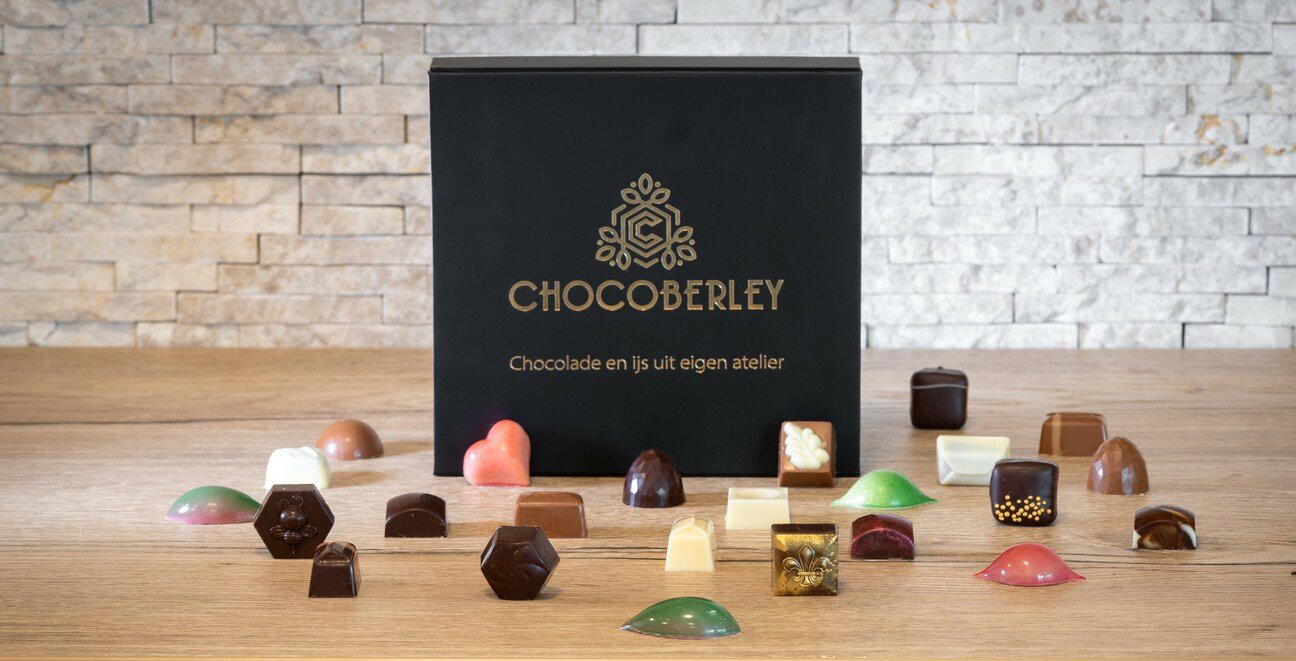
A Flemish Brabant Address on the Edge of the Circuit
Chocoberley is a restaurant in Herk-de-Stad, Belgium, known for artisanal ice cream and chocolates. Herk-de-Stad does not appear on most Belgian dining itineraries. The town sits in the Hageland subregion of Flemish Brabant, roughly midway between Hasselt and Diest, and its food scene operates at a remove from the Michelin-mapped corridors of Ghent, Antwerp, or Roeselare. That distance is, in part, the point. Belgium has a long tradition of destination dining in unexpected places: some of the country’s most serious kitchens operate from villages and market towns where rents allow for craft investment that city-centre overheads would otherwise consume. Chocoberley, addressed at Steenweg 7 in the centre of Herk-de-Stad, fits that pattern. The name itself signals a chocolate-centred or chocolate-adjacent concept, which in Belgium carries specific weight given the country’s position as one of the world’s most technically developed chocolate cultures.
For context on how this part of Flanders positions itself relative to the broader Belgian dining scene, see our full Herk De Stad restaurants guide, which maps the town’s options against regional peers.
What the Name Signals: Chocolate as an Ingredient Category
Belgian chocolate is a sourcing story before it is a flavour story. The country’s reputation rests on a combination of factors: access to high-grade cacao through historical trade relationships, a technical tradition in tempering and couverture production, and a retail culture that has kept chocolate literacy higher than almost anywhere in Western Europe. When a venue builds its identity around chocolate in this context, it is working within a defined craft lineage rather than exploiting a novelty angle. The question for any chocolate-oriented address in Belgium is always where on the spectrum between artisan chocolatier and dessert-forward restaurant it sits, and how seriously it treats provenance: single-origin bars and bean-to-bar processes have reshaped consumer expectations in the past decade, and venues that cannot speak to sourcing credibly tend to fall behind establishments that can.
Chocoberley’s positioning within that spectrum remains partly undefined, which means the editorial work here is partly to frame the category and partly to note what a visit would need to confirm. The Steenweg 7 address suggests a street-level retail or café format rather than a full-service restaurant, though that distinction remains provisional.
The Flemish Small-Town Dining Model
Belgium’s smaller Flemish towns have produced a disproportionate share of serious dining in the past two decades. Part of this reflects the country’s geography: nowhere in Flanders is more than an hour from a major urban centre, which means a village address loses little in accessibility while gaining considerably in operating economics. It also reflects a cultural preference for discretion over spectacle. Addresses like Wendelenhof in the same town suggest that Herk-de-Stad has at least one other serious food operation, which means the question of how Chocoberley relates to its immediate neighbour is relevant for any visitor planning a day in the area.
Across Belgium more broadly, the small-town fine dining model has produced some of the country’s most recognised kitchens. Hof van Cleve in Kruishoutem operates from a rural Flemish setting and holds three Michelin stars. Willem Hiele in Oudenburg is another example of a kitchen that built international recognition from a non-urban base. Chocoberley operates at a different scale and with a different concept, but the structural logic is the same: a town like Herk-de-Stad can support a serious specialist operation if the concept is focused enough and the sourcing credible enough to justify a detour.
Where Ingredient Sourcing Shapes the Experience
In Belgium’s chocolate culture, sourcing has become the primary differentiator between serious operations and tourist-facing ones. The shift toward single-origin cacao, transparent supply chains, and bean-to-bar production has been underway since roughly 2010, driven partly by producers in Brussels and Bruges who began publishing sourcing data and origin maps on their packaging. This transparency has raised the baseline expectation: visitors who have been to a well-run Belgian chocolatier in the past five years arrive with more specific questions than they would have a decade ago. A concept operating under the Chocoberley name, in a country with this level of chocolate literacy, is implicitly held to that standard.
For comparison, consider the sourcing emphasis at operations like Vrijmoed in Ghent, which applies a similar degree of ingredient-level rigour to its menu in a different cuisine category, or La Durée in Izegem, where the French-Belgian creative format similarly depends on the credibility of what arrives in the kitchen. The comparison is not about cuisine type but about the culture of accountability to ingredients that defines the upper tier of Belgian food operations regardless of format.
Planning a Visit to Herk-de-Stad
Herk-de-Stad is accessible by rail on the Hasselt-Leuven line, with a station close to the town centre. The Steenweg address is walkable from the station. Chocoberley is open daily from 1 to 9 PM, so a visit can be planned with little friction. Visitors based in Antwerp might also consider Zilte as a benchmark against which to calibrate expectations for what Belgian serious dining currently delivers at its upper end.
For those already committed to the Flemish Brabant area, pairing a visit to Chocoberley with another stop in Herk-de-Stad makes geographic sense and would allow a read of the town’s food character across two distinct formats. Other Flemish operations worth knowing for regional comparison include Boury in Roeselare and Cuchara in Lommel, both of which operate at the €€€€ tier in smaller Flemish cities and give a sense of how the regional creative kitchen has evolved. Further afield in Belgium, Ralf Berendsen in Neerharen, De Jonkman in Sint-Kruis, and Castor in Beveren each represent the same model of serious cooking outside the major urban centres. For international reference points at opposite ends of the format scale, Le Bernardin in New York and Lazy Bear in San Francisco both illustrate how ingredient sourcing can anchor a dining concept at different price points and service models. d’Eugénie à Emilie in Baudour and La Table de Maxime in Our round out the Walloon side of the Belgian small-town dining picture for those crossing the language boundary.
In Context: Similar Options
Comparable venues nearby, for context on price, style, and recognition.
| Venue | Cuisine | Price | Notes |
|---|---|---|---|
| ChocoberleyThis venue — the venue you are viewing | Artisanal Ice Cream & Chocolates | $ | Not listed |
| Wendelenhof | Belgian-French Gastrobar | $$$ | Schulen |
| Chocolade Fabric | Belgian Chocolatier | $ | hartje Kasterlee |
| Chocolatjeeke | Artisanal Belgian Chocolatier | $ | Brecht |
| BOON Chocoladehuis | Belgian Artisan Chocolates | $$ | Hasselt |
| Renaud Austen | Artisan Chocolatier | $ | Place du Monument |
Continue exploring
More in Herk De Stad
Restaurants in Herk De Stad
Browse all →
Bars in Herk De Stad
Browse all →
At a Glance
- Cozy
- Casual Hangout
- Family
Current opening hours
- Monday
- 1–9 PM
- Tuesday
- 1–9 PM
- Wednesday
- 1–9 PM
- Thursday
- 1–9 PM
- Friday
- 1–9 PM
- Saturday
- 1–9 PM
- Sunday
- 1–9 PM
Hours can change for holidays and private events. Last verified .
Cozy dessert shop atmosphere ideal for casual treats.