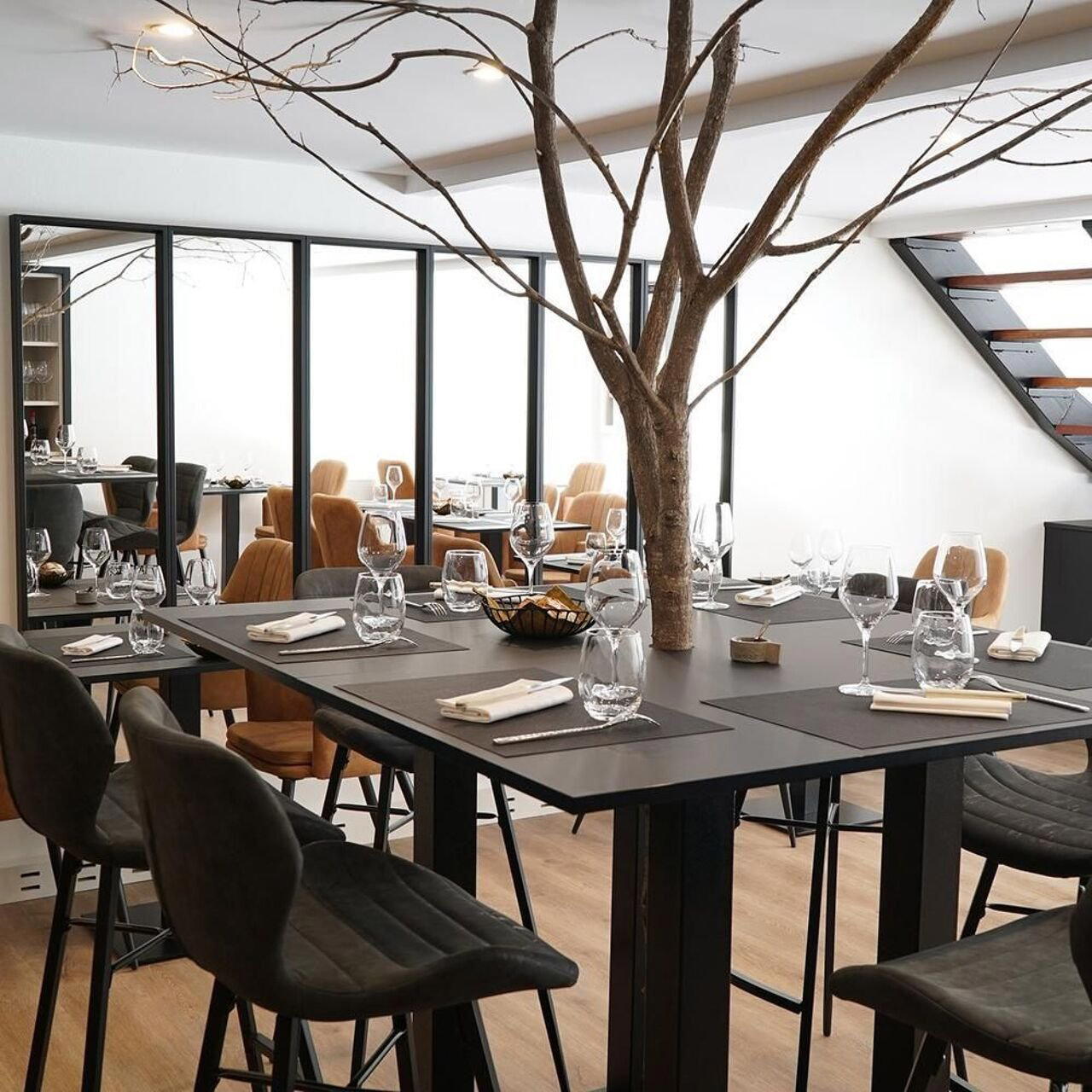
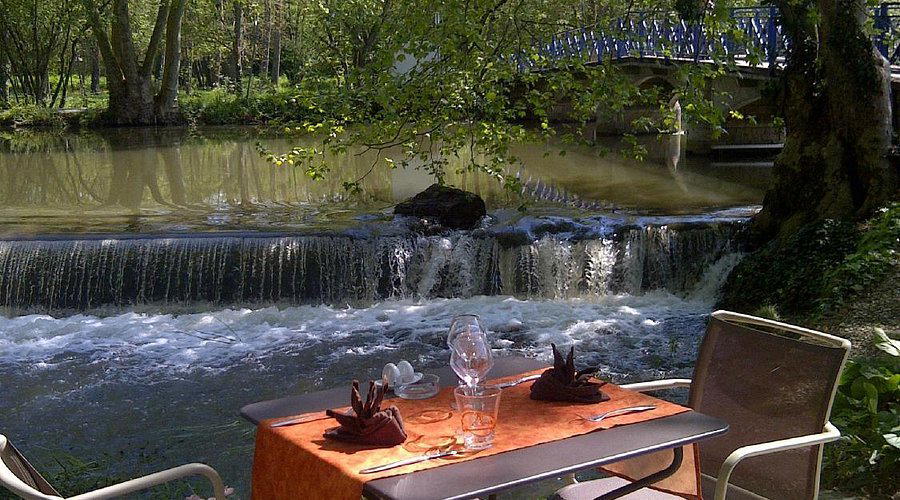
chez les copains serves traditional French bistro cooking at 8 Av. de la Libération in Surgères, with local sourcing, casual service, and terrace seating.
Pearl is the En Primeur Club membership app — saves, bookings, and concierge access live there. Same editors, same standards.
- Address
- 8 Av. de la Libération, 17700 Surgères, France
- Phone
- +33778705294
- Website
- instagram.com
- Directions
- Get directions
 Saves & bookings on Pearl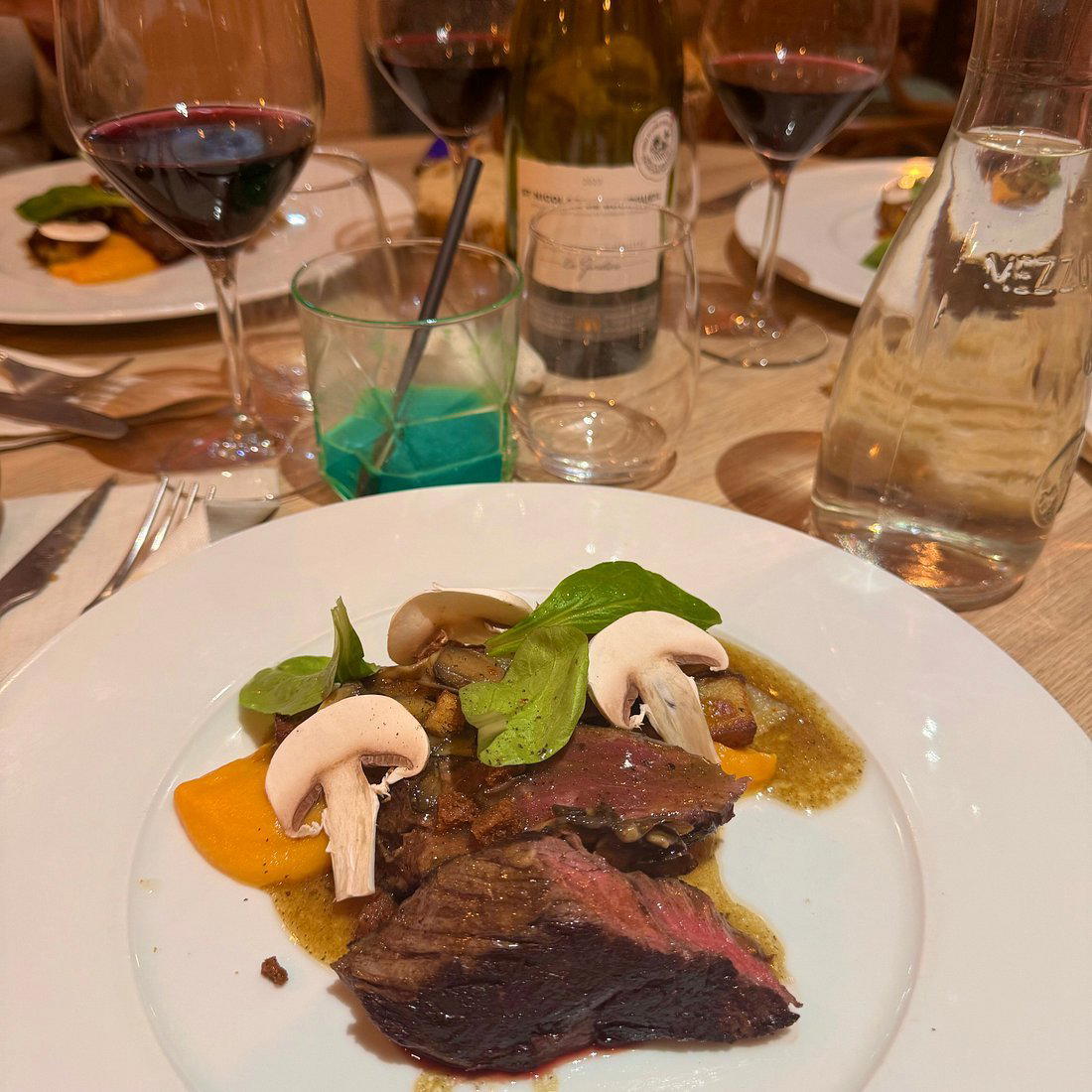
Where the Charente-Maritime Table Begins
Chez les Copains is a restaurant in Surgères, France, serving traditional French bistro fare at about $20 per person. Avenue de la Libération runs through the centre of Surgères with the low-key confidence of a town that has never needed to announce itself. The Charente-Maritime department surrounding it is Atlantic France at its most agricultural: salt marshes to the west, bocage pasture inland, and a food economy built on butter, oysters, snails, and Charentais melon that reaches back centuries. In a town of this scale, the neighbourhood bistrot does not compete with the destination restaurants of the French Atlantic coast so much as it defines daily eating life. Chez les Copains, at number 8 on that avenue, belongs to that category of local table that provincial France does better than anywhere else.
The Logic of Eating Where the Food Is Grown
The broader argument for eating in the Charente-Maritime rather than driving to a marquee address in La Rochelle or Cognac is partly about provenance compression. The gap between field and plate shrinks to almost nothing when the kitchen sits twenty minutes from the butter dairy, the salt pans, and the oyster beds. France’s most decorated kitchens, from Mirazur in Menton to Alléno Paris au Pavillon Ledoyen in Paris, have spent the last decade reorienting their sourcing arguments around regional proximity. The small-town bistrot in agricultural France has operated on that logic by necessity for generations, not by trend.
Surgères sits at the heart of a dairy corridor that supplies particularly consequential butter in European cooking. Beurre Charentes-Poitou carries AOP status, meaning the cream, the culture, and the churning method are geographically controlled, in the same regulatory tier as Comté or Époisses. A kitchen drawing on that supply chain has access to an ingredient that kitchens in Paris or Lyon pay premium prices to import. That structural advantage shapes what a table in this part of France can do at a price point that destination restaurants cannot replicate.
What the Room Signals
The approach to Chez les Copains along the avenue gives the first indication of register: a street-level address in a working provincial town, without the theatrical staging that signals destination dining. French bistrots of this type tend to operate with a room that prioritises occupancy over spectacle, tables close enough for conversation to carry, and a service rhythm calibrated to the lunch trade of local professionals and the dinner pace of neighbourhood regulars. The name itself, which translates roughly as “at the friends’ place,” places the social contract clearly: this is a room built for return visits, not first impressions.
That register matters because it sets reader expectations correctly. If you are travelling from Paris or arriving from one of the Loire Valley’s more formal addresses to compare it against Maison Lameloise in Chagny or Georges Blanc in Vonnas, you are applying the wrong frame. Chez les Copains operates in the register of the French bistrot provincial, a category with its own integrity and its own standards, where the measure of quality is consistency, regional honesty, and the kind of cooking that improves by being repeated rather than reinvented.
Sourcing in the Atlantic Southwest
The Charente-Maritime’s food geography is unusually well-stocked for a department its size. Oysters from Marennes-Oléron, the largest oyster-producing basin in France, travel no more than sixty kilometres to reach Surgères. The snails of the Charente are a regional specialty with a lineage that predates any current culinary conversation about local sourcing. Charentais melon, grown in the sandy soils of the lower Charente Valley, has a sugar content and aromatic profile that deteriorates with distance and time, making proximity to the growing area a genuine quality variable rather than a marketing claim.
Provincial kitchens like this one sit in a direct supply relationship with that landscape by virtue of geography rather than philosophy. The contrast with the sourcing programmes of France’s most ambitious restaurants, such as Bras in Laguiole or Les Prés d’Eugénie - Michel Guérard in Eugénie-les-Bains, is instructive: those kitchens have constructed formal sourcing architectures to replicate what a well-run provincial bistrot in the right region accesses as a matter of routine. For the reader planning a route through Atlantic France, that fact has practical weight.
The Bistrot Provincial in Context
The French dining hierarchy tends to draw editorial attention toward its upper tier: the three-star rooms, the hotel restaurants of the Grand Palaces, the chef-driven destination addresses. Coverage of Flocons de Sel in Megève, Le 1947 à Cheval Blanc in Courchevel, or La Vague d’Or - Cheval Blanc St-Tropez in Saint-Tropez follows a logic of scarcity and spectacle. The bistrot provincial operates on the opposite principle: abundance, repetition, and the democratic availability that makes French food culture legible at street level.
That tier includes addresses like Auberge du Vieux Puits in Fontjoncouse and Auberge de l’Ill in Illhaeusern at its upper reaches, where the auberge format meets serious kitchen ambition, but it extends all the way down to the neighbourhood table where the cooking is honest, the sourcing is local by default, and the room is full at noon on a Tuesday. The restaurant occupies that accessible end of the spectrum, and in the context of Surgères, that position is where one reliable version of Atlantic French provincial cooking exists.
Travellers routing through the Charente-Maritime toward the coast or using Surgères as a stopping point between Poitiers and La Rochelle will find the town’s eating options structured around exactly this kind of address. The comparison set is not Paul Bocuse - L’Auberge du Pont de Collonges in Collonges-au-Mont-d’Or or L’Oustau de Baumanière in Les Baux or La Table du Castellet in Le Castellet. It is the town bistrot of provincial Atlantic France, judged against its own category, and understood in relation to the ingredients that define the region.
Planning a Visit
Surgères is accessible by road from La Rochelle in under thirty minutes and sits on the A10/N11 corridor that connects Poitiers to the coast. Visitors approaching from further afield can reach the town from La Rochelle’s TGV station. Prospective visitors should verify directly with the restaurant at its address on Avenue de la Libération before planning a visit around a specific service. French provincial bistrots of this type typically close on Sundays and Mondays and run a set midday menu alongside a shorter evening carte.
At-a-Glance Comparison
Comparable venues nearby, for context on price, style, and recognition.
| Venue | Cuisine | Price | Notes |
|---|---|---|---|
| chez les copainsThis venue — the venue you are viewing | Bistro français traditionnel | $$ | Not listed |
| La Table d’As | French Bistro | $$ | Surgères |
| Vingelique | Regional French Bistro | $$ | town center |
| Le Comptoir du Marché | French Market Bistro | $$ | Les Halles de Talence |
| La Cigale | Classic French Brasserie | $$ | Graslin |
| Les 2 M | Traditional French Semi-Gastronomic | $$$ | Fontenay-le-Comte center-ville |
Continue exploring
More in Surgères
Restaurants in Surgères
Browse all →
Hotels in Surgères
Browse all →
Wineries in Surgères
Browse all →
At a Glance
- Cozy
- Rustic
- Family
- Casual Hangout
- Terrace
- Local Sourcing
Current opening hours
- Monday
- 9 AM–11 PM
- Tuesday
- Closed
- Wednesday
- 9 AM–3 PM
- Thursday
- 9 AM–3 PM
- Friday
- 9 AM–12 AM
- Saturday
- 9 AM–11:30 PM
- Sunday
- 9 AM–3 PM
Hours can change for holidays and private events. Last verified .
Ambiance accueillante et conviviale avec un personnel souriant et un accueil chaleureux.