Our verdict
Chez Germaine occupies a corner of the Ardèche that most French dining itineraries skip entirely. Located on the Grand Rue in Lamastre, a small market town in the volcanic hills southwest of Lyon, it belongs to a tradition of provincial French cooking rooted in local produce and unhurried rhythm. For travellers willing to detour from the Rhône corridor, it represents a different register of French table culture altogether.

Pearl is the En Primeur Club membership app, where members save venues, book tables and use the concierge.
The menu
What to order
- Ardéchois charcuterie
- Onglet with cep sauce
- Warm caillette
- Chocolate chestnut moelleux
A Town That Earns Its Detour
The Ardèche is not a region that announces itself. The drive into Lamastre from the Rhône valley cuts through chestnut forest and basalt plateau, dropping into a town of roughly 2,500 people that functions primarily as a market hub for the surrounding hills. There are no resort crowds here, no wine-route tourism infrastructure, no Michelin-starred hotel lobbies softening the approach. The Grand Rue runs through the centre with the matter-of-fact confidence of a street that has always been the street, and Chez Germaine sits within it as part of that fabric rather than apart from it. Arriving on foot from the central square, the building reads as what it is: a restaurant in a French provincial town, shaped by the same logic as the landscape around it, functional, durable, and calibrated to the people who live there year-round.
That context matters. The France that most international travellers engage with is either urban (Paris, Lyon, Bordeaux) or resort-adjacent (Megève, Courchevel, Saint-Tropez). The provincial auberge tradition, rooted in market-day cooking, seasonal rhythm, and deep familiarity with the land immediately surrounding the kitchen, occupies a different register, one that restaurants like Auberge du Vieux Puits in Fontjoncouse have demonstrated can achieve formal critical recognition without abandoning their essential character. Lamastre sits in that same tradition, though with less infrastructure around it to smooth the way for outside visitors.
What the Ardèche Puts on the Plate
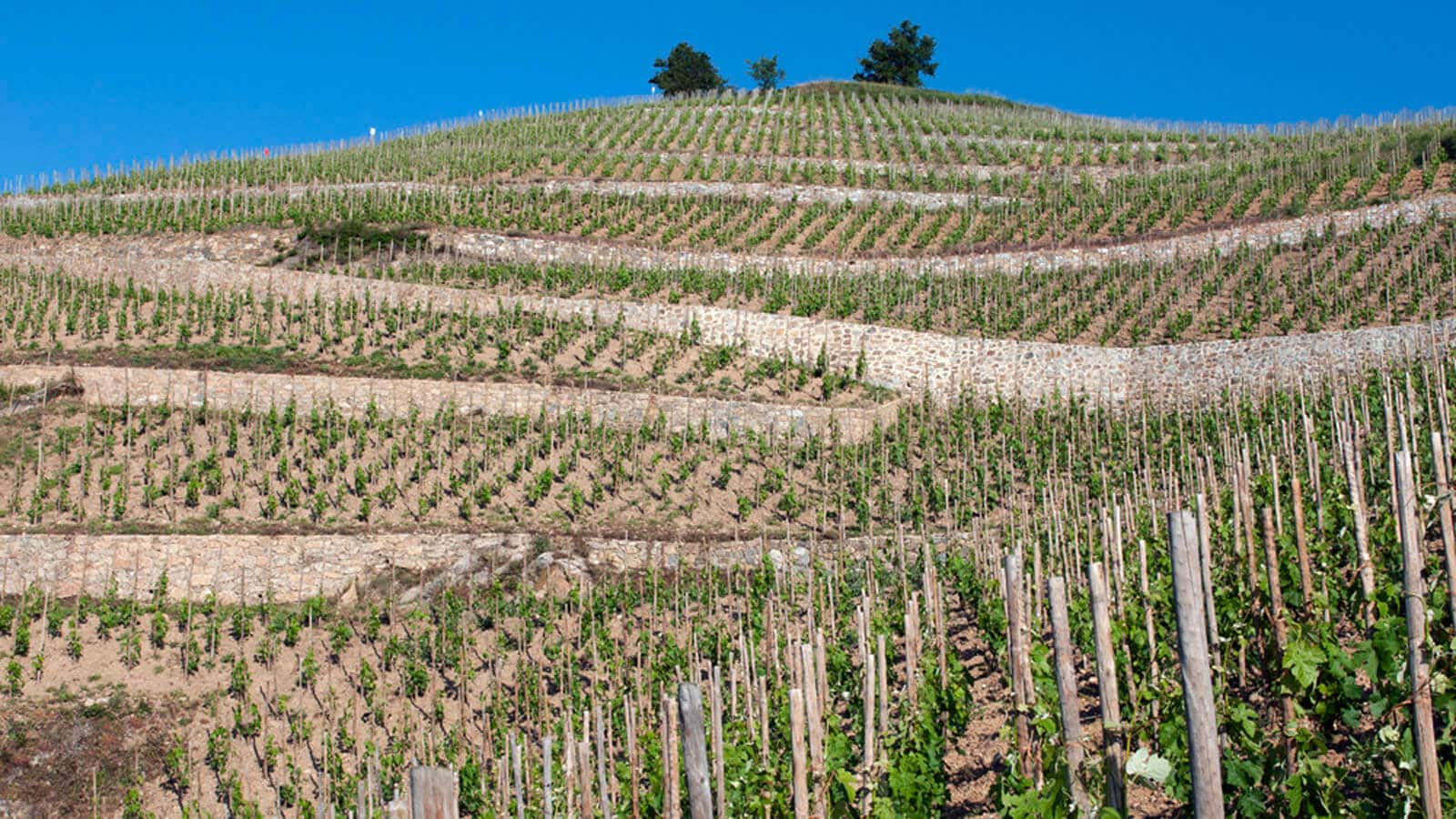
The ingredient story in this part of France begins with geography. The Ardèche sits between the Massif Central and the Rhône, a zone of volcanic soil, pronounced altitude variation, and a climate that shifts substantially from valley floor to highland. Chestnuts have been the defining crop here for centuries, the département produces some of the highest-quality marrons in France, the base for everything from crème de marrons to the whole roasted specimens that appear on autumn menus across the region. The surrounding hills also yield river trout, wild mushrooms (cèpes and chanterelles in season), small-breed pigs raised on forest mast, and a vegetable production shaped by the kind of small-plot farming that large agricultural regions have largely abandoned.
This is the sourcing context that French provincial cooking at its most coherent draws from: not a curated farm-to-table narrative imported from elsewhere, but an existing relationship between cooks and suppliers that predates the concept as marketing language. The Ardèche's relative economic modesty means that local sourcing here is structural rather than aspirational. A kitchen in Lamastre buys from local producers because that is how the supply chain has always functioned in a region without the distribution infrastructure of larger markets. The result, when executed well, is cooking in which the ingredient carries the argument, not technique, not plating convention, not international reference points.
This places the Ardèche auberge tradition in direct contrast with the high-intervention creative cooking that has defined French fine dining's international profile in recent decades. Where Mirazur in Menton or Alléno Paris au Pavillon Ledoyen operate within a framework of formal innovation, the provincial auberge works from a premise of accumulated local knowledge. Both traditions are French; they simply answer different questions about what French cooking is for.
The Broader Pattern of Rural French Tables
France's great restaurant conversation has always had two tracks. The first runs through Lyon, Paris, and their satellites, the Paul Bocuse legacy, the Troisgros evolution in Ouches, the Alsatian institution of Auberge de l'Ill in Illhaeusern, the Burgundian continuity of Maison Lameloise in Chagny and the Bresse-rooted empire of Georges Blanc in Vonnas. These are institutions with international reputations, multi-generation histories, and the kind of wine cellars that take decades to assemble. They are the reference points for French gastronomy's formal canon.
The second track is quieter and harder to map from outside France. It runs through market towns, farming regions, and river valleys where the restaurant serves the community before it serves the tourist. The Ardèche belongs to this second track. So does the territory around Bras in Laguiole, though that restaurant has long since crossed into the first register, and Les Prés d'Eugénie in Eugénie-les-Bains, which built a spa destination around what began as Gascon regional cooking. The distinction matters for a traveller choosing between them: a provincial table in a working French town delivers a different kind of meal from a destination restaurant built for out-of-town guests, even when the ingredient sourcing is comparable.
Chez Germaine, at its address on the Grand Rue de Macheville, occupies the former category. The frame of reference is local rather than international, and that is precisely the reason to seek it out rather than a reason to approach it with lowered expectations.
Planning a Visit
Lamastre sits roughly 35 kilometres southwest of Valence, which is the nearest TGV stop on the Lyon-Marseille axis. From Valence, the drive takes around 45 minutes through the Eyrieux valley, and the route itself is part of the experience, the Ardèche opens up gradually as the valley narrows and the road climbs. Arriving by train to Valence and hiring a car is the most practical approach for visitors coming from Paris or Lyon. Those already travelling through the region will find Lamastre a natural midpoint between the Rhône corridor and the high Ardèche plateau further west.
The town is small enough that orientation is immediate on arrival. The broader Lamastre dining scene is thin, which makes planning around a confirmed reservation the sensible approach rather than arriving speculatively.
For travellers building a longer itinerary around French regional cooking, the Ardèche fits naturally between a stay in Lyon and a push south toward Les Baux or the Mediterranean coast. It is not a region that competes with those destinations on formal prestige, but it offers something those destinations have largely traded away: the texture of a French food culture that is still primarily feeding itself.
Frequently asked questions
Is Chez Germaine a family-friendly restaurant?
Chez Germaine sits on the Grand Rue de Macheville in Lamastre, a small market town in the Ardèche where unhurried, generational dining is the norm rather than the exception. That context, provincial France, mid-scale pace, no performance theatrics, tends to suit families well. Confirm directly with the restaurant before visiting, as seating arrangements and service hours at rural French tables vary seasonally.
How would you describe the vibe at Chez Germaine?
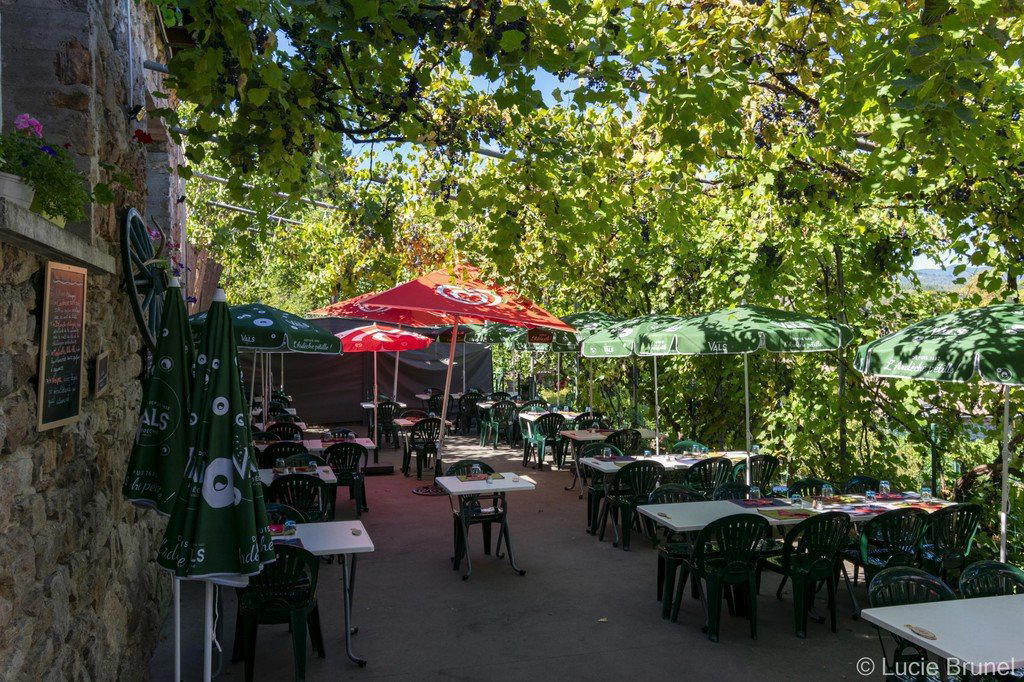
Lamastre is not a town that performs for visitors, and Chez Germaine sits in that register: a working address on the Grand Rue de Macheville rather than a destination stage set. The Ardèche interior draws a mix of locals and travellers stopping between the Rhône valley and the Massif Central, which gives rooms like this a grounded, unselfconscious quality that urban bistros often try and fail to replicate.
Is Chez Germaine worth a detour from Valence?
Lamastre sits roughly 35 kilometres southwest of Valence, the nearest TGV station on the Lyon-Marseille line, making Chez Germaine a plausible lunch stop for travellers already routing through the Ardèche. The question of detour value depends on what you are after: this is a provincial French table in a town of fewer than 2,500 people, not a destination built around accolades. If the draw is the Ardèche itself, its chestnut forests, basalt landscape, and pre-Michelin rural cooking culture, the address on the Grand Rue de Macheville fits that itinerary logically.
What dish is Chez Germaine famous for?
What the address in Lamastre does signal is a kitchen operating inside the Ardèche ingredient tradition: chestnut, lentil, volcanic-plateau produce, and the broader Rhône corridor larder. check the venue's official channels for current menu details.
Comparison Snapshot
Comparable venues nearby, for context on price, style, and recognition.
| Venue | Cuisine | Price | Notes |
|---|---|---|---|
| Chez GermaineThis venue (the venue you are viewing) | Regional French Bistro | $20–30 | Not listed |
| Restaurant le traditionnel | Traditional French Bistro | $10–20 | Cours Fauriel |
| Bistrot Compa | Modern French Bistro with Asian Influences | $30–50 | Quartier Bellecour Carnot |
| LE BISTROT ABEL | Lyonnaise Bistro | $30–50 | Quartier Bellecour Cordeliers |
| Le Petit Carron | Seasonal French Bistro | $30–50 | Quartier Voltaire Part-Dieu |
| L'arquebuse | Modern French Bistronomic | $30–50 | Quartier Bas des Pentes Presqu'île |
Continue exploring
More in Lamastre
Restaurants in Lamastre
All restaurants in Lamastre →
Hotels in Lamastre
Browse all →

Details
- Rustic
- Cozy
- Classic
- Family
- Casual Hangout
- Group Dining
- Terrace
- Historic Building
- Local Sourcing
- Street Scene
- A La Carte
Current opening hours
- Monday
- 10 AM–2 PM
- Tuesday
- 10 AM–2 PM
- Wednesday
- 10 AM–2 PM
- Thursday
- 10 AM–2 PM
- Friday
- Closed
- Saturday
- 10 AM–2 PM, 7–9 PM
- Sunday
- 10 AM–2 PM
Hours can change for holidays and private events. Hours as of .
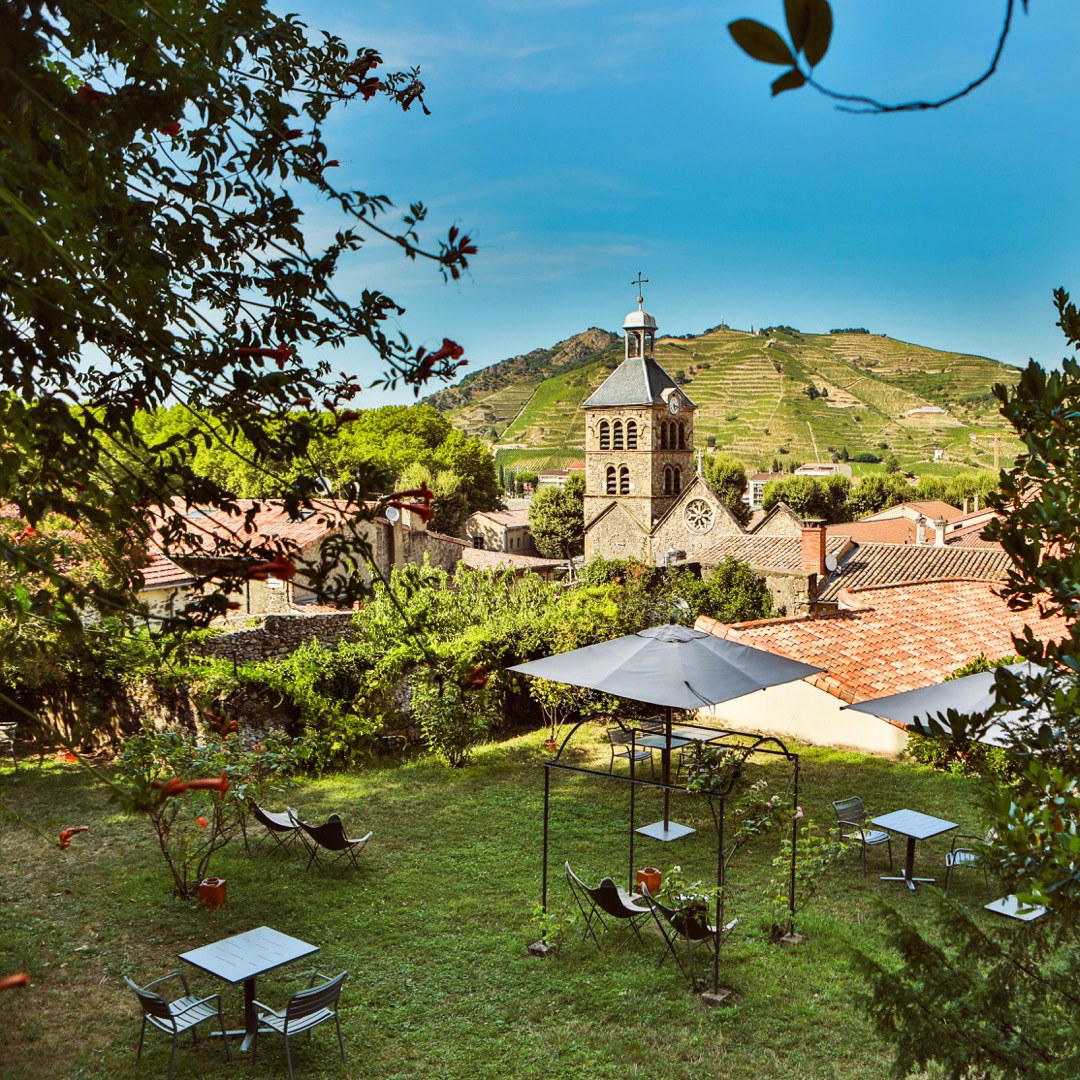
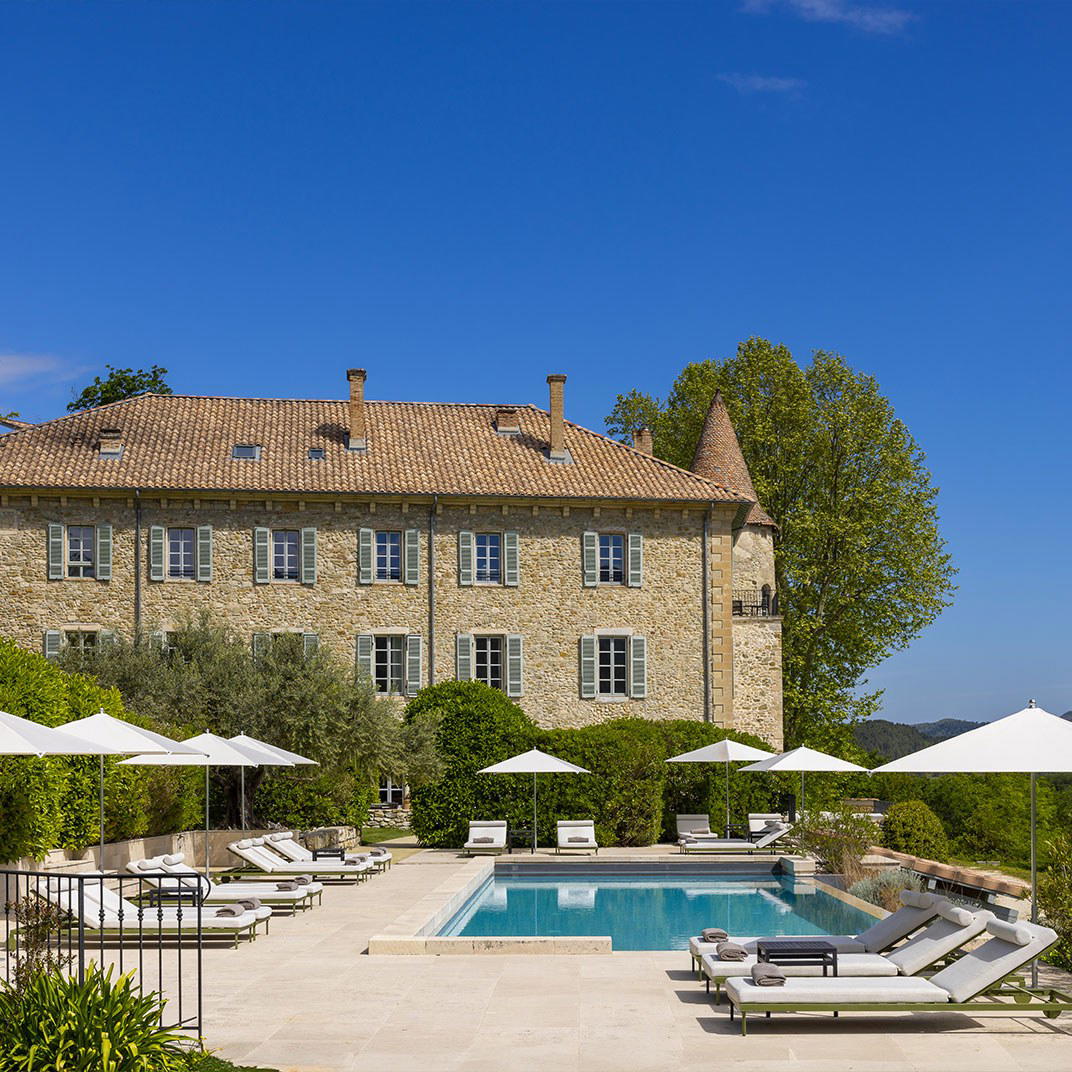
Warm and pleasant atmosphere in a historic setting with shaded terrace seating in summer.