
Chatora Hanten brings Chinese cooking into the mountain-town rhythm of Fujimi, where Nagano produce and destination dining meet at a modest price tier. Its selection for Tabelog Chinese EAST “Tabelog 100” in 2023, 2024, and 2026 gives the address a measurable signal in a region better known for soba, ryokan meals, and lakeside itineraries than Chinese restaurants.
Pearl is the En Primeur Club membership app — saves, bookings, and concierge access live there. Same editors, same standards.
- Address
- 10007-9 Ochiai, Fujimi, Suwa District, Nagano 399-0214, Japan
- Phone
- +81 80-4343-6769
- Website
- chatorahanten.com
- Directions
- Get directions
 Saves & bookings on Pearl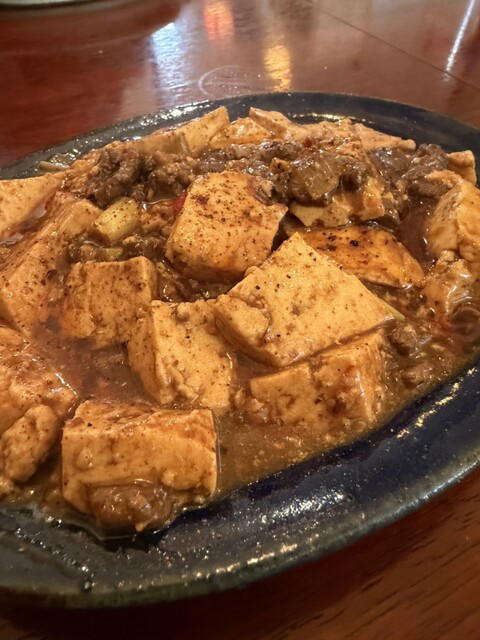
Fujimi does not announce itself with the restaurant density of Tokyo or Kyoto. The approach is quieter: station-side streets, mountain air, and the slower tempo of Suwa-gun, where meals sit between errands, ski-country travel, and detours around Lake Suwa. Here, Chinese cooking reads less as urban spectacle than as heat, sauce, and produce translated into a meal that makes sense in Nagano.
That frames Chatora Hanten. Its repeated selection for Tabelog Chinese EAST “Tabelog 100” in 2023, 2024, and 2026 places it in a documented regional conversation, not just a local one. For a Suwa-gun address, that matters. In Japan’s larger cities, Chinese restaurants often compete through chef lineage, luxury ingredients, or counter theatre; in a mountain town, the stronger argument is consistency, local draw, and a price point that keeps the cooking close to everyday dining rather than ceremony.
Chinese cooking filtered through Nagano's mountain pantry
The ingredient story gives this address more editorial weight than its simple category suggests. Nagano’s highland food culture is built around vegetables, mushrooms, fruit, river fish, fermented staples, and preserving seasonal abundance. Chinese technique, especially stir-frying, steaming, braising, and sauce work, gives those materials a different grammar from the soba shops and kaiseki-leaning inns that shape many traveller assumptions about the prefecture.
No named signature dish is publicly listed, and that absence is useful rather than limiting. The defining idea is not one social-media plate; it is the fit between a Chinese kitchen and a region where produce carries much of the meal’s authority. Strong restaurants outside major metro corridors often succeed by tightening the relationship between category and place. Here, the category is Chinese, but the context is Fujimi: a Suwa-gun town with agricultural proximity and a customer base that does not need luxury signalling to validate a table.
The price tier sharpens the point. Dinner sits around JPY 4,000 to JPY 4,999, while lunch is listed at JPY 1,000 to JPY 1,999. That places the restaurant below destination tasting-menu pricing and more formal regional dining. Compared with Nakano Ya in Suwa-gun, which sits in a higher JPY 10,000 to JPY 14,999 bracket, Chatora Hanten occupies a more casual but still award-recognised lane. The difference is not merely budgetary; it changes the meal a traveller should expect. This is an address to fold into a Nagano itinerary without turning the day around it.
A Suwa-gun counterpoint to the region's usual food script
Suwa-gun’s dining identity is often read through tradition: soba, miso, mountain vegetables, ryokan dinners, and the sweets and local shops around old travel routes. Nearby names such as Shintsuru Honten explain that older rhythm, while our full Suwa-gun restaurants guide maps the broader spread. Against that backdrop, a Chinese restaurant with Tabelog 100 recognition feels less like an outlier than a reminder that regional Japan is not frozen in one culinary register.
For travellers, the decision becomes interesting. A meal here gives a different reading of Suwa-gun from the expected rural-Japanese template. The cooking category links Fujimi to a national Chinese-restaurant culture, while the setting keeps the experience tied to Nagano’s scale. The result is neither destination formalism nor generic comfort food, but a middle ground where local pleasure overlaps with credible external award signal.
The comparison set shows how varied this part of central Japan can be. Kobuchisawa Izutsuya, just outside the immediate area, sits around JPY 5,000 to JPY 5,999, while Asian Yatai Gohan Gogo Kichi Shokudo is listed at JPY 2,000 to JPY 2,999 for dinner and JPY 1,000 to JPY 1,999 for lunch. OTTO SETTE occupies a far higher JPY 20,000 to JPY 29,999 range. Chatora Hanten’s position is clear: not the formal splurge, and not the cheapest casual option. Its interest lies in award-recognised Chinese cooking at a mid-range spend in a town where the category has fewer natural competitors than in a major city.
How to read the room before planning the meal
The setting is regional dining with recognition, not a polished special-occasion stage. Private rooms are unavailable, private use is listed as available, and the restaurant is non-smoking. Payment matters: credit cards, electronic money, and QR code payments are not accepted, so carry cash. Parking is available, a meaningful detail in Fujimi, where car-based itineraries often make more sense than urban-style restaurant hopping.
Reservations are available, and the weekly rhythm varies: Tuesday and Wednesday are closed, and Saturday service is dinner only. These details reinforce the point. This is a local restaurant with destination pull, not a seven-day tourist machine. Build it into a Suwa-gun route with rural-Japan care: check the day, carry cash, and do not assume metropolitan flexibility.
For a fuller trip, the restaurant pairs naturally with broader Suwa-gun planning rather than a single-meal detour. Accommodation, drinking, wine, and cultural time can be mapped through our full Suwa-gun hotels guide, our full Suwa-gun bars guide, our full Suwa-gun wineries guide, and our full Suwa-gun experiences guide. Readers comparing Japanese regional dining more widely can also look at -Grilled beef Sukiyaki- KAMAKURA TANUKIAN 鎌倉 たぬき庵 in Kamakura, . 鮪と炭火焼き うお炭 秋葉原店 in Tokyo.cafe in Osaka.know in Kumamoto, (Shoku) Vietnam in Kawasaki, [Curry Senmon Ten] Maruyama Kyoju. in Sapporo, [ki:] in Kyoto, #肉といえば松田 奈良本店 in Kashihara, 1/3 HAMBURGER FACTORY in Kanazawa, Jōdo Saké Bar in Los Angeles, and Onigiri Time in Pasadena.
The critical read is simple: the restaurant is compelling because it makes Chinese cooking feel native to a Nagano itinerary without flattening it into generic local dining. The Tabelog 100 selections supply the external proof; the Suwa-gun setting supplies the context. For travellers who understand that regional Japan’s food culture is broader than its postcard dishes, this address adds texture to the map.
Quick Comparison
Comparable venues by cuisine and price in the same metro.
| Venue | Cuisine | Price | Notes |
|---|---|---|---|
| Chatora Hanten | Casual Chinese restaurant | $$ | Suwa-gun |
| Nakano Ya | Traditional Edo-style Sushi Omakase | $$$ | Hara Village, Suwa District |
| Shintsuru Honten | Traditional Japanese Wagashi & Shio Yokan | $$ | Shimosuwa-machi |
| Chen Kenichi Mapo Tofu Restaurant (陳建一麻婆豆腐店) | Sichuan Mapo Tofu Specialist | $$ | Tachikawa |
| 上海点心 豫園 | 上海点心専門店 | $$ | 朝生田町 |
| Shaotsai Iedie | Authentic Sichuan Chinese | $$ | Higashi |
Recognition history
Dated appearances from independent guides and award organizations, with the underlying list record or original source where available.
Tabelog 100 #49 · No. 49
Tabelog · Tabelog 100 - Chinese cuisine - EAST - 2026
Continue exploring
More in Suwa-gun
Restaurants in Suwa-gun
Browse all →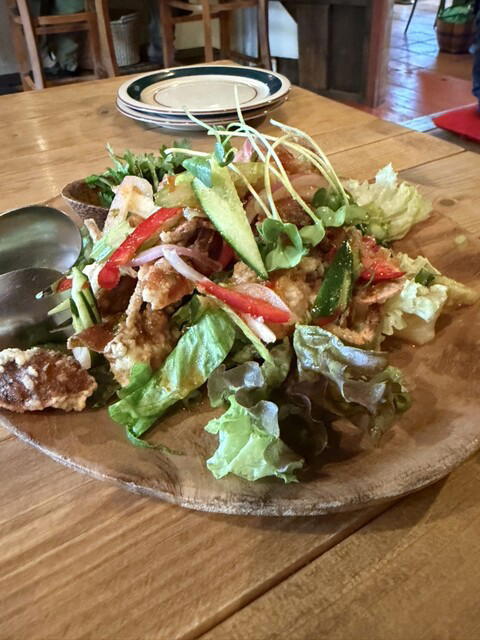
Bars in Suwa-gun
Browse all →
Hotels in Suwa-gun
Browse all →



At a Glance
- Cozy
- Quiet
- Family
- Group Dining
- Casual Hangout
- Solo
- Standalone
- Mountain
Current opening hours
- Monday
- 11:30 AM–1 PM, 5:30–8:30 PM
- Tuesday
- Closed
- Wednesday
- Closed
- Thursday
- 11:30 AM–1 PM, 5:30–8:30 PM
- Friday
- 11:30 AM–1 PM, 5:30–8:30 PM
- Saturday
- 5:30–8:30 PM
- Sunday
- 11:30 AM–1 PM, 5:30–8:30 PM
Hours can change for holidays and private events. Last verified .
A small, homely Chinese eatery with a relaxed, quiet atmosphere, simple décor, and a local, family-friendly feel rather than a formal dining room.