Chai Pani

Washingtonian 100 Very Best Restaurants #29
Our verdict
Chai Pani on 5th Street NE brings the street food traditions of India's chaat culture to Washington D.C.'s NoMa neighbourhood, translating the organized chaos of roadside snack counters into a sit-down format that retains the original's spontaneity. The kitchen draws on the same flavour logic that drives the original Asheville location, which earned a James Beard Award for Outstanding Restaurant in 2022.

Pearl is the En Primeur Club membership app, where members save venues, book tables and use the concierge.
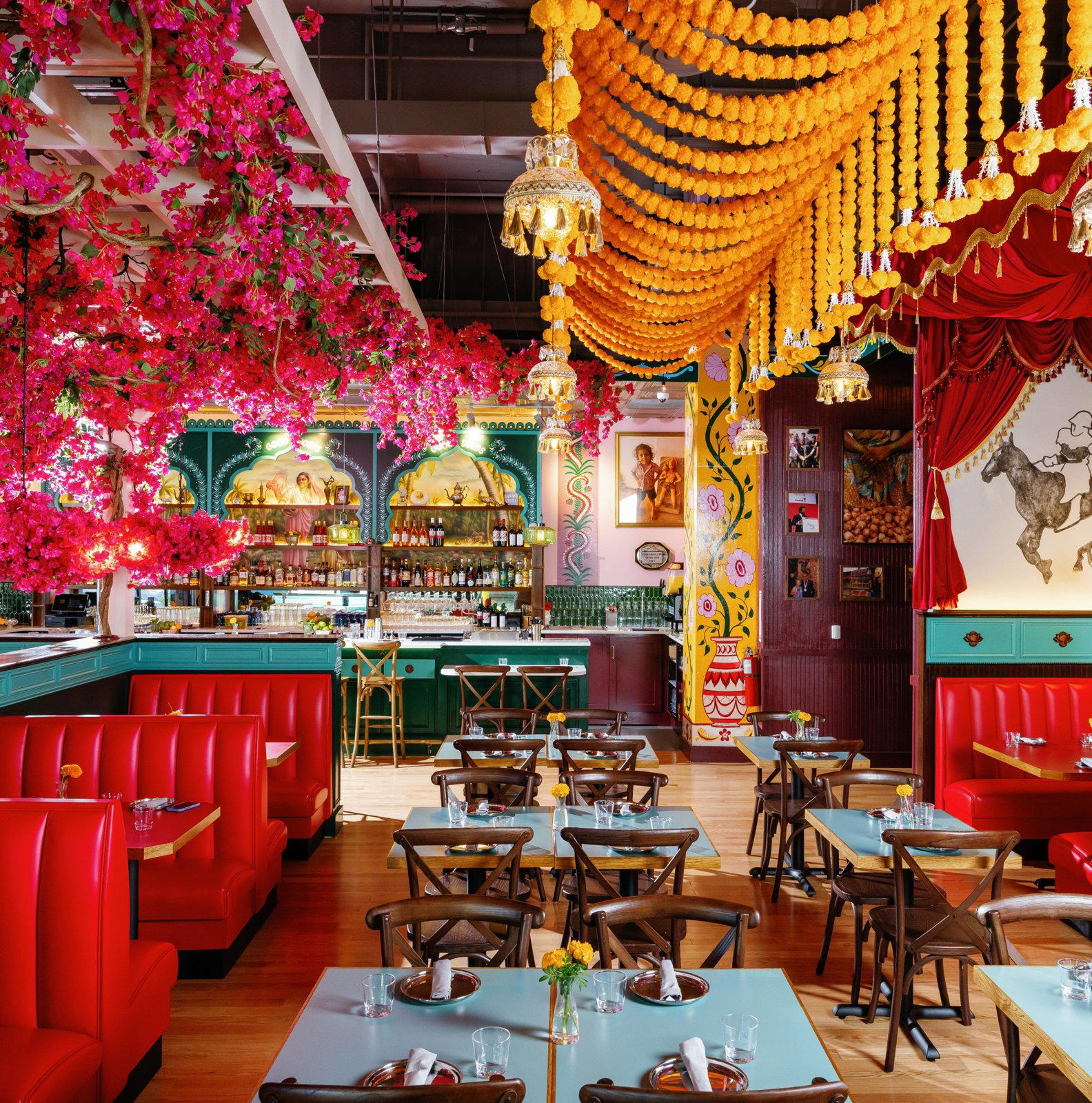
NoMa's Chaat Counter in Context
Washington D.C.'s dining geography has shifted considerably over the past decade. The corridor running through NoMa and the neighborhoods north and east of Union Station has moved from overlooked to genuinely competitive, with a cluster of kitchens that place the area alongside Shaw and 14th Street as a destination rather than a through-route. Chai Pani at 1325 5th Street NE sits inside that shift, representing a category of Indian cooking that D.C.'s restaurant scene had historically underserved: chaat, the tradition of spiced, layered street snacks that originated in North India and evolved differently across every region that adopted it.
Chaat operates on a logic distinct from the subcontinental restaurant formats most American cities know well. Where a tandoor-forward dinner house is organized around proteins and bread, chaat is built around contrast, the interplay of tamarind against chickpea, yogurt against crisp, heat against acid. It is snack architecture rather than composed plating, and the leading versions are evaluated on balance and timing rather than refinement. The Chai Pani model, developed first in Asheville, North Carolina before reaching D.C. applies that framework to a full-service restaurant environment without ironing out its inherent informality.
That Asheville location received the James Beard Award for Outstanding Restaurant in 2022, a category that looks beyond kitchen technique to consider the full operation: service culture, community relationship, and consistency over time. For a chaat-led Indian concept to win in that category placed it in conversation with restaurants whose cooking traditions are far more legible to the American fine dining establishment. It was a signal about where the culinary conversation was moving, not just a local validation.
The Street Food Argument
The broader question Chai Pani engages with, particularly in a city like Washington D.C. is whether Indian street food translates when it moves off the street. The answer depends almost entirely on whether a kitchen resists the gravitational pull toward adaptation and compromise. D.C.'s Indian restaurant scene has, at various points, defaulted to the Anglo-Indian curry house template or the upscale tasting-menu pivot that other immigrant cuisines have used to gain critical attention. Chaat resists both framings: it is too specific to generalize into a curry, and too inherently casual to carry a tasting menu format without becoming something else entirely.
The neighbourhood placement matters here. NoMa has developed a dining character that is younger and less ceremony-conscious than Georgetown or Penn Quarter, which creates conditions where a restaurant organized around shared plates and counter-culture informality can operate on its own terms. For comparison, Oyster Oyster, a Michelin-starred vegetable-forward kitchen in Shaw, demonstrates that the D.C. market can sustain and reward cooking that refuses to dress itself up in conventional fine dining language. Chai Pani occupies a parallel position within the Indian cooking tradition.
Drinks, Pairing Logic, and What the Wine List Signals
Indian street food presents a genuine pairing challenge that most wine programs sidestep entirely. The flavour profiles in chaat, tamarind's concentrated acidity, the weight of chickpea, the sharp green of fresh coriander, the heat of chili, are not natural partners for the structured tannins and oak that define much of the American wine list canon. The smarter approach, common at Indian restaurants that take their beverage program seriously, reaches toward lower-intervention whites, off-dry Rieslings, or sparkling formats that can handle acidic and spiced food without fighting it.
In the broader D.C. dining scene, the relationship between wine programs and cuisines considered outside the European fine dining tradition has been evolving. Albi, the Michelin-starred Middle Eastern kitchen in Navy Yard, has demonstrated that a list can be built around a cuisine that American sommeliers once treated as an afterthought. Causa, the Peruvian kitchen with its own Michelin star, has extended that logic into South American-influenced pairing territory. The implicit argument across these programs is that the wine list should answer to the food's actual flavour structure, not to received ideas about what a serious restaurant drinks. Whether Chai Pani's beverage program commits to that standard at the D.C. location is worth assessing in person, but the culinary logic of chaat strongly argues for it.
For readers accustomed to tasting-menu sommeliers at Jônt or the precision drinks architecture at minibar, Chai Pani's approach to the drinks program will feel different in register and intention. It should. The reference point here is less Burgundy allocation and more the lassi and spiced lemonade traditions that accompany street food in Indian cities, and any beverage list that acknowledges that starting point rather than defaulting to conventional wine-list formulas is already ahead.
Placing Chai Pani in the D.C. Competitive Set
It sits closer to a category of restaurants that carry serious culinary credentials while operating in a register that is deliberately accessible, where the James Beard recognition reflects consistency and cultural contribution rather than technical virtuosity in the European sense.
D.C.'s Michelin-starred Indian kitchens remain scarce relative to the city's South Asian population and the depth of Indian cooking traditions represented across the metro area. Chai Pani's arrival in NoMa introduces a concept that has already demonstrated it can sustain national-level recognition over time, which is a different kind of credential than an opening-year star. For readers building an itinerary around the city's full dining range, see our full Washington, D.C. restaurants guide for the complete picture across price tiers and cuisines.
Planning a Visit
Chai Pani is located at 1325 5th Street NE, Suite A, in Washington D.C.'s NoMa neighbourhood, accessible from the NoMa-Gallaudet U Metro station on the Red Line. The format, shared plates, snack-oriented, casual, tends to suit groups of two to four who intend to order across the menu rather than anchor around a single main. Given the James Beard pedigree attached to the brand and D.C.'s general appetite for the concept, demand at this location runs ahead of walk-in capacity, particularly on weekend evenings. Booking ahead through the venue's reservations system is the more reliable approach. For accommodation options near NoMa and the broader Capitol Hill area, our Washington, D.C. hotels guide covers properties at relevant price points. The city's wider drinking and bar scene is covered in our Washington, D.C. bars guide.
Frequently asked questions
What part of town is Chai Pani in?
Chai Pani is located at 1325 5th St NE Suite A, Washington, DC 20002, Washington, D.C.
Is Chai Pani in Washington D.C. connected to the Asheville or Atlanta locations?
The Chai Pani name is associated with Indian street food restaurants in Asheville and Atlanta, where the concept earned significant recognition including James Beard Award attention. Whether the Washington D.C. location at 1325 5th St NE shares ownership or affiliation with those operations is not confirmed in available documentation. Verifying the connection directly with the venue will clarify whether the D.C. outpost operates under the same kitchen philosophy.
What do people recommend at Chai Pani?
Chai Pani's reputation centres on chaat, the category of Indian street food built around contrasting textures and layered condiments like tamarind and chutneys. The address at 1325 5th St NE puts it in NoMa, a neighbourhood where that kind of casual, counter-driven concept has found a consistent audience.
Should I book Chai Pani in advance?
C. location. For a street food counter in a high-traffic neighbourhood like NoMa, walk-in availability tends to vary considerably by time of day and day of the week.
What has Chai Pani built its reputation on?
Chai Pani has established itself by treating Indian street food as a serious culinary category rather than a secondary offering within a broader Indian menu. In Washington D.C. where the dining conversation around Indian food has historically centred on sit-down restaurants in other corridors, a chaat-forward concept in NoMa occupies a distinct position. The 5th Street NE location positions it within a neighbourhood that has absorbed significant restaurant investment over the past decade.
Can Chai Pani adjust for dietary needs?
Chaat-based menus naturally accommodate vegetarians, since a significant portion of Indian street food traditions are plant-based by default. Specific allergen policies and customisation options are not confirmed in available documentation for the Washington D.C. location. Contacting the venue directly before visiting is the reliable way to confirm what the kitchen can accommodate.
Same-City Peers
Comparable venues nearby, for context on price, style, and recognition.
| Venue | Cuisine | Price | Awards | Notes |
|---|---|---|---|---|
| Chai PaniThis venue (the venue you are viewing) | Modern Indian Street Food | $30–50 | Washingtonian 100 Very Best Restaurants #29 | Not listed |
| Masala Art | Authentic North Indian | $20–30 | Not listed | Tenleytown |
| Chai Pani | Modern Indian Street Food | $30–50 | Washingtonian 100 Very Best Restaurants #29 | Union Market |
| Chopt Creative Salad Co. | Fresh Customizable Salads & Bowls | $10–20 | Not listed | Chinatown |
| Dawson's Market | Organic Market Cafe | Not listed | Not listed | Dupont Circle |
| Peacock Café | American Fusion with Persian Influences | $30–50 | Not listed | West Village Georgetown |
Recognition history
Dated appearances from independent guides and award organizations, with the underlying list record or original source where available.
Washingtonian 100 Very Best Restaurants #29
Washingtonian