
Chacha no Ma gives Tokyo occasion dining a quieter register: tea, vegetables, and a small table-service room in Jingumae rather than ceremony built around champagne or counter theatrics. Its Tabelog Cafe EAST “Tabelog 100” 2025 selection places it in a serious cafe tier, but the appeal is intimate and low-key, suited to birthdays, reunions, or a calm afternoon between Harajuku and Omotesando.
Pearl is the En Primeur Club membership app — saves, bookings, and concierge access live there. Same editors, same standards.
- Address
- 5 Chome-13-14 Jingumae, 渋谷区 Shibuya, Tokyo 150-0001, Japan
- Phone
- +81354688846
- Website
- chachanoma.com
 Saves & bookings on Pearl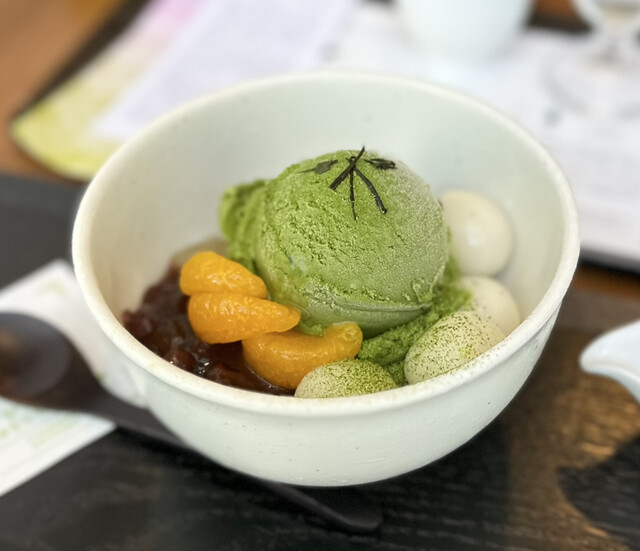
Jingumae changes quickly at street level: fashion traffic from Harajuku, polished Omotesando storefronts, side streets that narrow into quieter pockets. In that setting, Tokyo’s cafe culture can do two different things. It can perform style, or it can make space for time. Chacha no Ma belongs to the second camp, a small table-seating room where tea and vegetable-led cafe cooking carry the occasion without the expense signals of a formal restaurant.
That matters in a city where celebration dining often defaults to sushi counters, yakiniku rooms, hotel French, or teppanyaki. A milestone does not always need a long tasting menu. Sometimes the sharper choice is a contained afternoon: a few people, no smoking, a short operating window, and a format that encourages conversation rather than spectacle. For readers mapping a broader Tokyo itinerary, Our full Tokyo restaurants guide gives the wider restaurant frame, while Our full Tokyo hotels guide, Our full Tokyo bars guide, Our full Tokyo wineries guide, and Our full Tokyo experiences guide help place the stop inside a full day.
Tea-led cafe culture as an occasion format
Tokyo treats cafes with more seriousness than many dining cities. The category includes kissaten traditions, dessert specialists, design-led rooms, and health-focused kitchens that would be casual in format but highly specific in intent. Chacha no Ma’s recognition in Tabelog Cafe EAST “Tabelog 100” 2025, alongside earlier Cafe “Tabelog 100” selections in 2021 and 2022, signals that it is being judged inside that cafe category rather than against full-service fine dining. That distinction is useful: expectations should be calibrated to precision within a compact cafe format, not to ceremony, luxury ingredients, or a chef-driven tasting menu.
The menu identity sits around cafe and vegetable dishes, with a health-and-wellness angle noted in its public listing. That puts it in a different lane from the protein-led Tokyo meal. Compare the decision with gyoza at. 鮪と炭火焼き うお炭 秋葉原店, yakitori at 124. KAGURAZAKA (Yakitori), curry at 3 Chome no Curry Ya San, or the graphic cafe styling of 2D Cafe. The point here is not substitution. It is pacing. A tea-centered afternoon can carry emotional weight without competing with dinner.
That is why the room works for occasions that need intimacy rather than grandeur: a parent-child outing, a restrained birthday, a catch-up with a friend who has already eaten through the city’s louder restaurants. Children are welcomed, private rooms are not part of the setup, and the scale is small enough that the experience reads as personal without requiring formality. The better editorial comparison is not a luxury dining room; it is the Tokyo habit of treating small rituals with discipline.
Jingumae gives the room its tension
Location shapes the meal. Jingumae sits between shopping energy and residential calm, and that in-between quality suits a cafe that is not trying to be a department-store dessert stop. It can function as a pause after Omotesando, a quieter counterpoint to Harajuku, or a gentle anchor before an early evening plan. The nearest station is Meiji Jingumae, with Harajuku and Omotesando also part of the walking orbit, so the surrounding day can move between fashion, galleries, and food without crossing the city.
Within Tokyo’s comparison set, this is a softer register than teppanyaki at Ukai-tei Omotesando, less dinner-driven than contemporary rooms such as HYÈNE or bonélan, and closer in daypart to compact casual names such as Mizuho or Gyoza Lou. Those comparisons clarify the choice: Chacha no Ma is not where to send someone chasing theatre. It is where to send someone who wants the celebration to sit in the conversation itself.
The address also explains why planning matters. Small Tokyo rooms with limited days can punish spontaneity, and a cafe with a 16-seat table layout does not have the elasticity of a larger all-day operation. Reservations are unavailable, so the sensible approach is to treat the visit as a timed part of the afternoon rather than an open-ended drop-in. The reward is not exclusivity; it is a slower pocket inside a district that rarely slows itself down.
How to fold it into a Tokyo food day
A good Tokyo day often works by contrast. Tea and vegetables in Jingumae can precede a sharper evening meal, or it can soften the day after a heavy lunch. Visitors building a wider route might put it against Shinjuku choices such as 12/10 Shinjuku ten, then reserve a different night for regional Japanese comparisons beyond the capital, from -Grilled beef Sukiyaki- KAMAKURA TANUKIAN 鎌倉 たぬき庵 in Kamakura to.cafe in Osaka.know in Kumamoto, (Shoku) Vietnam in Kawasaki, [Curry Senmon Ten] Maruyama Kyoju. in Sapporo, and [ki:] in Kyoto.
For overseas readers, the appeal may be easiest to understand through category rather than cuisine: this is the Japanese cafe as a serious hospitality form. It occupies a different emotional space from sake-bar nights such as Jōdo Saké Bar in Los Angeles or casual rice-focused stops such as Onigiri Time in Pasadena. The Tokyo version is quieter, more compressed, and more dependent on timing. For a celebration that does not need a grand bill or a late reservation, that restraint is the argument.
Quick Comparison
Nearby venues at a similar price tier for orientation.
| Venue | Cuisine | Price | Notes |
|---|---|---|---|
| Chacha no MaThis venue — the venue you are viewing | Japanese tea room & cafe | $$ | Not listed |
| Ginza Kagari (銀座 篝) | Chicken Paitan Ramen | $$ | Ginza |
| Kayanoya (茅乃舎) | Dashi Oden Japanese | $$ | Roppongi |
| Tomita at NRT | Tsukemen Ramen | $$ | Narita Airport |
| CENTRE THE BAKERY Aoyama ten | Japanese shokupan bakery | $$ | Shibuya |
| Hishida-ya Sakaba | Chinese-influenced Izakaya with Fresh Tuna | $$ | Meguro |
Recognition history
Dated appearances from independent guides and award organizations, with the underlying list record or original source where available.
Tabelog 100 #28 · No. 28
Tabelog · Tabelog 100 - Cafe - EAST - 2025












At a Glance
- Quiet
- Cozy
- Modern
- Intimate
- Solo
- Casual Hangout
- After Work
- Date Night
- Design Destination
- Standalone
- Zero Proof
- Sake Program
- Local Sourcing
Current opening hours
- Monday
- Closed
- Tuesday
- Closed
- Wednesday
- Closed
- Thursday
- 1–5 PM
- Friday
- 1–5 PM
- Saturday
- 1–5 PM
- Sunday
- 1–5 PM
Hours can change for holidays and private events. Last verified .
A small, relaxing Japanese tea room tucked off Cat Street, with a calm, non‑smoking space that feels like a quiet hideaway for slowly enjoying carefully brewed tea and delicate sweets.