Our verdict
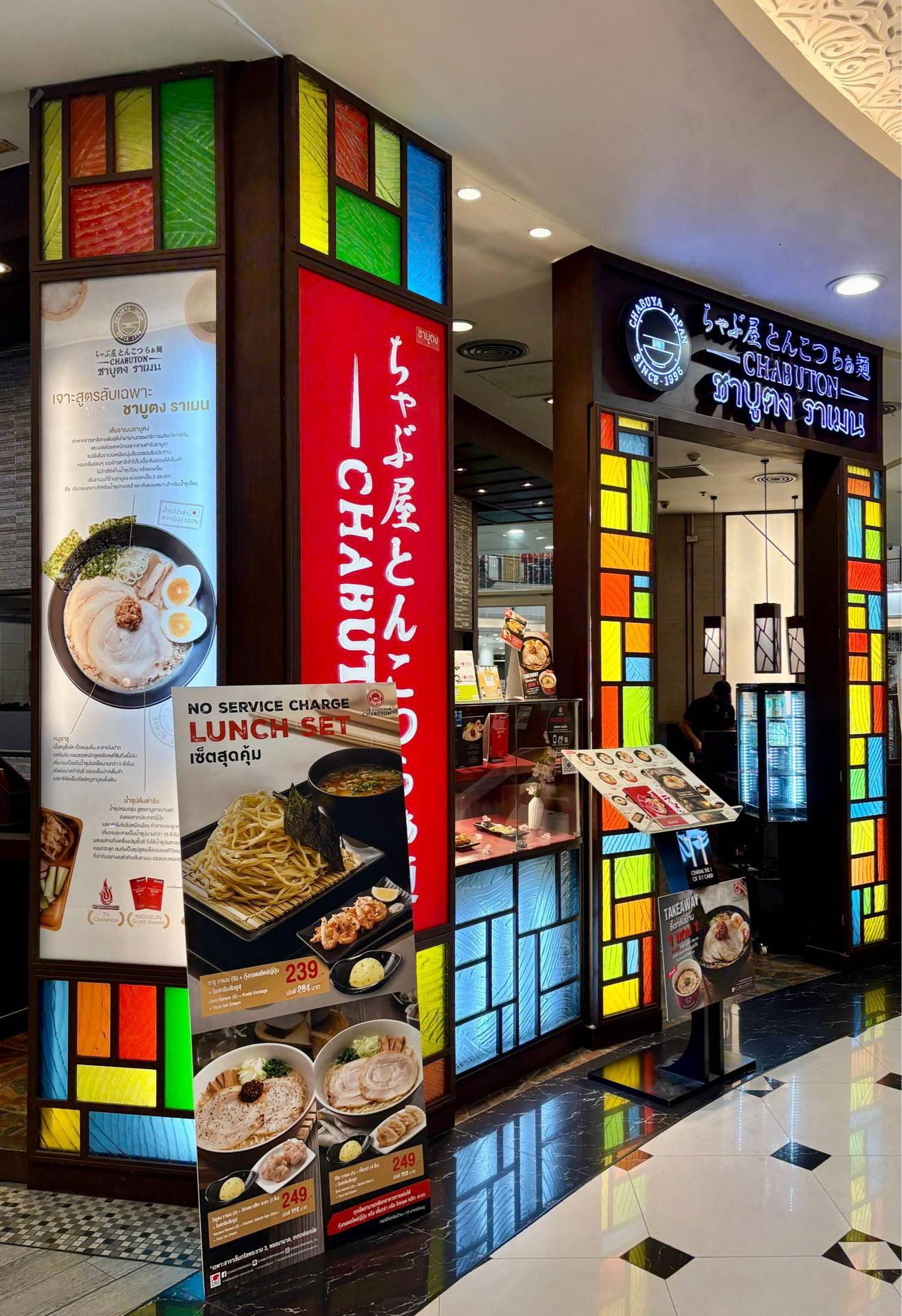
Chabuton Ramen at Fashion Island sits on Ram Inthra Road in Bangkok's Khan Na Yao district, bringing a Japanese ramen format into one of the city's northeastern suburban malls. The brand originates from Japan and operates within a broader Thai mall-dining culture where Japanese chain concepts have taken consistent hold. For ramen in this part of the city, it represents a reliable mid-range option away from the Sukhumvit corridor.
The menu
What to order
- Kakuni & Pork Chashu Tonkotsu Shio Ramen
- Spicy Shio Tonkotsu Ramen
Japanese Ramen in Bangkok's Suburban Mall Circuit
Bangkok's relationship with Japanese ramen is not a recent development. Over the past two decades, the city has absorbed Japanese chain dining at a pace that few other Southeast Asian capitals have matched, with ramen formats spreading well beyond the tourist-dense corridors of Sukhumvit and Silom into residential districts and suburban malls. Fashion Island on Ram Inthra Road, in the Khan Na Yao district of northeastern Bangkok, sits firmly in that second category: a large, locally oriented shopping centre serving a residential catchment rather than an international visitor base. That context matters when assessing what Chabuton Ramen is doing here and for whom.
Chabuton as a brand traces its origins to Japan, where tonkotsu-based ramen formats built around long-simmered pork bone broth have been codified and exported as franchise concepts across Asia. The logic of ingredient sourcing in this format is worth understanding: tonkotsu broth depends on extended reduction, often twelve hours or more, which means the stock's depth comes from process as much as from any single premium ingredient. That approach travels well across borders because it relies on a replicable technique rather than a hyper-local supply chain. It is a different proposition from the farm-to-bowl sourcing philosophy you find at, say, PRU in Phuket, where the kitchen's identity is inseparable from its relationship with specific regional producers.
The Mall Dining Context and What It Tells You
Fashion Island is not a luxury retail destination. It draws families, office workers from the surrounding residential zones, and shoppers who live in Khan Na Yao and Minburi rather than visitors making a special trip. The dining floor reflects that catchment: a mix of Thai chains, Japanese formats, and fast-casual Korean concepts, all operating at accessible price points. Within that mix, Chabuton occupies the Japanese ramen slot, a category that Thai mall tenants have filled consistently since the mid-2000s because the format converts well in a non-Japanese market: the bowl is self-contained, customizable, filling, and priced to compete with mid-range Thai options.
This is a meaningfully different tier from Bangkok's destination dining. Venues like Sorn, which operates at the upper end of Southern Thai cuisine and carries Michelin recognition, or Baan Tepa in its Thai contemporary format, exist in a planning-required, reservation-driven segment that serves a different purpose entirely. So do internationally framed fine dining rooms like Sühring and Gaa, or Mediterranean-influenced kitchens like Côte by Mauro Colagreco. Chabuton at Fashion Island is not in conversation with any of them. It serves a neighbourhood function, and understanding that prevents misaligned expectations in either direction.
Ramen Sourcing Logic and the Bangkok Chain Format
The ingredient question in Japanese chain ramen operating in Thailand involves a specific set of trade-offs. Core flavour components, including tare (the concentrated seasoning base), certain imported noodle varieties, and branded broth concentrates, are often sourced or quality-controlled at the brand level to maintain consistency across franchise locations. Local sourcing enters the picture for produce, supplementary proteins, and elements where Thai supply chains offer fresher or more cost-effective alternatives. The result is a bowl that is structurally Japanese in its format and seasoning logic but practically hybrid in its sourcing reality.
That hybrid model is characteristic of how Japanese dining concepts have scaled across Bangkok and broader Thailand. Compare it to more rigorously local sourcing approaches in the Thai regional dining category: Baan Chik Pork Noodles in Udon Thani or Baan Heng in Khon Kaen, where the ingredient geography is entirely domestic and often hyper-regional. The sourcing philosophy is different not because one is better but because the culinary tradition being served demands different things. Japanese ramen, when franchised, prioritises brand consistency; Thai regional cooking prioritises place-specific ingredients. Both are coherent positions.
For a broader view of how sourcing and regional identity interact across Thailand's dining spectrum, venues like AKKEE in Pak Kret, Anuwat in Phang Nga, and Ayutthayarom in Phra Nakhon Si Ayutthaya each demonstrate how Thai operators at various price points anchor their menus to specific local produce and cooking traditions. That is a different project from what a Japanese ramen chain is attempting, and the comparison clarifies rather than diminishes either approach.
Getting There and Planning Your Visit
Fashion Island sits on Ram Inthra Road, address at 585 Ram Inthra Rd, Khan Na Yao, Bangkok 10230. The mall is most easily reached by car or taxi from central Bangkok, as the BTS and MRT networks do not extend to this part of the northeastern city. From the Sukhumvit line's On Nut terminus, the drive runs approximately thirty to forty minutes depending on traffic conditions, which on Ram Inthra Road during evening rush hours can be considerable. Grab is the practical choice for most visitors arriving without their own transport. The mall's operating hours govern when Chabuton is accessible; specific restaurant hours were not available at the time of writing, so confirming directly before making a dedicated trip is advisable. For visitors already in the Khan Na Yao or Minburi area, the location is direct to incorporate into an existing itinerary.
Given the mall-dining format, walk-in is likely the standard approach, consistent with how most casual Japanese chain restaurants in Bangkok's suburban mall circuit operate. For context on how Bangkok's broader dining scene is structured, our full Bangkok restaurants guide covers the city's range from neighbourhood casual to destination fine dining, including venues in the central districts that require advance planning.
Beyond Bangkok, the Thai dining scene extends to well-regarded options at various price points: Baan Suan Lung Khai on Ko Samui, Banmai Chay Nam in Nakhon Ratchasima, and Banrimbung in Nakhon Pathom each represent how Thai regional dining operates outside the capital. For those calibrating Bangkok's casual Japanese segment against global reference points in other categories, Le Bernardin in New York City and Lazy Bear in San Francisco illustrate the upper end of what destination-dining formats look like when sourcing and technique are the primary editorial story. Chabuton at Fashion Island occupies a different position on that spectrum, one defined by accessibility, consistency, and neighbourhood function rather than by the sourcing provenance or culinary ambition that drives coverage of Bangkok's upper tier.
Frequently asked questions
Where is Chabuton Ramen แฟชั่น ไอส์แลนด์ in Bangkok?
Chabuton Ramen แฟชั่น ไอส์แลนด์ is located at 585 Ram Inthra Rd, Khan Na Yao, Bangkok 10230, Thailand, Bangkok.
Is Chabuton Ramen at Fashion Island suitable for families visiting from central Bangkok?
Fashion Island on Ram Inthra Road sits in the northeastern residential zone of Bangkok, roughly 30 minutes by car from central areas like Asok or Ratchada depending on traffic. The mall format draws a predominantly local family crowd from the Khan Na Yao and surrounding districts. No awards or star ratings are currently recorded for this specific branch, which positions it as a neighbourhood-circuit option rather than a destination dining stop from the city centre.
What should I order at Chabuton Ramen แฟชั่น ไอส์แลนด์?
Chabuton built its reputation in Japan on tonkotsu-style broths, so that category is the logical starting point at any of its Thailand locations. The Bangkok mall format typically keeps the core menu consistent with the broader Chabuton chain lineup.
What's the best way to book Chabuton Ramen แฟชั่น ไอส์แลนด์?
No booking contact, website, or reservation system is documented for this branch at 585 Ram Inthra Rd, Khan Na Yao, Bangkok 10230. Walk-in is the standard approach for mall-format ramen chains in Bangkok. Visiting during off-peak hours, outside the weekend lunch window, will reduce wait times at the counter.
At-a-Glance Comparison
| Venue | Cuisine | Price | Awards | Notes |
|---|---|---|---|---|
| Chabuton Ramen แฟชั่น ไอส์แลนด์This venue (the venue you are viewing) | Japanese Ramen | Not listed | Not listed | Not listed |
| Sorn | Fine Southern Thai | $200–300 | 3 Michelin Stars · World's 50 Best #12 | Southern Thai, ฿฿฿฿ |
| Baan Tepa | Creative Thai Fine Dining | $150–200 | 2 Michelin Stars · World's 50 Best #53 | Thai contemporary, ฿฿฿฿ |
| Côte by Mauro Colagreco | Riviera Mediterranean Fine Dining | $200–300 | 2 Michelin Stars · World's 50 Best #91 | Mediterranean, Modern Cuisine, ฿฿฿฿ |
| Gaa | Modern Indian Fine Dining with Thai Influences | $150–200 | 2 Michelin Stars · World's 50 Best #95 | Modern Indian, Indian, ฿฿฿฿ |
| Sühring | Modern German Fine Dining | $200–300 | 3 Michelin Stars · World's 50 Best #18 | German, ฿฿฿฿ |
Continue exploring
More in Bangkok
Restaurants in Bangkok
All restaurants in Bangkok →
Bars in Bangkok
All bars in Bangkok →
Details
- Casual
- Casual Hangout
- Family
- Standalone
- Sake Program
- A La Carte
Casual mall restaurant with comfortable indoor and some outdoor seating, spacious but lacking distinctive atmosphere.