
Michelin Plate
Our verdict
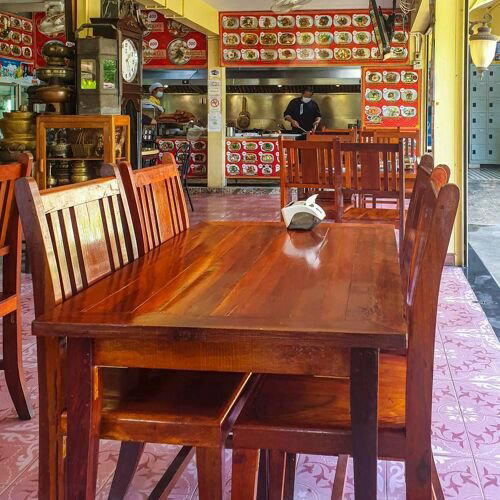
A riverside Thai restaurant in the heart of Ayutthaya's historic district, Ayutthayarom holds back-to-back Michelin Plate recognition (2024 and 2025) and sits in the mid-range price tier. Seating is arranged across traditional Thai sala pavilions facing a golden pagoda, with a kitchen focused on intense central Thai flavours, sour broths, river fish, and coconut-milk desserts drawn from the region's own culinary register.

Pearl is the En Primeur Club membership app, where members save venues, book tables and use the concierge.
The menu
What to order
- Sour soup with fresh chilli and squid
- Fried river fish in chu chi curry
- Fresh pineapple with minced pork and peanuts
- Stir fried crab meat with yellow curry
Riverside Dining and the Ayutthaya Culinary Tradition
Ayutthaya's relationship with water has always defined how its residents eat. The Chao Phraya, Pa Sak, and Lopburi rivers once made this city the trading capital of mainland Southeast Asia, and the kitchen traditions that developed here, heavy on freshwater fish, tamarind-soured broths, and coconut-enriched curries, carry that riverine character directly onto the plate. When the Michelin Guide began covering Thailand beyond Bangkok, it found that provincial cities like Phra Nakhon Si Ayutthaya were sustaining cooking registers distinct from the capital's more polished restaurant scene: less performance, more locality. Ayutthayarom fits precisely into that category, earning Michelin Plate recognition in both 2024 and 2025 for food that reads as a document of place rather than a chef's personal statement.
The setting reinforces that reading. The restaurant occupies a riverside position in Ban Pom, with seating distributed across small, open-sided Thai sala pavilions shaded by mature trees. The view across the water takes in a gilded pagoda, not a decorative backdrop but an actual fragment of the ancient city's surviving temple fabric. In a town where the ruins are the attraction, eating with that view in front of you anchors the meal in its geographical and historical context more effectively than any interior design scheme could. The space is decorated in traditional Thai style, consistent with the food it serves.
The Hawker Tradition Behind the Menu
To understand what Ayutthayarom is doing, it helps to understand where central Thai cooking comes from at a street level. The flavour logic of this region predates the restaurant as a format by centuries. The sour-hot-saline triangle that governs so many dishes here traces back to fermented fish paste, tamarind, fresh chillies, and the particular sweetness of coconut sugar grown in the central plains. These were the pantry staples of boat vendors and riverside market cooks long before they appeared on any printed menu. The leading riverside restaurants in Ayutthaya today are essentially translating that hawker and home-cook inheritance into a seated format, with the river providing both the primary protein and the setting.
Ayutthayarom's kitchen works within that logic. The sour soup with fresh chilli and squid draws directly on the region's preference for sharp, aggressive acidity cut with heat, a profile that reads differently here than it does in the south or northeast, less coconut-forward than southern Thai sour soups, more austere in its sourness than a Bangkok-style tom yum. The fried river fish in chu chi curry similarly reflects central Thai technique: chu chi is a thick, reduced coconut-milk curry paste, fragrant with kaffir lime and galangal, and when applied to a locally sourced river fish it produces a dish that Bangkok fine-dining venues like Nahm or Samrub Samrub Thai often reference as an ancestral touchstone. Here, it arrives without the fine-dining framing, just the dish, cooked with the ingredients available locally.
The meal ends with Thai desserts made from fresh coconut milk, a detail worth noting because coconut milk quality varies enormously depending on whether it comes from fresh-pressed fruit or packaged concentrate. The Michelin Guide's assessors flag this as a point of distinction, and it aligns with the broader pattern of central Thai dessert-making, bua loi, khanom chan, thong yip, where the fat content and fragrance of the coconut is the structural and flavour base of the entire category.
Where Ayutthayarom Sits in the Local Scene
Phra Nakhon Si Ayutthaya's restaurant scene is smaller and less stratified than Chiang Mai's or Phuket's, but it has a distinct character rooted in its position as a day-trip and short-stay destination for Bangkok visitors. The mid-range Thai category (฿฿) here is competitive: Baan Ta Ko Rai operates in the same price tier with a comparable Thai focus, while Baan Mai Rim Nahm and Baan Pomphet occupy riverside positions in the same general neighbourhood. What separates Ayutthayarom from that peer group is the Michelin recognition, which places it in a smaller subset alongside Michelin-tracked Thai restaurants across the provinces, a cohort that includes venues like Aeeen in Chiang Mai and AKKEE in Pak Kret at different price points and formats.
For visitors building a broader picture of Thai Michelin dining, the contrast between Ayutthayarom's provincial, riverside format and the elaborate tasting menus at venues like Sorn in Bangkok or PRU in Phuket is instructive. The Plate designation does not imply the same investment or format, it signals cooking that meets Michelin's quality threshold without the fine-dining scaffolding. That distinction matters when setting expectations: Ayutthayarom is not a destination tasting-menu experience, it is a well-executed, Michelin-recognised expression of regional Thai cooking in an atmospheric riverside setting, priced accessibly within the ฿฿ bracket.
Other well-regarded addresses in the city worth pairing with a visit include Baan Ton Sai and Baan Pu Karn. For a complete view of what the city offers across hotels, bars, and experiences, see our full Phra Nakhon Si Ayutthaya restaurants guide, our full Phra Nakhon Si Ayutthaya hotels guide, our full Phra Nakhon Si Ayutthaya bars guide, our full Phra Nakhon Si Ayutthaya wineries guide, and our full Phra Nakhon Si Ayutthaya experiences guide.
Planning Your Visit
Ayutthayarom is located at 1/1 Ban Pom in Phra Nakhon Si Ayutthaya District, roughly 80 kilometres north of Bangkok and reachable in under two hours by road or train. The restaurant sits within the Ban Pom area on the western bank, close to the main temple ruins, making it a natural stop on any structured tour of the historical park. The shaded pavilion seating and riverside position make midday visits more comfortable than they would be at many open-air venues in the region. The ฿฿ price range positions it as an accessible lunch or dinner option for visitors already spending on entrance fees and transport across the UNESCO-listed site. For visitors already familiar with Thai regional cooking through venues like Agave in Ubon Ratchathani or The Spa in Lamai Beach, the flavour register here will read as distinctly central Thai in its sourness and its use of river protein.
Frequently asked questions
What's the price range at Ayutthayarom?
Pricing at Ayutthayarom is listed as ฿฿.
What awards or recognition does Ayutthayarom have?
Ayutthayarom has received recognition including: Situated in a pleasant, cool, and shady location, the riverside offers seating in small Thai pavilions and boasts views of a golden pagoda. The space is decorated in traditional Thai style, in keeping with the cuisine, which features intens….
What's the must-try dish at Ayutthayarom?
The Michelin Guide's assessors specifically flagged two dishes: the sour soup with fresh chilli and squid, and the fried river fish in chu chi curry. Both reflect the restaurant's focus on intense local flavours rooted in central Thai cooking. The chu chi preparation in particular showcases the aromatic depth that earned Ayutthayarom consecutive Michelin Plate recognition in 2024 and 2025.
What's Ayutthayarom's location?
Ayutthayarom is located at 1 1, Ban Pom, Phra Nakhon Si Ayutthaya District, Phra Nakhon Si Ayutthaya 13000, Thailand, Phra Nakhon Si Ayutthaya.
Price and Positioning
| Venue | Cuisine | Price | Awards |
|---|---|---|---|
| AyutthayaromThis venue (the venue you are viewing) | Authentic Thai Riverside | $10–20 | Michelin Plate |
| Baan Ta Ko Rai | Authentic Central Thai | $10–20 | Michelin Bib Gourmand |
| Pa Lek Boat Noodles | Authentic Thai Boat Noodles | $1–10 | Michelin Bib Gourmand |
| Angeum | Authentic Vietnamese | $10–20 | Michelin Plate |
| Gu Cherng | Authentic Chinese Dim Sum & Peking Duck | Not listed | Michelin Plate |
| Here Klae Pork Satay | Thai Pork Satay | $1–10 | Michelin Bib Gourmand |
Recognition history
Dated appearances from independent guides and award organizations, with the underlying list record or original source where available.
Michelin Plate
Michelin
Full recognition history (3 entries)
Michelin Plate
Michelin
Michelin Plate
Michelin
Continue exploring
More in Ayutthaya
Details
- Scenic
- Romantic
- Classic
- Date Night
- Group Dining
- Casual Hangout
- Family
- Waterfront
- Garden
- Terrace
- Local Sourcing
- Waterfront
- Garden
- A La Carte
- Family Style
- Vegetarian Friendly
- Pescatarian Friendly
Current opening hours
- Monday
- 10 AM–9 PM
- Tuesday
- 10 AM–9 PM
- Wednesday
- 10 AM–9 PM
- Thursday
- 10 AM–9 PM
- Friday
- 10 AM–9 PM
- Saturday
- 10 AM–9 PM
- Sunday
- 10 AM–9 PM
Hours can change for holidays and private events. Hours as of .
Pleasant, cool, and shady riverside location with traditional Thai architectural style and natural lighting from the water and garden surroundings.