
Michelin Plate
Our verdict
A Michelin Plate-recognised street food stall in Thai Mueang, Phang Nga, Anuwat holds consecutive Michelin distinctions for 2024 and 2025, a signal that the inspectors keep returning. At single-baht pricing, it sits at the accessible end of the province's recognised dining spectrum, and represents exactly the kind of rooted, ingredient-led cooking that southern Thailand does without ceremony.

Pearl is the En Primeur Club membership app, where members save venues, book tables and use the concierge.
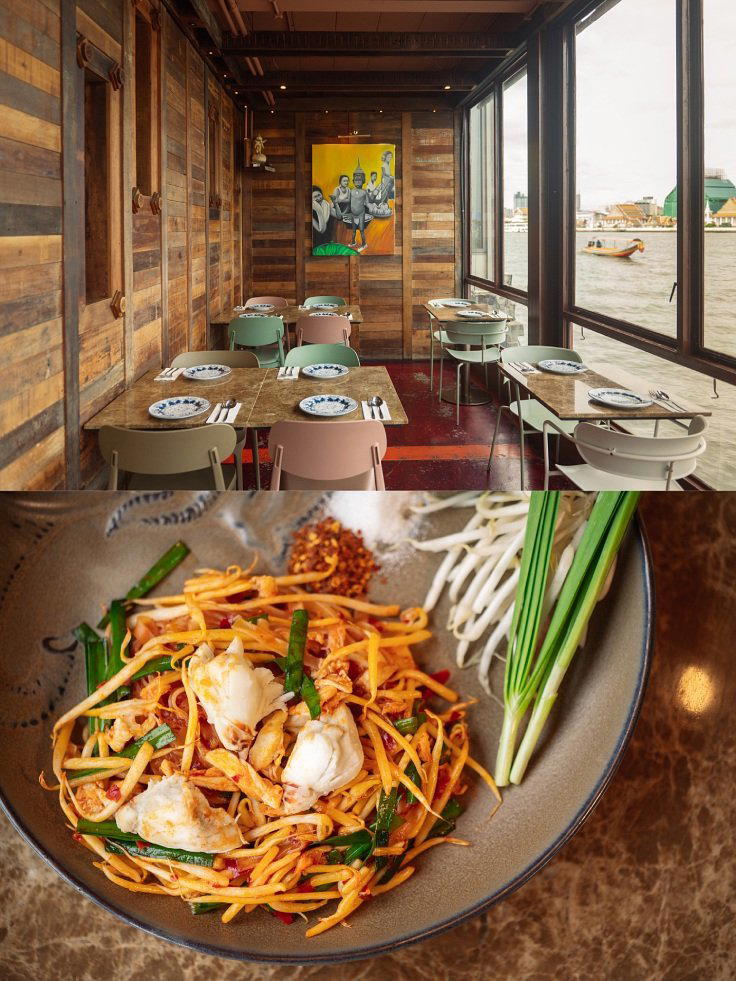
The menu
What to order
- Crispy Pork Rice
- Grilled Pork
- BBQ Pork
- Clear Chicken Soup
Where the Southern Thai Pantry Meets the Roadside Stall
Thai Mueang is not a district that appears on many itineraries. It sits between Khao Lak's resort corridor to the south and Phang Nga town to the north, a stretch of coastline and agricultural land that most travellers pass through on the way to somewhere else. That geography shapes what you eat here: the cooking reflects proximity to the Andaman Sea, to rubber and palm plantations, and to the kind of household-level culinary knowledge that rarely gets documented. Anuwat, operating out of a modest address in Thai Mueang District, is a product of that environment, and the Michelin Guide has taken notice, awarding consecutive Michelin Plates in 2024 and 2025.
The Michelin Plate is a specific, underappreciated designation. It does not carry the star hierarchy, but it marks kitchens where inspectors believe the cooking is technically sound and worth the detour. For a single-baht street food operation in a district this far from the tourism mainstream, two consecutive Plates represent an unusually clear signal: the food is consistent, the sourcing matters, and the kitchen is not coasting.
Ingredient Proximity as a Culinary Framework
Southern Thai street food derives much of its character from the supply chain around it. The Andaman coastline running past Thai Mueang district produces shellfish, fish, and crustaceans that travel short distances to the cooking vessels that serve them. Inland, smallholder farms contribute fresh herbs, chillies, and the aromatics that define the southern flavour profile, heavier on turmeric, sharper on heat, more reliant on dried spice than the milder, coconut-softened palate of central Thai cooking. Anuwat's single-baht price point suggests a kitchen working within this local supply network rather than importing premium product from further afield. At this price tier, the equation almost requires it: margin discipline forces proximity.
That sourcing model is not incidental to quality, it is the mechanism of it. Southern Thai street food at its most coherent is a form of hyper-local cooking, where the quality ceiling is set by what arrived that morning and the skill of the person at the wok or charcoal grill. The Michelin designation, repeated across two consecutive guides, implies that Anuwat is executing within that framework at a level that inspectors found consistently above the baseline. For the reader calibrating which stops to make in this province, that is a meaningful data point.
Compare the approach to what is happening at the higher end of Thailand's recognised dining circuit: Sorn in Bangkok has built a reputation on tracing southern Thai ingredients to specific producers and elevating them through a tasting menu format. PRU in Phuket takes a farm-to-table position within a resort context. Anuwat operates at the opposite end of the format spectrum, but the underlying logic, that southern Thailand's ingredient base is worth paying attention to, is the same. The difference is that here, the argument is made in a single bowl or plate at street food prices, without ceremony.
The Street Food Tier in Phang Nga Province
Phang Nga's recognised dining scene is thin by Phuket or Bangkok standards, which makes each Michelin distinction carry more weight. Within the province's street food category, Anuwat shares its single-baht tier with operations like Bang Dean and Khok Kloi Tom Yam Noodles with Eggs, as well as Khun Thip's Satay. These are operations where the cooking is close to the produce, the format is direct, and the price reflects the local economic context rather than any premium positioning. The gap between this tier and the province's higher-priced options, Baan Rearn Mai at the seafood end, or Aulis at the creative fine-dining tier, is substantial, and the comparison reinforces what makes Anuwat's Michelin recognition notable: the inspectors are not applying a separate standard for street food. The Plate means the food is good, full stop.
Across Southeast Asia, this dynamic is well established. Hill Street Tai Hwa Pork Noodle in Singapore and 545 Whampoa Prawn Noodles both hold Michelin recognition as hawker stalls, and both demonstrate that the guide's methodology is format-agnostic when the cooking meets the threshold. Anuwat fits into that same regional pattern, where Michelin's Southeast Asia operations have consistently validated the idea that technical precision and ingredient quality are not the exclusive property of formal restaurant spaces.
In Thailand specifically, the street food Michelin list includes entries at every price tier. AKKEE in Pak Kret and Aeeen in Chiang Mai illustrate how the designation travels across regions and formats. Anuwat's two consecutive Plates place it within this national pattern rather than as an outlier.
Planning a Visit to Thai Mueang
Thai Mueang is roughly equidistant between Khao Lak and Phang Nga town, and most visitors arriving from Phuket International Airport reach the district in under ninety minutes by road. The area is not set up as a dining destination in the conventional sense, there is no strip of restaurants, no tourist infrastructure built around the food scene. That means Anuwat sits within a working district rather than a curated experience zone, which is precisely the context that tends to produce this kind of cooking.
Given the street food format and single-baht pricing, no advance booking infrastructure should be assumed. The standard approach for this category of operation across Thailand is to arrive at core meal hours, midday or early evening, and accept that seating may be simple and the menu may be limited by what was available that day.
For those building a broader Phang Nga itinerary, the full picture is available across our guides: our full Phang Nga restaurants guide, our full Phang Nga hotels guide, our full Phang Nga bars guide, our full Phang Nga wineries guide, and our full Phang Nga experiences guide. For further reference on how southern Thai culinary traditions translate across formats and price points, the work being done at Agave in Ubon Ratchathani and The Spa in Lamai Beach offers useful comparative perspectives from elsewhere in the country.
Frequently asked questions
How much does it cost to eat at Anuwat?
Pricing at Anuwat is listed as ฿.
What kind of recognition has Anuwat received?
Anuwat has received recognition including: Michelin Plate (2025); Michelin Plate (2024).
What should I order at Anuwat?
Anuwat holds a Michelin Plate for Southern Thai street food, so the menu draws on the Andaman coastline's supply chain, expect dishes rooted in the region's seafood and spice traditions. The ฿ price tier means most dishes cost very little by any standard.
Where do I go for Anuwat?
Anuwat is located at 97V5+FQ3, Thai Mueang, Thai Mueang District, Phang Nga 82120, Thailand, Phang Nga.
What's the best way to book Anuwat?
No phone number or website is listed for Anuwat, which is consistent with many Michelin Plate street food operations in rural Thai districts. Walk-ins are the standard approach for venues at this tier and price point in Thai Mueang. Arriving early in a sitting is advisable given the Michelin recognition in both 2024 and 2025.
What is Anuwat known for?
Anuwat is a Michelin Plate recipient in both 2024 and 2025, making it one of a small number of recognised dining addresses in Phang Nga province. It serves Southern Thai street food in Thai Mueang district, a low-profile corridor between Khao Lak and Phang Nga town that rarely features on tourist itineraries. The recognition is notable precisely because Phang Nga's formal dining scene is sparse compared to Phuket or Bangkok.
In Context: Similar Options
A compact comparison to help you place this venue among nearby peers.
| Venue | Cuisine | Price | Awards | Notes |
|---|---|---|---|---|
| AnuwatThis venue (the venue you are viewing) | Authentic Southern Thai Street Food | $1–10 | Michelin Plate | Not listed |
| Hok Kee Lao | Thai-Chinese with Southern Thai influences | $10–20 | Michelin Bib Gourmand | Thai-Chinese, ฿฿ |
| Krua Luang Ten | Southern Thai | $10–20 | Michelin Bib Gourmand | ฿ |
| Baan Rearn Mai | Thai Seafood | Not listed | Michelin Plate | Seafood, ฿฿ |
| Bang Dean | Thai-Muslim Street Food | $1–10 | Michelin Plate | Street Food, ฿ |
| Beach Grill and Bar | Mediterranean Beach Grill | $20–30 | Michelin Plate | Mediterranean Cuisine, ฿฿฿ |
Recognition history
Dated appearances from independent guides and award organizations, with the underlying list record or original source where available.
Michelin Plate
Michelin
Full recognition history (2 entries)
Michelin Plate
Michelin
Continue exploring
More in Phang Nga
Restaurants in Phang Nga
All restaurants in Phang Nga →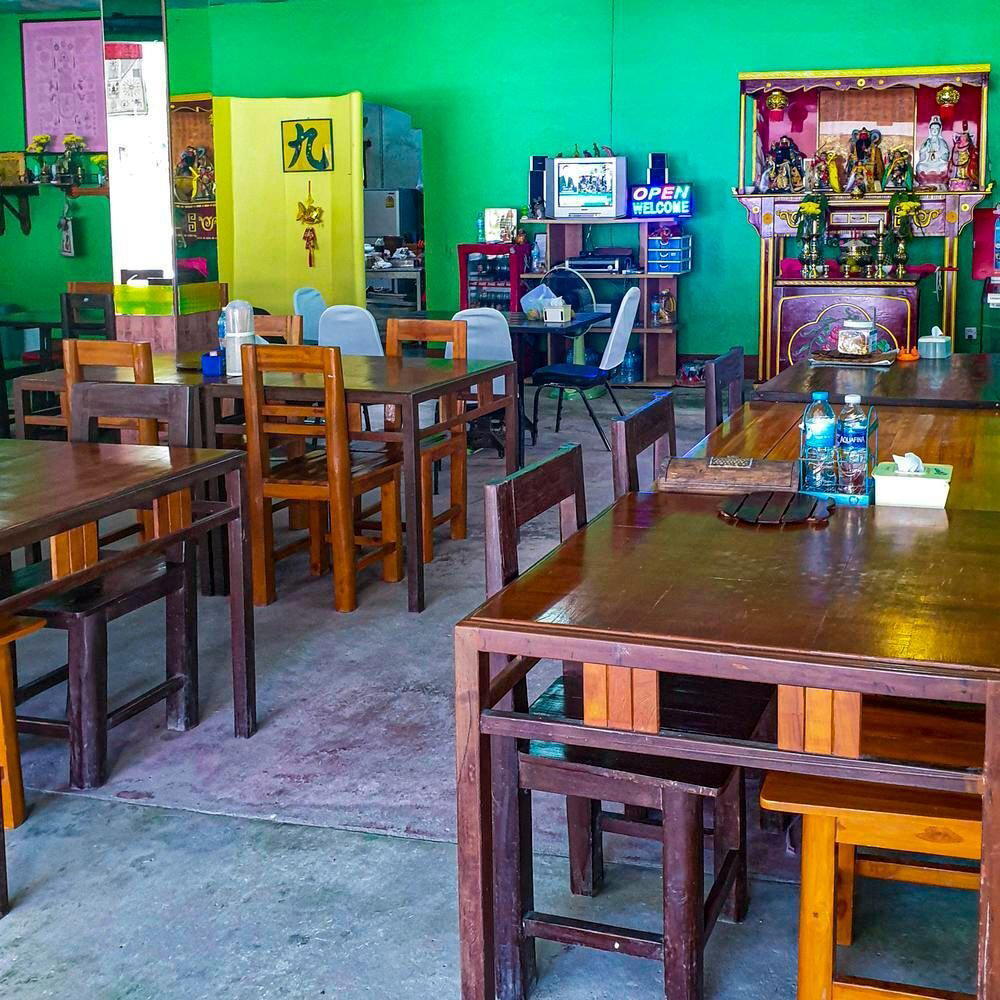
Bars in Phang Nga
Browse all →
Details
- Cozy
- Rustic
- Family
- Casual Hangout
- Standalone
- Local Sourcing
- A La Carte
Nostalgic 1980s shop atmosphere, simple yet full of heart with a charming, magical air.