On Rue Pasteur in the old port quarter of Cassis, Café Sardine occupies the modest, sun-warmed register that defines the town's most honest dining. The address reads as a neighbourhood café, but the kitchen draws on the Provençal coastline's daily catch in a way that places it firmly within Cassis's broader conversation about where Mediterranean ingredients actually come from and what to do with them once they arrive.
Pearl is the En Primeur Club membership app — saves, bookings, and concierge access live there. Same editors, same standards.
- Address
- 9 Rue Pasteur, 13260 Cassis, France
- Phone
- +33442012484
- Website
- cafe-sardine.fr
- Directions
- Get directions
 Saves & bookings on Pearl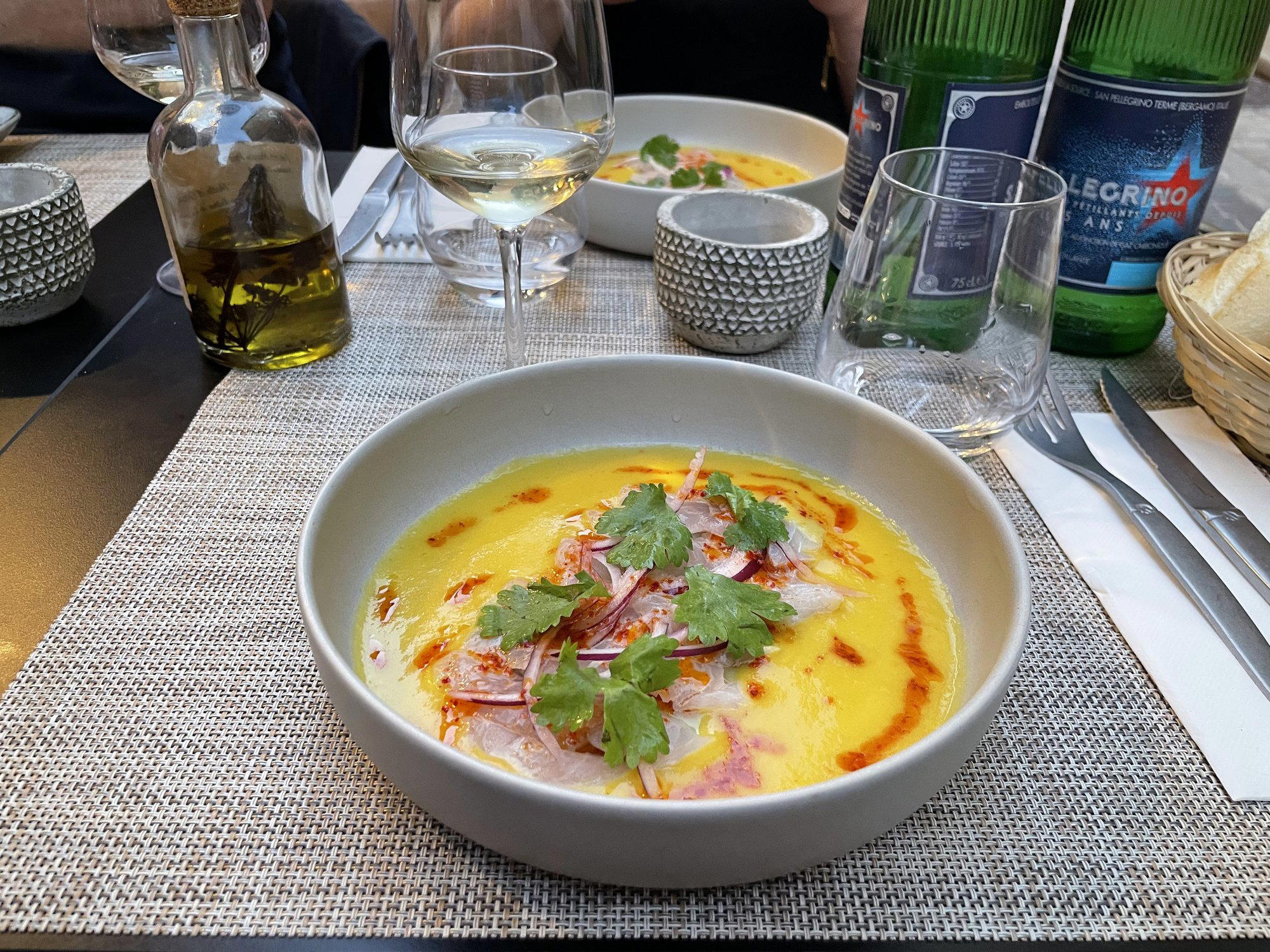
Where the Calanques Meet the Table
Cassis has always operated at two speeds. There is the polished tier, represented by addresses like La Villa Madie, where the Mediterranean becomes a canvas for precision cooking in the modern French tradition. And then there is the older, quieter register: small rooms on side streets, blackboards that change with the morning market, and a kitchen philosophy that depends less on technique than on proximity to the source. Café Sardine is a Mediterranean seafood restaurant at 9 Rue Pasteur in Cassis, France. The street runs just back from the port, away from the tourist-facing terraces, and the room itself signals its intentions early: this is a place built around what came off the boats, not around what photographs well.
That distinction matters in a town like Cassis, where the distance between a kitchen and the fishing quay can be measured in minutes rather than supply-chain links. The Mediterranean coast of Provence operates on a sourcing logic that larger cities can only approximate. Local fishermen working the waters around the Calanques de Cassis, the dramatic limestone inlet system that frames the town to the east, bring in rouget, sea bream, octopus, and the anchovies that gave the café its name. The sardine itself, once the workhorse protein of the entire Provençal coast from Marseille to Toulon, has been partly displaced by more glamorous species on higher-end menus. Addresses like Café Sardine that keep it in the frame are anchoring a tradition rather than chasing a trend.
The Sourcing Logic of a Provençal Port Kitchen
Coastal Provence has a specific set of market rhythms that differ from those further inland. The morning fish market in Cassis, like those in nearby Marseille, sets the day's agenda for kitchens that choose to follow it. Menus at this level of dining are not engineered weeks in advance: they are negotiated at the quay and adjusted at the stove. This is the editorial angle that separates a café like this from the fixed-menu fine-dining tier represented regionally by restaurants such as La Table du Castellet in Le Castellet or, at the national level, multi-starred institutions like Mirazur in Menton and Alléno Paris au Pavillon Ledoyen. Those kitchens plan; this one responds.
That responsiveness has a lineage. The cooking traditions of coastal Provence, shaped by Ligurian, Greek, and Arabic influences layered over centuries, have always prioritised what was available over what was canonical. Bouillabaisse, one famous expression of this principle, is essentially a document of proximity: every ingredient in the pot came from water within reach of the Marseille docks. The same logic applies at the simpler end of the spectrum, where grilled fish with olive oil, herbs, and a squeeze of citrus is less a recipe than a philosophy of restraint in the presence of good raw material. Café Sardine's positioning in Cassis connects it to this deeper tradition, one that restaurants from Bras in Laguiole to Auberge de l'Ill in Illhaeusern have each interpreted through their own regional ingredients and philosophies.
Cassis in Context: Where Café Sardine Sits in the Town's Dining Tier
Cassis punches above its size when it comes to dining range. A town of fewer than eight thousand permanent residents supports a spectrum that runs from destination-level fine dining down through brasseries, bistros, and port-facing cafés. La Villa Madie holds the anchor position at the upper end, with Michelin recognition and a format that draws visitors making dedicated trips from Marseille and beyond. Addresses like Calendal, L'Oustau de la Mar, and La Bonne Mère occupy the mid-range, each with a slightly different relationship to the port and the local market. La Brasserie du Corton brings a more structured modern-cuisine approach to the town's dining options.
Café Sardine reads as one accessible entry point in this tier, in the sense that it asks the least of the guest in terms of formality or financial commitment. That accessibility is not a shortcoming; it reflects a specific dining tradition in which the quality ceiling is set by the sourcing rather than the service register. In French coastal towns, this is often where honest food exists: not in the room with the sommelier and the amuse-bouche trolley, but in the narrow street around the corner where the fisherman's regulars still eat.
For visitors building a broader picture of French haute cuisine, context helps: Troisgros in Ouches, Paul Bocuse in Collonges-au-Mont-d'Or, Les Prés d'Eugénie in Eugénie-les-Bains, and Georges Blanc in Vonnas represent the institutional architecture of French gastronomy. Café Sardine operates at the opposite end of that spectrum, in a register that international visitors to France sometimes overlook in favour of more legible luxury. The comparison is instructive: France's dining culture depends on both ends of that range functioning well.
Planning a Visit
Cassis is accessible by train from Marseille Saint-Charles, a journey of around 25 minutes, with a short taxi or bus connection to the town centre from Cassis station. The town's pedestrian-friendly old port area means that Rue Pasteur is within easy walking distance of most accommodation. Summer weekends in Cassis are high-traffic: the town draws significant tourist volume from June through August, and casual café-format addresses can fill quickly at lunch without advance contact. Visiting in shoulder season, particularly May or September, gives a quieter read of the town's daily rhythm and may reflect more directly on what is available from local fishermen. For a fuller view of dining options across the town, the EP Club Cassis restaurants guide maps the full range. Those extending their trip regionally might also consider Flocons de Sel in Megève for the contrast between alpine and Mediterranean sourcing philosophies, or Lazy Bear in San Francisco and Le Bernardin in New York City for transatlantic reference points on seafood-forward cooking.
Comparison Snapshot
Comparable venues nearby, for context on price, style, and recognition.
| Venue | Cuisine | Price | Awards | Notes |
|---|---|---|---|---|
| CAFE SARDINEThis venue — the venue you are viewing | Mediterranean Seafood | $$ | Not listed | Not listed |
| Le Poisson Rouge | Modern Mediterranean Bistro | $$ | Not listed | Cassis |
| Ô Rev | Modern Mediterranean Bistronomic | $$$ | Not listed | Vieux Cassis |
| La Bonne Mère | Authentic Italian Pizzeria | $$ | Not listed | historic center |
| L'Oustau de la Mar | Traditional French Mediterranean Bistro | $$$ | Not listed | Port |
| Les Belles Canailles | Refined Mediterranean Fine Dining | $$$$ | Michelin Plate | Cassis |
Continue exploring
More in Cassis
Restaurants in Cassis
Browse all →
Bars in Cassis
Browse all →
Hotels in Cassis
Browse all →
At a Glance
- Cozy
- Intimate
- Lively
- Casual Hangout
- Natural Wine
- Local Sourcing
Current opening hours
- Monday
- Closed
- Tuesday
- 7–10:30 PM
- Wednesday
- 10 AM–2 PM, 7–10:30 PM
- Thursday
- 10 AM–2 PM, 7–10:30 PM
- Friday
- 10 AM–2 PM, 7–10:30 PM
- Saturday
- 10 AM–2 PM, 7–10:30 PM
- Sunday
- 10 AM–2 PM, 7–10:30 PM
Hours can change for holidays and private events. Last verified .
Simple yet lively atmosphere in a quiet street away from the seafront chaos.