On a narrow street in Cassis just back from the port, La Bonne Mère works within a tradition shared by many of the town's long-standing bistros: Provençal cooking that draws directly from the Mediterranean and the surrounding garrigue. The address at 19 Rue Michel Arnaud places it in the older residential quarter, away from the harbour-front tourist circuit, and that positioning alone tells you something about the clientele it attracts.
Pearl is the En Primeur Club membership app — saves, bookings, and concierge access live there. Same editors, same standards.
- Address
- 19 Rue Michel Arnaud, 13260 Cassis, France
- Phone
- +33442723167
- Website
- chezalfred-cassis.fr
- Directions
- Get directions
 Saves & bookings on Pearl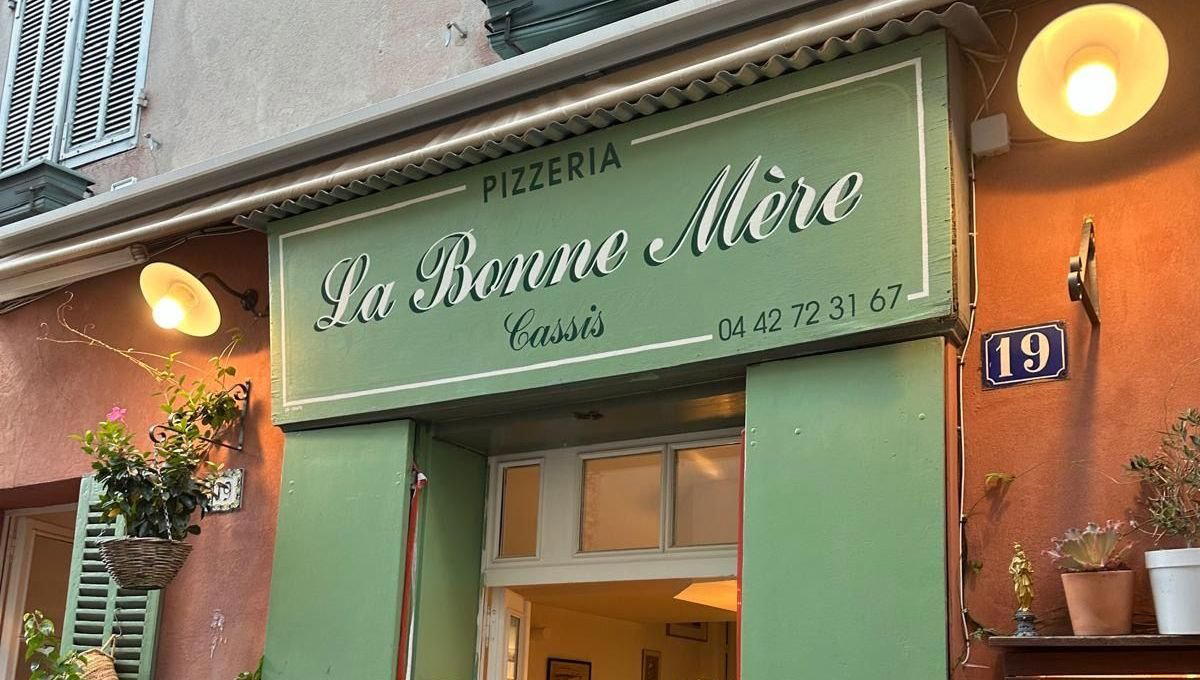
Where the Sourcing Is the Argument
Cassis sits at an unusual intersection for a small Provençal port town. It is close enough to Marseille, roughly 22 kilometres along the coast road, to benefit from serious wholesale fish markets and professional supplier networks, yet its scale, fewer than 8,000 permanent residents, keeps its restaurant economy weighted toward places that cook close to their ingredients rather than importing an elaborate culinary apparatus from elsewhere. La Bonne Mère, an Authentic Italian Pizzeria in Cassis at 19 Rue Michel Arnaud, sits within this pattern. The address is residential rather than waterfront, which in Cassis tends to signal a kitchen more interested in the product than the view.
In Provence, the argument about ingredient sourcing is inseparable from the argument about terroir, a word the region's winemakers have long owned but which applies with equal force to its fishermen, olive growers, and herb gatherers. The calanques that frame Cassis, the same limestone inlets that draw divers and kayakers, also define the microclimate that shapes what grows and what swims nearby. Restaurants that build menus around these conditions rather than importing neutral protein and garnishing it locally occupy a distinct tier in the town's dining structure.
Cassis in Context: A Small Port with a Layered Dining Scene
The dining scene in Cassis is smaller than its reputation among French coastal towns might suggest, but it is more stratified than a casual visitor would initially notice. At the upper end, La Villa Madie (Modern French, Creative) holds Michelin stars and prices accordingly, drawing destination diners from across the country and internationally. Below that, a mid-range tier of bistros and brasseries, including La Brasserie du Corton (Modern Cuisine) and Calendal, handle the bulk of the town's regular trade. Then there is a quieter stratum: addresses with long-standing neighbourhood credibility, less visible to the booking-app circuit, known primarily through local referral. La Bonne Mère belongs to this stratum.
That positioning carries practical implications. Visitors coming directly from Marseille, where AM par Alexandre Mazzia represents the region's most decorated contemporary French cooking, will find La Bonne Mère operating on an entirely different register. The comparison is not between competitors; it is between different philosophies about what a restaurant is for. One is a destination in itself; the other is woven into a specific street, a specific postcode, a specific daily rhythm.
The Provençal Bistro Tradition and What It Demands
The bistro tradition in southern France carries obligations that are easy to underestimate. A kitchen working within it is implicitly committed to cooking that reflects the season with precision, because the clientele, local and repeat, will notice when it does not. The Provençal version of this tradition is also committed to a specific palette of flavours: olive oil over butter, aromatics from the garrigue, fish from identifiable local waters, and the kind of vegetable cookery that knows what a ripe Provençal tomato actually tastes like in August compared to February.
Across France, the bistro form has been under pressure for a decade, squeezed between the economics of ingredient quality and the expectations of affordable pricing. Many have resolved this tension by narrowing their sourcing ambitions, substituting convenience products for the real thing and relying on technique and presentation to cover the gap. The addresses that have not made this compromise are fewer than they once were, and they tend to be found in towns where the supply chain for good ingredients is still intact. Cassis, with its working fishing port and proximity to Marseille's markets, is one of those towns. CAFE SARDINE and L'Oustau de la Mar are other addresses in town that operate within versions of this same commitment.
What Sets the Ingredient-Led Model Apart
In the broader French fine dining conversation, the sourcing argument has migrated upward into the Michelin tier. Restaurants like Mirazur in Menton, Bras in Laguiole, and Flocons de Sel in Megève have made their relationship to local agriculture and terroir central to their critical identity. At those price points, the sourcing story is explicit, narrated through tasting menus and sommelier pairings. The bistro version of the same commitment is quieter and less curated, but the underlying logic is identical: cook what is close, cook what is in season, and resist the temptation to homogenise the plate.
What this means in practice, for a diner at La Bonne Mère, is that the menu is not consistent across the year in the way that a more industrialised kitchen's would be. The fish available in early spring differs from what appears in high summer. The herb notes shift. The weight of the cooking changes with the weather. This is not a flaw in the model; it is the model. It is what separates kitchens that source from kitchens that merely shop.
Planning a Visit
Cassis is accessible from Marseille by train in under 25 minutes, with the station sitting above the town centre. From the station, the walk down to the port and the old residential streets takes roughly ten minutes on foot. Rue Michel Arnaud is in the older part of town, a short distance from the main harbour square. For visitors staying on the coast between Marseille and the Var, Cassis functions well as a half-day or full-day stop, with the restaurant fitting naturally into a late lunch or early dinner slot. The restaurant is recommended for reservations, and it is open Wednesday, Thursday, and Friday from 7 to 10 PM; Saturday from 11 AM to 2 PM and 7 to 10 PM; and Sunday from 12 to 3 PM.
France's long-running restaurant traditions, from the grand houses like Auberge de l'Ill in Illhaeusern and Paul Bocuse in Collonges-au-Mont-d'Or to addresses like Alléno Paris au Pavillon Ledoyen and Assiette Champenoise in Reims at the contemporary decorated end, and Au Crocodile in Strasbourg carrying Alsatian regionalism, share a common thread: specificity of place expressed through what ends up on the plate. A neighbourhood bistro in Cassis is not competing with those references, but it is participating in the same underlying argument, that French cooking is most interesting when it cannot be relocated without becoming something else entirely.
In Context: Similar Options
Comparable venues nearby, for context on price, style, and recognition.
| Venue | Cuisine | Price | Notes |
|---|---|---|---|
| La Bonne MèreThis venue — the venue you are viewing | Authentic Italian Pizzeria | $$ | Not listed |
| L'Oustau de la Mar | Traditional French Mediterranean Bistro | $$$ | Port |
| CAFE SARDINE | Mediterranean Seafood | $$ | Cassis |
| Le Poisson Rouge | Modern Mediterranean Bistro | $$ | Cassis |
| Ô Rev | Modern Mediterranean Bistronomic | $$$ | Vieux Cassis |
| Le Bistrot de Nino | Traditional Provençal Mediterranean Bistro | $$$ | Port |
Continue exploring
More in Cassis
Restaurants in Cassis
Browse all →
Bars in Cassis
Browse all →
Hotels in Cassis
Browse all →
At a Glance
- Cozy
- Rustic
- Intimate
- Casual Hangout
- Family
- Terrace
- Extensive Wine List
- Organic
Current opening hours
- Monday
- Closed
- Tuesday
- Closed
- Wednesday
- 7–10 PM
- Thursday
- 7–10 PM
- Friday
- 7–10 PM
- Saturday
- 11 AM–2 PM, 7–10 PM
- Sunday
- 12–3 PM
Hours can change for holidays and private events. Last verified .
Warm terracotta and olive green decor evoking Southern Italy in a cozy, inviting space with terrace seating.