Buut

We're Smart World 2 Radishes
Our verdict
In the forested village of Doorn, Buut makes a considered case for plant-forward cooking rooted in Dutch seasonal produce. Chef Matthijs Pijpers and his team work directly with local producers, building menus around what the surrounding region yields rather than what import markets supply. For plant-based dining in the Utrecht Hill Ridge area, it represents a notable benchmark.

Pearl is the En Primeur Club membership app, where members save venues, book tables and use the concierge.
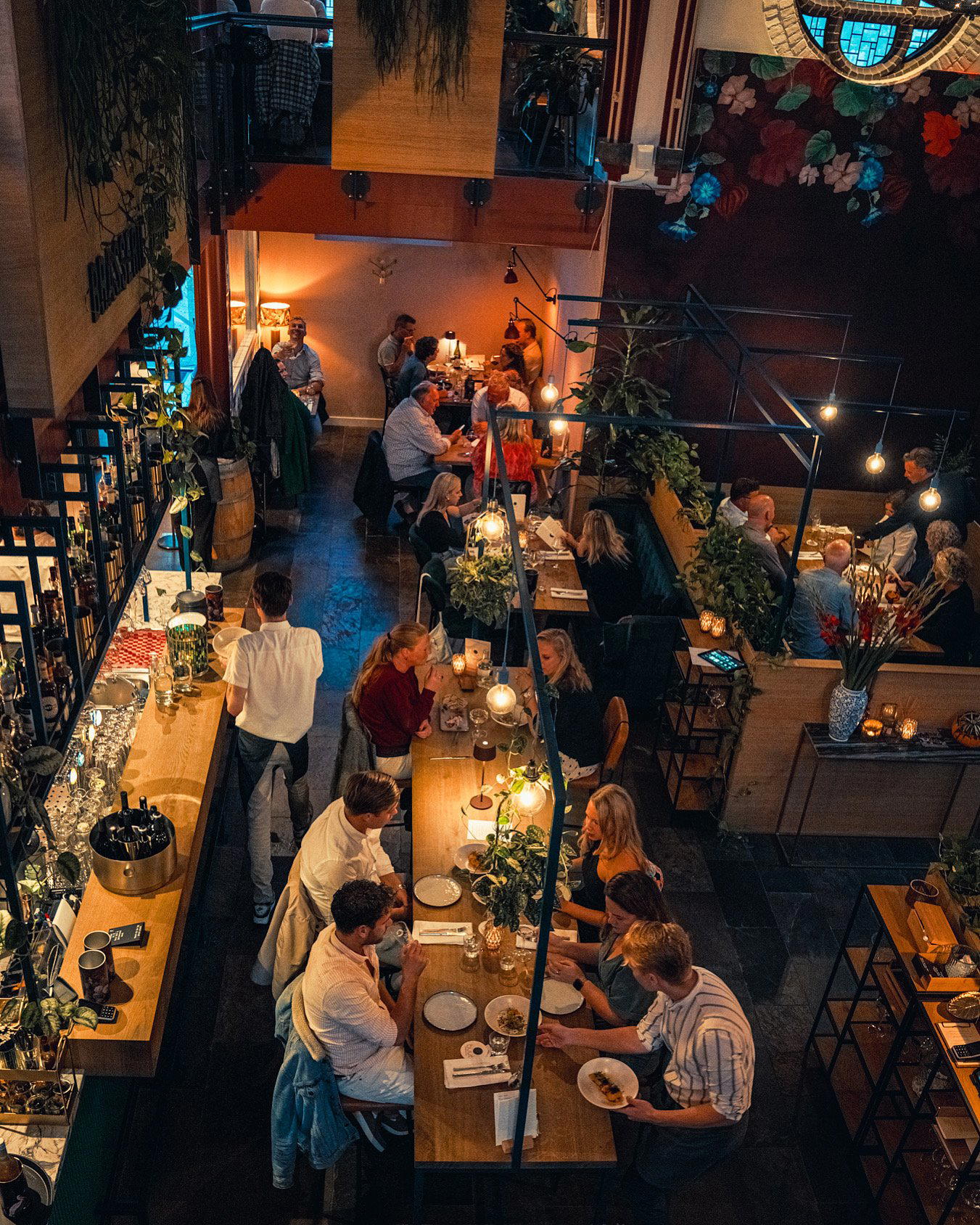
Where the Woodland Meets the Plate
Doorn sits at the heart of the Utrechtse Heuvelrug, a ridge of wooded moraine that cuts through the central Netherlands and shapes what grows in its soil and beneath its tree canopy. The village is quiet, its streets framed by beech and oak, and the sensibility that landscape instils, unhurried, rooted, attentive to the season, runs through what Buut does at its address on Kampweg. Approaching the restaurant, you feel less like you are arriving at a dining destination and more like you are stepping into a working relationship with a particular stretch of Dutch countryside.
That framing matters, because Buut's cooking is not a stylistic gesture toward sustainability. It is organised around a structural commitment to sourcing from local producers and building the menu from whatever the season makes available. In a country where fine dining has long been anchored to classical French technique and premium imported product, the tradition you see carried through at restaurants like Ciel Bleu in Amsterdam or De Bokkedoorns in Overveen, a kitchen that deliberately narrows its sourcing radius and centres plants is making an editorial statement about what Dutch produce can do on its own terms.
The Sourcing Logic Behind a Plant Menu
The Netherlands has one of the most sophisticated agricultural systems in Europe, but premium restaurant kitchens have historically reached past domestic farming toward French foie gras, Spanish Ibérico, or Japanese wagyu to signal ambition. The turn toward local and plant-forward cooking represents a different ambition: one that asks the kitchen to work harder with what is immediately available rather than importing prestige.
Buut operates in that mode. Chef Matthijs Pijpers and his team source directly from local producers, which means the menu shifts with genuine seasonal logic rather than calendar convention. What arrives on the plate in March differs materially from what arrives in October, not because a seasonal section was refreshed on a website, but because the supply chain genuinely changes. That discipline is a structural feature of the kitchen's approach, not a marketing position. Venues like De Nieuwe Winkel in Nijmegen, which has earned recognition for its organic sourcing and plant-centred format at the €€€€ tier, show how far this approach can extend in the Netherlands. Buut occupies a different price register and a quieter geographic context, but the underlying sourcing logic has clear affinities with that direction of travel.
Across the Dutch fine dining tier, the restaurants that have accumulated the most sustained recognition, De Librije in Zwolle, 't Nonnetje in Harderwijk, De Lindehof in Nuenen, tend to operate at the €€€€ level with menus that span protein categories. Buut's choice to work within a pure plant framework at a village scale is a narrower and, in some respects, more demanding format. There is less margin for a kitchen to compensate for seasonal gaps with a different protein or a luxe import. The discipline is built into the constraints.
Recognition and What It Signals
Buut has received recognition that specifically calls out its commitment to plants and local sourcing, noting that Chef Pijpers and his team find a balance between local expectations and their own kitchen ambitions. That framing is worth examining. Doorn is not a destination dining village on the scale of, say, the Burgundy communes that draw pilgrimage visits. The surrounding population has expectations rooted in Dutch hospitality tradition, generosity, familiarity, accessibility, and a kitchen that wants to push into pure plant territory has to negotiate that tension rather than ignore it.
The recognition positions Buut as a starting point for further refinement in plant-forward cooking for the region, which is an honest assessment of where the venue sits in the broader Dutch culinary development. Comparable recognition across the Netherlands, from the organic credentials of De Nieuwe Winkel to the produce-led approach at De Lindenhof in Giethoorn or the creative ambition at Brut172 in Reijmerstok, suggests that regional cooking in the Netherlands is developing in multiple directions simultaneously. Buut represents one of those directions: quiet, geographically specific, plant-centred.
The Utrechtse Heuvelrug Context
Doorn's position on the Heuvelrug ridge gives it access to a particular kind of Dutch terroir, sandy, forested soils that support fungi, wild herbs, root vegetables, and a farming culture that differs from the polders of the western Netherlands or the clay soils of Zeeland. For a kitchen working with local producers, that geography is both a resource and a constraint. It dictates what comes through the kitchen door with regularity and what requires effort to source.
That kind of geographic specificity is increasingly valued in premium dining contexts. When Le Bernardin in New York City built its identity around a single product category, fish, it demonstrated that constraint can produce depth rather than limitation. Buut operates on a different scale entirely, but the underlying logic has similarities: accepting a narrower ingredient set and working it harder produces a more defined kitchen identity than attempting to cover all categories at once.
For visitors to the Utrecht Hill Ridge area, Buut sits within a broader offering that extends to accommodation, local bars, and regional experiences. Our full Doorn hotels guide, bars guide, and experiences guide cover the surrounding options for those building a longer stay in the area. The restaurant is located at Kampweg 22, 3941 HH Doorn, and sits within the village itself rather than on a remote rural plot, making it accessible for those based locally or staying in the region. As with most kitchens operating at this level of seasonal dependency, booking ahead is advisable, particularly during spring and autumn when regional produce supply is at its most varied and kitchen creativity tends to follow.
For a fuller picture of what the Dutch dining scene is doing at different price points and in different regional contexts, our full Doorn restaurants guide maps the local options, while the broader Netherlands coverage, including Aan de Poel in Amstelveen, De Treeswijkhoeve in Waalre, and De Groene Lantaarn in Staphorst, shows the range of approaches operating across the country's regional dining scene. Our Doorn wineries guide is also worth consulting for those wanting to pair the plant-forward approach at Buut with regional Dutch wine options.
Frequently asked questions
Is Buut good for families?
Buut's plant-focused menu in Doorn draws on seasonal, locally sourced ingredients, which tends to suit families open to vegetable-led cooking. The Utrechtse Heuvelrug setting adds a natural, unhurried character to the visit. Families with adventurous eaters will find the format more engaging than those expecting a conventional Dutch menu.
What is the atmosphere like at Buut?
Buut sits on Kampweg in Doorn, a town embedded in the forested Utrechtse Heuvelrug ridge, and that woodland context carries into the feel of the place. The kitchen's stated commitment to local producers and seasonal plants signals a setting that prioritises craft over spectacle. Expect a considered, unhurried tone rather than a high-tempo dining room.
What awards or recognition does Buut have?
Buut has received recognition including: With a determination to work with local producers and in the season, Buut makes a real statement for the use of plants and their love for local. Chef Matthijs Pijpers and his team find the balance between the expectations of the 'locals' an….
What do people recommend at Buut?
Recognition of Buut specifically calls out its pure plant menu and Chef Matthijs Pijpers' ability to balance the expectations of local diners with the kitchen's own ambitions around seasonal, producer-led cooking. That tension, familiar enough for regulars, focused enough for a destination visit, is the consistent thread in how the restaurant is discussed. The plant menu is the reason to go.
Quick Comparison
Comparable venues nearby, for context on price, style, and recognition.
| Venue | Cuisine | Price | Awards | Notes |
|---|---|---|---|---|
| BuutThis venue (the venue you are viewing) | Contemporary Dutch Brasserie | $30–50 | We're Smart World 2 Radishes | Not listed |
| Meester Keeman | Dutch Seafood Brasserie | $30–50 | Star Wine List | Waalre centrum |
| Bij de Engel | Dutch Seafood | Not listed | Not listed | Dodewaard |
| Pub Verhip | Dutch Pub Fare | $10–20 | Not listed | Schiemond |
| Bij Teus | Modern Dutch Seafood | $50–100 | Not listed | Oude Dorp |
| Dinner at Six | Modern Dutch Fine Dining | Not listed | Not listed | Houten |
Recognition history
Dated appearances from independent guides and award organizations, with the underlying list record or original source where available.
We're Smart World 2 Radishes
We're Smart World
Continue exploring
More in Doorn
Restaurants in Doorn
All restaurants in Doorn →
Bars in Doorn
Browse all →
Hotels in Doorn
Browse all →
Wineries in Doorn
Browse all →
Details
- Cozy
- Elegant
- Intimate
- Rustic
- Date Night
- Group Dining
- Special Occasion
- Historic Building
- Private Dining
- Terrace
- Extensive Wine List
- Local Sourcing
- Farm To Table
- A La Carte
- Small Plates
- Vegetarian Friendly
Current opening hours
- Monday
- Closed
- Tuesday
- Closed
- Wednesday
- 4–10 PM
- Thursday
- 4–10 PM
- Friday
- 4–11 PM
- Saturday
- 12–11 PM
- Sunday
- Closed
Hours can change for holidays and private events. Hours as of .
Cozy and atmospheric with a mix of contemporary luxury and historic church elements, including stained glass windows, acoustic panels, and warm lighting.