Bustan
On Amsterdam Avenue in the Upper West Side, Bustan occupies a corner of New York's Middle Eastern dining scene where Mediterranean technique and regional produce intersect. The kitchen draws on Levantine tradition while operating squarely within a city that rewards culinary specificity. For the neighborhood, it reads as a serious address rather than a casual stop.
Pearl is the En Primeur Club membership app — saves, bookings, and concierge access live there. Same editors, same standards.
- Address
- 487 Amsterdam Ave, New York, NY 10024
- Phone
- +12125955050
- Website
- bustannyc.com
- Directions
- Get directions
 Saves & bookings on Pearl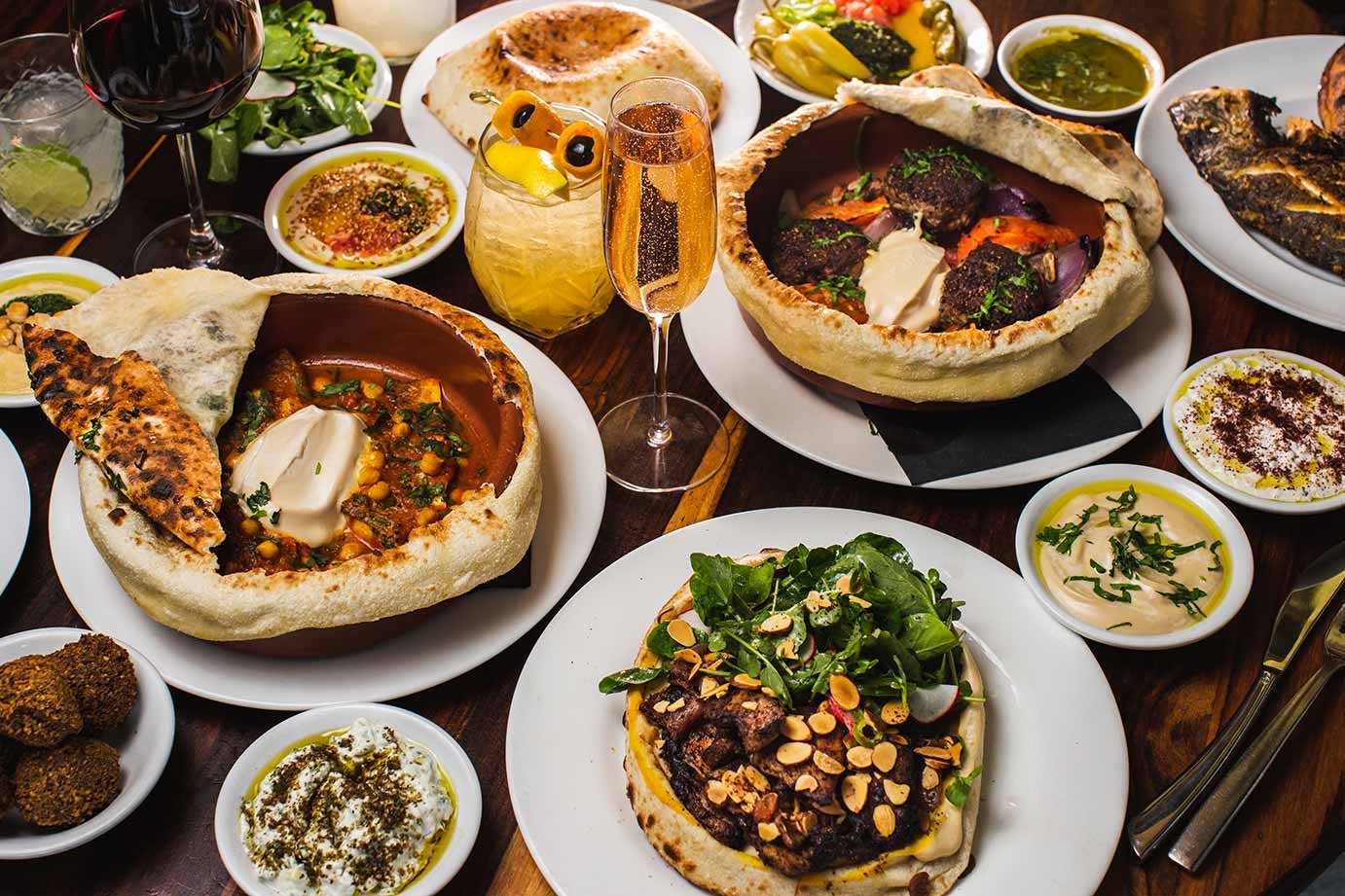
Where the Upper West Side Meets the Eastern Mediterranean
Amsterdam Avenue between 83rd and 84th streets is not where most food conversations about New York begin. The city's critical attention pools downtown and in Brooklyn, around the tasting-menu counters and natural wine bars that generate column inches. Yet the Upper West Side has always maintained a parallel dining culture, quieter and more neighborhood-rooted, where restaurants earn loyalty through consistency rather than hype cycles. Bustan, at 487 Amsterdam Ave, is a restaurant serving modern Pan-Mediterranean cooking. It is a Middle Eastern address on a block better known for its proximity to the Natural History Museum than to the city's restaurant circuit, and that positioning is part of what defines it.
Middle Eastern cooking in New York has undergone a significant recalibration over the past decade. What was once confined to falafel counters and casual shawarma spots now spans a range that includes technique-driven Levantine kitchens applying French and Mediterranean precision to the pantry of the Eastern Mediterranean: preserved lemons, pomegranate molasses, za'atar, sumac, and slow-braised lamb cuts that reward patience. Bustan sits within that broader shift, drawing on the intersection of imported culinary method and indigenous ingredient logic that now defines the more considered end of this category in American cities.
The Logic of Local Ingredients, Applied to a Global Pantry
The editorial angle that explains Bustan's positioning is one that recurs across contemporary American dining: the use of global technique on locally or regionally sourced product, or conversely, the use of deeply traditional ingredient systems filtered through a more cosmopolitan kitchen sensibility. At the better end of New York's Middle Eastern and Mediterranean restaurants, this tension produces cooking that reads as neither purely traditional nor purely modernist. The approach echoes what restaurants like Blue Hill at Stone Barns in Tarrytown do with American agricultural product, though the reference points are the Levant rather than the Hudson Valley.
This is a meaningful distinction within New York's dining economy. The city's four-star tier, occupied by addresses like Le Bernardin, Eleven Madison Park, Per Se, Atomix, and Masa, operates on a different register entirely, where price, formality, and critical infrastructure align. Bustan does not compete in that tier. Its competitive set is the cohort of serious neighborhood restaurants where the quality-to-price relationship drives repeat visits rather than destination dining pilgrimages. In that context, getting the ingredient logic right matters more than architectural plating.
The Middle Eastern pantry is, by its nature, globally transported even when locally applied. Spices sourced from the Levant, grains with North African roots, and cooking techniques that carry Ottoman, Persian, and Mediterranean overlays all converge in a cuisine that has always been the product of trade and migration. A kitchen that takes this seriously is not simply applying French technique to foreign ingredients; it is working within a tradition that was already cosmopolitan before the word became a restaurant concept. That depth of culinary history rewards diners who pay attention to what is on the plate rather than what is on the press release.
Amsterdam Avenue in Context
The Upper West Side's dining character has historically favored longevity over novelty. Restaurants here tend to run for decades rather than seasons, which places Bustan in a neighborhood that values a different kind of dining relationship than the downtown rotation. This contrasts sharply with the model at work elsewhere in the city, where restaurants in Williamsburg or the East Village turn over within two or three years regardless of quality. The Upper West Side rewards the kind of cooking that improves with repetition: seasonal adjustments to a consistent format, a menu that builds on what the kitchen knows rather than chasing what the algorithm recommends.
For travelers arriving in New York and organizing their time across the city, the Upper West Side's restaurant density is lower than Midtown or the West Village, which makes strong individual addresses more significant within their local context. Bustan at 487 Amsterdam Ave is accessible via the 1 train to 86th Street, a short walk south. The address sits comfortably within a neighborhood that also offers proximity to Central Park, which makes it a practical choice for a meal before or after time in the park, particularly during spring and fall when the neighborhood is at its most walkable.
How Bustan Fits the Broader American Middle Eastern Moment
New York is not the only American city where Middle Eastern and Mediterranean cooking has moved from peripheral to central. In San Francisco, Lazy Bear demonstrates how a city's dining culture can shift when a cuisine achieves critical mass. In New Orleans, Emeril's shows how a regional culinary identity can persist through institutional dining. In Los Angeles, Providence anchors a coastal seafood tradition. What makes New York's version of this story different is the density and competition: there are more Middle Eastern and Mediterranean restaurants per square mile here than in most American cities, which means the bar for credibility is higher and the cost of mediocrity is steeper.
Restaurants operating in this space nationally, from Smyth in Chicago to Single Thread Farm in Healdsburg to Addison in San Diego, demonstrate that regional ingredient intelligence applied with technical seriousness can sustain a dining room regardless of format. The ingredient-first framework that defines the better end of contemporary American dining is, in a sense, already native to Levantine cooking, where the seasonal availability of specific produce has always structured the menu. Bustan draws on that alignment, offering a kitchen that is not chasing a trend so much as working within a tradition that the broader American dining conversation has recently caught up to.
Bustan's technique-and-tradition intersection has parallels at addresses like the technique-and-tradition intersection it represents has parallels at addresses like Atelier Moessmer Norbert Niederkofler in Brunico and Dal Pescatore in Runate, where deep regional ingredient knowledge meets sustained technical application. The scale and price point differ considerably, but the underlying logic, that place-specific ingredients handled with care produce cooking that neither trend nor formula can replicate, is shared. Frasca Food and Wine in Boulder and The Inn at Little Washington offer another version of this, where culinary tradition and regional identity intersect at a serious restaurant outside the major coastal markets. The French Laundry in Napa remains the reference point for what American fine dining looks like when it fully commits to a sense of place.
Visit Notes
Bustan is located at 487 Amsterdam Ave, New York, NY 10024, in the Upper West Side. Reservations are recommended. The Upper West Side's dining rhythm skews earlier than downtown, which suits travelers managing a longer evening across multiple neighborhoods.
Peers in This Market
Comparable venues nearby, for context on price, style, and recognition.
| Venue | Cuisine | Price | Notes |
|---|---|---|---|
| BustanThis venue — the venue you are viewing | Modern Pan-Mediterranean | $$$ | Not listed |
| Mezze on the River | Modern Mediterranean Seafood | $$$ | Financial District-Battery Park City |
| TESSA | Modern Mediterranean | $$$ | Upper West Side (Central) |
| Pulperia Latin Mediterranean Kitchen | Latin Mediterranean | $$ | Hell's Kitchen |
| Shalel | Coastal Mediterranean | $$$$ | Upper West Side-Lincoln Square |
| Florisity | Seasonal Italian-Mediterranean with Botanical Elements | $$$ | Long Island City-Hunters Point |
Continue exploring
More in New York City
Restaurants in New York City
Browse all →
Bars in New York City
Browse all →

Hotels in New York City
Browse all →







At a Glance
- Lively
- Trendy
- Cozy
- Date Night
- Brunch
- Open Kitchen
Current opening hours
- Monday
- 5–9 PM
- Tuesday
- 5–9 PM
- Wednesday
- 5–9 PM
- Thursday
- 5–9 PM
- Friday
- 5–10 PM
- Saturday
- 5–10 PM
- Sunday
- 11 AM–3:30 PM, 5–9 PM
Hours can change for holidays and private events. Last verified .
Relaxed and lively atmosphere with moderate noise levels and great vibe.