Burger & Lobster City
Our verdict
At Bread Street in the City of London, Burger & Lobster strips its menu down to two central ingredients and builds an entire dining proposition around that constraint. The format sits at the accessible end of the City's casual dining spectrum, where speed and clarity of choice matter as much as what arrives on the plate. It is a useful benchmark for how focused menus can outperform longer, more diffuse alternatives in a high-footfall neighbourhood.

Pearl is the En Primeur Club membership app, where members save venues, book tables and use the concierge.

The menu
What to order
- Lobster roll
- Burger lobster combo
- Whole lobster
A Menu Built on Refusal
The City of London's lunch circuit has long rewarded a particular kind of restraint. In a neighbourhood where time is a currency and decision fatigue is real, restaurants that edit ruthlessly tend to outlast those that try to cover every base. Burger & Lobster City, at 1 Bread Street, applies that logic further than most: its menu is built around two ingredients, and the structure of the offer flows from that single editorial decision. The kitchen does not hedge. That commitment to a narrow brief is, in itself, a statement about how the restaurant understands its customer and its location.
This approach places Burger & Lobster City in a distinct tier from the multi-course tasting format that defines much of London's fine dining conversation. Venues like CORE by Clare Smyth, Restaurant Gordon Ramsay, and Sketch, The Lecture Room and Library operate at the opposite end of the menu-complexity axis, where the number and sequencing of courses is itself the product. Burger & Lobster makes the opposite argument: that removing choice can be as sophisticated a design decision as multiplying it.
What the Menu Architecture Reveals
A short menu is not the same as a simple one. In practice, the narrower a kitchen's stated brief, the harder it is to disguise inconsistency. When a restaurant commits to two central proteins, every iteration of those proteins becomes a direct test of execution. There is no long list of dishes to obscure a weak section. The format at Burger & Lobster City is, in this sense, a form of public accountability: the kitchen's quality standard is visible in every order.
This structure also has implications for how the room functions. Without lengthy menu deliberation, tables move at a different rhythm than in a multi-course environment. The City location on Bread Street, close to St Paul's Cathedral and within the EC4 postcode's dense office population, is served well by this pace. The lunch window here is compressed. A format that removes friction from the ordering process is not just convenient; it is commercially appropriate to the neighbourhood's working patterns.
Comparing this model with full-service operations at The Ledbury or Dinner by Heston Blumenthal clarifies the segmentation. Those restaurants require and reward a different time investment, one measured in hours rather than the City's typical forty-five-minute lunch. Burger & Lobster City addresses a different moment in a diner's week, not a lesser one.
The City of London as Context
EC4's dining environment has shifted considerably over the past decade. The area around St Paul's and Cannon Street used to be defined by corporate accounts and set-price lunch menus designed for expense reporting. The neighbourhood's casual dining offer has since broadened, with more operators treating the area's lunchtime and post-work traffic as a genuine audience for quality rather than just volume.
Burger & Lobster City fits into that second wave. The chain format, with multiple London locations, brings operational consistency that standalone restaurants often struggle to maintain in a high-cost, high-turnover environment like the City. For the diner, consistency across visits is itself a form of trust signal, particularly in a neighbourhood where lunch is often a working meal rather than a leisure occasion.
The UK's broader casual seafood dining scene has developed considerably in the same period. Lobster, once confined to fine dining prix fixe menus or special-occasion tablecloths, has moved into mid-market formats partly because of supply chain changes and partly because of formats like this one that treat it as an everyday rather than a ceremonial protein. For context on how the formal end of that spectrum looks in the UK, Waterside Inn in Bray and L'Enclume in Cartmel represent the opposite pole, where seafood and produce are embedded in elaborate seasonal tasting frameworks. Burger & Lobster City occupies a deliberately different position on that continuum.
Positioning Within London and Beyond
London's restaurant offering has expanded significantly beyond the central postcode clusters, with strong kitchens now operating across a range of formats and neighbourhoods. For those planning a wider London itinerary, the full London restaurants guide maps the full spectrum. Elsewhere in the UK, standout destination restaurants like Moor Hall in Aughton, Gidleigh Park in Chagford, and Hand and Flowers in Marlow each represent different ways the country's serious kitchen talent has chosen to operate outside the capital.
For internationally-minded diners comparing focused seafood formats, Le Bernardin in New York City offers a reference point for how a similar protein focus (fish and shellfish, with structural rigour) operates at the formal fine dining level. The contrast in ambition and format is instructive. Closer in format energy, if not in cuisine, is Lazy Bear in San Francisco, which also builds its identity around a deliberately constrained format, though one pointing in a different direction entirely.
Other UK restaurants worth tracking for context on how British kitchens approach focused, high-quality formats include hide and fox in Saltwood, Midsummer House in Cambridge, Opheem in Birmingham, Ynyshir Hall in Machynlleth, and Restaurant Andrew Fairlie in Auchterarder, each representing distinct national approaches to focused, serious cooking.
Planning Your Visit
| Detail | Burger & Lobster City | Peer Comparison (City Casual) | Fine Dining Tier |
|---|---|---|---|
| Location | 1 Bread St, EC4M 9BE | Varies by venue | Mayfair, Chelsea, Notting Hill |
| Menu Length | Short, ingredient-focused | Moderate (10-20 dishes) | Set tasting menus, 5-10 courses |
| Typical Pace | Fast to moderate | Moderate | 2-3 hours minimum |
| Booking | Online or walk-in | Weeks to months in advance | |
| Dress Code | Smart casual | Casual to smart casual | Smart, often formal |
Frequently asked questions
at Burger & Lobster City?
The menu's architecture makes the decision relatively direct: the core offer centres on burger and lobster preparations, with the lobster options representing the clearest expression of what the format is built around. If you are coming primarily for the seafood, the lobster roll or whole lobster preparations are the logical anchor choices. The burger exists as a serious alternative rather than a fallback, which means either direction reflects the kitchen's focus rather than an afterthought.
What is the ideal way to book Burger & Lobster City?
For a City location with a compressed lunch window, booking ahead is advisable, particularly for midweek lunches when the EC4 office population peaks. Contact the restaurant directly or check their current booking platform for availability. Walk-ins may be possible at off-peak times, but the Bread Street location's footfall during peak hours makes reservations the more reliable approach.
What do critics highlight about Burger & Lobster City?
The format's durability in a competitive City market is frequently noted. A two-ingredient menu concept that has sustained multiple London locations over several years demonstrates that the model has found a repeatable audience, which in a high-turnover neighbourhood like EC4 is itself a form of recognition. Critics tend to place it in the casual seafood category rather than the fine dining column, treating the focused menu as the defining characteristic rather than any individual dish.
Is Burger & Lobster City allergy-friendly?
Given that shellfish and beef are the central proteins, guests with shellfish allergies should assess the menu carefully before booking. For specific allergen information, contacting the restaurant directly before your visit is the most reliable approach. London's food safety regulations require venues to provide allergen information on request, so the team should be able to detail preparation methods and cross-contamination protocols clearly.
How does Burger & Lobster City fit into the broader London casual seafood scene?
The City location sits within a London casual seafood tier that has grown meaningfully since the mid-2010s, as operators brought higher-quality shellfish into accessible, no-reservation or easy-booking formats. Burger & Lobster's multi-site London presence places it among the more established operators in that segment, with the Bread Street address serving the EC4 and St Paul's catchment specifically. For diners whose frame of reference is the formal seafood end of the market, the format represents a structurally different proposition: speed and ingredient focus over occasion dining.
Cuisine and Credentials
Comparable venues nearby, for context on price, style, and recognition.
| Venue | Cuisine | Price | Notes |
|---|---|---|---|
| Burger & Lobster CityThis venue (the venue you are viewing) | Burgers and Lobster | $30–50 | Not listed |
| The Fish House | Traditional British Fish and Chips | $20–30 | Addiscombe |
| La Petite Poissonnerie | French-Japanese Seafood Tapas | $20–30 | Marylebone |
| Fish and Grill | British Fish and Grill | Not listed | Pitlake |
| Randall & Aubin Soho | Classic Seafood Bar | $50–100 | Soho |
| The Heron | Authentic Thai | $20–30 | Moorgate |
Burger & Lobster City
Featured Guides
Continue exploring
More in London
Restaurants in London
All restaurants in London →
Bars in London
All bars in London →



Details
- Lively
- Trendy
- Modern
- Group Dining
- Casual Hangout
- Open Kitchen
- Craft Cocktails
- A La Carte
- Cocktails
Current opening hours
- Monday
- 12–9 PM
- Tuesday
- 12–10 PM
- Wednesday
- 12–10 PM
- Thursday
- 12–10 PM
- Friday
- 12–10:30 PM
- Saturday
- 12–10:30 PM
- Sunday
- 12–9 PM
Hours can change for holidays and private events. Hours as of .
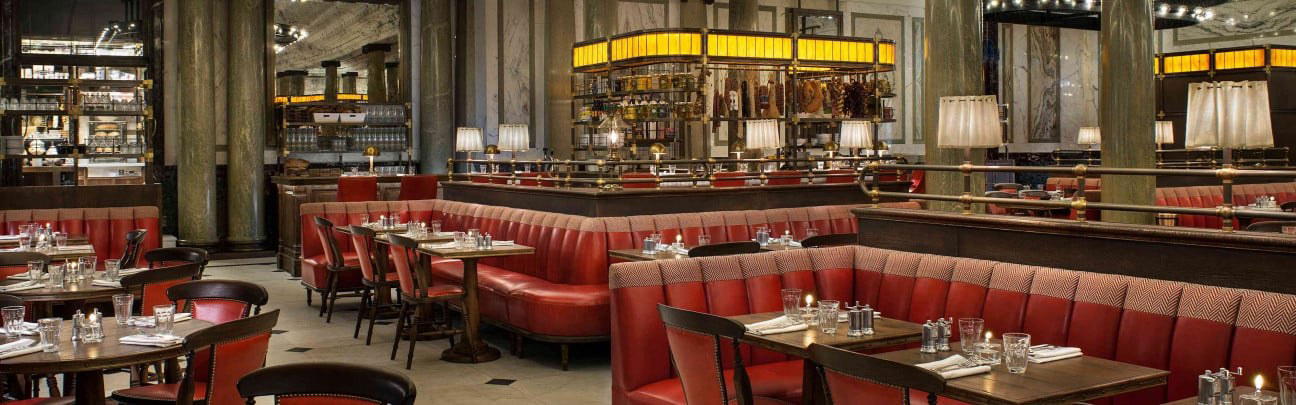
Casual and energetic atmosphere in spacious, modern settings often in converted historic spaces with high ceilings.