Our verdict
Brauhaus Spandau occupies a corner of Berlin's oldest borough, where the traditions of German brewing culture meet the kind of communal hall format that has defined the city's social fabric for centuries. It sits in Spandau's historic centre, a district that predates the German capital itself, making it a reference point for understanding how Berlin eats and drinks beyond the Mitte circuit.

Pearl is the En Primeur Club membership app, where members save venues, book tables and use the concierge.

Drinking Where Berlin Began
Spandau is not a suburb in the conventional sense. Incorporated into Greater Berlin only in 1920, the borough retains a civic identity distinct from the capital's better-known districts, and its old town, centred on the confluence of the Havel and Spree rivers, carries the kind of architectural continuity that most of central Berlin lost in the twentieth century. Brauhaus Spandau, addressed at Neuendorfer Strasse 1, sits at the edge of that old town core. The location matters: this is a district where the Bierkeller tradition was never interrupted by the ruptures that transformed Mitte and Prenzlauer Berg, and the brauhaus format here reads as continuity rather than revival.
Across Germany, the brauhaus model operates as one of the more coherent expressions of regional drinking culture. Unlike the wine-led restaurant formats that dominate fine dining, or the cocktail bar scene that has reshaped Berlin's Kreuzberg and Neukölln, the brauhaus positions beer as the organisational principle of the meal. Food arrives to accompany, extend, and justify the beer, not the reverse. That logic shapes everything from portion structure to the rhythm of service, and it places Brauhaus Spandau in a different competitive conversation than the €€€€ tasting-menu operations that have brought Berlin international attention.
The Berlin Brewing Context
Berlin's craft beer renaissance of the past decade has largely unfolded in the city's eastern and central districts, where small-batch producers have oriented themselves toward international export markets and bar-programme collaborations. The older brauhaus tradition, high-volume, house-brewed, served in litre measures in rooms built to hold several hundred people, has held its ground more firmly in the western districts. Spandau is among the clearest examples of that geographic split. While venues like CODA Dessert Dining and Nobelhart & Schmutzig represent Berlin's push toward internationally recognised creative formats, Brauhaus Spandau operates in a register that serves the city's domestic social culture rather than its export reputation.
That distinction is not a criticism. Germany's Michelin-starred circuit, which includes destinations like Schwarzwaldstube in Baiersbronn, Aqua in Wolfsburg, and Vendôme in Bergisch Gladbach, occupies a tier defined by restraint, precision, and international technique. The brauhaus tradition operates on entirely different criteria: generosity of scale, directness of flavour, and the management of a room where the social experience is as central as what arrives on the table. These are parallel systems, not a hierarchy.
The Hall Format and How It Works
The large-format hall is a discipline of its own. German brauhäuser at the serious end of the format typically manage several hundred covers across multiple rooms or terraces, with a house-brewing operation visible or at least accessible to guests. Service at this volume requires a front-of-house team with crowd-management competence as much as hospitality finesse, the team dynamic that sustains a working brauhaus is closer to that of a well-run brasserie than to the choreographed precision of a tasting-menu kitchen. The staff reading of the room, when to turn tables, how to pace rounds, how to handle the transition from early-evening families to later crowds, is the operational core of the format.
In this context, the collaboration between kitchen and floor matters differently than it does in a chef-driven restaurant. The kitchen's role is consistency at scale: the same schnitzel, the same pork knuckle, the same house-brewed Helles must arrive at the same standard on a quiet Tuesday and a packed Saturday evening. Front-of-house carries the experiential variability, they are the mechanism through which a large, sometimes noisy room becomes a place a guest wants to return to. At well-run brauhäuser across Germany, that division of labour is understood and staffed accordingly.
Berlin's comparable institutions include a handful of operations in Charlottenburg and the outer western districts, though Spandau's old town location gives Brauhaus Spandau a setting that few can replicate. For those tracking similar formats elsewhere in Germany, Restaurant Haerlin in Hamburg and Bagatelle in Trier represent the more formal end of German dining, while JAN in Munich and Schanz in Piesport show how German kitchens engage with contemporary fine dining at a national level.
What to Order and How to Approach the Menu
German brauhaus menus are structured around the logic of the brew: heavier, salt-forward dishes that extend the drinker's session. Pork in its various preparations, roasted knuckle, belly, chops, anchors the menu at most operations of this type, alongside sausage formats, pretzels served warm, and potato preparations that provide ballast. The brauhaus kitchen rarely attempts subtlety of technique; it succeeds or fails on the quality of its sourcing, the accuracy of its seasoning, and the timing of its service. At the better end of the format, the schnitzel arrives at correct temperature with a crust that has not softened in transit, and the roast pork carries enough caramelisation to justify the wait.
For guests arriving from Berlin's more internationally oriented dining scene, the territory covered by Restaurant Tim Raue, Rutz, or FACIL, the adjustment is one of register rather than quality. The brauhaus asks for a different kind of attention: settle in, order a round, read the room. The meal unfolds over more time and more beer than a tasting menu, and the measure of success is whether you want to order another glass.
Placing It in the Wider Berlin Visit
Spandau is approximately 45 minutes from Alexanderplatz by S-Bahn on the S5 or S75 lines, which puts it at the outer edge of a central Berlin day without requiring a separate trip. The old town itself warrants an hour of walking before or after a meal, the Zitadelle Spandau, a Renaissance citadel dating to the sixteenth century, sits within easy reach of the Neuendorfer Strasse address. For visitors constructing a Berlin itinerary that moves beyond the Mitte–Kreuzberg axis, Spandau offers a different register of the city: less self-conscious, more residential, oriented toward the west rather than the east.
Those building a broader German itinerary alongside a Berlin visit might also consider Victor's Fine Dining by Christian Bau in Perl, ES:SENZ in Grassau, or Waldhotel Sonnora in Dreis for formal dining contrasts. For international context on high-volume, team-driven restaurant formats, Le Bernardin in New York City and Lazy Bear in San Francisco represent how different cities have solved the problem of sustaining quality at scale. The brauhaus tradition solves it differently, through simplicity of ambition rather than complexity of technique, and Spandau is among the more coherent places in Berlin to observe that solution in practice. Our full Berlin restaurants guide covers the city's dining range in more detail.
Know Before You Go
- Address: Neuendorfer Str. 1, 13585 Berlin, Germany
- Borough: Spandau, Berlin
- Getting There: S-Bahn lines S5 or S75 to Spandau station; approximately 45 minutes from Alexanderplatz
- Format: Traditional German brauhaus with house brewing and large-format hall seating
- Phone / Website: Not publicly listed, walk-ins are standard at this format
- Hours / Booking: Confirm directly on arrival or via local listings; large-format brauhäuser typically do not require advance reservations except for group bookings
- Dress Code: Casual; the format does not expect or reward formality
Frequently asked questions
Where is Brauhaus Spandau located?
Brauhaus Spandau is located at Neuendorfer Str. 1, 13585 Berlin, Germany, Berlin.
Is Brauhaus Spandau worth the trip from central Berlin?
Spandau sits roughly 45 minutes from Alexanderplatz via the S5 or S75 S-Bahn lines, which places it at the outer reach of a central Berlin day. The journey makes sense if the brauhaus format itself is the draw, the borough's distinct civic identity and its position at the Havel-Spree confluence give the visit a context that a central Berlin beer hall cannot replicate. Treat it as a destination rather than a detour.
What should I eat at Brauhaus Spandau?
Order from the pork-forward core of the menu: roasted knuckle, schnitzel, sausage plates, and pretzel bread are the structural anchors of the brauhaus format. The logic is beer-first, dishes are calibrated to extend the session, so lean toward salt-forward, substantial plates. At Neuendorfer Str. 1 in Spandau, the kitchen functions as a complement to the brew rather than the main event.
How hard is it to get a table at Brauhaus Spandau?
Large-format brauhäuser in Berlin's outer districts, including Spandau, typically operate on a walk-in basis for parties of two to four. Groups should arrange reservations in advance, as hall seating at this scale is managed separately. Weekday visits carry less risk of a wait than Friday or Saturday evenings.
What's the defining dish or idea at Brauhaus Spandau?
The defining idea is the primacy of the beer over the meal. Across the brauhaus tradition, the kitchen exists to sustain the drinking session, dishes are built around salt, fat, and volume rather than finesse. At Brauhaus Spandau in Berlin, that philosophy is reinforced by the large-format hall setting, where the rhythm of the room is set by rounds, not courses.
Can Brauhaus Spandau handle vegetarian requests?
German brauhäuser have historically been structured around pork and meat, and Brauhaus Spandau fits that tradition. Most contemporary operations of this format now carry potato-based dishes, bread plates, and salad options alongside the meat-heavy menu. Vegetarians can find workable options, but the kitchen is not designed around plant-forward cooking.
Accolades, Compared
| Venue | Cuisine | Price | Awards | Notes |
|---|---|---|---|---|
| Brauhaus SpandauThis venue (the venue you are viewing) | Traditional German Brewery | $20–30 | Not listed | Not listed |
| CODA Dessert Dining | Dessert-Inspired Fine Dining | $200–300 | 2 Michelin Stars · World's 50 Best #82 | Creative |
| Rutz | Modern German Fine Dining | $200–300 | 3 Michelin Stars · La Liste Top Restaurants | Modern European, Modern Cuisine |
| Nobelhart & Schmutzig | Hyper-Local Modern German Fine Dining | $100–150 | 1 Michelin Star · World's 50 Best #76 | Modern German, Creative |
| FACIL | Modern Fusion Fine Dining | $200–300 | 2 Michelin Stars · La Liste Top Restaurants | Contemporary European, Creative |
| Horváth | Modern Austrian Vegetable Cuisine | $200–300 | 2 Michelin Stars · La Liste Top Restaurants | Modern Austrian, Creative |
Continue exploring
More in Berlin
Restaurants in Berlin
All restaurants in Berlin →
Bars in Berlin
All bars in Berlin →

Details
- Lively
- Rustic
- Cozy
- Group Dining
- Casual Hangout
- Family
- Late Night
- Open Kitchen
- Historic Building
- Live Music
- Beer Program
- Waterfront
- A La Carte
- House Beer
- Seasonal Beers
- Vegetarian Friendly
- Gluten Free Options
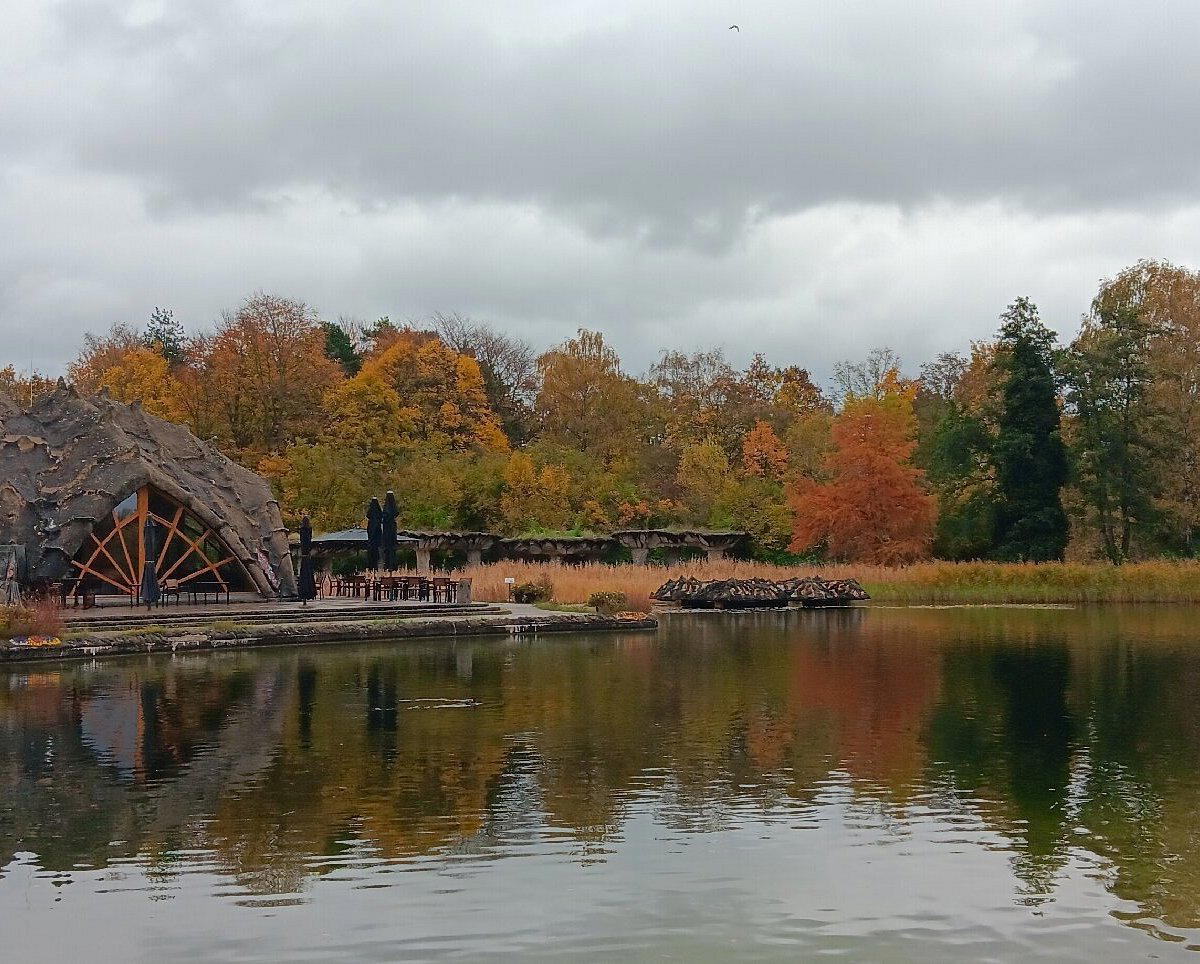
Warm, traditional brauhaus atmosphere with impressive copper brewing kettles, lively vibes, live music, and cozy beer garden by the Havel river.