Few dining rooms in Vienna carry the architectural weight of the Palmenhaus in the Burggarten. The 19th-century iron-and-glass greenhouse sets a scene that the brasserie format inhabits naturally, placing it in a category of its own among central Vienna's all-day venues. It draws a broad crowd, from museum visitors to after-concert regulars, precisely because the setting does the heavy lifting before the menu is opened.
Pearl is the En Primeur Club membership app — saves, bookings, and concierge access live there. Same editors, same standards.
- Address
- Burggarten 1, 1010 Wien, Austria
- Phone
- +43 1 5331033
- Website
- palmenhaus.at
- Directions
- Get directions
 Saves & bookings on Pearl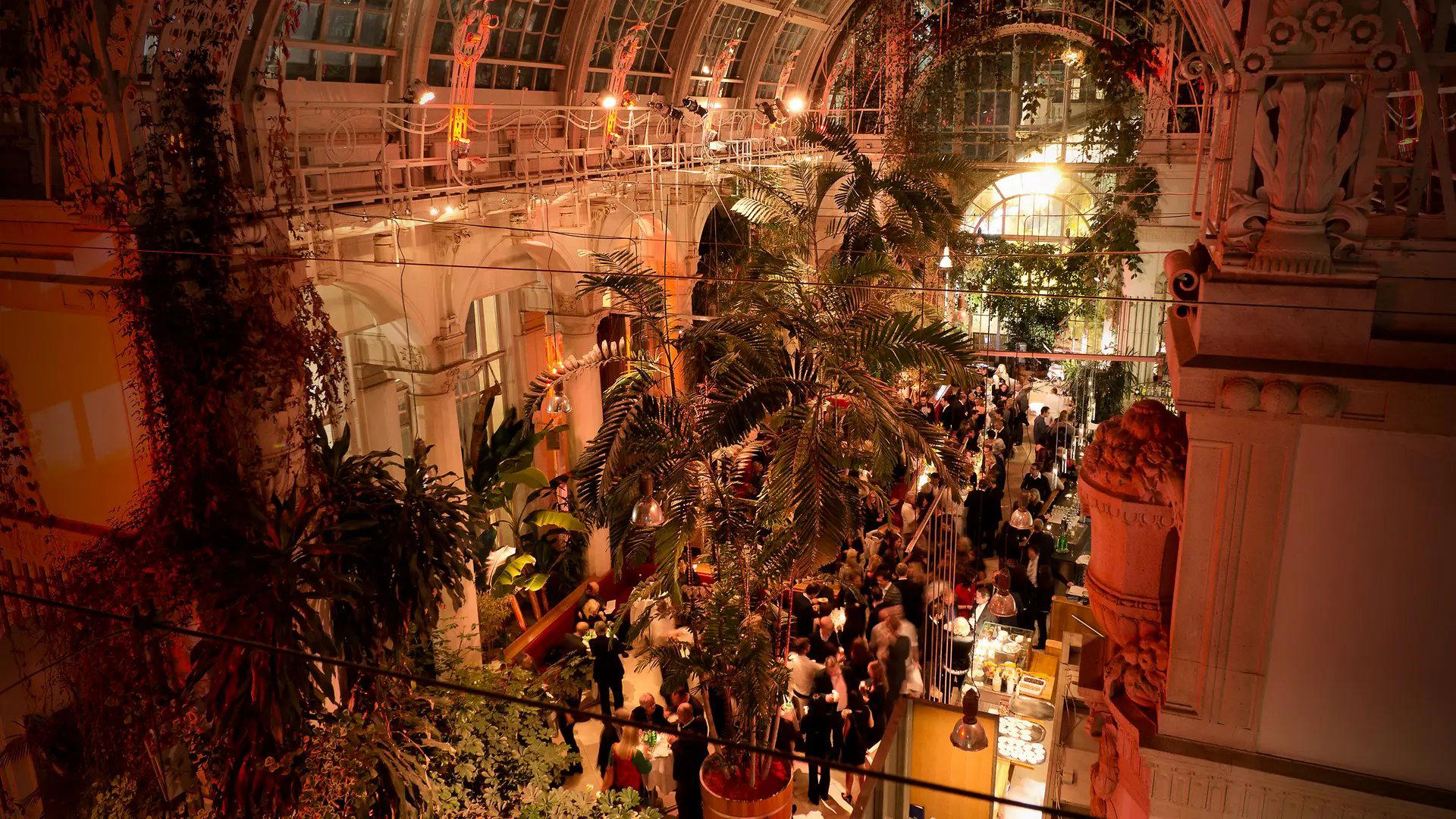
Glass, Iron, and the Burggarten: What the Setting Actually Delivers
Vienna has many grand interiors, but the Palmenhaus works differently from the gilded coffeehouse tradition that defines the city's café culture. The structure is a late 19th-century glasshouse, built on the edge of the Burggarten, and its bones are industrial in elegant sense: exposed wrought iron, soaring glass panels, and a volume of light that shifts dramatically across the day. By mid-morning, the eastern light crosses the floor in long columns; by late afternoon, the greenhouse effect is soft and diffused. This is not mood lighting engineered by a designer. It is the physics of a Victorian-era conservatory repurposed for contemporary dining, and the distinction matters.
The Palmenhaus sits in a category that Vienna's dining scene handles better than most European capitals: the serious all-day brasserie with genuine architectural heritage. Across the city, venues in the €€ to €€€ bracket tend to skew either toward the classical coffeehouse (marble tops, bentwood chairs, thick newspapers on bamboo poles) or toward the modern bistro (reclaimed wood, curated wine lists, Instagram-ready small plates). The Palmenhaus occupies a third position, where the architecture is the primary editorial statement and the food and drink operate in support of it rather than in competition.
The Brasserie Format in a City That Does It Differently
Brasserie dining in Vienna follows a looser interpretation than the Parisian model. The Viennese version tends to absorb elements of Kaffeehaus culture, meaning longer dwell times are expected, transitioning from coffee to lunch to aperitivo hour without the table-turn pressure common in comparable European capitals. The Palmenhaus fits this rhythm. Its position inside the Burggarten, adjacent to the Mozart statue and a short walk from the Kunsthistorisches Museum and the Albertina, means the crowd is mixed by design: tourists mid-itinerary, locals using the terrace for a working coffee, and the pre- and post-Staatsoper contingent who treat the first district as their neighbourhood.
This geographic placement puts the Palmenhaus in a peer conversation with other landmark-adjacent brasseries across Vienna's first district, but few of those peers can match the structural drama of the glass pavilion itself. For comparison, the creative and tasting-menu end of Viennese fine dining runs through venues like Steirereck im Stadtpark and Amador, where the emphasis is on technical cuisine at €€€€ price points. The Palmenhaus operates at a different register entirely, where the proposition is access to one of the city's most architecturally significant interiors without the commitment of a full tasting menu evening.
Sensory Experience: What Visitors Actually Encounter
The approach from the Burggarten path matters. The glasshouse reads as a pavilion from outside, low-slung relative to the surrounding palace architecture, which makes the interior volume a mild surprise on entry. Sound behaves differently in a glass-and-iron structure than in a plaster-ceilinged room: there is a particular brightness to the acoustic, voices carry without echoing, and the ambient noise of the garden filters in around the edges. On warmer days, the terrace extends the experience outward into the park itself, one of the more agreeable outdoor dining positions in the first district.
The visual rhythm inside is set by the botanical elements that reference the building's original function as a greenhouse, which means foliage and planting are integrated into the architecture rather than deployed as decoration. This is not the potted-plant styling common to contemporary restaurant interiors. The greenery here has the slightly overgrown density of something that has been growing for decades, and it softens the industrial frame of the iron structure. The combination produces an atmosphere that sits somewhere between a well-maintained conservatory and a confident brasserie, without being fully either.
Where This Sits in the Vienna Dining Picture
Vienna's restaurant scene has developed two distinct tracks at the serious end: the modernist fine dining tier, represented by venues like Konstantin Filippou and Mraz & Sohn, and the quality casual tier, where Austrian regional cooking meets the Kaffeehaus format. The Palmenhaus belongs to neither track cleanly, which is both its limitation and its appeal. It does not compete with the tasting-menu houses on culinary ambition, and it does not try to. It competes on terms of setting, accessibility, and the particular pleasure of drinking well in a notable room.
Austria's broader restaurant scene, for those using Vienna as a base to reach the country's regional cooking, extends well beyond the capital. The Wachau and Salzburg corridors carry venues like Landhaus Bacher in Mautern an der Donau and Obauer in Werfen, while the Tyrolean and Vorarlberg Alpine dining scene runs through properties like Gourmetrestaurant Tannenhof in Sankt Anton am Arlberg and Stüva in Ischgl. For a broader picture of where the Palmenhaus sits within Vienna's specific dining character, the EP Club Vienna restaurants guide maps the full range from fine dining to neighbourhood standards.
For those cross-referencing serious brasserie and glass-pavilion dining internationally, the format has equivalents in how certain landmark-adjacent venues operate in New York and San Francisco, where setting and cultural context carry as much weight as menu. Venues like Le Bernardin in New York City represent the high-precision end of that spectrum, while Lazy Bear in San Francisco shows how experience-forward formats can work at a different price register. The Palmenhaus sits closer to the experience-forward model, where the room is the core of the proposition.
Other Austrian venues worth knowing in the context of regional cooking and serious hospitality include Döllerer in Golling an der Salzach, Schwarzer Adler in Hall in Tirol, Restaurant 141 by Joachim Jaud in Mieming, Ois in Neufelden, Kräuterreich by Vitus Winkler in Sankt Veit im Pongau, Taubenkobel in Schützen am Gebirge, and Doubek within the capital itself.
Planning a Visit: Practical Notes
The Palmenhaus is located at Burggarten 1, in Vienna's first district, a position that makes it walkable from the Staatsoper, the Albertina, and the MuseumsQuartier. The first district is well served by the U1 and U4 U-Bahn lines, with Karlsplatz and Herrengasse particularly practical stops depending on direction of approach. The building's all-day format and popularity with both visitors on museum itineraries and local regulars mean it can be busiest at peak hours, particularly in summer and on weekends.
Similar Picks
Comparable venues nearby, for context on price, style, and recognition.
| Venue | Cuisine | Price | Notes |
|---|---|---|---|
| Brasserie Palmenhaus WienThis venue — the venue you are viewing | Austrian Brasserie Classics | $$$ | Not listed |
| Urbanek | Austrian Delicatessen & Wine Bar | $$$ | Wieden |
| Café Landtmann | Classic Viennese Coffee House | $$$ | Hofburg |
| Leitenbauer Delikatessen | Austrian Sausage Deli | $$ | Neubau |
| HaasBeisl | Traditional Viennese Offal Specialties | $$ | Margareten |
| Leopoldauerhof | Traditional Austrian | $$ | Leopoldau |
Continue exploring
More in Vienna
Restaurants in Vienna
Browse all →
Bars in Vienna
Browse all →
Hotels in Vienna
Browse all →
At a Glance
- Elegant
- Classic
- Scenic
- Sophisticated
- Brunch
- Date Night
- Special Occasion
- Garden
- Terrace
- Historic Building
- Extensive Wine List
- Garden
Current opening hours
- Monday
- 10 AM–11 PM
- Tuesday
- 10 AM–11 PM
- Wednesday
- 10 AM–11 PM
- Thursday
- 10 AM–11 PM
- Friday
- 10 AM–11 PM
- Saturday
- 9 AM–11 PM
- Sunday
- 9 AM–11 PM
Hours can change for holidays and private events. Last verified .
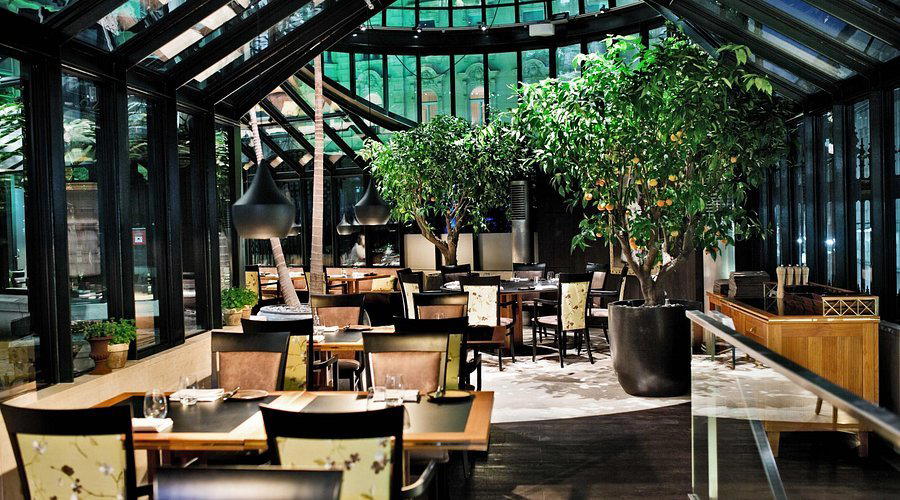
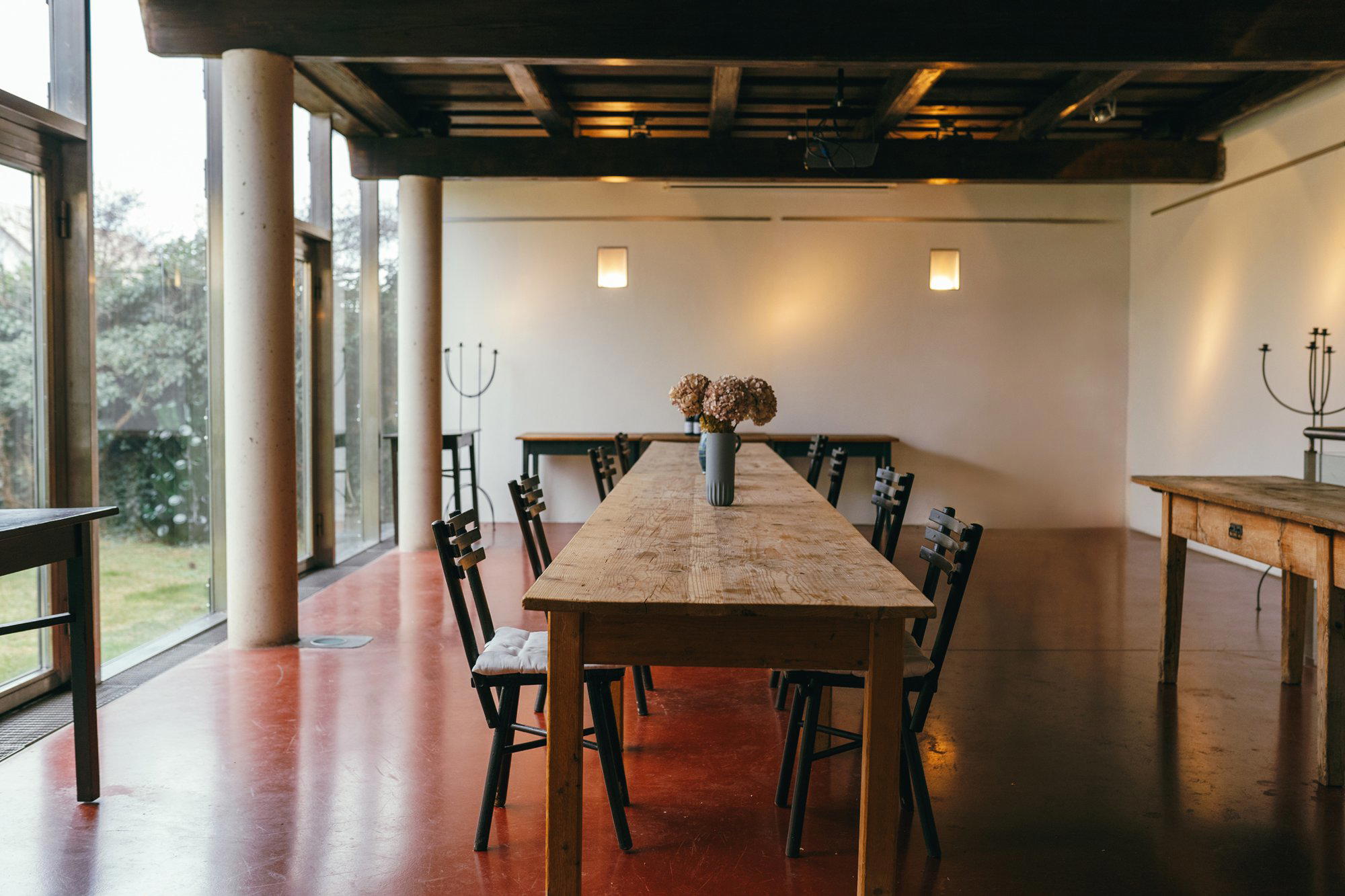
Warm and inviting atmosphere enhanced by natural light filtering through glass walls, surrounded by lush greenery and palm trees, creating an elegant tropical oasis.