
Tabelog 100 #68
Our verdict
Chinese Komugiko Ryori Senmonten Keisen puts Northeast Chinese wheat-flour cooking at the center of a Chiba meal, with chunbing, dim sum and dumpling traditions treated as the main event rather than a side order. Its Tabelog 100 Chinese EAST selection in 2026, alongside earlier selections in 2023 and 2024, gives this modest Tsuga address a clear place in the region’s Chinese dining conversation.

Pearl is the En Primeur Club membership app, where members save venues, book tables and use the concierge.
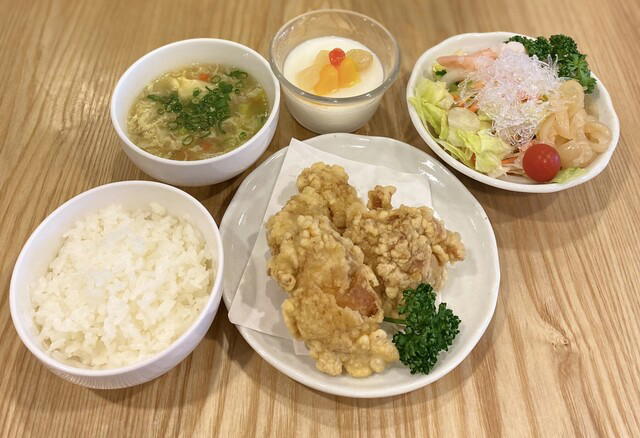
The menu
What to order
- Spring pancakes (chunbing)
- Long yam fried dumplings
- Boiled dumplings
- Meat buns
Tsuga is not the Chiba most travelers picture first: suburban, station-led and practical. That makes the dining signal sharper: a specialist Chinese room built around wheat flour, handwork and the shared rhythm of wrapping, folding and passing dishes. Chinese Komugiko Ryori Senmonten Keisen belongs to a category visitors often miss when reading Chinese food in Japan through ramen, gyoza or luxury banquet rooms. The richer thread is regional technique, especially the northern Chinese habit of making wheat behave like a full cuisine.
Chinese dining in Japan spans chuka comfort food, hotel Cantonese, Sichuan heat, dumpling counters and regional specialists. Chiba has examples across that range, from value-led everyday rooms to higher-budget Chinese restaurants such as Boushu En. Keisen sits apart. Its stated focus is komugiko ryori, wheat-flour cooking, with spring pancakes from Northeast China at the center and Hokkaido wheat named in the approach. The meal is not organized around a single prestige ingredient, but around dough, timing and the pleasure of assembling food at the table.
Wheat-flour cooking turns the meal into a shared ritual
Chunbing, often translated as spring pancakes, changes the tempo of a Chinese meal. Instead of waiting for a plated sequence, the action moves between kitchen and table: pancakes, fillings, condiments and hands. The custom has roots in northern and northeastern China, where wheat is more central than rice, and flatbreads, dumplings, noodles and wrappers carry as much cultural weight as the stir-fry or braise they accompany. Here, the Chinese, dim sum and dumpling categories are not scattered tags; they form one grammar of flour, steam, stretch and fold.
For Chiba diners, the distinction matters. A wheat-flour meal can feel generous without premium pricing, and Keisen’s JPY 1,000 to JPY 1,999 average price band makes it a repeatable neighborhood habit rather than a special-occasion banquet. It separates the restaurant from higher-spend city comparisons while lifting it above a functional lunch stop through technical focus. Selection for Tabelog 100 Chinese EAST in 2026, with previous selections in 2023 and 2024, is the trust signal: not a Michelin-style luxury marker, but a Japanese dining-culture marker for clear category identity and sustained local approval.
The chef detail belongs in that frame, not in personality theater. A noodle chef invited from Dalian is credited with handcrafting the wheat-flour dishes from scratch, and Dalian’s position in Liaoning explains the northern Chinese emphasis. The point is transmission: regional craft arriving in Chiba in a format where ordinary diners can encounter chunbing and related flour work without turning the meal into a museum piece.
Chiba's Chinese dining range, from station meals to regional specialists
Chiba’s restaurant culture rewards usefulness: business lunches, family rooms, car-access dining and station-adjacent counters, rather than central Tokyo’s concentrated luxury grid. Category clarity therefore matters. A diner might compare Indian cooking at Bengal Tiger, French-leaning dining at Cinq au Pied, curry at Curry Restaurant Shiba, or broader local options such as BAMBOU. Within that spread, Chinese wheat-flour specialization gives Tsuga a more specific reason to travel than neighborhood convenience.
The comparison set shows why price and format matter. Kikuzono and Ramen Sugita Ya Chiba yuukou ten occupy lower price bands, while Seikou En and Boushu En move higher; Koimen Kurage overlaps the JPY 1,000 to JPY 1,999 range. Keisen does not compete through luxury cues but through focus: 40 seats, a private room for eight, private use for groups of 20 to 50, takeout and a no-smoking room make it closer to a family-and-friends Chinese table than a chef-counter performance. Children and strollers are welcome, matching the food itself. Chunbing is social, and dumplings rarely benefit from silence.
The drinks list also signals localization. Sake, shochu and wine sit alongside Chinese wheat-flour dishes, a Japanese way of absorbing regional Chinese cooking into local dining habits. Serious Chinese restaurants in Japan often treat authenticity not as costume, but as a technical base that can coexist with Japanese service expectations, payment systems and family use. The result is less formal than a hotel dining room and more intentional than a generic chuka shop.
How to read the room before choosing it
Expect a specialist neighborhood Chinese meal with a dough-centered identity. Diners wanting polished ceremony, long wine choreography or a destination tasting menu should choose another category. Those interested in northern Chinese flour work, group pacing and a repeat-ordering price band will understand the appeal faster. The meal likely makes more sense with several people than solo, because spring pancakes and dumplings reward sharing; this is a table format, not a solitary counter pursuit.
For a broader Chiba itinerary, this address fits a food-led day better than a luxury-hotel circuit. EP Club readers can place it alongside Our full Chiba restaurants guide, then widen the trip through Our full Chiba hotels guide, Our full Chiba bars guide, Our full Chiba wineries guide and Our full Chiba experiences guide. For cross-city dining context, compare how specialist identity appears in places as different as -Grilled beef Sukiyaki- KAMAKURA TANUKIAN 鎌倉 たぬき庵 in Kamakura. 鮪と炭火焼き うお炭 秋葉原店 in Tokyo.cafe in Osaka.know in Kumamoto, (Shoku) Vietnam in Kawasaki, [Curry Senmon Ten] Maruyama Kyoju. in Sapporo, Jōdo Saké Bar in Los Angeles and Onigiri Time in Pasadena.
The editorial read is direct: Chinese Komugiko Ryori Senmonten Keisen is valuable because it narrows the frame. Chiba has many places to eat; fewer make a regional Chinese staple the reason for the table. The 2026 Tabelog 100 Chinese EAST selection confirms this is not just local convenience, while the price band keeps it grounded in everyday dining. For travelers who care how food traditions move, adapt and settle into Japanese suburbs, that combination is more instructive than another polished room with a broader menu and less conviction.
Frequently asked questions
Where exactly is Chinese Komugiko Ryori Senmonten Keisen?
Chinese Komugiko Ryori Senmonten Keisen is located in Chiba.
What's the pricing like at Chinese Komugiko Ryori Senmonten Keisen?
Pricing at Chinese Komugiko Ryori Senmonten Keisen is listed as JPY 1,000 - JPY 1,999.
When is Chinese Komugiko Ryori Senmonten Keisen open?
Hours at Chinese Komugiko Ryori Senmonten Keisen: Mon: 11:30 AM–2:30 PM, 5–8 PM; Tue: 11:30 AM–2:30 PM, 5–8 PM; Wed: 11:30 AM–2:30 PM, 5–8 PM; Thu: 11:30 AM–2:30 PM, 5–8 PM; Fri: 11:30 AM–2:30 PM, 5–8 PM; Sat: 11:30 AM–2:30 PM, 5–8 PM; Sun: 11:30 AM–2:30 PM, 5–8 PM.
What is Chinese Komugiko Ryori Senmonten Keisen known for?
It specializes in Chunbing, or spring pancakes, from Northeast China, with wheat-flour dishes made from scratch using Hokkaido wheat. The restaurant was selected for Tabelog 100 in 2026, with prior selections in 2024 and 2023.
Cuisine and Awards Snapshot
Side-by-side context: comparable cuisine and price.
| Venue | Cuisine | Price | Awards | Notes |
|---|---|---|---|---|
| Chinese Komugiko Ryori Senmonten KeisenThis venue (the venue you are viewing) | Chinese Wheat-Flour Cuisine | $10–20 | Tabelog 100 #68 | Not listed |
| EST! Prossimo | Italian Trattoria & Osteria Bar | Not listed | Tabelog 100 #63 | Chuo Ward |
| Tonkatsu Okura | Tonkatsu specialty restaurant | $10–20 | Tabelog 100 #77 | Mihama-ku |
| Epice | French | $50–100 | Tabelog 100 #32 | Chuo-ku |
| Hanamigawa Ootomi | Yakitori using Hinai-jidori chicken | $50–100 | Tabelog 100 #88 | Makuharihongo |
| Tenpaku | Modern Tempura | Not listed | Tabelog Silver #140 | Chuo-ku |
Recognition history
Dated appearances from independent guides and award organizations, with the underlying list record or original source where available.
Tabelog 100 #68 · No. 68
Tabelog · Tabelog 100 - Chinese cuisine - EAST - 2026
Continue exploring
More in Chiba
Restaurants in Chiba
All restaurants in Chiba →
Bars in Chiba
Browse all →





Details
- Classic
- Cozy
- Group Dining
- Casual Hangout
- Family
- Standalone
- A La Carte
- Set Menu
Current opening hours
- Monday
- 11:30 AM–2:30 PM, 5–8 PM
- Tuesday
- 11:30 AM–2:30 PM, 5–8 PM
- Wednesday
- 11:30 AM–2:30 PM, 5–8 PM
- Thursday
- 11:30 AM–2:30 PM, 5–8 PM
- Friday
- 11:30 AM–2:30 PM, 5–8 PM
- Saturday
- 11:30 AM–2:30 PM, 5–8 PM
- Sunday
- 11:30 AM–2:30 PM, 5–8 PM
Hours can change for holidays and private events. Hours as of .
A modest, specialized neighborhood dining room focused on traditional wheat-flour dishes rather than a highly designed or scenic setting.