Our verdict
The sparse public record makes direct comparison difficult, but the neighbourhood context, residential, relatively quiet, a step removed from the inner-district restaurant circuit, shapes the kind of dining proposition that tends to work here: deliberate, locally rooted, worth a specific journey rather than a passing visit.

Pearl is the En Primeur Club membership app, where members save venues, book tables and use the concierge.
The menu
What to order
- Grilled octopus with rosemary mashed potatoes
- Oysters
- Mixed fish platter for two
- Monkfish
- Whole fish with potatoes
- Seafood risotto
Hietzing and the Case for Dining Outside the Ring
Vienna's most-discussed restaurants tend to cluster inside or immediately adjacent to the Ringstraße: the Stadtpark corridor that houses Steirereck im Stadtpark, the inner-district addresses of Amador and Konstantin Filippou, the creative-Austrian registers of Mraz & Sohn. The geography is not accidental. Central addresses attract the expense-account lunch crowd, the visiting food press, the hotel concierge recommendation. Restaurants in the outer districts have to work differently: they build a local constituency first, rely on word of mouth over editorial coverage, and often develop a menu logic that reflects the neighbourhood rather than the international fine-dining template. Hietzing is the district that contains Schönbrunn Palace and its grounds, a neighbourhood defined by Gründerzeit apartment buildings, professional households, and a quieter rhythm than the 1st or 7th. A restaurant here does not benefit from tourist foot traffic or the gravitational pull of the city's hotel zone. It earns its tables through the quality of what it puts on them.
What the Address Implies About the Offer
In most European cities, the relationship between neighbourhood character and restaurant format is reasonably predictable. Residential districts at some remove from the centre tend to support either highly local, informal propositions, neighbourhood bistros, family-run trattorie, or the opposite extreme: destination restaurants that have deliberately chosen space, quiet, and lower rents in exchange for requiring guests to make a real journey. The middle ground, the venue trying to be both casual drop-in and serious kitchen, is harder to sustain outside a central location. The name itself, not an Austrian reference, not a Viennese dialect term, signals a deliberate departure from the regional-heritage framing that defines so much of the city's current fine-dining identity. Where places like Doubek lean into Viennese tradition, and the broader Austrian restaurant circuit, from Döllerer in Golling an der Salzach to Landhaus Bacher in Mautern an der Donau, draws its identity from landscape and local produce, a name like Blue Marlin positions the restaurant as something other than regionally anchored. Whether that means a seafood-forward offer, an international frame, or simply a branding decision made independently of cuisine type, the public record does not confirm.
Menu Architecture and What It Signals
Outer-district Vienna restaurants that sustain a reputation typically do so through one of two menu architectures. The first is a focused, frequently changing card, short enough to execute with a small brigade, deep enough in a single category to justify the journey. The second is a broader, all-day or multi-occasion format that serves the neighbourhood across lunch, dinner, and weekend visits, trading depth for range.
The seafood reference embedded in the name, if it maps to the actual offer, would place Blue Marlin in an interesting position within Vienna's dining scene. Serious seafood restaurants are not a dominant format in a landlocked city. The Austrian kitchen tradition reaches its international recognition through meat, game, dairy, and freshwater fish, the repertoire evident in celebrated houses like Obauer in Werfen or Kräuterreich by Vitus Winkler in Sankt Veit im Pongau. A restaurant oriented around Atlantic or Mediterranean fish in this context would occupy a relatively underserved niche, comparable, in its positioning logic if not its register, to the way Le Bernardin in New York City carved a specific identity through seafood focus in a market that valued beef. The comparison is in structural logic only: a focused category commitment in a scene that defaults to something else.
This kind of menu commitment, if Blue Marlin does operate on seafood principles, carries implications for sourcing, for seasonal rotation, and for the rhythm of the kitchen. Coastal fish in Vienna requires reliable supply chains and careful turnover. Restaurants that do it well tend to post short, rotating menus that reflect what arrived that week rather than locking in dishes for a season. That model rewards repeat visits from a local base rather than single-occasion visits from tourists, which aligns with the Hietzing location.
Placing Blue Marlin in the Broader Austrian Restaurant Moment
Austrian fine dining has spent the past decade building a reputation for produce-led, technique-precise cooking that draws from alpine, Pannonian, and Danubian traditions simultaneously. The critical conversation around restaurants like Taubenkobel in Schützen am Gebirge, Stüva in Ischgl, and Restaurant 141 by Joachim Jaud in Mieming reflects a national scene increasingly confident in its own terms rather than calibrated against French or Scandinavian benchmarks.
Vienna's inner-district restaurants, operating at €€€€ price points with Michelin attention, sit at the visible apex of this moment. But the more interesting development may be what is happening at the neighbourhood level: smaller, less-publicised restaurants building genuine local followings in districts that the food press rarely visits. Blue Marlin, positioned in Hietzing with limited public footprint, may belong to this latter group. If so, the lack of broad critical coverage says less about quality than about the structural invisibility of outer-district dining in a media environment that rewards central addresses and already-decorated kitchens.
For visitors willing to take the U4 west from Karlsplatz, or for Hietzing residents already familiar with the street, the journey proposition is different. Restaurants in this position, neighbourhood-rooted, requiring intent rather than impulse, tend to offer a more settled, less performative experience than their inner-district peers. The dining room is not calibrated for first-time visitors triangulating between guidebook entries. It is calibrated for people who already know why they are there. Formats like the community-driven tasting model explored by places such as Lazy Bear in San Francisco demonstrate that some of the most considered dining experiences operate away from the highest-visibility addresses. The principle, if not the format, is relevant here.
For a complete picture of what Vienna's restaurant scene currently offers across all price points and districts, our full Vienna restaurants guide covers the city's dining character in detail. For the alpine and regional Austrian circuit beyond the capital, Schwarzer Adler in Hall in Tirol and Ois in Neufelden illustrate the range of what is happening outside Vienna's orbit and Gourmetrestaurant Tannenhof in Sankt Anton am Arlberg shows how destination restaurants function in mountain resort contexts.
Frequently asked questions
Where is Blue Marlin in Vienna?
Blue Marlin is located at Hietzinger Hauptstraße 10/16, 1130 Wien, Austria, Vienna.
Is Blue Marlin in Vienna suitable for a dinner before or after visiting Schönbrunn Palace?
Hietzinger Hauptstraße 10/16 places Blue Marlin within the same outer-13th-district zone as Schönbrunn, making it a geographically logical option for visitors to that part of the city. Unlike restaurants inside the palace grounds or in heavily tourist-facing areas nearby, Blue Marlin operates from a residential street address, which typically means a different pace and clientele. No confirmed hours are published, so verifying evening service directly before planning around a palace visit is advisable.
What should I order at Blue Marlin?
Confirmed menu data for Blue Marlin is not currently published, which itself tells you something about how the restaurant operates. Venues at this address tier in Hietzing typically run tight, rotation-based menus rather than broad à la carte lists. Arriving without a fixed agenda and following the kitchen's direction is the practical approach here.
Should I book Blue Marlin in advance?
Blue Marlin sits in Hietzing at Hietzinger Hauptstraße 10/16, a residential quarter where walk-in culture is less common than in the city centre. Outer-district restaurants in Vienna at this address level tend to operate with a loyal local clientele that fills seats consistently. Booking ahead is the safer position.
What is Blue Marlin known for?
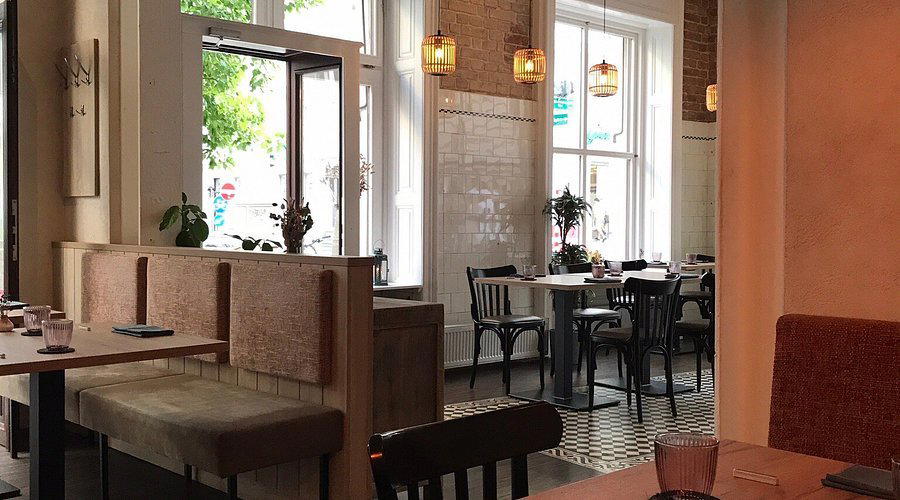
Blue Marlin occupies a position in Vienna's 13th district that places it outside the Ringstraße restaurant circuit, where the city's most-discussed tables are concentrated. Its Hietzing address connects it to a neighbourhood with a distinct residential identity rather than tourist traffic.
How does Blue Marlin handle allergies?
No allergy or dietary accommodation policy is documented for Blue Marlin at this time. EU food labelling regulations require Austrian restaurants to disclose major allergens, so the baseline legal framework applies.
Is Blue Marlin worth it?
The case for Blue Marlin rests on location logic as much as the food itself. Hietzing restaurants that sustain an audience without the footfall advantages of the first or fourth district tend to do so on repeat local business, which is a meaningful signal of consistency. Without published pricing or award documentation, the honest answer is that the value proposition requires a visit to assess directly.
Fast Comparison
Comparable venues nearby, for context on price, style, and recognition.
| Venue | Cuisine | Price | Awards | Notes |
|---|---|---|---|---|
| Blue MarlinThis venue (the venue you are viewing) | Premium Fresh Seafood | $50–100 | Not listed | Not listed |
| Lubin | Traditional Croatian Seafood | $50–100 | Falstaff Restaurant - 92 Falstaff Points | Wien-Mitte |
| Gastro Fisch Brač | Fresh Croatian Seafood | Not listed | Not listed | Mariahilf |
| Fisch am Markt | Nordic-Istrian Seafood Grill | $20–30 | Not listed | Riesenrad |
| Restaurant Ilija | Dalmatian Seafood | $30–50 | Not listed | Josefstadt |
| Babenberger Passage | Nightclub | $50–100 | Not listed | Hofburg |