On a narrow lane a short walk from the Markt, Bistro Den Amand occupies a modest address that punches well above its profile in Bruges's bistro circuit. The kitchen draws on the deep Flemish culinary tradition that defines West Flanders dining, and the room's unhurried pace reflects the Belgian conviction that a proper meal is measured in hours, not courses. A practical starting point for anyone mapping the city's mid-register eating.
Pearl is the En Primeur Club membership app — saves, bookings, and concierge access live there. Same editors, same standards.
- Address
- Sint-Amandsstraat 4, 8000 Brugge, Belgium
- Phone
- +3250340122
- Website
- denamand.be
- Directions
- Get directions
 Saves & bookings on Pearl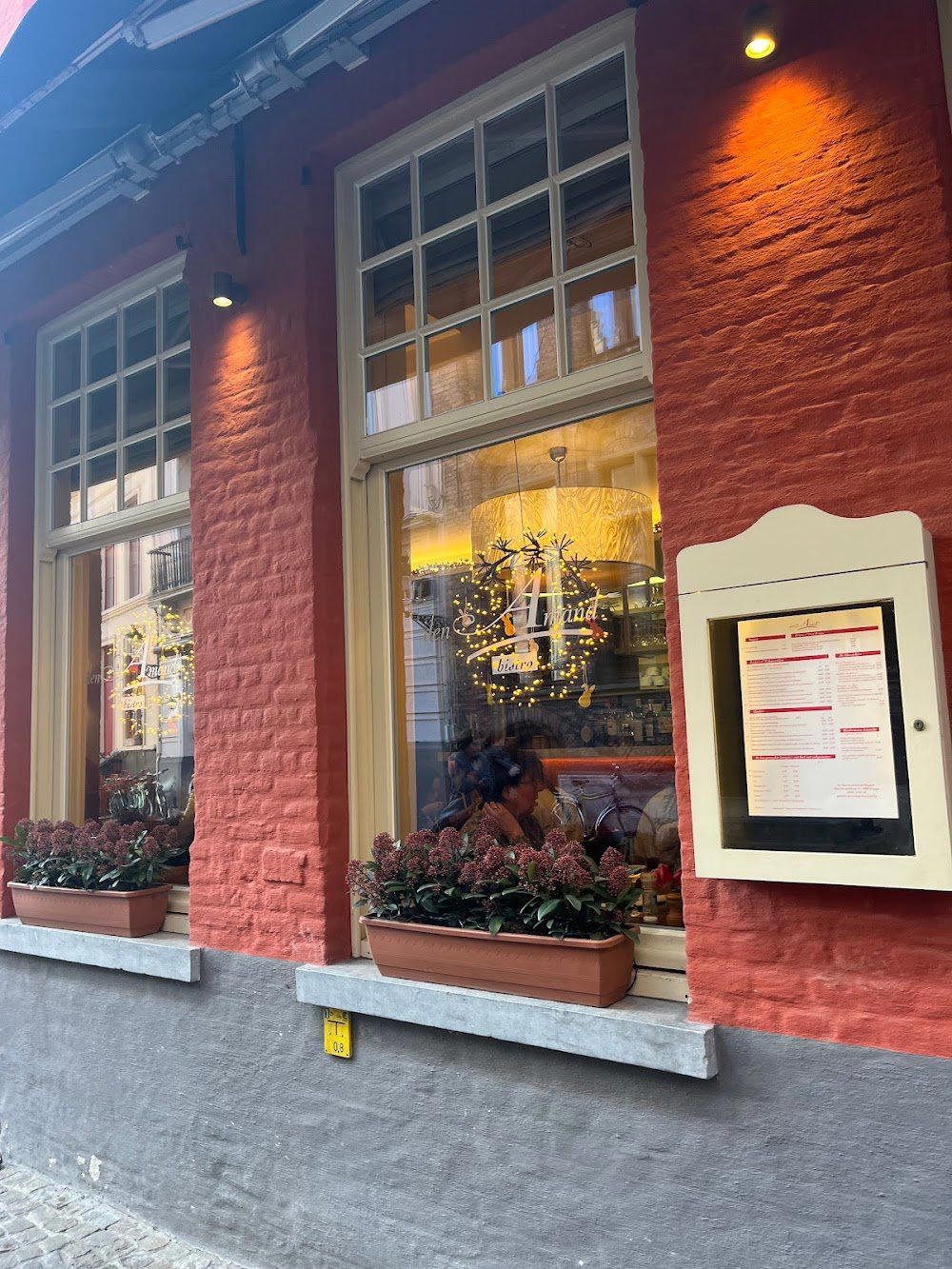
A Street, a Ritual, a Room
Sint-Amandsstraat is one of those Bruges lanes that visitors photograph from both ends and then walk straight through without stopping. The canal is a block away, the Markt is two minutes on foot, and the street itself is narrow enough that the buildings on either side seem to lean toward each other by early afternoon. It is precisely this kind of address that tends to house the restaurants Bruges residents actually eat in: low-profile, embedded in the urban grain, easy to miss if you are looking at your phone rather than at the facades. Bistro Den Amand sits at number 4, a slot long shaped by the city’s restaurant culture.
The bistro format matters here as a category signal. Bruges has a tiered dining scene that runs from the heavily touristed waterfront spots through a solid mid-market layer and up to a handful of addresses that operate at the level of Belgian fine dining. De Karmeliet and Zet'Joe by Geert Van Hecke occupy the upper register; Mémoire and Sans Cravate represent the contemporary creative French tier priced at €€€€. Den Amand operates in the bracket below that ceiling, which in a city with Bruges's culinary density is not a compromise but a different kind of proposition: the kind of room where the food earns attention not through elaborate architecture but through consistency and the weight of local habit.
The Rhythm of a Belgian Table
Belgian dining, particularly in Flanders, runs on a set of unspoken conventions that distinguish it from French bistro culture across the border. The pace is slower by design. Courses arrive with deliberate gaps rather than the French efficiency of clearing and resetting; bread arrives early and is replenished without being asked; and the expectation that a table will turn twice in an evening is largely absent from the cultural frame. A meal at a Bruges bistro is structured around the idea that the table is yours for the duration, a posture that shapes everything from how the room is staffed to how the menu is written.
At Den Amand, this rhythm is built into the address itself. The street is not a through-route for the kind of quick-turnover visitor traffic that drives faster pacing. Diners who find their way to Sint-Amandsstraat 4 have generally made a deliberate choice rather than a spontaneous one, which self-selects for a clientele more interested in sitting down properly than in moving on to the next stop. That dynamic tends to produce better meals even before the kitchen gets involved, because the social contract between the room and its guests is already calibrated toward patience.
For visitors comparing Bruges against Antwerp or Ghent on the Belgian dining circuit, West Flanders has historically maintained a slightly more conservative kitchen register than either city. Zilte in Antwerp and Vrijmoed in Gent both operate at the ambitious end of modern Belgian cooking, while the West Flanders tradition, from coastal addresses like Willem Hiele in Oudenburg to the rooms in Bruges proper, tends to ground its ambition in product rather than technique. The bistro tier in this city reflects that tendency.
Where Den Amand Sits in the City's Eating Hierarchy
Bruges is a small city with an unusually high concentration of serious restaurants relative to its permanent population, a function of the tourist economy and of West Flanders's longstanding culinary seriousness as a region. The difficulty for any single address is standing out in a field where Boury in Roeselare and Hof van Cleve in Kruishoutem raise regional expectations for anyone eating in the province.
In that context, a well-run neighbourhood bistro like Den Amand performs a specific function. It is not competing with the three-Michelin-star tier or the contemporary tasting-menu format; it is serving the part of the market that wants a proper Flemish meal without the formality or the price point of the upper bracket. That is a legitimate and genuinely useful slot in any city's dining ecology, and Bruges has enough visitors and residents who need exactly that proposition to sustain it.
Comparable addresses in the city's mid-register include 't Apertje, which operates in a similar neighbourhood-bistro register. Further afield on the Belgian scene, La Durée in Izegem and d'Eugénie à Emilie in Baudour illustrate how Belgian bistro cooking plays out in smaller cities across the country, each rooted in regional product but inflected by local preference.
For those building an itinerary that extends to Brussels, Bozar Restaurant represents the capital's own approach to the serious-but-not-formal register. Internationally, the bistro ritual has analogues in places as different as Le Bernardin in New York City and the communal-table format of Lazy Bear in San Francisco, though the Belgian version is defined less by event and more by the quiet expectation of a good meal done correctly.
Planning Your Visit
Sint-Amandsstraat 4 is walkable from any central Bruges hotel in under ten minutes. The room is in the historic centre, which means parking is easier approached from the outer ring than attempted at the door; the city's central car parks are the practical option for drivers, with a short walk through the lanes to the address. Bruges is a year-round destination, but the shoulder months of April, May, September, and October bring fewer tour groups to the immediate area and make the street itself noticeably quieter in the evenings. For a wider map of where Den Amand sits relative to other serious Bruges restaurants, the EP Club full Bruges restaurants guide gives particularly useful orientation across price tiers. Elsewhere in Belgium's smaller-city dining circuit, Cuchara in Lommel and Ralf Berendsen in Neerharen demonstrate that serious cooking is distributed well beyond the major urban centres.
Cuisine-First Comparison
Comparable venues nearby, for context on price, style, and recognition.
| Venue | Cuisine | Price | Notes |
|---|---|---|---|
| Bistro Den AmandThis venue — the venue you are viewing | Seasonal Belgian Bistro | $$ | Not listed |
| De Gastro | Classic Belgian Bistro | $$ | Historic Center |
| De Verloren Hoek | Belgian Fusion Tapas | $$ | St-anna |
| Réliva | Seasonal Organic European | $$ | historic centrum |
| Chocolaterie Sukerbuyc | Artisanal Belgian Chocolates | $$ | Historic Center |
| Bonte B | Modern Belgian Fine Dining | $$$ | Bruges Center |
Continue exploring
More in Bruges
Restaurants in Bruges
Browse all →
Bars in Bruges
Browse all →
Hotels in Bruges
Browse all →
Wineries in Bruges
Browse all →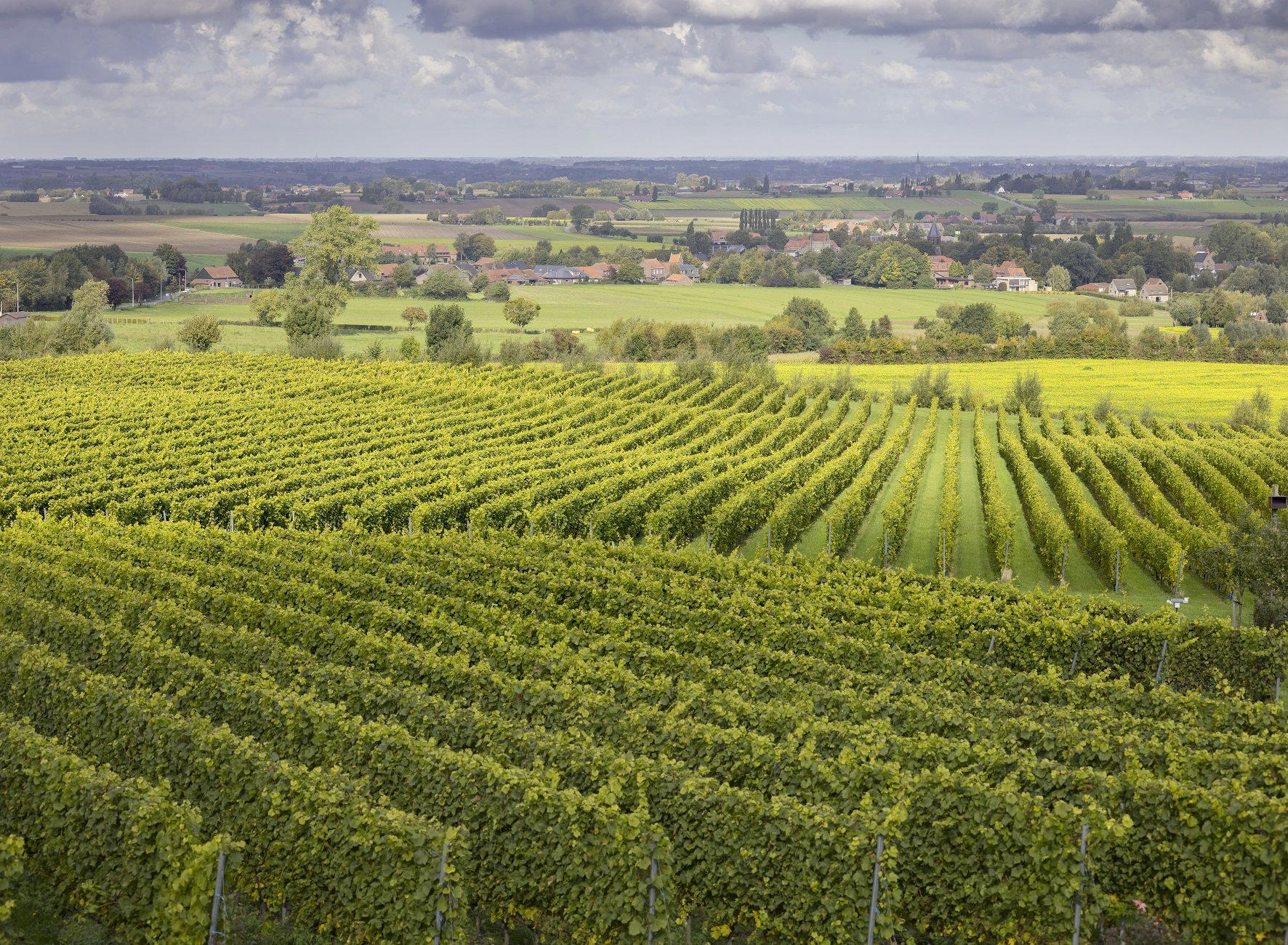
At a Glance
- Cozy
- Quiet
- Intimate
- Classic
- Casual Hangout
- Date Night
- Group Dining
- Open Kitchen
- Standalone
- Beer Program
- Corkage Allowed
- Local Sourcing
Current opening hours
- Monday
- Closed
- Tuesday
- 12–2 PM, 6–9 PM
- Wednesday
- 12–2 PM, 6–9 PM
- Thursday
- 12–2 PM, 6–9 PM
- Friday
- 12–2 PM, 6–9 PM
- Saturday
- 12–2 PM, 6–9 PM
- Sunday
- Closed
Hours can change for holidays and private events. Last verified .
Charming and intimate with an open kitchen visible to diners, creating a warm and welcoming atmosphere in a small, family-run space tucked away from the bustling tourist crowds.