Lahore Tikka House on Gerrard Street East has anchored Toronto's Little India corridor for decades, serving the kind of Pakistani and North Indian cooking that prioritises the tandoor and the grill over presentation theatre. The menu reads as a direct argument for smoke, char, and spice over refinement, and in that argument it has earned a loyal following that extends well beyond the neighbourhood.
Pearl is the En Primeur Club membership app — saves, bookings, and concierge access live there. Same editors, same standards.
- Address
- 1365 Gerrard St E, Toronto, ON M4L 1Z3, Canada
- Phone
- +1 416 406 1668
- Website
- lahoretikkahouse.com
- Directions
- Get directions
 Saves & bookings on Pearl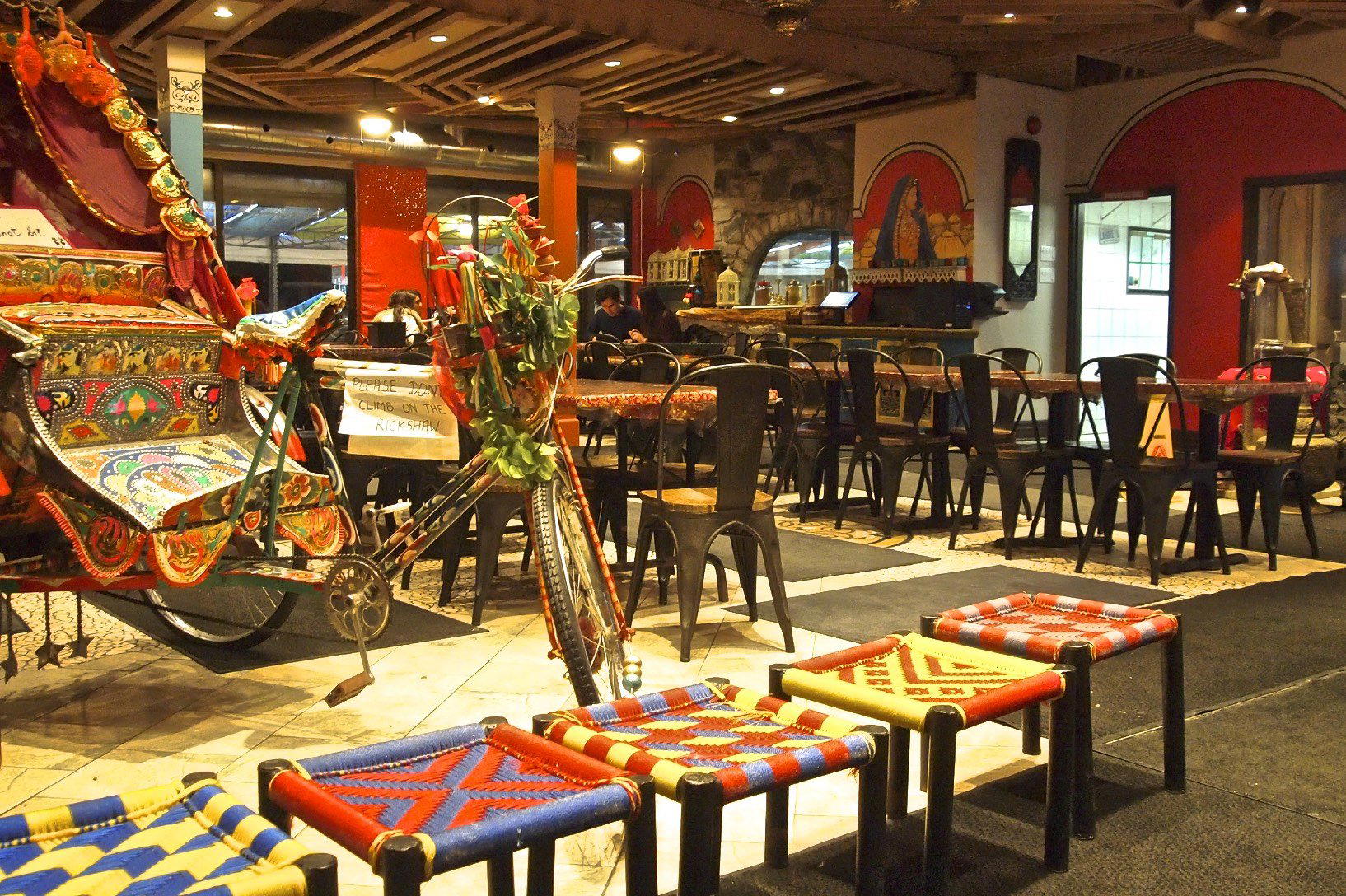
Gerrard Street and the Logic of the Grill
Toronto's Gerrard Street East corridor, the stretch between Coxwell and Greenwood known loosely as Little India, operates on a different register than the downtown dining precincts. Where venues like Alo or Aburi Hana build identity around precision and restraint, Gerrard's reputation has always rested on volume, directness, and the kind of cooking that scales through repetition and fire rather than through chef-driven narrative. Lahore Tikka House sits at 1365 Gerrard St E, Toronto, as a long-running Pakistani and North Indian restaurant with a menu that points clearly to tandoor and grill cooking.
That architecture is worth examining closely. Pakistani and North Indian restaurant menus in this tradition are not organised around courses in the European sense. They are organised around cooking method first, protein second, and sauce or spice profile third. The tandoor section carries its own internal logic: breads, then tikkas, then seekh, then whole preparations. The karahi and curry section follows a parallel structure. A menu like this is not a sequence to be followed from leading to bottom; it is a selection matrix, and how a table navigates it determines the quality of the meal.
What the Menu Architecture Reveals
The primacy of the tandoor in menus of this type reflects something specific about the Pakistani grilling tradition as it developed in Lahore's food streets, particularly around Burns Road and Data Darbar. The tandoor is not a supporting element; it is the central technique, and the rest of the menu is built around it. Tikka preparations, whether chicken, lamb, or seekh-style minced preparations, require high heat and short contact time to develop the char that defines the flavour profile. Getting that char without drying the protein is the core technical challenge, and it is the measure by which regulars assess any kitchen working in this tradition.
The karahi preparations occupy a different register on the menu. A karahi is a cooking vessel and a technique simultaneously: high heat, minimal liquid, tomato and fat as the sauce base, finished at speed in a wok-style iron pan. The result is a drier, more concentrated preparation than what most diners associate with subcontinental curry. Karahi chicken and karahi lamb are the reference points against which a kitchen in this tradition is typically assessed, precisely because the short cooking window offers nowhere to hide technique.
Bread on menus of this type functions as both vehicle and indicator. A naan from a properly heated tandoor arrives with blister marks, a slight char on the dome side, and enough structural integrity to serve as a scoop without tearing. The quality of bread service tracks closely with the overall management of the tandoor, a kitchen that is running the tandoor well will produce consistent bread; a kitchen that is not will produce steam-softened flatbread that reads more like a supermarket product.
The Corridor Context
Within the Gerrard corridor, Lahore Tikka House has maintained a presence that stretches across multiple decades, which in a neighbourhood shaped by turnover and changing demographics is itself a form of credential. The surrounding block has seen the corridor's composition shift over time as the South Asian population it originally served became more geographically dispersed across Scarborough, Brampton, and Mississauga. The restaurants that have persisted on Gerrard tend to be those with either strong local residential loyalty or sufficient reputation to draw visitors from across the city.
Toronto's South Asian dining scene has simultaneously developed a second tier of more formal, design-conscious restaurants elsewhere in the city, particularly in the suburbs, where larger South Asian communities have supported restaurants with longer menus and more diverse regional coverage. Gerrard's remaining institutions, including Lahore Tikka House, occupy a different position: they are identifiably in the Pakistani grilling tradition rather than attempting to cover the full subcontinent, and their pricing and setting reflect that specificity rather than trying to compete with a broader contemporary South Asian restaurant category.
The gap between a Gerrard Street grill house and a venue like Sushi Masaki Saito or DaNico is not simply a price gap; it reflects entirely different organising philosophies about what a meal is supposed to accomplish.
Venues like Tanière³ in Quebec City, Restaurant Pearl Morissette in Lincoln, and Eigensinn Farm in Singhampton represent a current in Canadian cooking defined by local sourcing and extended tasting formats. AnnaLena in Vancouver and Jérôme Ferrer - Europea in Montreal reflect similar tendencies in their respective cities. Further afield, Fogo Island Inn Dining Room in Joe Batt's Arm and Narval in Rimouski show how remote-location dining has become a distinct and serious category in Canadian hospitality. None of those venues are trying to do what the restaurant does, and that distinction clarifies both what the Gerrard Street address is and what it is not.
Busters Barbeque in Kenora and Cafe Brio in Victoria represent different regional interpretations of cooking built around fire and smoke. Internationally, Le Bernardin in New York City and Lazy Bear in San Francisco show how American cities at the higher end have resolved the tension between technical formalism and open-fire cooking. Don Alfonso 1890 and The Pine in Creemore fill out the picture of how kitchen-driven identity operates across different formats and price points.
A Pricing-First Comparison
Comparable venues nearby, for context on price, style, and recognition.
| Venue | Cuisine | Price | Notes |
|---|---|---|---|
| Lahore Tikka HouseThis venue — the venue you are viewing | Not listed | $$ | Not listed |
| Leela - Dundas West | Not listed | $$ | The Junction, Modern Indian Street Food and Curries |
| Ambiyan On Yonge | Deer Park, Modern Indian | $$ | Not listed |
| Green Eggplant | The Beaches, Mediterranean Grill | $$ | Not listed |
| Barnsteiner's | Deer Park, European Bistro | $$ | Not listed |
| Khao San Road | Entertainment District, Northern Thai | $$ | Not listed |
Continue exploring
More in Toronto
Restaurants in Toronto
Browse all →
Bars in Toronto
Browse all →
Hotels in Toronto
Browse all →

At a Glance
- Lively
- Classic
- Cozy
- Group Dining
- Family
- Casual Hangout
- Late Night
- Private Event
- Open Kitchen
- Private Dining
Current opening hours
- Monday
- 4–10 PM
- Tuesday
- 4–10 PM
- Wednesday
- 4–10 PM
- Thursday
- 4–10 PM
- Friday
- 4–11 PM
- Saturday
- 12–11 PM
- Sunday
- 12–10 PM
Hours can change for holidays and private events. Last verified .
Lively and colorful with an intoxicating aroma of exotic spices and the sound of sizzling platters; warm, family-oriented atmosphere reflecting its community legacy.