Barcelona Tapas - City EC3
Our verdict
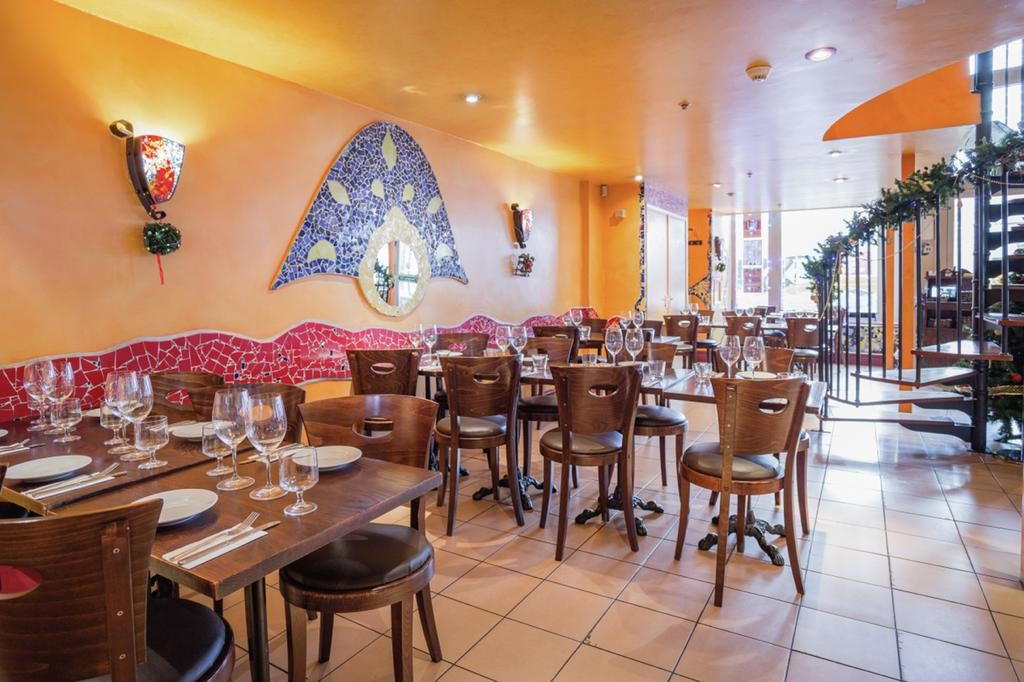
Barcelona Tapas Bar and Restaurant sits on Middlesex Street in the City of London, placing it squarely in EC3's weekday lunch and post-work circuit. The kitchen draws on Spanish tapas tradition in a neighbourhood better known for finance than Iberian cuisine, making it a practical and genuine choice for the area.

Pearl is the En Primeur Club membership app, where members save venues, book tables and use the concierge.
The menu
What to order
- Paella Mixta
- Jamón Ibérico
- Patatas Bravas
Where the City Meets the Iberian Counter
Middlesex Street sits at the seam between the City of London's financial core and the older commercial fabric of Aldgate. On a weekday lunchtime, the street pulls a crowd of office workers moving quickly between EC3 and E1 postcodes, and the dining options in this specific pocket reflect that pressure: fast, functional, and rarely celebrated in the same breath as what you find further west. Against that backdrop, a dedicated tapas format is a deliberate counter-programming choice. Spanish tapas, as a dining structure, resists the single-plate lunch rhythm. It is designed for sharing, for ordering in rounds, for eating slowly across an afternoon, none of which maps neatly onto a City lunch hour. The fact that a venue in this location has committed to that format rather than softening it into a brasserie or casual European menu is itself a statement about where it positions itself in the local dining ecosystem.
The EC3 Dining Scene and What It Demands
The City of London's restaurant circuit operates on a logic that differs from almost every other London dining neighbourhood. Footfall is dense Monday through Friday and thins dramatically at weekends, when the residential population barely registers. Venues that succeed here tend to do one of two things: they serve the lunch and post-work crowd with something familiar enough to require no explanation, or they offer enough specificity to become a destination within the local professional network, the kind of place a senior partner books for a client lunch because it signals taste without requiring anyone to navigate a waiting list. Barcelona Tapas occupies the second of those positions. A tapas format in EC3 is a deliberate pitch to the client-entertainment segment of the market, where a sharing table dynamic replaces the more formal tasting-menu setup you find at venues like CORE by Clare Smyth or Restaurant Gordon Ramsay.
That distinction matters. The multi-course tasting menus at London's fine dining tier, represented by venues including Sketch's Lecture Room and Library, The Ledbury, and Dinner by Heston Blumenthal, place the chef's sequence in control of the meal. Tapas inverts that structure. The table controls the pacing, the volume, and the combination. For a business lunch in EC3, that flexibility is often the point. Conversation is easier when no one is waiting for a course transition.
Tapas as a Tradition, Not a Trend
Spanish tapas has had a complicated relationship with London's restaurant culture. Through the 2000s and into the 2010s, the format was frequently diluted into small-plates menus with no real Iberian grounding, sharing boards dressed up with Spanish labels. The more coherent tapas operations in London have consistently held to a tighter definition: dishes rooted in regional Spanish cooking, portions calibrated for ordering across multiple rounds, and a wine list that operates alongside the food rather than independently of it. How closely any individual venue holds to that tradition depends on kitchen discipline and sourcing decisions that are not always visible from the outside.
What the tapas format does well in a City context is give a table a reason to stay. A lunch that moves through five or six rounds of dishes, with bread, jamón, something from the sea, something braised, and a cheese or sweet at the end, occupies a different kind of time than a set lunch. That rhythm has kept the format relevant in cities across Spain, and in London neighbourhoods where the dining culture runs slower—Bermondsey, Hackney, and parts of Islington—tapas bars have found a committed following. The City is a harder environment for that rhythm, but Middlesex Street's position just outside the densest office core gives it slightly more latitude than a venue on Bishopsgate or Threadneedle Street would have.
Location as a Practical Frame
For anyone visiting from outside the immediate area, the address at 1 Middlesex Street is most easily approached from Aldgate or Liverpool Street stations, both within a short walk. The EC3A 7DT postcode places it just north of the main Aldgate junction, which means it is accessible from multiple directions without requiring navigation through the narrowest parts of the City's medieval street grid. That practicality matters for a booking that involves guests coming from different parts of central London.
London's broader Spanish dining offering, the venues tracking Basque and modern Spanish cooking in Soho, Fitzrovia, and Bermondsey, tends to draw a destination crowd willing to plan ahead and travel across the city. The City venue operates differently: it serves proximity first, and the reader who lives or works within walking distance has the clearest reason to engage with it. For those making a specific trip, the combination of a less congested neighbourhood at lunchtimes, reasonable transport links, and a format that works for groups gives it a functional argument even against stronger destinations elsewhere in London.
For context on what high-end Spanish and European cooking looks like at its most formal outside London, the UK's wider fine dining circuit includes long-established destinations such as Waterside Inn in Bray, Le Manoir aux Quat'Saisons in Oxford, and L'Enclume in Cartmel. Elsewhere across the country, venues including Moor Hall in Aughton, Gidleigh Park in Chagford, Hand and Flowers in Marlow, hide and fox in Saltwood, Midsummer House in Cambridge, Opheem in Birmingham, and Restaurant Andrew Fairlie in Auchterarder define what serious kitchen ambition looks like across different price points and regions. Internationally, the precision end of the dining spectrum is represented by venues such as Le Bernardin in New York City and Atomix in New York City. Barcelona Tapas City EC3 operates in a different register to all of these; different formats serve different purposes, and a neighbourhood tapas operation in EC3 is not competing with a tasting-menu destination in the Lake District.
Our full London restaurants guide covers the wider range of options across the capital for readers planning a broader trip.
Planning Your Visit
The venue is at 1 Middlesex Street, off St Botolph Street, London EC3A 7DT, with Aldgate and Liverpool Street stations the most practical arrival points.
Frequently asked questions
Is Barcelona Tapas - City EC3 a good option for a group lunch near Aldgate?
Located at 1 Middlesex Street, off St Botolph Street in EC3, the venue sits within a short walk of both Aldgate and Liverpool Street stations, making it accessible for groups converging from across the City. Spanish tapas formats are structurally suited to group dining, given the shared-plate structure that removes the need for individual course decisions. Groups should check the venue's official channels to confirm capacity and any arrangements for larger parties.
How Barcelona Tapas - City EC3 compares with similar nearby venues.
| Venue | Cuisine | Price | Awards |
|---|---|---|---|
| Barcelona Tapas - City EC3This venue (the venue you are viewing) | Authentic Spanish Tapas | $30–50 | Not listed |
| Som Saa | Authentic Regional Thai | $50–100 | The Good Food Guide GFG Good |
| Gul & Sepoy | Modern Rustic Royal Indian | Not listed | Not listed |
| The Culpeper | Modern British Gastropub | $30–50 | We're Smart World 1 Radish · The Good Food Guide GFG Good |