Tapajax
Tapajax sits on Balham Station Road in south London, a neighbourhood that has quietly developed one of the capital's more considered mid-market dining scenes. The address places it at the intersection of local regularity and destination-level ambition, a position increasingly common in zones south of the river where rents allow kitchens to take risks that zone-one sites cannot afford.
Pearl is the En Primeur Club membership app — saves, bookings, and concierge access live there. Same editors, same standards.
- Address
- 1 Balham Station Rd, London SW12 9SG, United Kingdom
- Phone
- +442087729555
- Website
- opentable.com
- Directions
- Get directions
 Saves & bookings on Pearl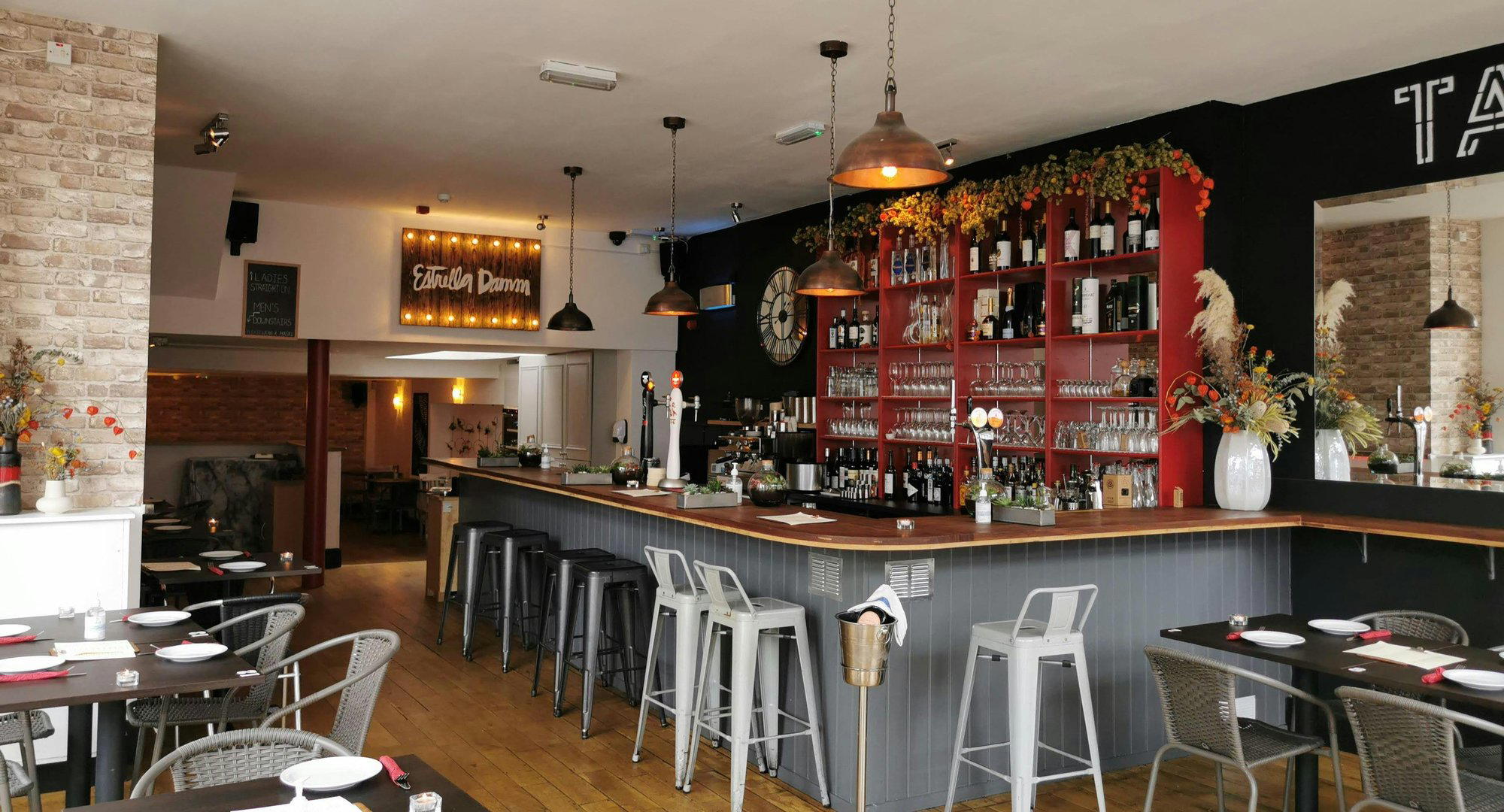
Balham and the South London Shift
For most of the past two decades, London's serious dining conversation was conducted almost entirely north of the river. The concentration of Michelin-starred rooms along corridors from Notting Hill to Mayfair, represented today by destinations like CORE by Clare Smyth, Restaurant Gordon Ramsay, and Sketch, The Lecture Room and Library, made zone-one postcodes feel like the only legitimate territory for ambitious cooking. That geography has been shifting. South London, and Balham in particular, has accumulated a set of operators who bring professional kitchen credentials to neighbourhoods where the customer base is local first, destination second.
Tapajax, addressed at 1 Balham Station Road, sits inside that shift. The Balham Station Road location places the restaurant within walking distance of Balham station. In the broader geography of London dining, that accessibility gap has historically sorted serious independents from destination rooms. Tapajax occupies a position where both audiences can plausibly show up.
Sustainability as a Structural Commitment, Not a Menu Note
Across British restaurants of every tier, sustainability signalling has evolved from a footnote on printed menus into a structural operating decision. The question that separates genuine commitment from positioning is whether environmental choices affect the economics of the kitchen or merely its language. At the tier occupied by restaurants on south London high streets, the commercial pressure to make those commitments real is greater than in tasting-menu rooms, where price points can absorb supply-chain premiums.
The broader British dining scene has produced some clear reference points for what structural sustainability looks like in practice. L'Enclume in Cartmel operates its own farm, reducing supply-chain intermediaries while controlling provenance end to end. Moor Hall in Aughton and Midsummer House in Cambridge each demonstrate that regional sourcing at high volume is logistically achievable without sacrificing consistency. These are not aspirational comparisons for every neighbourhood restaurant, but they establish what the committed end of the spectrum looks like, and they make clearer what questions to ask of any operator who claims environmental seriousness.
For a restaurant at Tapajax's address and scale, the meaningful sustainability questions are practical ones: how much of the supply chain is local, how is waste handled across the kitchen, and whether seasonal menu rotation is a genuine response to availability or a marketing convention. These are the signals that distinguish an environmentally conscious operation from one using the language without bearing the cost.
The South London Independent and Its comparable set
London's dining tier below the four-pound-sign ceiling has diversified considerably. The corridor running through Clapham, Balham, and Tooting now contains a set of independently operated rooms that draw direct comparisons with neighbourhood restaurants in Paris's 11th or New York's Williamsburg, where cooking credentials are high and room scale is deliberately limited. The Ledbury in Notting Hill demonstrates what sustained critical attention can do to a neighbourhood's dining identity over time. The south London version of that effect is more gradual, but the direction of travel is clear.
In the UK's wider fine-dining geography, the north-south divide within London mirrors a broader provincial-versus-capital dynamic. Restaurants like Waterside Inn in Bray, Le Manoir aux Quat'Saisons in Oxford, Gidleigh Park in Chagford, and Hand and Flowers in Marlow have demonstrated for years that distance from London's zone-one concentration is not a barrier to serious recognition. The same logic, compressed into the capital's own geography, applies to Balham's emerging dining identity.
Outside the UK, the reference points are similarly instructive. Le Bernardin in New York City shows how a defined culinary identity, sustained over decades, can anchor a restaurant's reputation independently of location trends. Atomix in New York City demonstrates how a tightly controlled, technically specific format can generate sustained global attention from a single address. These are not direct comparators for a south London neighbourhood restaurant, but they illustrate how clarity of purpose functions as a competitive position in any market.
Where Tapajax Fits in London's Wider Conversation
London's highest-tier rooms, including Dinner by Heston Blumenthal in Knightsbridge and the cluster of three-Michelin-star addresses in Mayfair and Chelsea, operate in a different commercial register than Balham independents. That distance is not a disadvantage for the south London restaurant scene; it is the condition that makes a different kind of cooking viable. Kitchens not under pressure to justify four-figure tasting menus can take ingredient risks, support smaller suppliers, and rotate menus on genuine seasonal logic rather than the calendar of a PR cycle.
The same pattern is visible in cities beyond London. Opheem in Birmingham and Restaurant Andrew Fairlie in Auchterarder each operate outside London's gravitational pull with distinct culinary identities that owe nothing to zone-one geography. Hide and Fox in Saltwood makes a similar case from Kent. The pattern is consistent: operating outside the premium capital cluster forces a clarity of proposition that can itself become a competitive asset.
For anyone building a map of London's dining scene that extends beyond the expected Mayfair-to-Notting-Hill corridor,
Planning a Visit
Tapajax is addressed at 1 Balham Station Road, London SW12 9SG, directly adjacent to Balham Underground and Overground station, which is served by the Northern line. From central London, journey times from London Bridge or King's Cross run approximately fifteen to twenty minutes, placing it within practical reach for an evening visit without requiring a cab. Balham High Road's surrounding blocks offer parking in the evenings, and the immediate station area is walkable from several bus routes.
Quick Comparison
Comparable venues nearby, for context on price, style, and recognition.
| Venue | Cuisine | Price | Notes |
|---|---|---|---|
| TapajaxThis venue — the venue you are viewing | Spanish Tapas | $$ | Not listed |
| El Vino | Traditional Spanish Tapas & Wine Bar | $$ | Temple |
| Barcelona Tapas - City EC3 | Authentic Spanish Tapas | $$ | Spitalfields |
| El Pirata Detapas | Authentic Spanish Tapas | $$ | Bayswater |
| Tapas Revolution | Spanish Tapas | $$ | White City |
Continue exploring
More in London
Restaurants in London
Browse all →
Bars in London
Browse all →
Hotels in London
Browse all →



At a Glance
- Lively
- Trendy
- Energetic
- Casual Hangout
- Group Dining
- Celebration
- Live Music
- Open Kitchen
- Craft Cocktails
Current opening hours
- Monday
- Closed
- Tuesday
- 5–11 PM
- Wednesday
- 5–11 PM
- Thursday
- 5–11 PM
- Friday
- 5 PM–12 AM
- Saturday
- 12 PM–12 AM
- Sunday
- 12–9 PM
Hours can change for holidays and private events. Last verified .
Busy and sociable atmosphere with inviting interiors, good music, and lively energy from live entertainment.