Google: 4.3 · 280 reviews
Bao Haus
.png)
Bao Haus brings Taiwanese street food to Busan's Busanjin District with enough confidence to earn back-to-back Michelin Bib Gourmand recognition in 2024 and 2025. At the single-won price tier, it occupies a different register from the city's starred contemporary tables, offering shared, informal eating that sits closer to the communal spirit of the night market than the tasting counter.
 Discover on Pearl
Pearl is the En Primeur Club membership app — saves, bookings, and concierge access live there. Same editors, same standards.
Where Taiwanese Table Culture Lands in Busan
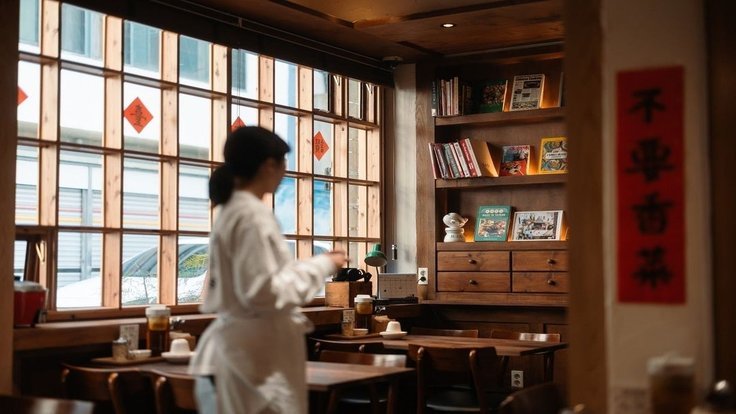
The communal eating traditions of Taiwan travel well. The logic of a shared table — multiple dishes arriving without ceremony, passed hand to hand, each component pulling its weight against the others — transfers across borders because it is fundamentally social rather than ceremonial. In Busan's Busanjin District, on a side street off Seojeon-ro, Bao Haus has built its reputation on exactly that register: food designed to be shared, priced to allow repetition, and recognised by Michelin's Bib Gourmand programme in both 2024 and 2025 as among the city's most satisfying value propositions.
Arriving on the block, the setting reads less like a destination restaurant and more like the kind of place locals already know about. That is the point. Taiwanese street food culture has never positioned itself as aspirational , its authority comes from flavour discipline and repetition, from dishes refined through volume rather than scarcity. Bao Haus operates inside that tradition, which makes it a different kind of dining experience from the single-won competitors it shares a price tier with, such as 100.1.Pyeongnaeng, where the focus is fixed firmly on naengmyeon. Here, the spread is the thing.
The Logic of the Shared Table
Taiwanese communal dining has its own choreography. Unlike the sequential service of a tasting menu, it works through simultaneity: dishes land together or in quick succession, and the table becomes a negotiation of flavours, textures, and temperatures. Braised elements sit next to pickled ones; something fried provides contrast against something steamed. The meal is constructed laterally rather than vertically, which changes the pace of the room and the dynamic between the people at the table.
That structure is less common in Busan's broader dining scene, which skews either toward solo-service formats (naengmyeon, gukbap) or the sequential logic of contemporary tasting menus at places like Palate, which holds a Michelin star and operates at the ₩₩ tier. Bao Haus sits in a different position entirely: informal, plural, and built for groups rather than lone diners or couples conducting a composed progression through courses. That distinction matters when choosing where to eat and with whom.
Chef Jakob Brasch , a name that carries a cross-cultural signal in itself, working in a Taiwanese idiom in a South Korean city , leads a kitchen that has maintained its Bib Gourmand standing across consecutive Michelin cycles. That kind of sustained recognition at the entry-level tier is its own credential. Bib Gourmand listings do not reward novelty; they reward consistency, and holding the designation in both 2024 and 2025 indicates a kitchen operating reliably rather than impressively on any given evening.
Bao Haus Inside Busan's Broader Dining Picture
Busan's restaurant scene has widened considerably in recent years, and the Michelin Guide's local coverage reflects that. The city now sustains starred contemporary Korean tables and high-ticket international formats alongside its longstanding street-food and gukbap culture. The gap between those poles is real: Mori, a Michelin-starred Japanese counter at the ₩₩₩ tier, and Born and Bred, a steakhouse at the ₩₩₩₩ tier, occupy a different competitive set from what Bao Haus is doing. The Bib Gourmand programme specifically identifies restaurants where the kitchen is performing above its price point , which is a more useful signal for value-conscious travellers than starred recognition at a higher tier.
Within South Korea's broader Taiwanese food presence, Bao Haus is not competing with temple cuisine at Baegyangsa or the refined Korean fine dining of Mingles or Gaon in Seoul. It is doing something more specific: transplanting the democratic informality of Taiwanese eating into a Korean port city, and doing so with enough conviction to earn external validation two years running.
For those tracking Taiwanese cuisine across the region, the reference points in Taipei offer useful context. Fujin Tree in Songshan and Golden Formosa represent the more polished, modern-Taiwanese end of the spectrum; Ming Fu holds to a more traditional register. Bao Haus, operating outside Taiwan entirely, positions itself closer to the accessible, high-flavour middle ground , the kind of cooking that does not require cultural familiarity to appreciate.
Busan's own Taiwanese food options are limited enough that Bao Haus functions almost as a category unto itself. That isolation, combined with its Busanjin District address, means it draws from a wider catchment than a comparable concept might in a city with deeper Taiwanese restaurant density. For those already exploring the city's noodle houses , including the Sichuan-adjacent registers at Niurou Mian Guan Zi , the shift to Taiwanese shared plates at Bao Haus covers different ground at a similar price point.
Planning Your Visit
Bao Haus sits at 62-9 Seojeon-ro 38beon-gil in Busanjin District, one of Busan's more centrally navigable areas with good transport connections to the broader city. The single-won (₩) pricing means a full shared spread across several dishes remains accessible by any standard, particularly compared to the starred tier of Busan dining. Google reviewer data across 234 ratings sits at 4.3 out of 5, which for a casual-format restaurant in a competitive district reflects a consistently positive experience rather than a polarising one.
The Bib Gourmand designation does attract attention, and shared-table formats can fill quickly on weekends and during peak travel periods. Arriving earlier in a service window generally offers more flexibility than attempting a late entry. There is no listed booking method in available records, so checking directly with the restaurant on current reservation practice is advisable before visiting, particularly for larger groups where the communal table format matters most.
For broader Busan planning, the EP Club city guides cover the full range: our full Busan restaurants guide, our full Busan hotels guide, our full Busan bars guide, our full Busan wineries guide, and our full Busan experiences guide.
The Quick Read
A fast peer set for context, pulled from similar venues in our database.
| Venue | Notes | Price |
|---|---|---|
| Bao Haus | This venue | ₩ |
| Palate | Contemporary, ₩₩ | ₩₩ |
| Mori | Japanese, ₩₩₩ | ₩₩₩ |
| Born and Bred | Steakhouse, ₩₩₩₩ | ₩₩₩₩ |
| 100.1.Pyeongnaeng | Naengmyeon, ₩ | ₩ |
| Anmok | Dwaeji-gukbap, ₩ | ₩ |



At a Glance
- Trendy
- Lively
- Modern
- Casual Hangout
- Open Kitchen
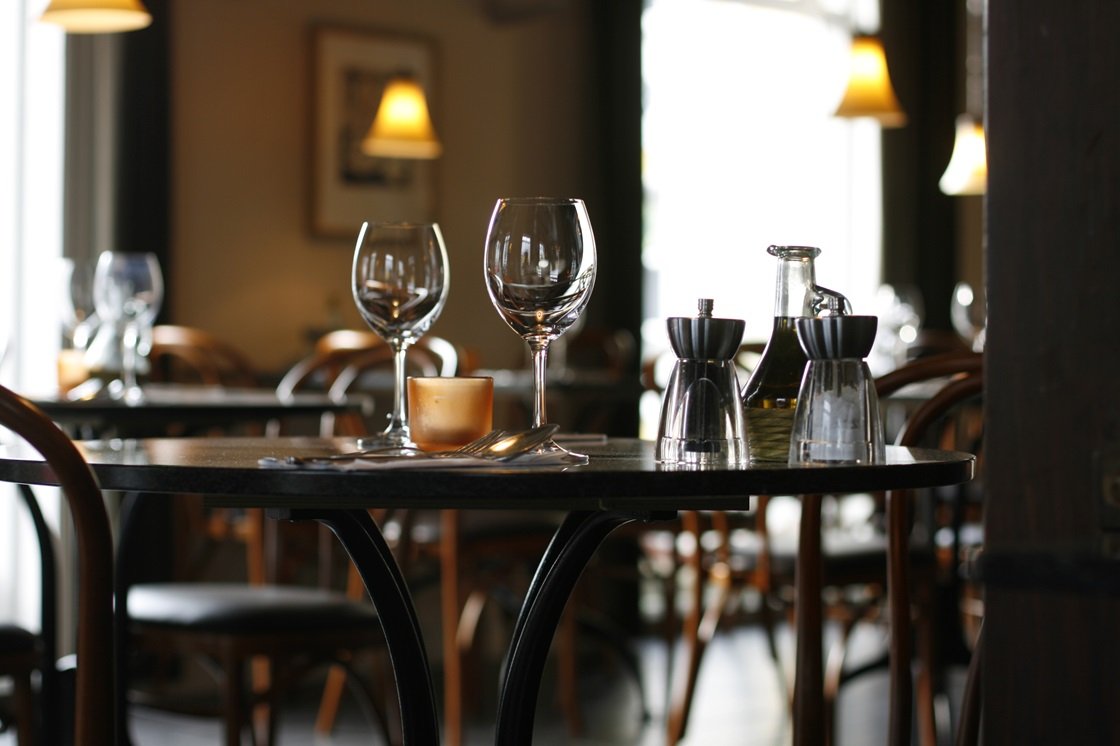
Clean, bustling, open kitchen with conversational to lively noise.