Banyan Tree AlUla
Our verdict
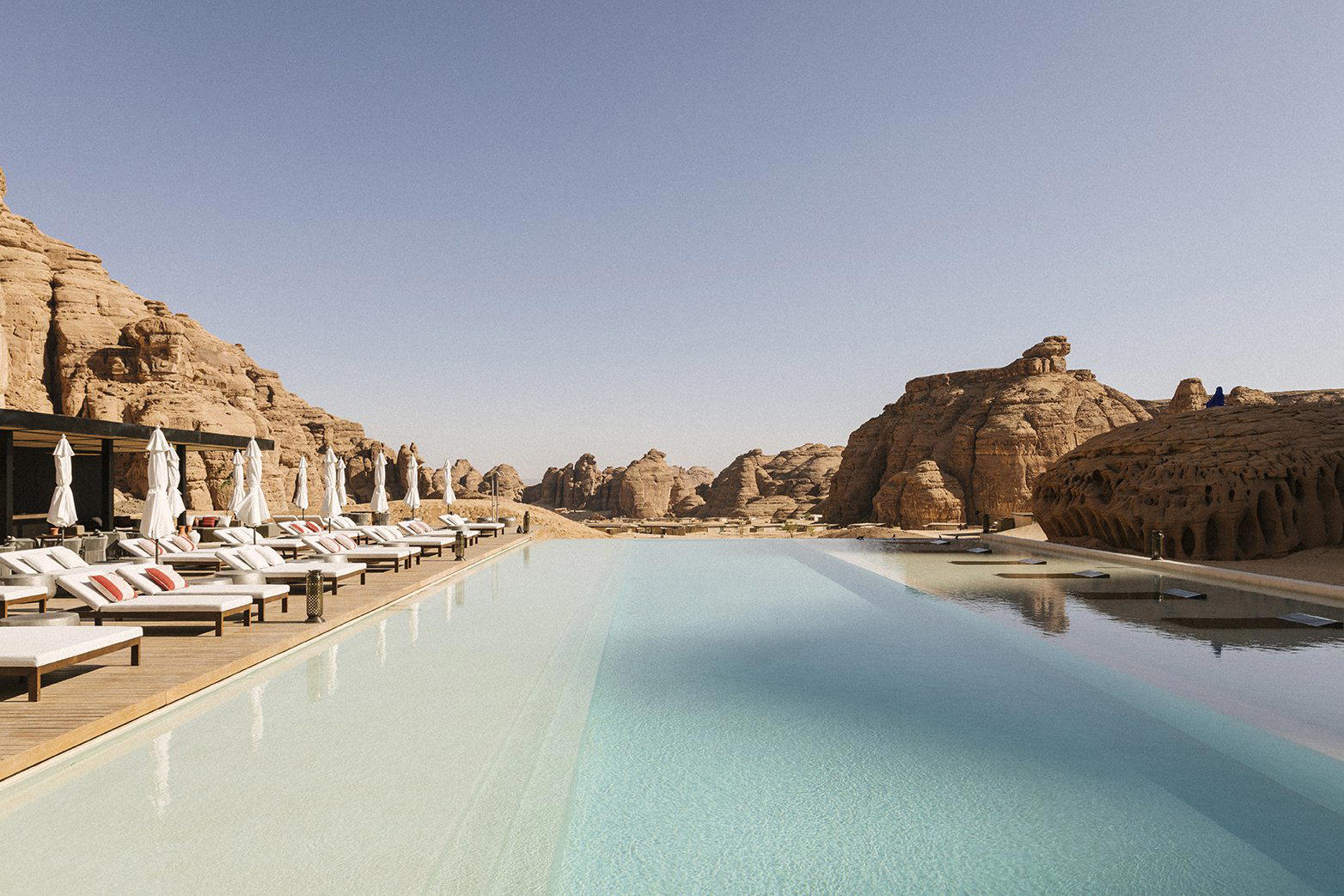
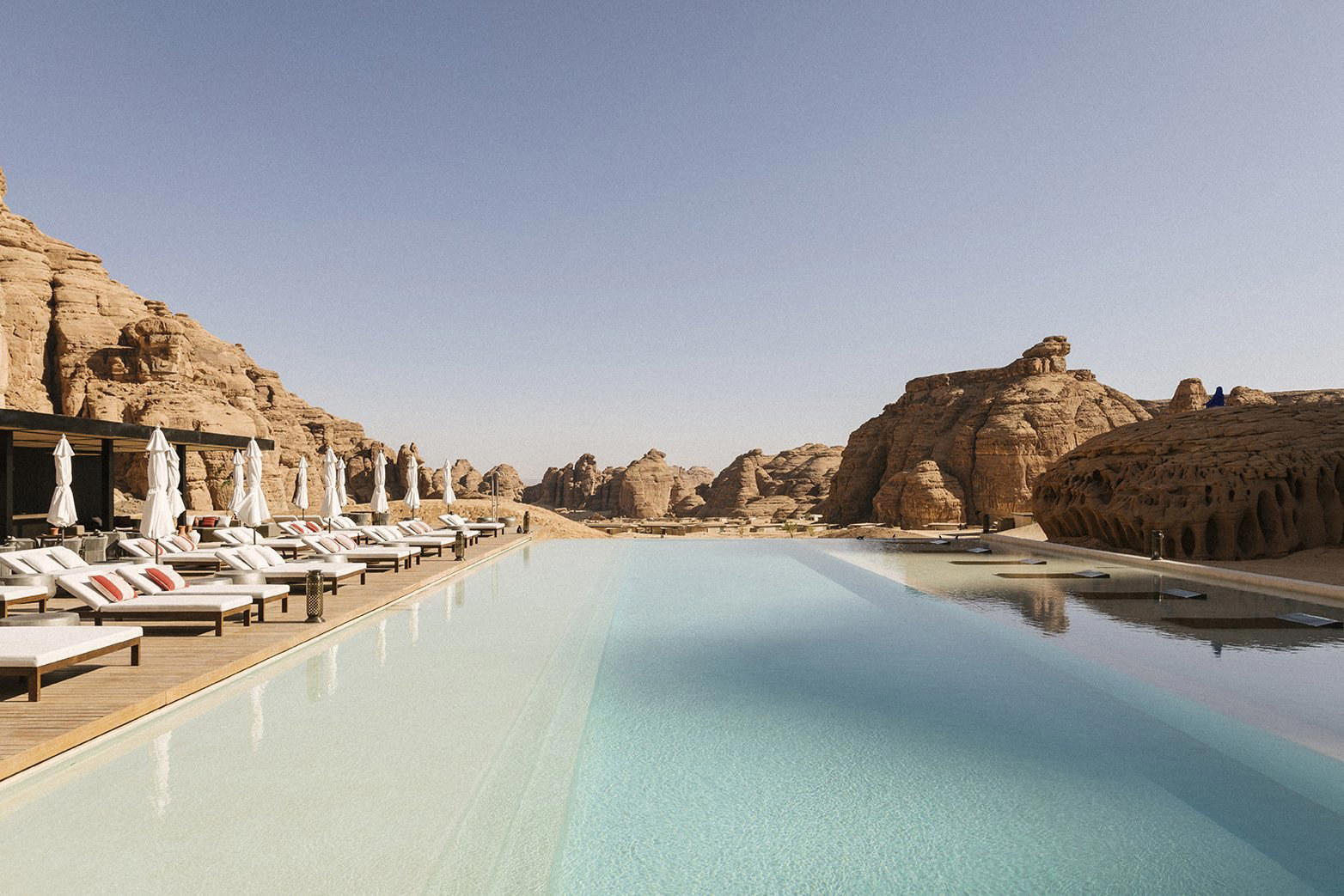
Banyan Tree AlUla sits within the sculpted sandstone terrain of Wadi Ashar, placing guests at the threshold of one of Saudi Arabia's most archaeologically significant landscapes. The property belongs to a cohort of design-led desert retreats that have repositioned AlUla as a destination for considered, low-impact hospitality. Its setting alone makes it a reference point for the broader conversation about how luxury operates in protected heritage corridors.

Pearl is the En Primeur Club membership app — saves, bookings, and concierge access live there. Same editors, same standards.
- Address
- Road, Wadi Ashar Tabuk, Alula 43563, Saudi Arabia
- Phone
- +966 14 512 0000
- Website
- banyantree.com
- Directions
- Get directions
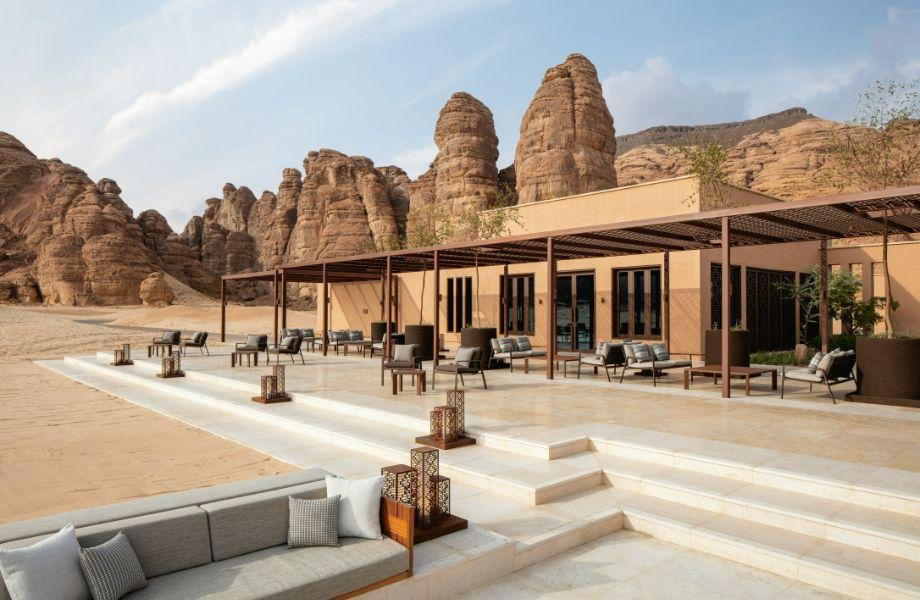
Where the Desert Sets the Terms
AlUla has spent the better part of a decade being reintroduced to the world, not as a transit stop on the way to somewhere else, but as a destination with its own gravitational pull. The ancient Nabataean tombs at Hegra, the sandstone formations of Elephant Rock, and the layered geology of Wadi Ashar together create a physical context that hospitality properties in the region cannot ignore — and the better ones don't try to. Banyan Tree AlUla, positioned inside the Wadi Ashar corridor in the Tabuk region, belongs to the category of property that treats the surrounding terrain as the primary design brief. The architecture, the pace, and the dining approach are all calibrated to that premise.
The Banyan Tree group has operated in remote, ecologically sensitive environments long enough to have developed a recognisable methodology: low-key footprint, locally responsive design, and a food program that draws on what the land and region can actually provide. In destinations like AlUla, where the physical environment is the reason people come at all, that approach carries more weight than it does in a conventional city hotel.
Arriving in Wadi Ashar
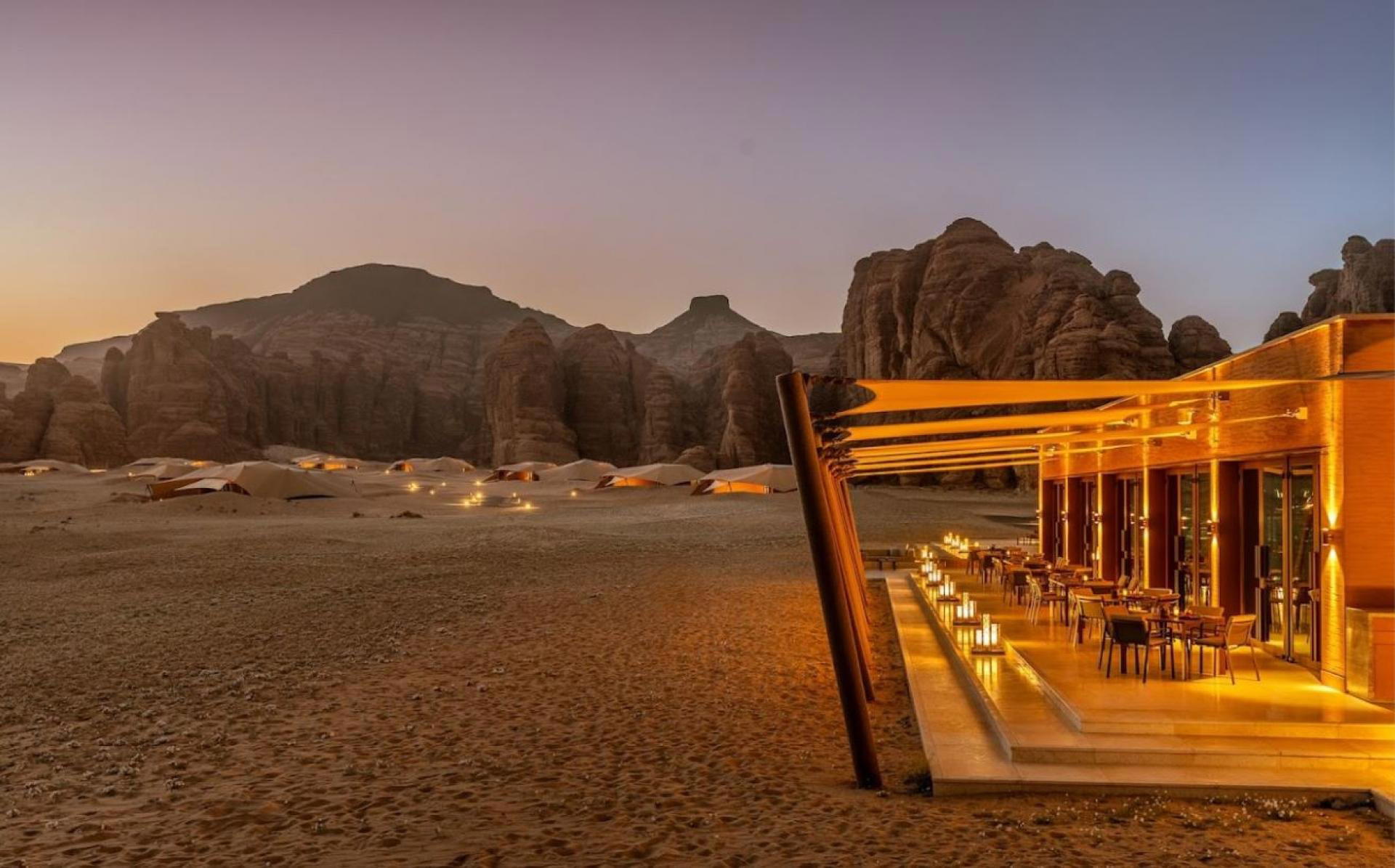
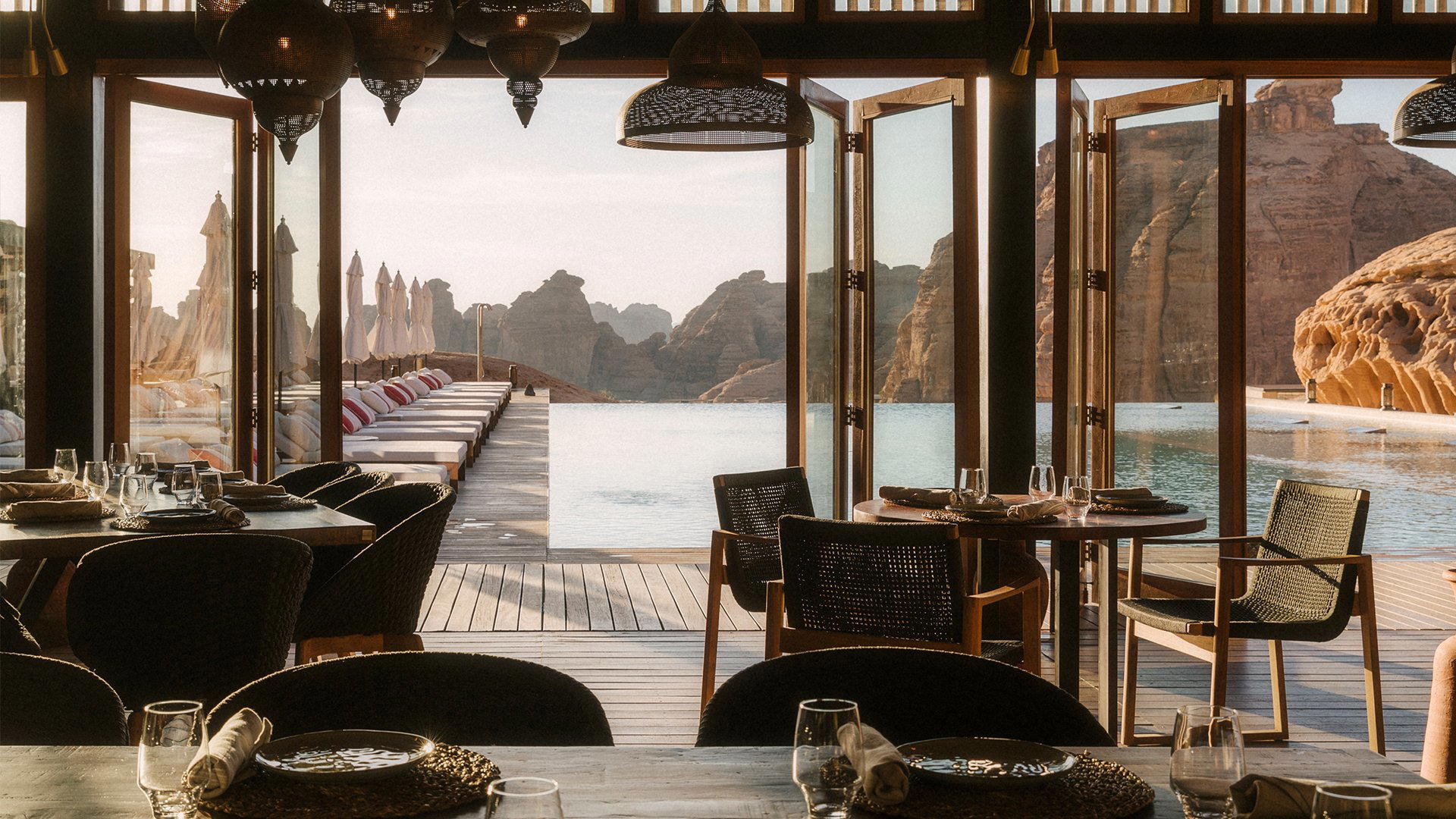
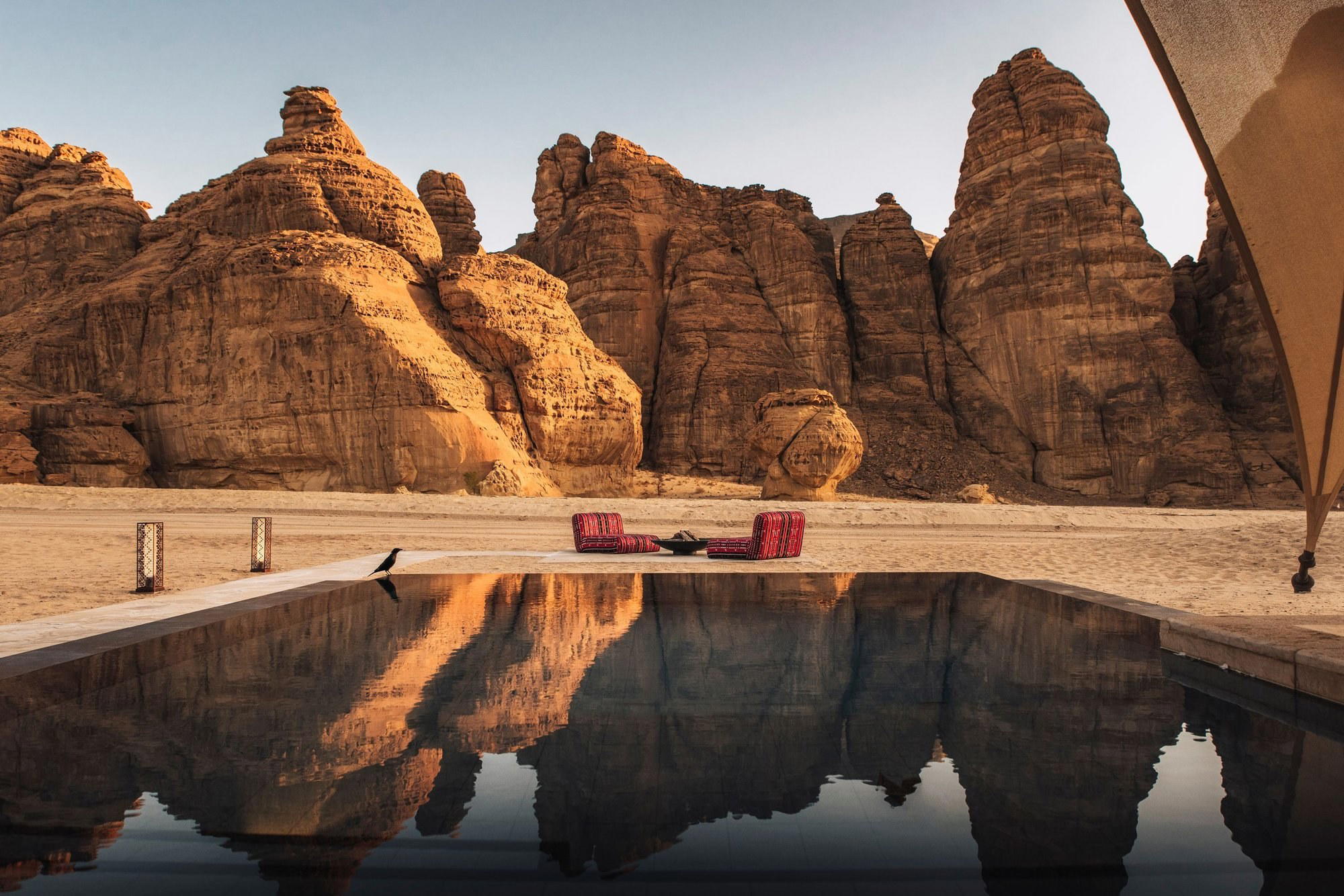
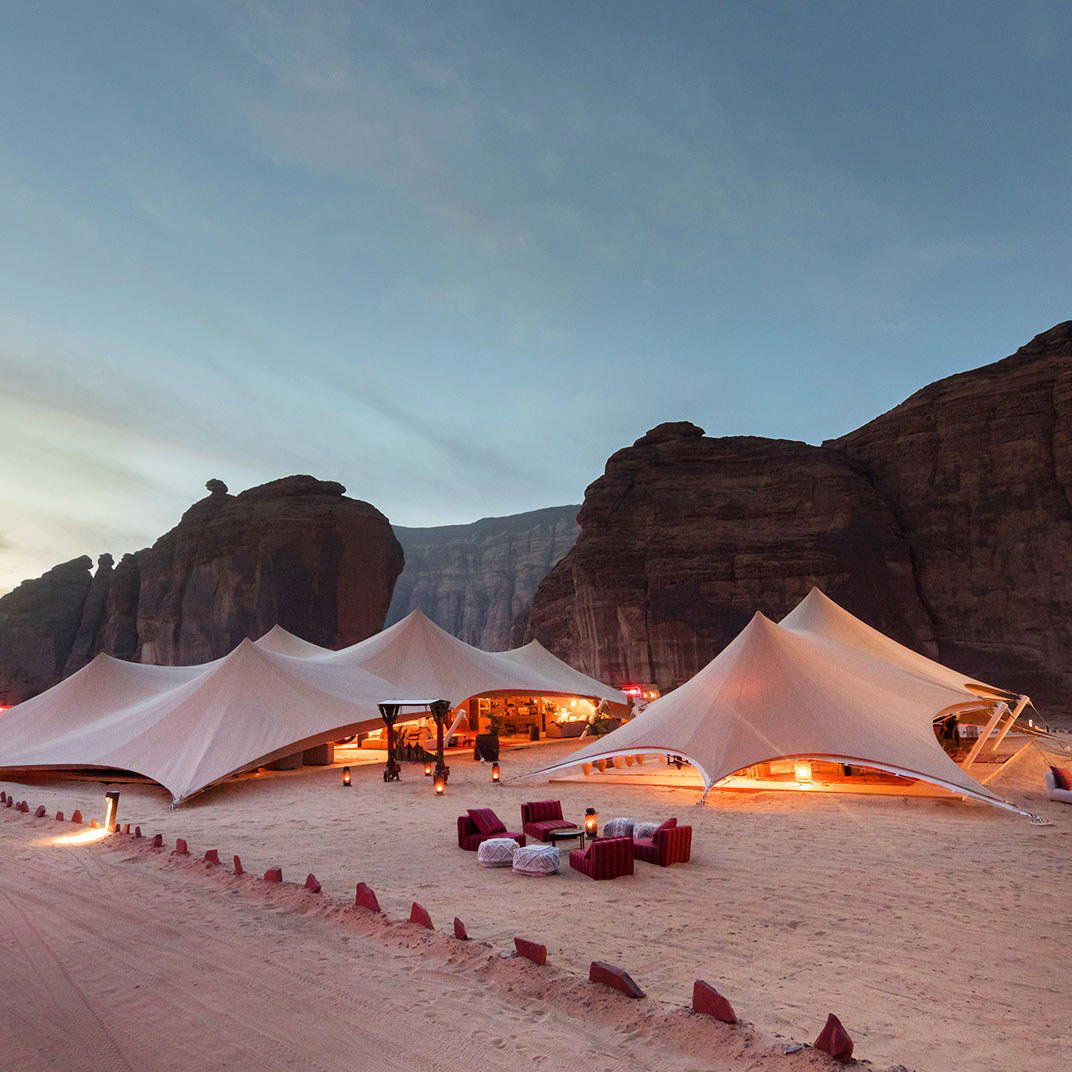
The approach to the property along the Wadi Ashar road signals immediately that this is not a resort in the conventional resort-strip sense. The sandstone escarpments that define the wadi frame the arrival sequence, and by the time you reach the property, the surrounding geology has already established the atmosphere more effectively than any interior design choice could. At dusk, the rock faces shift through ochre and deep amber before settling into the cool greys of the desert night — a transition that properties in this corridor schedule their outdoor dining around for good reason.
This kind of setting places Banyan Tree AlUla in a specific peer group within Saudi Arabia's emerging luxury hospitality tier. Properties like Our Habitas AlUla operate on a comparable design-led, environment-first logic, and the broader dining scene documented in our full Al Ula restaurants guide reflects a city-wide shift toward food programs that take the heritage corridor context seriously.
The Sourcing Question in a Heritage Corridor
Ingredient sourcing in AlUla is not a marketing footnote, it is a logistical and ethical constraint that shapes what is on the table. The region sits within a controlled heritage zone administered by the Royal Commission for AlUla, which means development density, agricultural activity, and supply chain infrastructure are all subject to oversight that does not apply in a conventional Saudi city. Any food program operating here must account for that reality.
The broader Tabuk and Madinah regions have historically produced dates, olives, and certain grains, and AlUla's own microclimate, cooler and more temperate than the surrounding desert plateau, has supported small-scale cultivation for centuries. Properties that engage with local sourcing in this context are working with a supply base that is genuinely limited in scale but specific in character. Dates from the Khaybar oasis to the south, lamb from Bedouin pastoral traditions, and wild herbs from the wadi floors represent the kind of hyper-regional ingredients that give a food program here a logic that cannot be replicated in Riyadh or Jeddah.
For diners interested in how Saudi regional cooking connects to its agricultural and pastoral foundations, the AlUla context is more instructive than almost anywhere else in the country. Venues like Tama in AlUla and Sass Cafe each approach this sourcing question from different points on the formality spectrum, and طوفرية represents the more traditionally rooted end of the local dining scene. Banyan Tree's kitchen, positioned within a full-service resort context, sits in a different tier but draws from the same geographic supply conditions.
The Dining Environment
Resort dining in remote desert settings has a structural advantage over standalone city restaurants in one respect: the captive audience effect forces a longer investment in food quality than a property could get away with in a competitive urban market. Guests are not leaving property for a competing restaurant down the street. That constraint tends to either sharpen a kitchen's ambition or expose its complacency, and at properties in protected heritage zones where the Royal Commission for AlUla has set a baseline expectation for quality across all hospitality offerings, the former outcome is more likely.
Outdoor dining around sunset is the dominant format at desert retreats in this corridor, and the wadi setting at Banyan Tree AlUla supports that rhythm naturally. The transition from afternoon heat to the cooler evening air in the wadi creates a specific window, roughly the two hours around sunset, when al fresco dining in AlUla operates at its most atmospheric. Properties that schedule their primary dining service around that window are working with the environment rather than against it.
AlUla in the Saudi Dining Conversation
Saudi Arabia's dining scene has expanded dramatically since 2019, with Riyadh and Jeddah absorbing the majority of international attention. Kuuru in Jeddah and Lunch Room in Riyadh each reflect the urban sophistication of those markets. AlUla operates on a different register entirely, smaller in scale, more restricted in supply, and more directly connected to the ancient trade routes and agricultural traditions that predate the modern Saudi state by two millennia.
The region's food culture has historically been shaped by Nabataean, Roman, and early Islamic trade networks, and the dates, grains, and preserved meats that sustained those civilisations remain embedded in the local cooking tradition. When a resort kitchen in AlUla draws on that provenance, it is working with a food history that carries genuine archaeological depth. That context separates the AlUla dining experience from what you find at comparable price points in Khobar or Ad Diriyah.
Further afield, the Saudi regional dining scene extends to venues like kol restaurant in Jizan and Camel Burger Food Truck in Medina, each anchored to distinct regional food traditions. The range illustrates how different Saudi Arabia's food geography is once you move beyond the capital's restaurant corridor. Internationally, the conversation about environment-led, sourcing-conscious fine dining is anchored by reference points like Le Bernardin in New York City and Lazy Bear in San Francisco, properties with different contexts but a shared commitment to place-specific ingredient logic.
Planning Your Visit
AlUla is accessible via AlUla Regional Airport, which receives direct flights from Riyadh, Jeddah, and select international origins during the peak season running from October through March. Visiting outside that window means contending with temperatures that regularly exceed 40°C during the day, which compresses outdoor dining to early morning and late evening windows. The Royal Commission for AlUla manages visitor numbers at major archaeological sites, so booking accommodation and any guided experiences in advance is advisable during the Winter at Tantora festival season, when demand across all properties in the corridor increases sharply. For broader dining context during your stay, venues including Shawarmer and بيتوتي in Burayda offer reference points for how Saudi regional food traditions translate across different parts of the country, while Khayal Restaurant and Japan Village reflect the broader diversity of the Saudi dining conversation. Contact Banyan Tree AlUla directly through their reservations channel for current room availability and dining bookings, as specific hours, pricing, and program details are subject to seasonal adjustment.
Frequently asked questions
Is Banyan Tree AlUla child-friendly?
Banyan Tree properties across the group generally offer family accommodation options, and the Wadi Ashar setting in Al Ula gives younger guests access to one of Saudi Arabia's most significant archaeological and natural landscapes. That said, the remote desert environment, with its heat extremes and limited surrounding infrastructure, suits older children and teenagers more naturally than very young ones. Check directly with the property regarding specific children's facilities before booking.
What should I expect atmosphere-wise at Banyan Tree AlUla?
The property sits along the Wadi Ashar road in Al Ula, away from any conventional resort strip, which means the surrounding sandstone landscape does most of the atmospheric work. Expect quiet over activity, open skies over ambient noise, and a pace dictated by the desert rather than a hotel entertainment programme. It is a property where the setting is the primary experience.
When is the best time of year to visit Banyan Tree AlUla in Al Ula?
AlUla's peak travel season runs from October through March, when daytime temperatures in the Wadi Ashar area drop to a range more suitable for outdoor exploration of the surrounding heritage sites, including Hegra and the broader UNESCO-nominated corridor. Direct flights to AlUla Regional Airport from Riyadh and Jeddah increase in frequency during this window, and the majority of the region's cultural programming is concentrated in these months. Summer visits are possible but the desert heat at altitude requires serious planning.
What's the best thing to order at Banyan Tree AlUla?
What is known is that ingredient sourcing in AlUla's heritage corridor involves genuine logistical constraints, which tends to shape menus toward regionally available produce and Saudi culinary tradition rather than imported luxury staples. Ask the property directly about current dining offerings when you confirm your stay.
How do I find Banyan Tree AlUla?
Banyan Tree AlUla is located at Road, Wadi Ashar Tabuk, Alula 43563, Saudi Arabia, Al Ula.
Is Banyan Tree AlUla reservation-only?
As an integrated resort property in a remote desert location along Wadi Ashar in Al Ula, Banyan Tree AlUla operates on a booking model rather than walk-in access. Accommodation reservations are the primary route in, and dining is typically tied to the guest experience. Contact the property ahead of arrival to confirm dining reservation requirements, particularly during AlUla's peak season between October and March.
How It Stacks Up
| Venue | Cuisine | Price | Awards |
|---|---|---|---|
| Banyan Tree AlUlaThis venue — the venue you are viewing | Middle Eastern Fusion & Thai | $100–150 | Not listed |
| Our Habitas AlUla | Modern Middle Eastern Fusion | $100–150 | Not listed |
| طوفرية | Traditional Saudi Cuisine | $10–20 | Michelin Bib Gourmand |
| Sass Cafe | Mediterranean & South American Fusion with Open-Fire Cooking | $150–200 | Not listed |
Details
- Scenic
- Elegant
- Rustic
- Sophisticated
- Special Occasion
- Date Night
- Celebration
- Hotel Restaurant
- Terrace
- Panoramic View
- Local Sourcing
- Mountain
- A La Carte
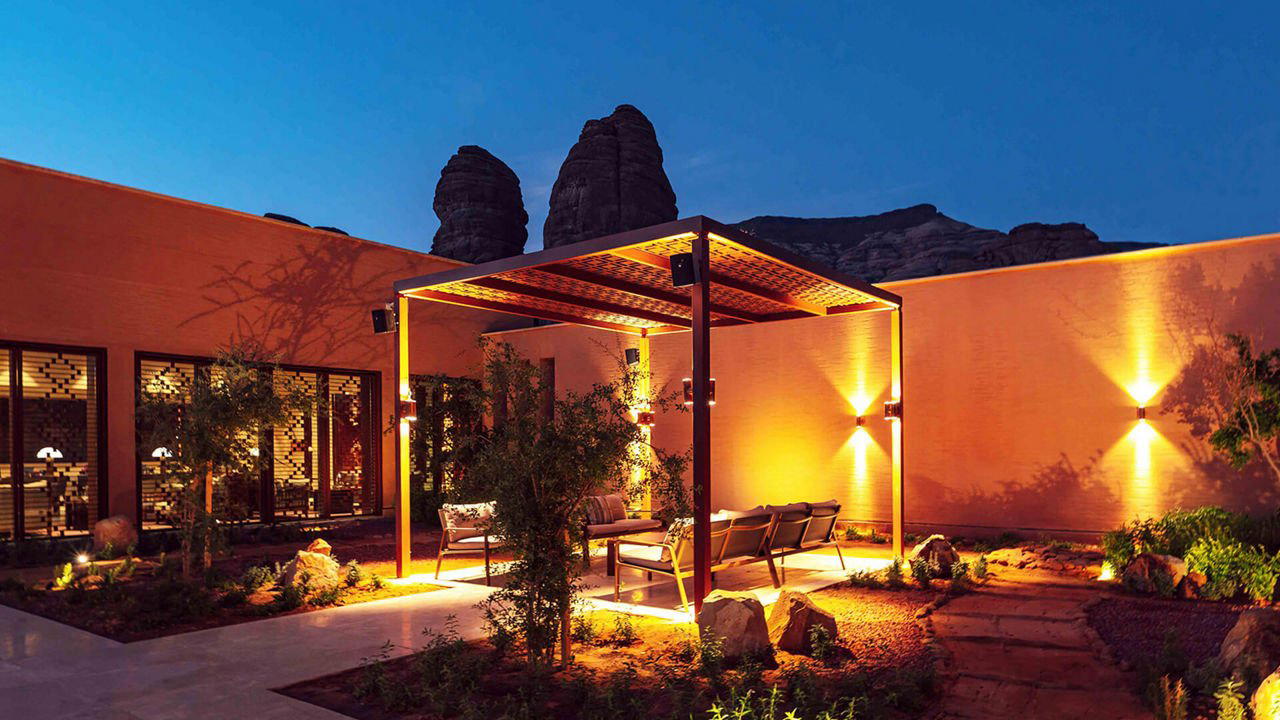
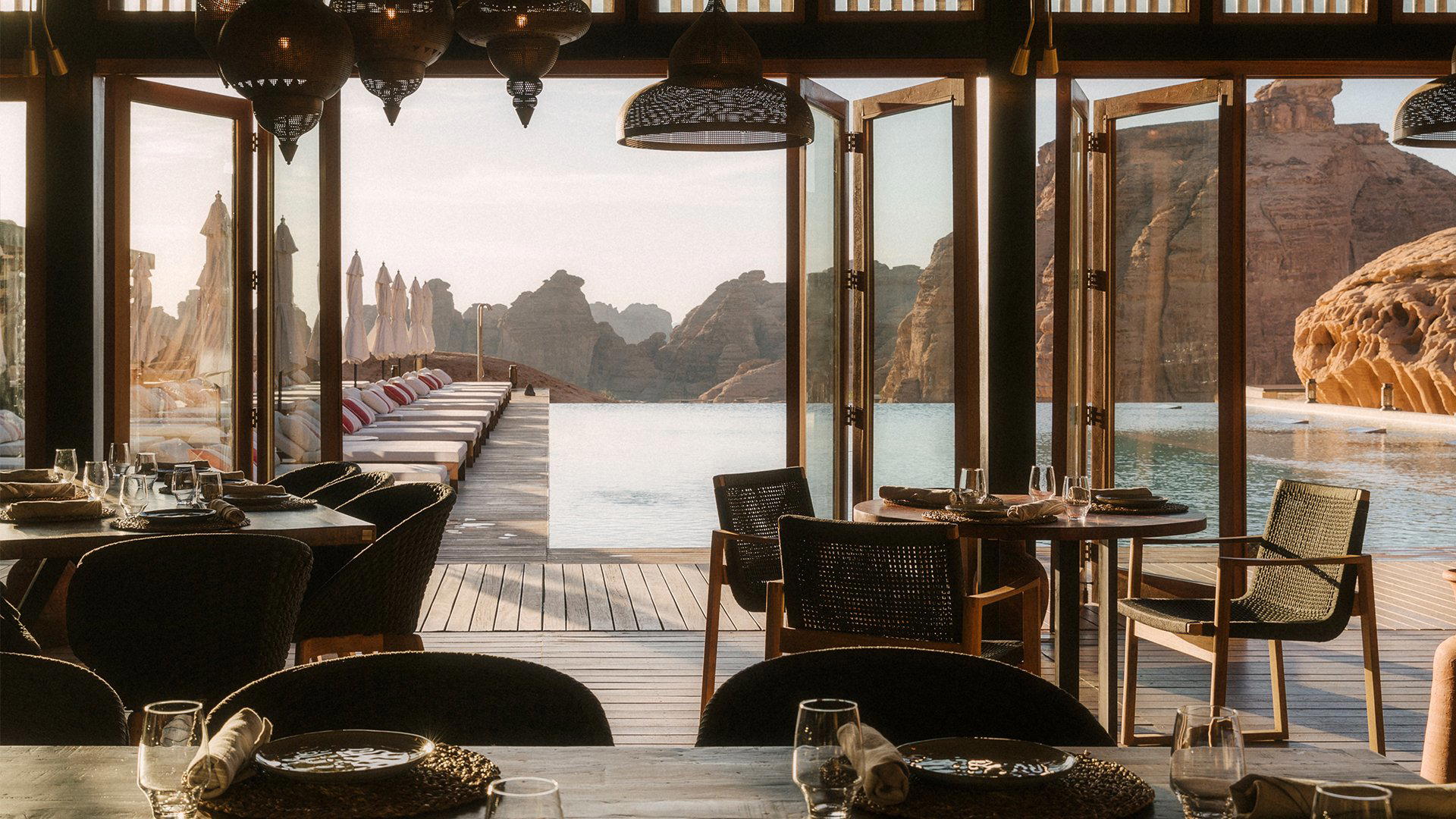
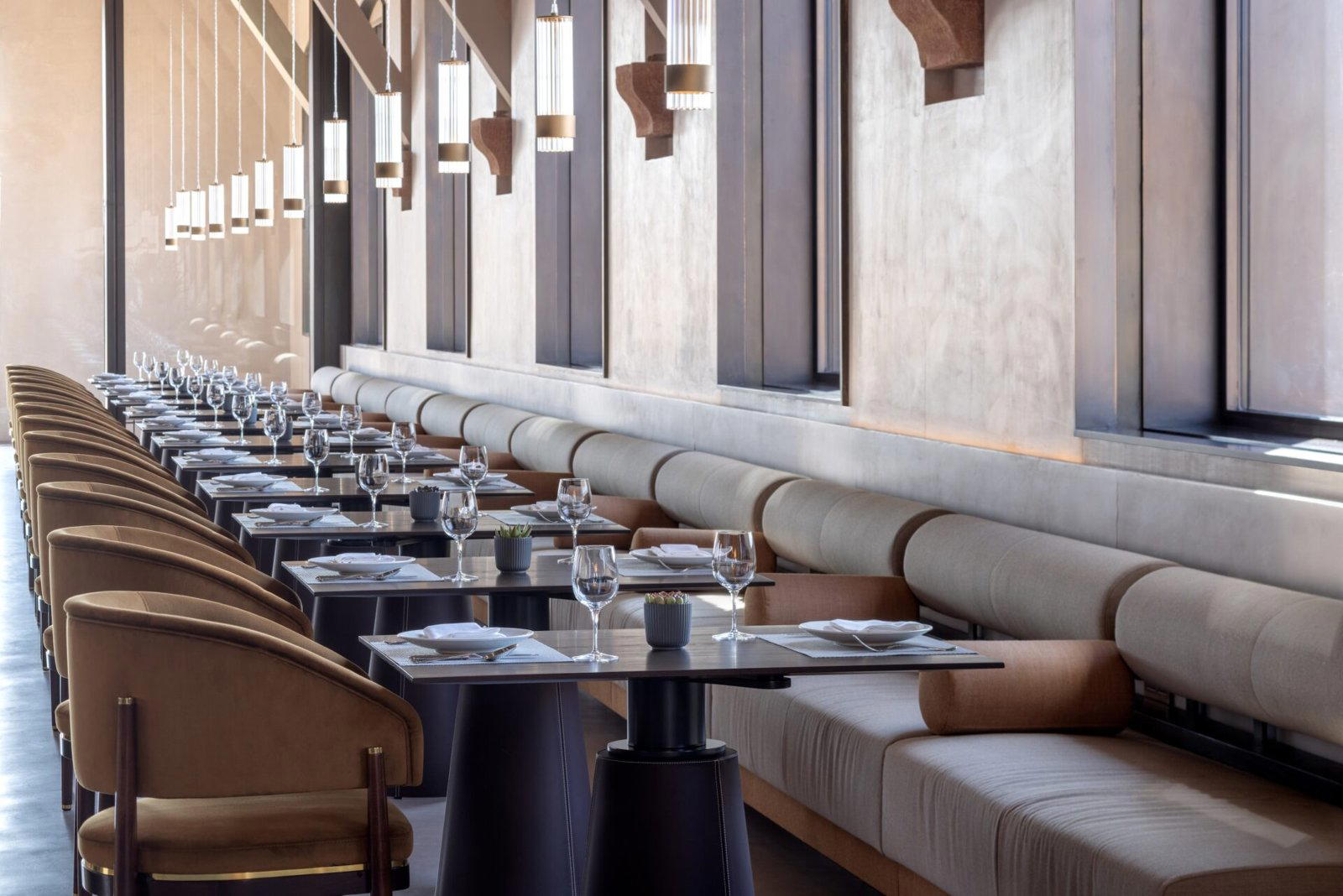
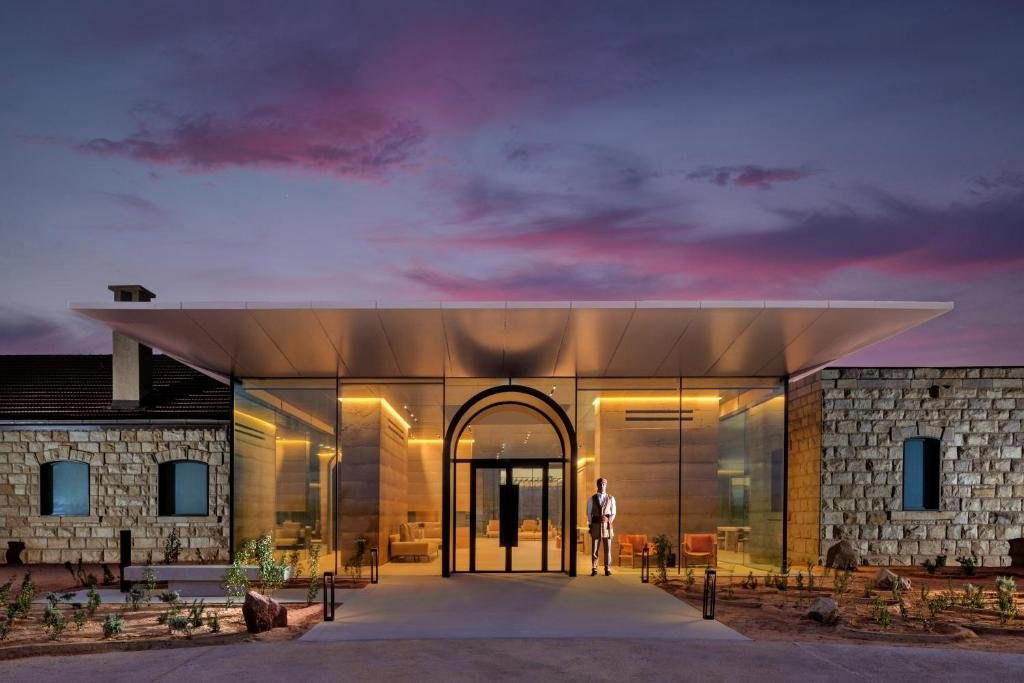
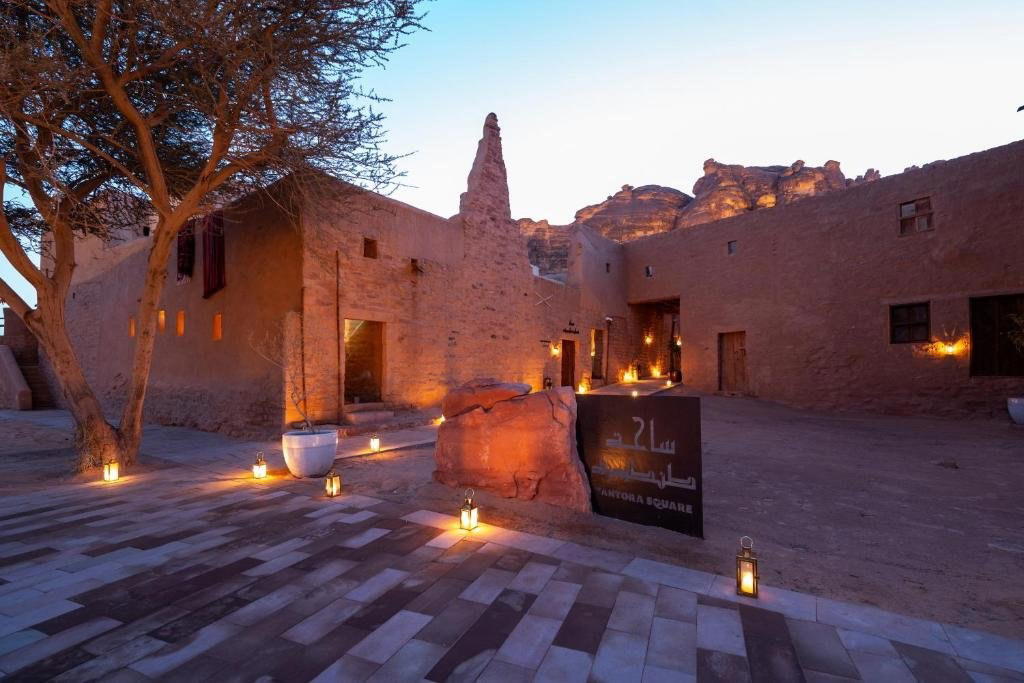
Rustic yet elegant atmosphere with handmade rugs, local earthenware, and open-air dining overlooking dramatic desert landscapes.