Shawarmer (شاورمر)
Our verdict
Shawarmer on King Abdulaziz Road sits inside Shaqra's everyday eating culture, where the shawarma format has long served as the region's most reliable fast meal. The chain's presence in a mid-sized Saudi city reflects how standardised marinated-meat counters have spread beyond urban centres, bringing consistent product to communities where dining options remain limited.

Pearl is the En Primeur Club membership app — saves, bookings, and concierge access live there. Same editors, same standards.
- Address
- King Abdulaziz Rd, Al Shifa, Shaqra 15557, Saudi Arabia
- Phone
- +966 9200 08080
- Hours
- Mon–Tue 10 AM–3 AMWed–Thu 10 AM–4 AMFri 12 PM–3 AMSat–Sun 10 AM–3 AM
- Website
- shawarmer.com
- Directions
- Get directions
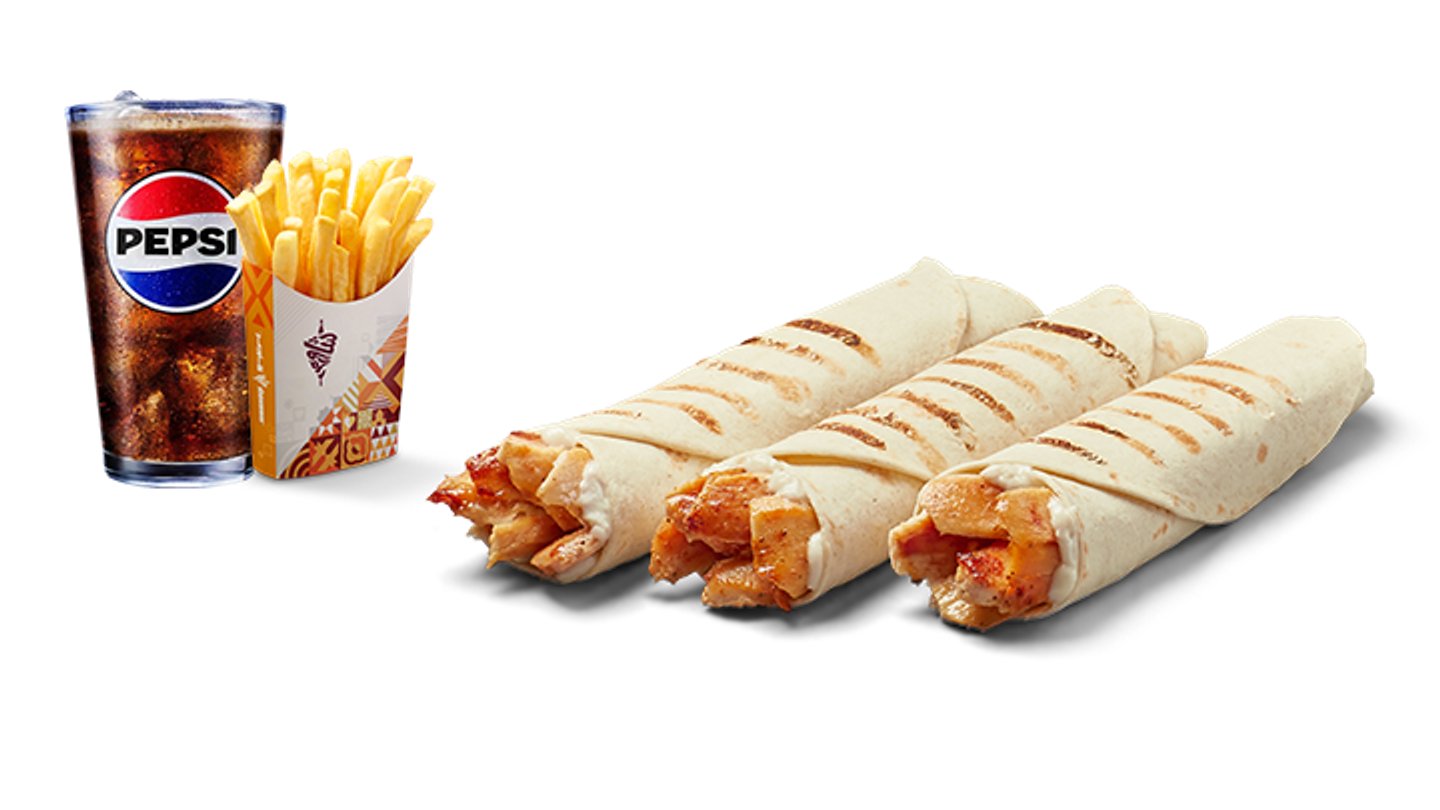
Shawarma in the Central Province: What the Format Tells You About the Region
The shawarma counter occupies a specific and well-understood position in Saudi Arabia's food economy. It is not fine dining, not a social occasion built around ceremony, and not a format that requires advance planning. It is the architecture of the quick meal: marinated meat rotating on a vertical spit, carved to order, wrapped in flatbread, and consumed within minutes. In a mid-sized city like Shaqra, roughly 170 kilometres south of Riyadh in the Riyadh Region, that format carries particular weight. The dining scene here is practical rather than aspirational, and the shawarma counter is its most consistent fixture. For visitors passing through or residents in the Al Shifa district, the question is rarely whether to eat shawarma, but where the execution holds up.
Shawarmer operates on King Abdulaziz Road, one of the main commercial arteries running through Shaqra, placing it within the flow of everyday movement through the city rather than in any destination-specific pocket. The address in Al Shifa puts it in a residential-commercial band typical of Saudi secondary cities, where food businesses cluster along the main road and serve a predominantly local, repeat-visit clientele. This is not a tourist circuit. It is neighbourhood eating at its most direct.
The Sourcing Question Behind Every Shawarma
The shawarma format's appeal has always rested on a short supply chain. The core ingredients, marinated chicken or lamb, flatbread, and a small array of sauces and pickled vegetables, are sourced and prepared close to service. In the central and Najd regions of Saudi Arabia, the protein most commonly used in shawarma is chicken, often marinated with a spice profile that draws on Gulf pantry staples: turmeric, cumin, coriander, and sometimes a touch of cinnamon. Lamb and beef variants exist but are less dominant at the quick-service tier.
For a chain operating across multiple Saudi cities, ingredient consistency is a function of centralised supply rather than hyper-local sourcing. This matters to understand the product correctly. You are not eating from a butcher who slaughtered that morning; you are eating from a system designed to deliver the same marinade, the same cut, and the same rotation time across locations. That standardisation is the point. The debate inside Saudi fast-casual eating circles is whether the trade-off, consistency over locality, is worth it, and for a city like Shaqra, where the alternative is often an independent counter with less predictable quality control, the answer for many diners is yes.
The broader context matters here. Saudi Arabia's quick-service food sector has professionalised sharply over the past decade, with chains investing in cold-chain logistics and protein sourcing standards that independent operators often cannot match. Shawarmer sits inside that professionalised tier, which is a relevant credential in a market where food safety and consistency are not guaranteed at every counter. This is the argument the format makes in smaller cities: reliability over idiosyncrasy. Compare this to what you find at destination restaurants elsewhere in the Kingdom, such as Aseeb in Riyadh, where the emphasis on heritage Saudi cuisine and plated presentation operates in an entirely different register, or Kuuru in Jeddah, where the dining format is designed around a longer, more considered meal. The shawarma counter is the other end of the spectrum, and in its own tier, the standards that matter are different.
Shaqra's Dining Reality
Shaqra is a city of modest scale, historically significant as a settlement in the Najd plateau but not a dining destination in the way that Riyadh, Jeddah, or even Al-Ula have become. Visitors arriving here are typically doing so for reasons unrelated to food, whether family connections, administrative business, or travel along the central highway network. The practical reality is that dining options in Shaqra skew toward the functional: grills, shawarma counters, rice dishes, and a small number of sit-down restaurants serving Saudi staples.
Within that context, a chain with standardised operations and a known product profile functions as a reliable anchor. For anyone moving through the city on a time constraint, knowing that a specific address on King Abdulaziz Road will deliver a consistent shawarma is genuinely useful information. It removes a variable from a day that likely has enough of them. For coverage of how this kind of mid-city quick-service culture compares to regional alternatives, our full Shaqra restaurants guide covers the broader options available in the city.
The Saudi quick-service scene in secondary cities is worth taking seriously as a category. It does not generate the critical attention that the Kingdom's fine-dining expansion attracts, but it feeds far more people daily. Operations like Camel Burger Food Truck in Medina or بروست طازة in Ta'if reflect how street-adjacent formats are adapting to consumer expectations around freshness and speed across smaller Saudi cities. The shawarma counter, whether independent or chain-operated, remains the format that connects all of them.
For those planning any travel through central Saudi Arabia with food as part of the itinerary, it is worth understanding the gap between what the Kingdom's emerging restaurant culture offers in its major cities and what is available in transit. Destinations like Banyan Tree AlUla represent one end of the spectrum; a shawarma counter on King Abdulaziz Road in Shaqra represents the other. Both are honest expressions of where and how people actually eat in Saudi Arabia. Elsewhere in the region, بيتوتي in Burayda offers another data point on how smaller Najd cities are handling the gap between heritage cooking and modern quick-service demand.
Further afield in the Kingdom, the contrast with Jeddah's more cosmopolitan offer, visible in places like Khayal Restaurant in Jeddah or casual stops like kol restaurant in Jizan, underscores how geography shapes what a restaurant can aspire to be. In Shaqra, aspiration is not the operating mode. Utility is.
Planning a Stop
Shawarmer on King Abdulaziz Road in Shaqra requires no advance booking and no particular timing strategy. The format is walk-in by definition. For anyone driving through the central region, the Al Shifa address is easy to locate along the main road.
Frequently asked questions
Is Shawarmer (شاورمر) a family-friendly restaurant?
The shawarma counter format at Shawarmer on King Abdulaziz Road in Shaqra is broadly accessible by design. In Saudi Arabia, fast-casual shawarma operations of this type routinely serve families, individuals, and groups without segmented seating arrangements. No booking is required, and the walk-in model suits varied group sizes.
What's the vibe at Shawarmer (شاورمر)?
This is a functional, counter-service operation in Al Shifa, Shaqra — not a sit-down dining room with a cultivated atmosphere. The format prioritises speed and consistency over ambience, which is standard for this category of shawarma outlet across the Central Province. Expect a brisk, transactional rhythm.
Is Shawarmer (شاورمر) in Shaqra part of a wider Saudi chain, and what does that mean for consistency?
Shawarmer operates as a multi-location Saudi fast-casual chain, which means the Shaqra branch on King Abdulaziz Road in Al Shifa follows a standardised format rather than functioning as an independent local operation. For travellers passing through Shaqra — a city with limited dining infrastructure relative to Riyadh or Jeddah — that consistency is a practical advantage. The format removes uncertainty about quality floor and ordering process.
What's the must-try dish at Shawarmer (شاورمر)?
Shawarmer's menu centres on the shawarma format — marinated chicken or lamb wrapped in flatbread, the core offering across the chain's Saudi locations. Specific menu items and configurations at the Shaqra branch are not documented in available detail, so ordering the house shawarma wrap is the logical entry point.
Where exactly is Shawarmer (شاورمر)?
Shawarmer (شاورمر) is located at King Abdulaziz Rd, Al Shifa, Shaqra 15557, Saudi Arabia, Shaqra.
How far ahead should I plan for Shawarmer (شاورمر)?
No advance planning is needed. Shawarmer on King Abdulaziz Road operates as a walk-in counter by format, consistent with the broader shawarma category in Saudi Arabia. Peak meal times may bring a short queue, but reservations are not part of the model.
What do critics highlight about Shawarmer (شاورمر)?
Shawarmer as a Saudi chain has attracted attention for standardising the shawarma counter format at scale across the Kingdom, though editorial focus has centred on larger city locations rather than the Shaqra outlet on King Abdulaziz Road.
Side-by-Side Snapshot
Comparable venues nearby, for context on price, style, and recognition.
| Venue | Cuisine | Price | Awards | Notes |
|---|---|---|---|---|
| Shawarmer (شاورمر)This venue — the venue you are viewing | Saudi Shawarma | $10–20 | Not listed | Not listed |
| Berenjak Riyadh | Modern Persian Restaurant | Not listed | Not listed | Al Hada |
| Shawarmer | Modern Middle Eastern Shawarma | Not listed | Not listed | Al Aziziyah |
| yello | Modern Brunch | Not listed | Not listed | Ad Diriyah |
| بيتوتي | Chinese Fast Food | $10–20 | Not listed | Al Dahiya |
| Yawmiyat By Dalal | Homestyle Lebanese | $20–30 | Michelin Plate | Al Woroud |
Details
- Casual Hangout
- A La Carte
- Halal
Current opening hours
- Monday
- 10 AM–3 AM
- Tuesday
- 10 AM–3 AM
- Wednesday
- 10 AM–4 AM
- Thursday
- 10 AM–4 AM
- Friday
- 12 PM–3 AM
- Saturday
- 10 AM–3 AM
- Sunday
- 10 AM–3 AM
Hours can change for holidays and private events. Last verified .
Casual fast-food atmosphere focused on quick shawarma service.