Banyan Tree AlUla





1 Michelin Key · La Liste Top Hotels · Virtuoso Luxury Hotel Partner
Banyan Tree AlUla's 47 freestanding villas occupy the Ashar Valley floor beneath sandstone cliffs that have been shaping caravans routes since antiquity. Scoring 97.5 points on the 2026 La Liste Top Hotels ranking, the property places design in direct conversation with one of the world's most archaeologically dense environments. Two restaurants, private pools, and a cliff-set swimming pool complete the picture.

Pearl is the En Primeur Club membership app — saves, bookings, and concierge access live there. Same editors, same standards.
- Address
- Wadi Ashar Tabuk, Road, Alula 43563
- Phone
- +966 14 512 0000
- Website
- banyantree.com
- Directions
- Get directions
Sandstone, Silence, and the Architecture of Restraint
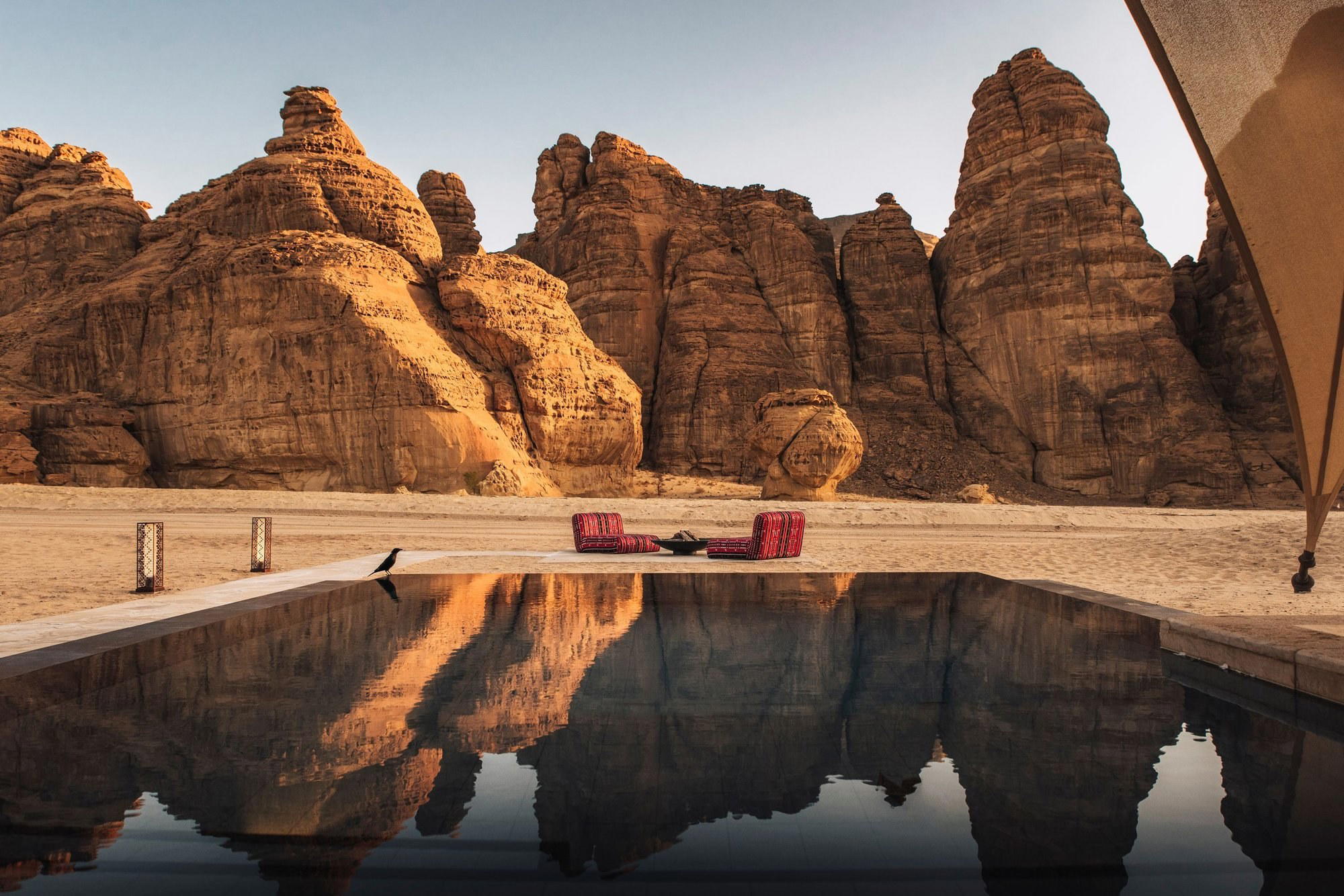
There is a particular design challenge in AlUla that few hospitality brands have met convincingly: how do you build something permanent in a landscape that predates most of human civilisation, without either dwarfing it or pretending to disappear into it? The Ashar Valley, where Banyan Tree AlUla is positioned, answers that question with its own ruthless geology. Vertical cliffs of rose-coloured sandstone rise on multiple sides, and the light shifts hourly in ways that make static photographs unreliable. Any structure placed here is in constant dialogue with forces that move faster than architecture.
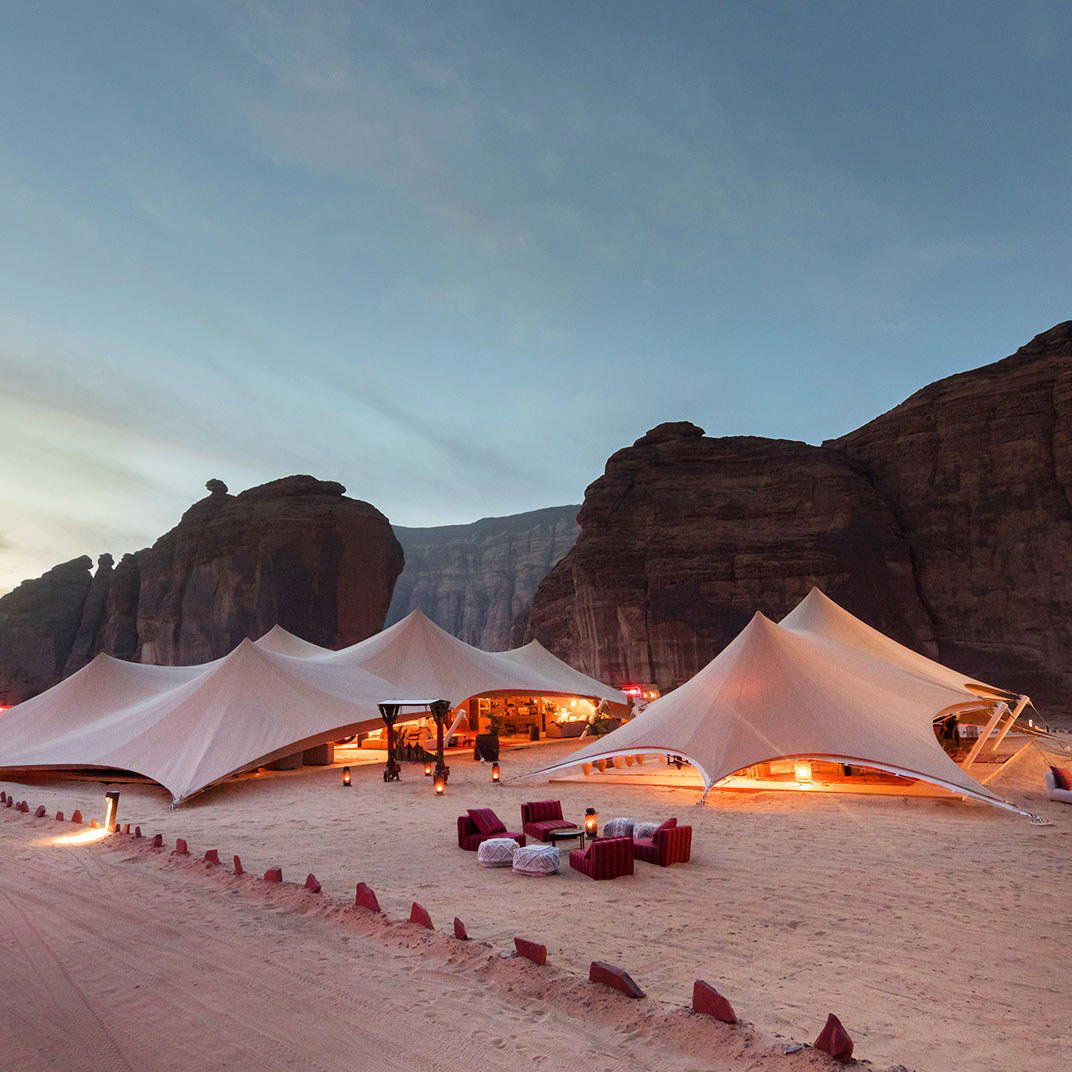
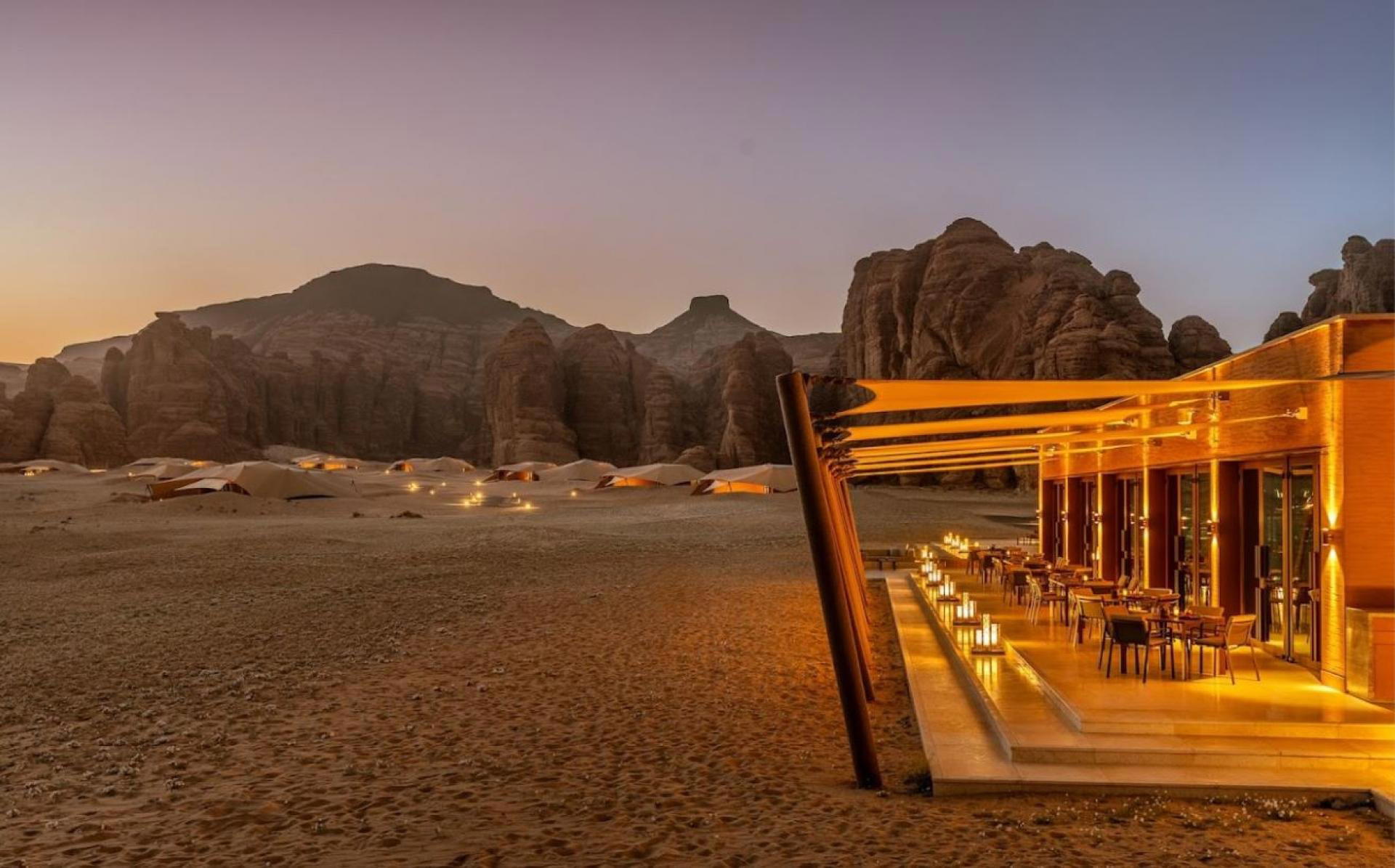
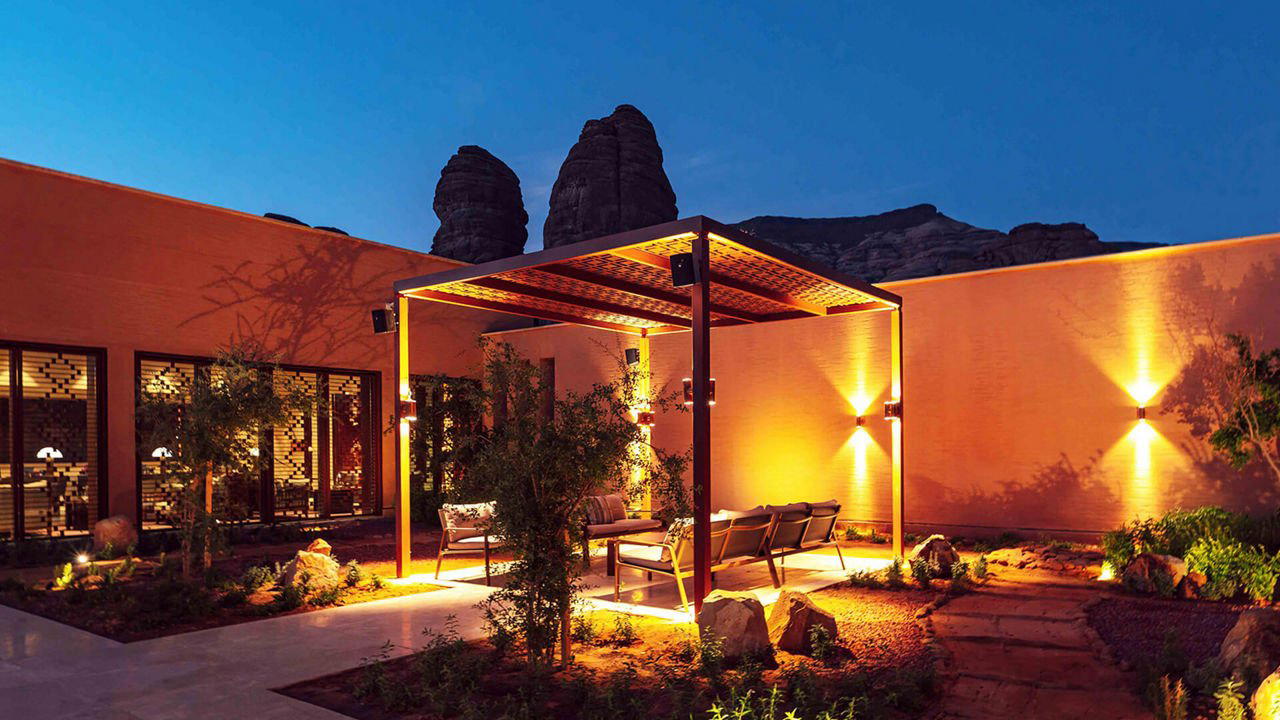
Banyan Tree's response is a village of 47 freestanding villas dressed in tent-like canopies, referencing the temporary shelters of traders and travellers who crossed this corridor for centuries, but constructed as solid, permanent structures beneath. The silhouette reads as impermanent; the engineering is not. That deliberate tension between transient form and durable material is the resort's central architectural idea, and it works in the valley setting in a way that a more assertive design language almost certainly would not. Our Habitas AlUla and The Chedi Hegra each make their own bets on how to sit inside this environment; Banyan Tree's tent-villa vernacular is among the more considered positions in that field.
What the Ashar Valley Does to a Stay
AlUla's hospitality scene is inseparable from its archaeological context. The region holds Hegra, Saudi Arabia's first UNESCO World Heritage Site, along with Dadan, the ancient Lihyanite capital, and thousands of petroglyphs that predate the Nabataean period. Guests at properties in this valley are not simply staying near history in the decorative sense that a European city hotel might claim; they are inside a working archaeological zone where new discoveries continue to alter the scholarly record. That context changes how a resort functions. Mornings here often start with excursion departures rather than late breakfasts, and the rhythm of the day tends to track the light rather than a fixed schedule.
The Ashar Valley specifically offers one of the more sheltered and atmospheric entry points into this terrain. The near-vertical cliff faces that frame the resort site create natural acoustic dampening, making the silence more complete than the open desert provides. Arriving at Banyan Tree AlUla, whether from Riyadh or Jeddah by short domestic flight to AlUla Regional Airport, or via direct connection from Dubai, the transition from jet infrastructure to that silence is abrupt in a way that most resort arrivals are not. The airport connection, served by direct flights from Dubai and short domestic hops from both Riyadh and Jeddah, means the logistical barrier to reaching AlUla has dropped considerably from what it was even five years ago.
Villa Design and the Logic of the Canopy
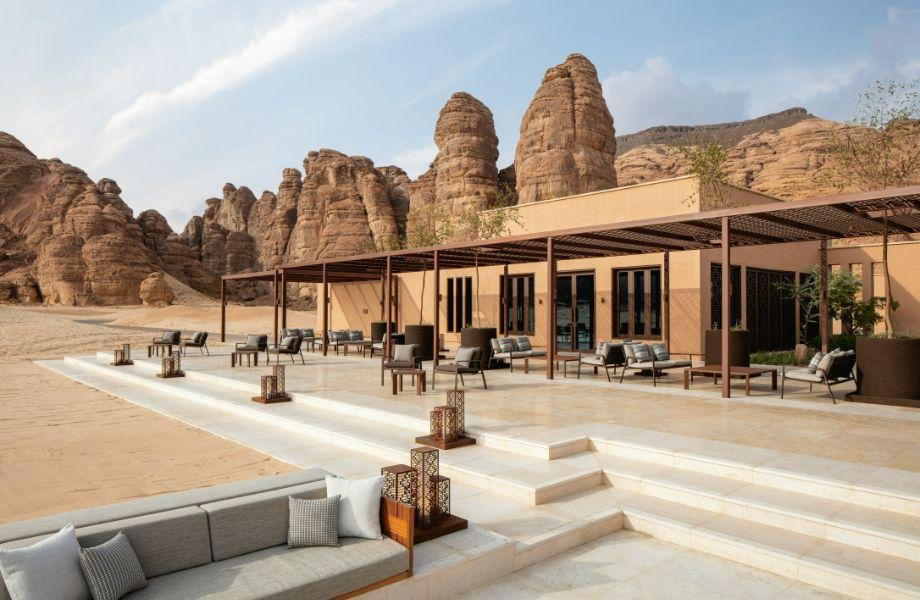
Inside the villas, the tent reference continues in ceiling treatment and material palette without becoming a costume. The structures are full-service luxury accommodations, and many come with private pools. The design approach keeps external materials in a register that reads as local: earth tones, textures that echo the valley walls, and an avoidance of the glass-and-steel vocabulary that would read as intrusive against the sandstone backdrop. The La Liste Leading Hotels 2026 assessment, which awarded the property 97.5 points, specifically notes that the accommodations reach a luxury tier comparable to any resort globally, which is a meaningful credential in a ranking that evaluates properties across the full spectrum of international options.
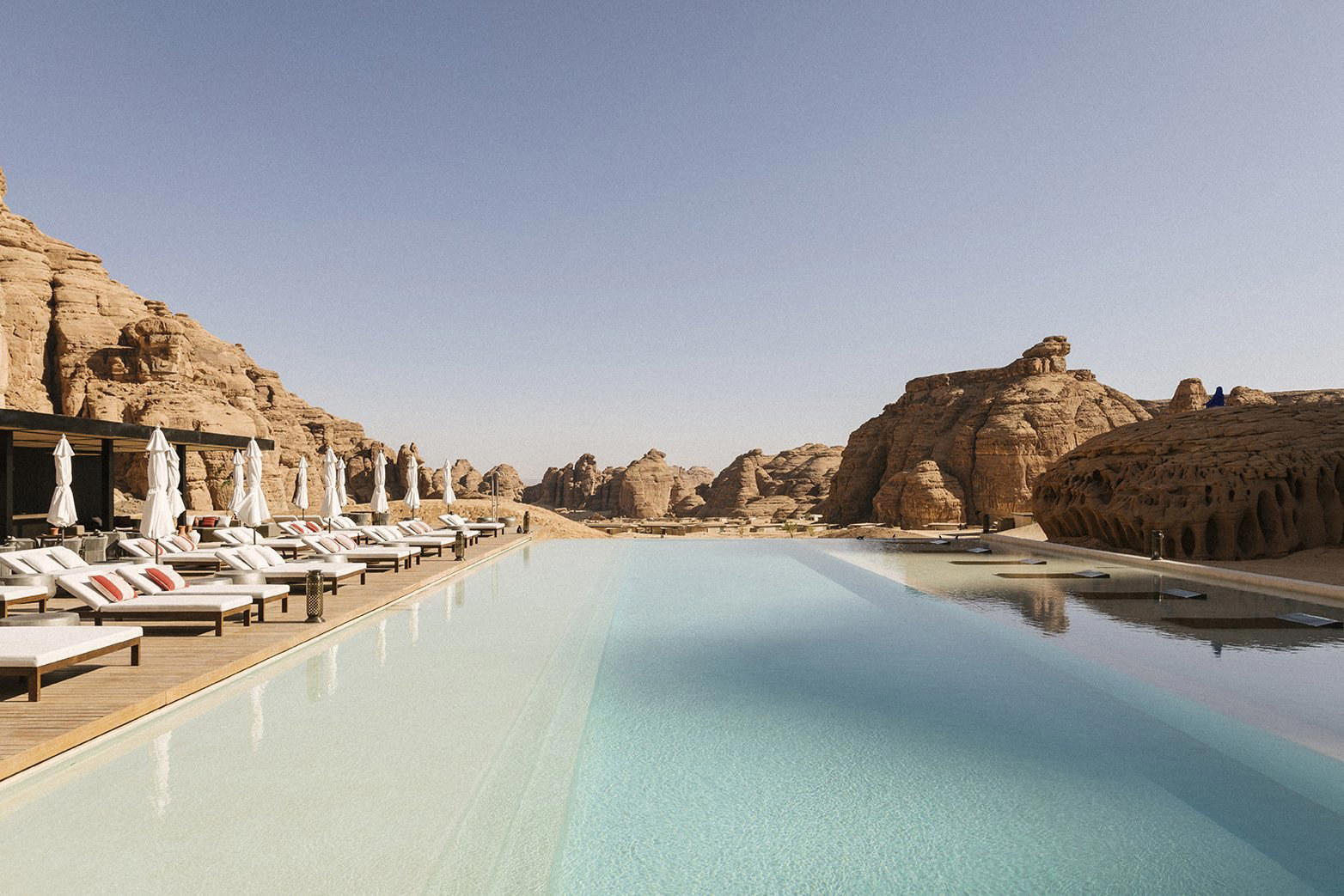
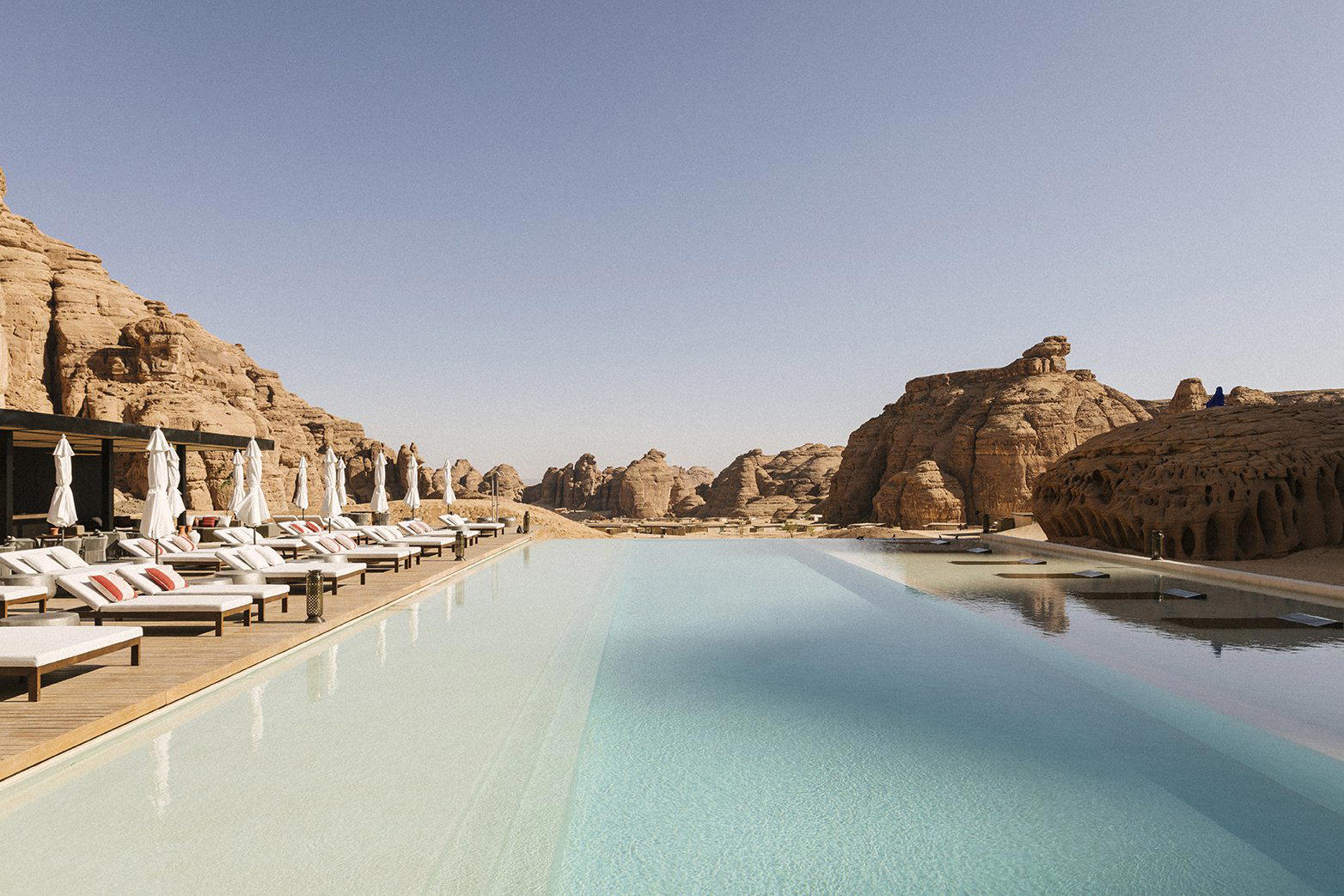
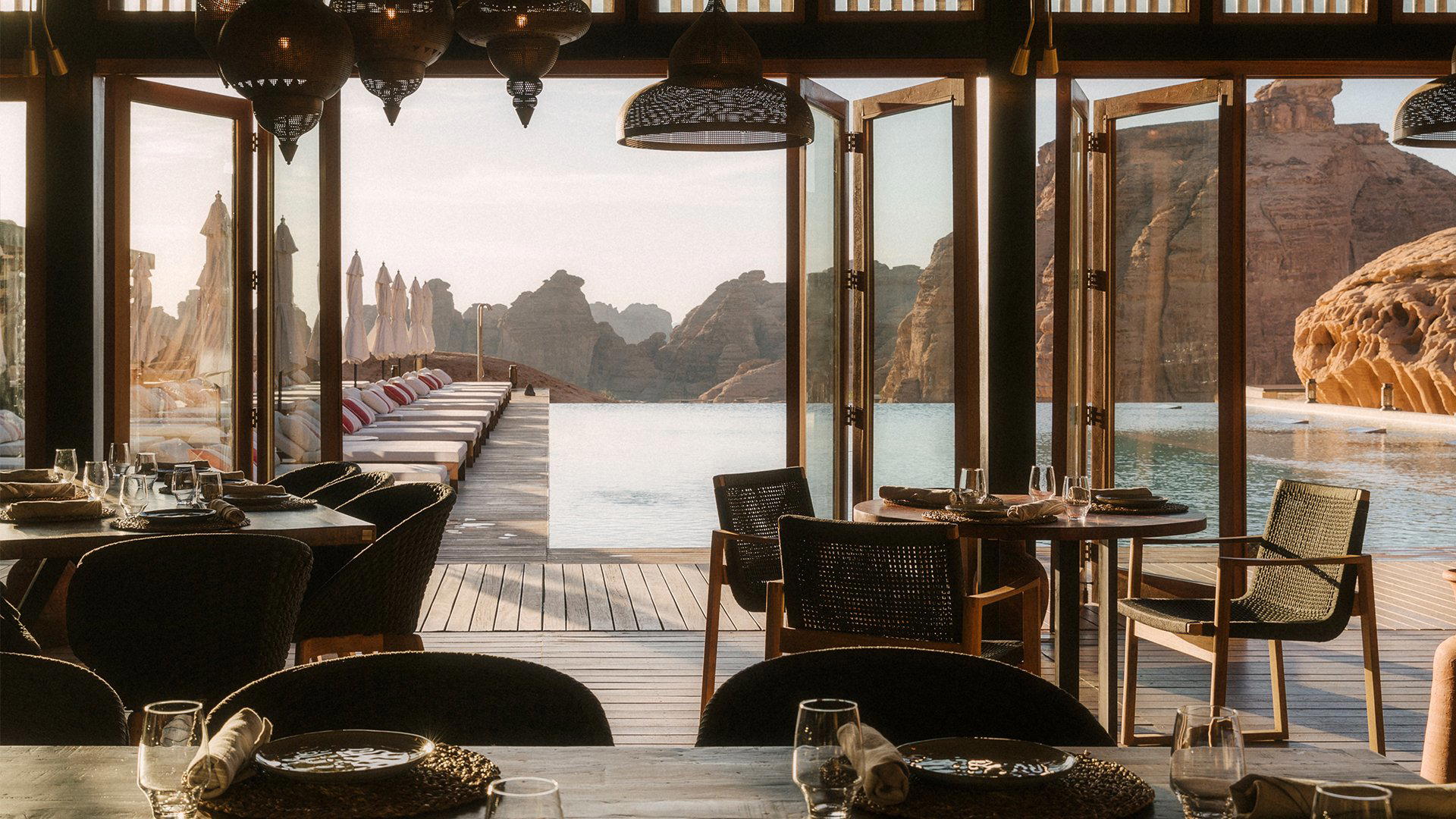
The pool positioned between two near-vertical cliff faces is the resort's most architecturally legible moment. Rather than creating a conventional resort pool as a destination in itself, the placement converts the surrounding geology into the primary design element. The cliffs do the work. It is the kind of site-responsive decision that separates properties that understand their location from those that could be relocated without losing anything essential. Among AlUla's current hotel options, which include Dar Tantora The House Hotel at the medina end of the experience spectrum, this cliff-pool configuration is a structural argument for Banyan Tree's position at the upper end of the destination's offer.
Dining in a Valley That Predates Both Menus
The resort operates two restaurants, one Arabic and one Thai. The pairing reflects Banyan Tree's group DNA, which has Thai hospitality roots, alongside a commitment to regional culinary identity in each location. In AlUla, where the dining infrastructure outside the resort hotels remains limited, having two distinct restaurant programmes within a property is a practical asset as much as it is a branding decision. Guests spending multiple nights, which the excursion depth of this destination encourages, benefit from menu variety that a single-restaurant property cannot offer. For context on how the wider city's food scene is developing, our full AlUla restaurants guide maps the current options across the destination.
The Spa and the Broader Wellness Argument
Banyan Tree's spa programme carries group-level credentials that predate the AlUla property. The brand built much of its identity around wellness programming across Southeast Asian properties before expanding into the Middle East and other markets. At AlUla, the spa is described as a standout amenity, operating in a setting where the landscape itself functions as a wellness argument: low population density, minimal light pollution, geological silence, and air that carries none of the urban particulate load of the region's major cities. The combination of branded spa depth and environmental conditions is a pairing that urban wellness hotels cannot replicate by adding more treatment rooms.
Saudi Arabia's Premium Hotel Field in Context
Saudi Arabia's upper hospitality tier is expanding at a pace that makes any single-year snapshot provisional. The Vision 2030 programme has catalysed a series of major property openings, from Red Sea Shura Island (Four Seasons property) to AMAALA (Four Seasons property) and the Nammos Resort AMAALA. Within AlUla specifically, the competitive set is still forming, with each property staking out distinct territory: medina character at Dar Tantora, community-led programming at Our Habitas AlUla, heritage positioning at The Chedi Hegra, and Banyan Tree's landscape-architecture approach in the Ashar Valley. Nationally, the range now runs from Assila, A Luxury Collection Hotel, Jeddah to Edge Riyadh Al Rabie, with mid-market options like Al Manakha Rotana Madinah, InterContinental Taif, Grand Hyatt Al Khobar, Movenpick Hotel Qassim, Braira Abha, Braira Al Rass, Braira Al-Ahsa, Mövenpick Hotel Wa'ad Al Shamal, Miraval The Red Sea, InterContinental The Red Sea Resort, Nofa Riyadh, A Radisson Collection Resort, Ayara-managed hotels in Dammam, and Conrad Makkah Jabal Omar filling out the national map. Banyan Tree AlUla at $1,133 per night sits at the upper end of that field, with the La Liste 97.5-point score providing external validation for that pricing position.
For comparison, properties that score in that La Liste bracket internationally include the kind of addresses, such as Aman New York or Aman Venice, where the relationship between architecture and setting is the primary value argument. Banyan Tree AlUla is making a structurally similar case, just in a valley that has been receiving travellers for considerably longer than any of those cities' hotel districts have existed.
Planning a Stay
At $1,133 per night, Banyan Tree AlUla prices against international destination resorts rather than the domestic Saudi market. The 47-villa count keeps the property at a scale where it avoids the anonymity of larger resort formats. Booking is advisable in advance, particularly for the winter season between November and March when AlUla's temperatures are most hospitable to outdoor exploration, and when the annual AlUla Moments arts and culture programme draws additional visitors to the destination. The address is Wadi Ashar Tabuk Road, AlUla 43563, reachable via AlUla Regional Airport, which receives direct flights from Dubai and short domestic connections from Riyadh and Jeddah.
Comparison Snapshot
Comparable venues nearby, for context on price, style, and recognition.
| Venue | Cuisine | Price | Awards | Notes |
|---|---|---|---|---|
| Banyan Tree AlUlaThis venue — the venue you are viewing | Luxury villa resort blending Saudi Arabian and Asian wellness traditions | $1,500–2,500 | 1 Michelin Key · La Liste Top Hotels | Not listed |
| Our Habitas Alula | Sustainable desert resort blending into natural landscape with 96 villas. | $300–500 | Michelin Selected · La Liste Top Hotels | Ashar Valley |
| Dar Tantora The House Hotel | Restored traditional mudbrick heritage architecture in AlUla Old Town | $200–300 | 1 Michelin Key · La Liste Top Hotels | Al'Ula Old Town |
| The Chedi Hegra | Contemporary luxury integrated within historic railway station architecture, blending Arabian opulence with Asian elegance and UNESCO World Heritage Site preservation. | $500–750 | 1 Michelin Key · La Liste Top Hotels | Al Hijir District |
| Caravan by Habitas AlUla | Contemporary luxury glamping blending Bedouin nomadic traditions with modern design in vintage Airstreams. | $300–500 | Michelin Selected | Ashar Valley |
| Waldorf Astoria Jeddah - Qasr Al Sharq | Luxurious Arabian palace with modern amenities | Not listed | 1 Michelin Key · La Liste Top Hotels | Jeddah Waterfront |
Recognition history
Dated appearances from independent guides and award organizations, with the underlying list record or original source where available.
Michelin 1 Key
Michelin
La Liste Top Hotels
La Liste
Fodor's Most Incredible Hotels in the World
Fodor's
Virtuoso Luxury Hotel Partner
Virtuoso
World Spa Awards Saudi Arabia's Best Wellness Retreat 2026 Nominee
World Spa Awards
Full recognition history (7 entries)
Michelin 1 Key
Michelin
World Spa Awards Saudi Arabia's Best Wellness Retreat 2025 Nominee
World Spa Awards
Details
- Romantic
- Serene
- Elegant
- Sophisticated
- Ornate
- Honeymoon
- Romantic Getaway
- Wellness Retreat
- Wedding
- Infinity Pool
- Private Villa
- Butler Service
- Panoramic View
- Wi Fi
- Pool
- Spa
- Fitness Center
- Room Service
- Concierge
- Valet Parking
- Mountain
- Wheelchair Accessible
- Step Free Entrance
Serene and luxurious atmosphere with natural light-filled spaces, soundproofed villas, and dramatic valley views.