Somewhere

Michelin Plate
Our verdict
Where the Palm Grove Meets the Plate Approach Somewhere on foot from AlUla's Old Town and the setting does the introductory work before you've sat down. The restaurant sits at the edge of AlUla's largest palm grove, a position that places it at...

Pearl is the En Primeur Club membership app — saves, bookings, and concierge access live there. Same editors, same standards.
- Address
- Alula Oasis
- Phone
- +966 9200 24788
- Hours
- Daily 1 PM–12:15 AM
- Website
- letustakeyousomewhere.com
- Directions
- Get directions
- Booking
- Book on the venue's website
The menu
What to order
- Shawarma bao
- Kunafa shrimp
- Wagyu shawarma
- Msakkhan
- Shrimp sayyadiyeh
Where the Palm Grove Meets the Plate
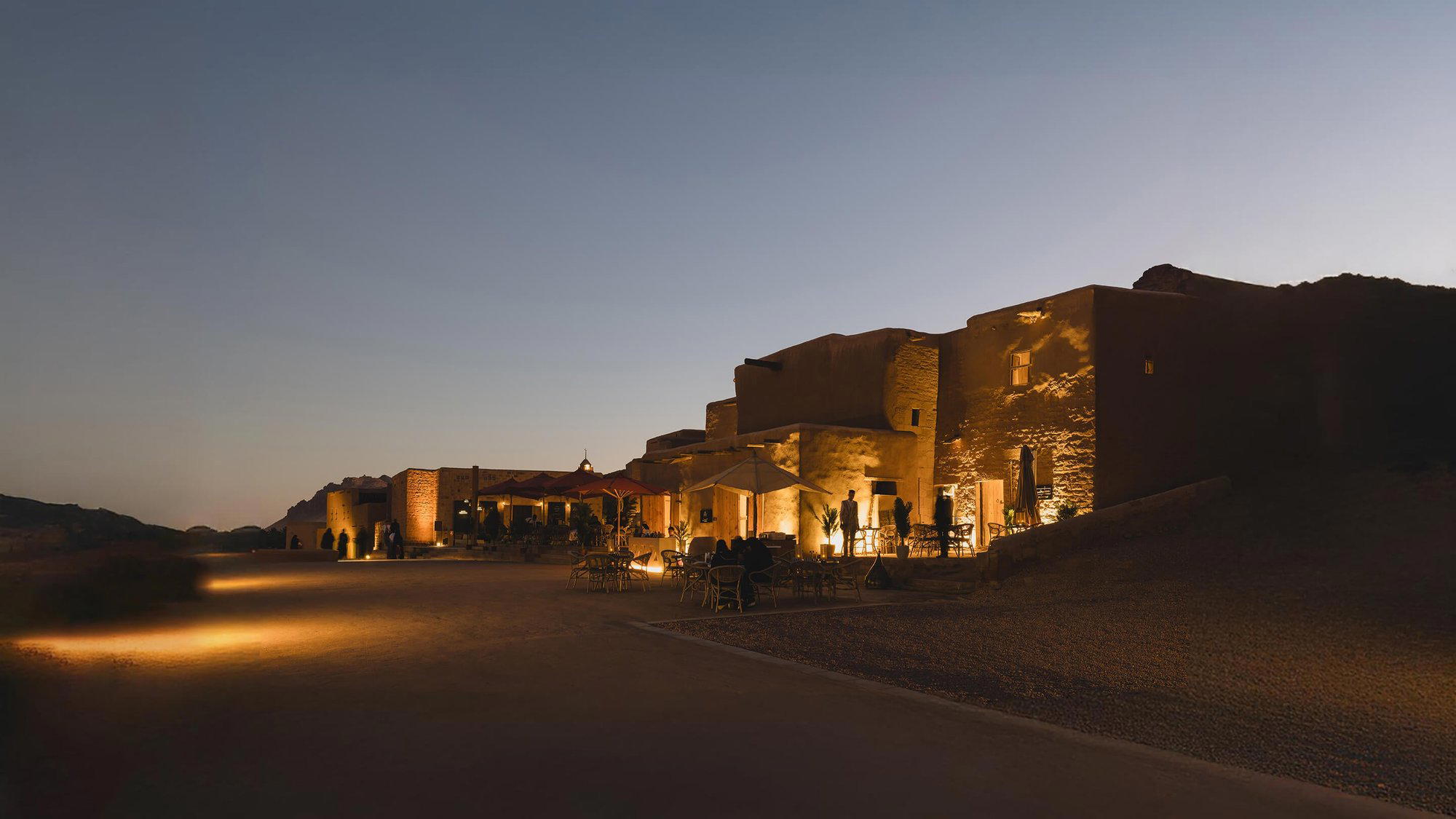
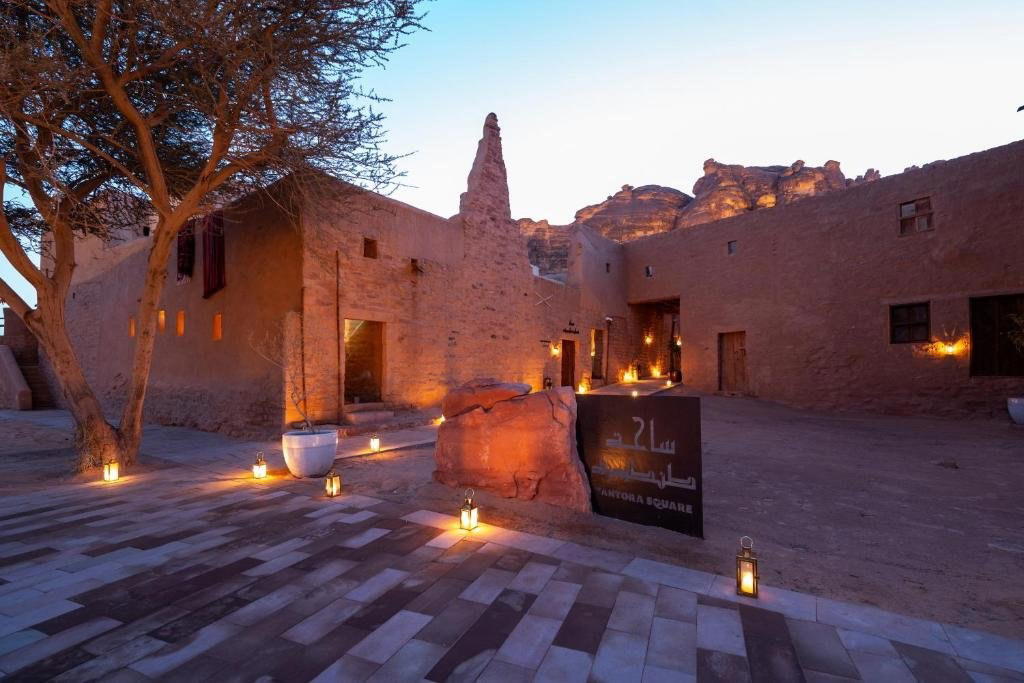
Approach Somewhere on foot from AlUla's Old Town and the setting does the introductory work before you've sat down. The restaurant sits at the edge of AlUla's largest palm grove, a position that places it at the meeting point of two of the oasis's most defining features: the ancient date agriculture that has sustained this valley for millennia, and the mud-brick Old Town that predates most of the region's modern infrastructure by centuries. The walk from the historic quarter takes only a few minutes, but the shift in atmosphere is pronounced. The noise of the main visitor areas drops away, and what replaces it is the particular quiet of dense palm canopy.
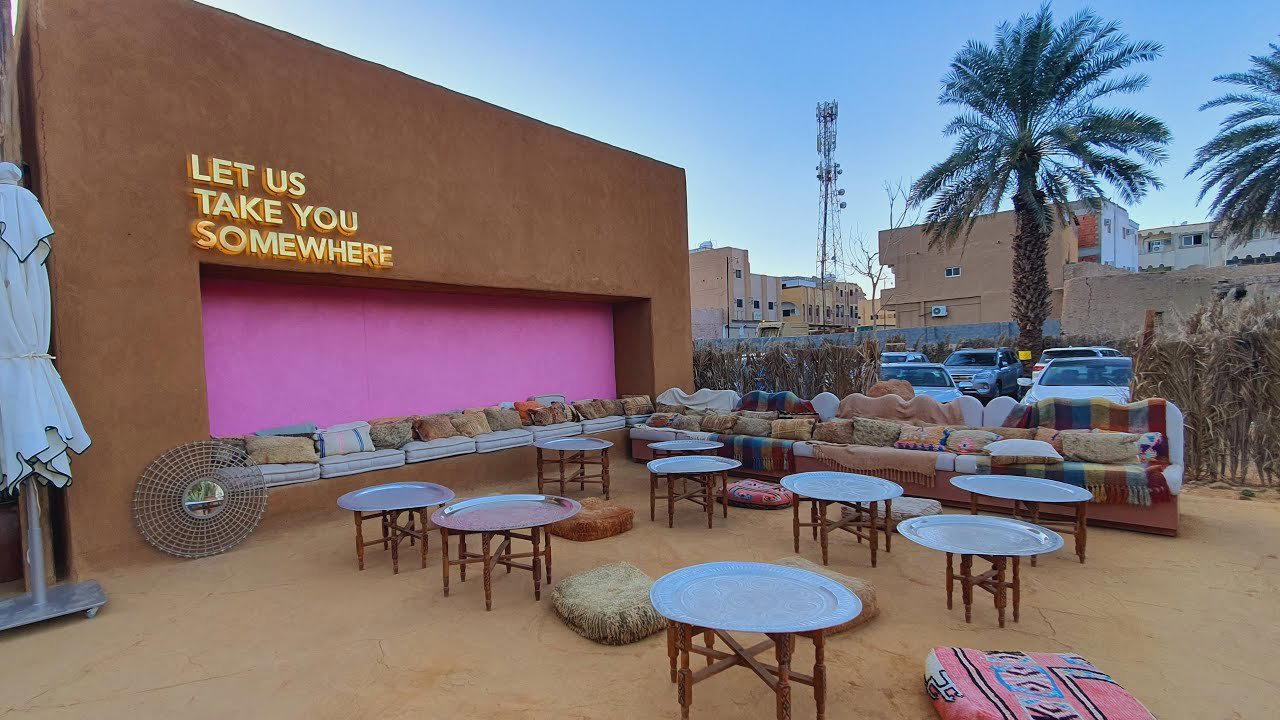
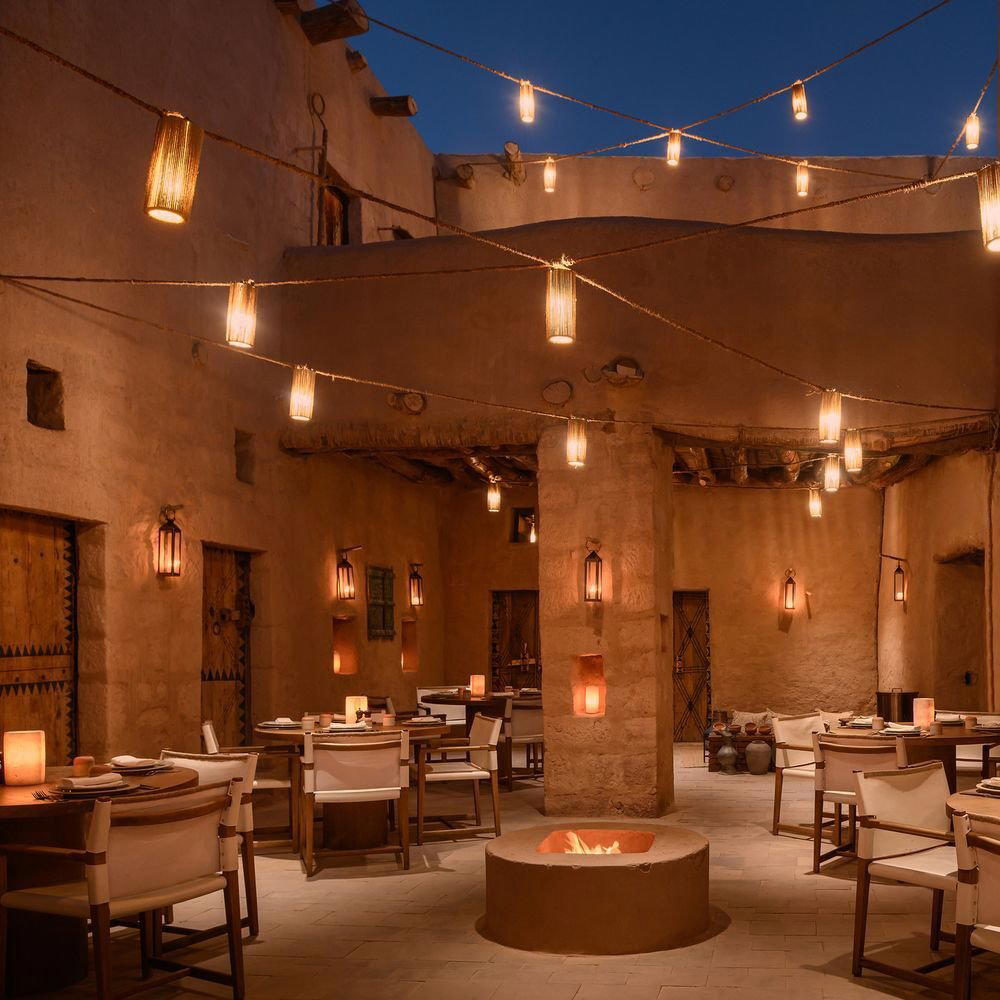
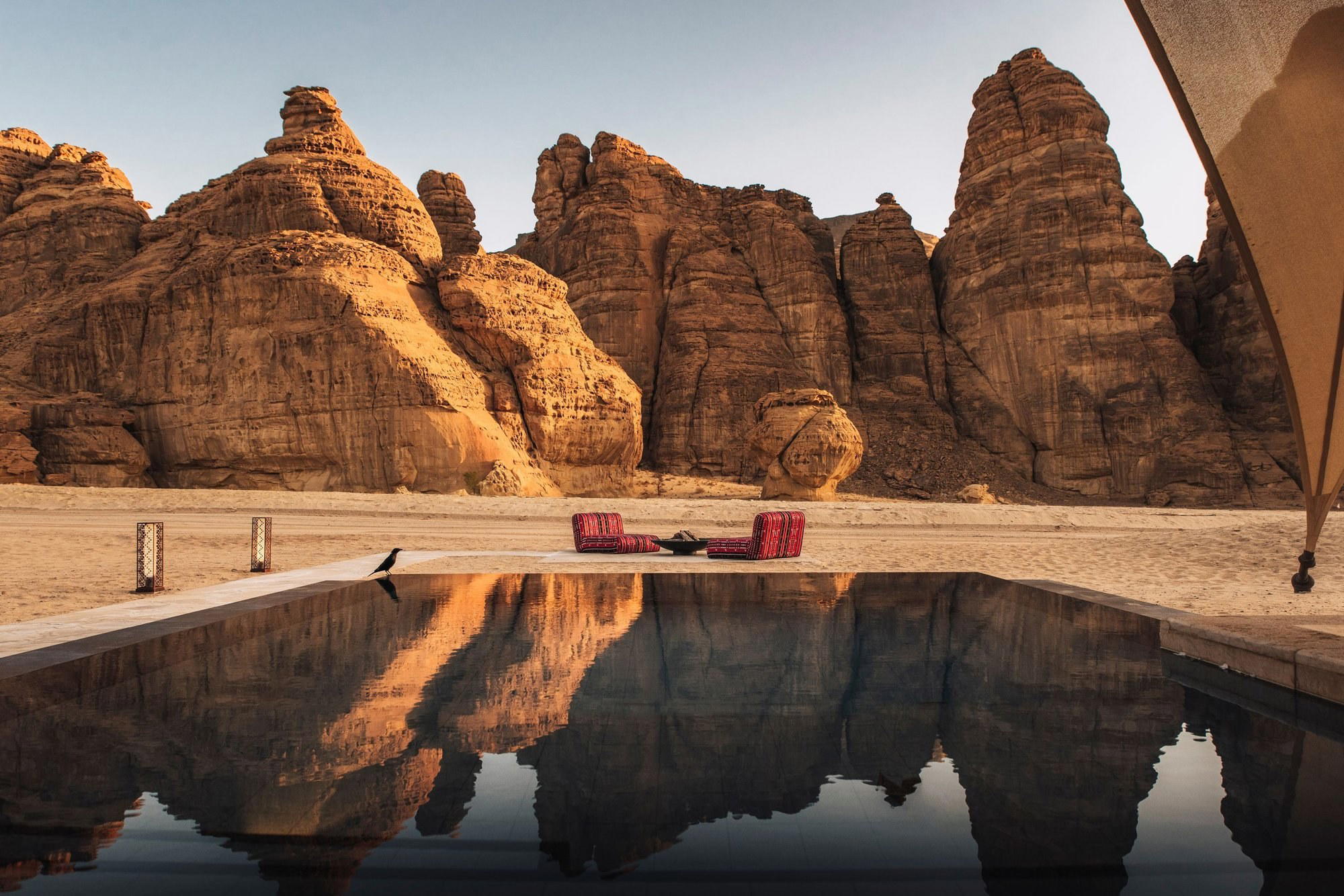
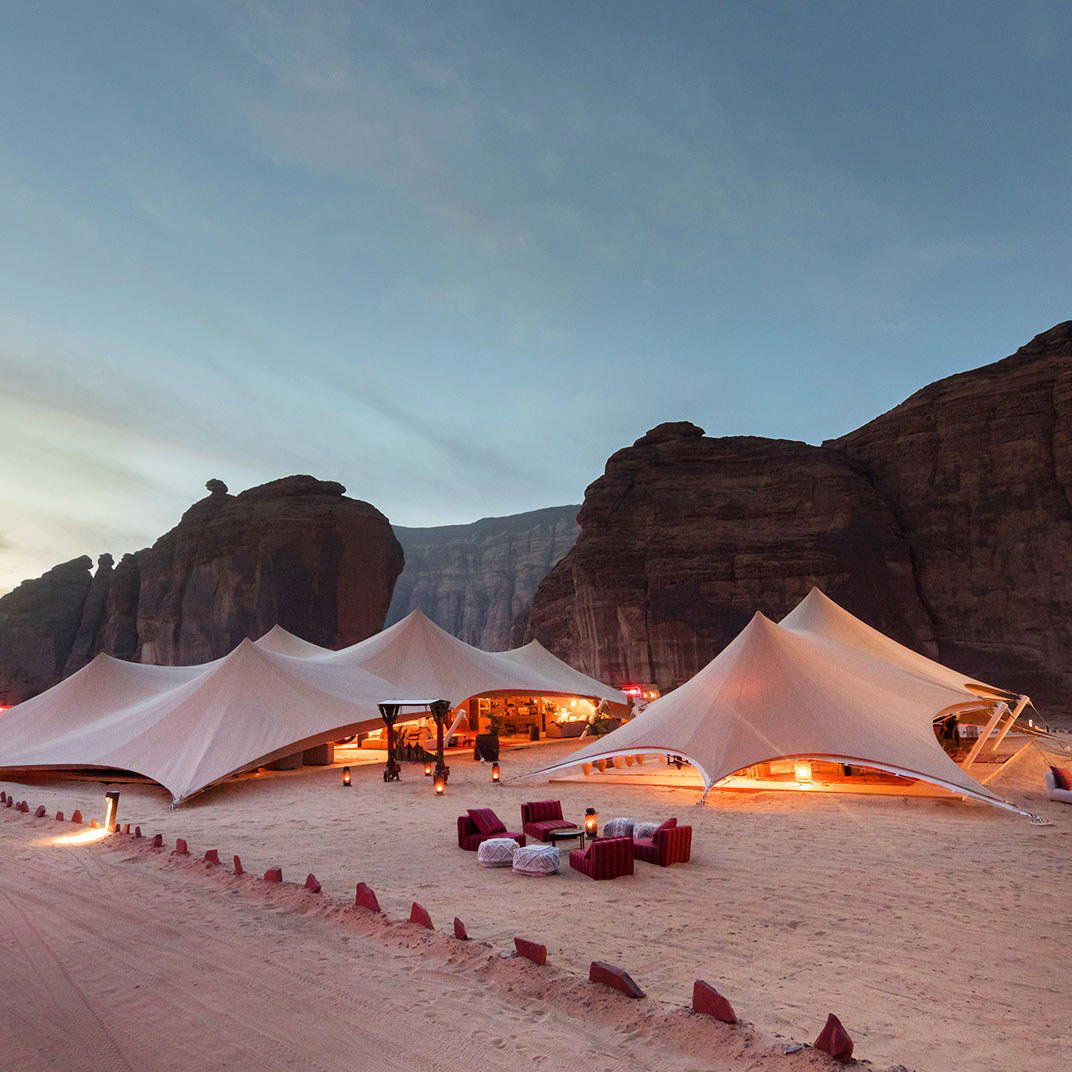
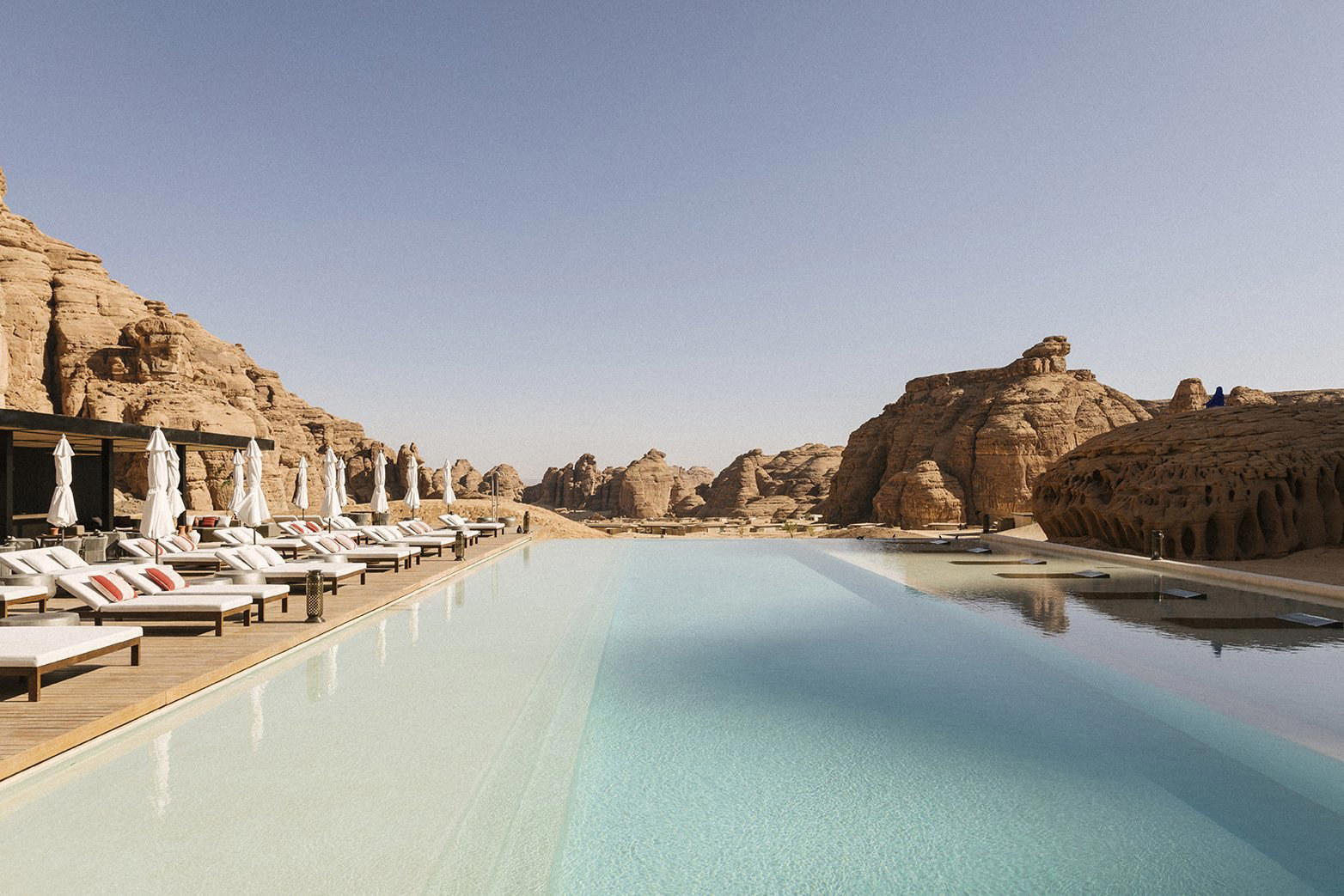
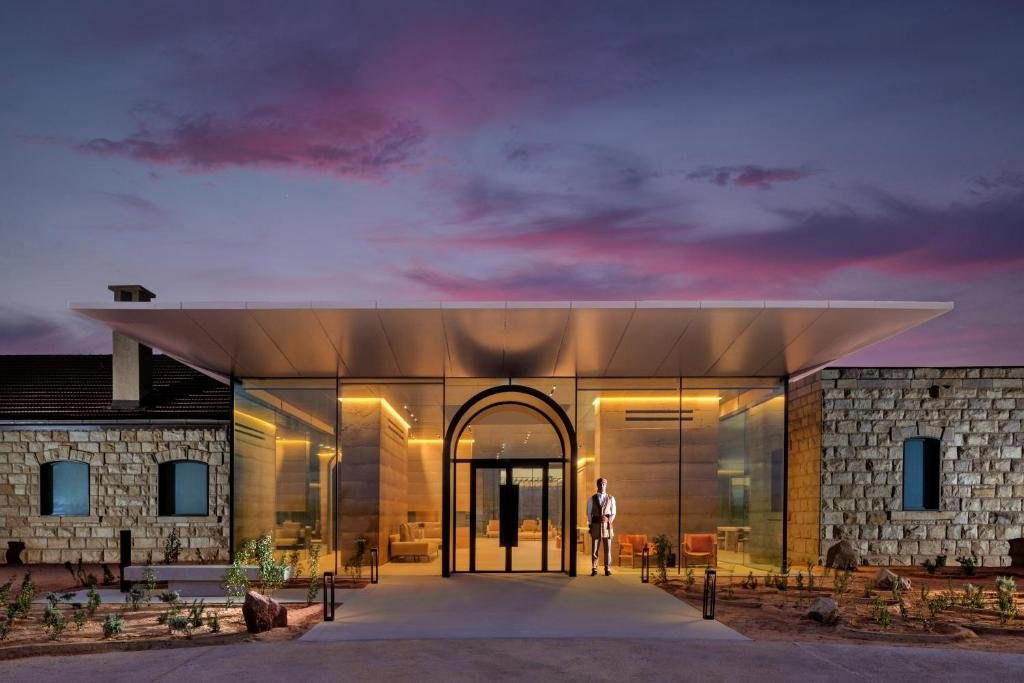
Inside, the design holds a conversation between contemporary Mediterranean sensibility and the architectural vernacular of the surrounding oasis. Wrought iron furniture, generous cushion arrangements, and piles of fresh fruit placed around the dining room establish a register that feels more Levantine courtyard than Saudi desert resort dining. Dune frescoes on the walls connect the interior to the sandstone landscape outside without leaning into the kind of theatrical regionalism that newer AlUla venues sometimes over-apply. The main draw, physically and experientially, is the wooden terrace overlooking the oasis itself, where the scale of the palm grove becomes fully legible.
The Dining Ritual at Somewhere
In the broader tradition of Egyptian and Lebanese table culture, meals are structured around sharing, pacing, and accumulation rather than the linear progression of a European tasting format. Somewhere operates within that tradition, presenting Middle Eastern classics from both countries with occasional fusion inflections that extend the vocabulary of the menu without displacing its foundation. This approach to pacing matters: the food is generous in portion and designed to be distributed, which means a table here tends to slow down and settle in rather than move through courses on a fixed tempo.
The shawarma-filled bao is the most discussed example of the kitchen's fusion instinct, a preparation that places a Levantine meat treatment inside a format borrowed from East Asian steamed bun tradition. It is a logical pairing in execution rather than a novelty, since the structural function of the bao (soft, yielding, capable of absorbing fat and seasoning) maps cleanly onto what a shawarma wrap does in its original context. Dishes described as colourful and generous in composition suggest a kitchen that treats visual abundance as part of the hospitality logic, consistent with the Egyptian and Lebanese custom of making plenty visible as a form of welcome.
The Omm Ali, a bread pudding preparation standard across Egyptian households and restaurant menus alike, appears here in a version built around croissant and oat milk rather than the traditional Egyptian flatbread and dairy milk. The substitution changes the texture profile significantly: croissant lamination adds more fat layers and a lighter crumb than the standard base, while oat milk shifts the sweetness toward a quieter, less rich finish. Whether this reads as an improvement or simply a variation depends on the diner's reference point, but it positions the dish as something that speaks to both regional memory and a contemporary dietary sensibility. In a dining room that draws international visitors alongside local guests, that dual address is a practical calibration as much as a creative one.
Somewhere in AlUla's Restaurant Scene
AlUla's dining options have expanded considerably as the Royal Commission for AlUla has developed the region into an international destination, and the restaurant tier now covers a reasonable range of formats and price points. Within that field, Somewhere occupies a position defined by informality and accessibility rather than prestige fine dining. Venues like Harrat, Joontos, Tama, and Tofareya each address different points of the local dining spectrum, and Somewhere's position is set by its oasis location, its Levantine-Egyptian menu, and a format built around relaxed communal eating rather than ceremony.
The comparison is worth drawing because it shapes how a visit here fits into a broader AlUla itinerary. Restaurants working within a high-production, destination-dining model, from Le Bernardin in New York City to Alinea in Chicago to Alléno Paris au Pavillon Ledoyen in Paris, structure the meal as a controlled sequence with fixed pacing. Somewhere operates from a different premise entirely. The meal here is responsive and expansive, shaped by the rhythm of a shared table rather than by kitchen choreography. That register is closer to what you'd find at a strong neighbourhood Lebanese restaurant than at a venue like 8 1/2 Otto e Mezzo Bombana in Hong Kong or Alain Ducasse's Louis XV in Monte Carlo. That is not a shortcoming; it is the point. Within the Saudi dining context, comparable casual-sharing formats appear at venues like Lunch Room in Riyadh and Kuuru in Jeddah, each working within the logic of the relaxed, sociable meal that characterises much of the region's dining culture.
For a fuller picture of where to eat and stay in the region, the full AlUla restaurants guide, AlUla hotels guide, AlUla bars guide, AlUla wineries guide, and AlUla experiences guide cover the wider field.
Planning a Visit
Somewhere is located in the AlUla Oasis, a short walk from the Old Town, which makes it a natural extension of a morning or afternoon spent in the historic quarter. Given AlUla's climate, where midday temperatures in summer months can exceed 40°C, the covered terrace and shaded interior become logistically relevant: evening dining during the cooler months between October and March will let the outdoor terrace work as it is designed to. High-season visitor numbers in AlUla have grown sharply since the development of the region as a cultural destination, so arriving early or with a reservation in place is sensible. Booking specifics are best confirmed directly with the venue, as contact details are not publicly listed at time of writing. Venues in this format and price tier across the region typically require no dress code formality, though the relaxed Levantine atmosphere at Somewhere is consistent with that expectation. For visitors comparing across destination dining elsewhere or planning around highly produced formats like Lazy Bear in San Francisco, Somewhere's appeal is specifically its distance from that register.
Frequently asked questions
What part of town is Somewhere in?
Somewhere is located at Alula Oasis, AlUla.
Is Somewhere Michelin-listed?
Somewhere has received recognition including: You’ll find this eatery located on the edge of AlUla’s largest palm grove, a short walk away from the Old Town. The restaurant blends contemporary and traditional Mediterranean design, with its comfortable cushions, wrought iron furniture, ….
What should I order at Somewhere?
Two dishes from the venue's own documentation stand out as house favourites: the shawarma-filled bao, which folds a Levantine street staple into an East Asian format, and Omm Ali made with croissant and oat milk rather than the traditional pastry-and-cream base. Both reflect the kitchen's approach of treating Egyptian and Lebanese classics as starting points rather than fixed endpoints.
How hard is it to get a table at Somewhere?
Specific reservation data for Somewhere is not published, but its position at the edge of AlUla's largest palm grove and proximity to the Old Town makes it a natural stop for visitors already in the area. AlUla's overall tourist infrastructure has expanded significantly under the Royal Commission for AlUla, so demand at well-located restaurants can spike around festival periods and heritage tourism events. Booking ahead is advisable during peak season.
What has Somewhere built its reputation on?
Somewhere is positioned around its setting and its food simultaneously: the wooden terrace overlooking the AlUla Oasis is the physical draw, while the menu builds a case for Egyptian and Lebanese cooking as generous, colour-forward, and open to selective fusion. The combination of a historically loaded location — steps from AlUla's Old Town — and a kitchen willing to put shawarma inside a bao gives the restaurant a character that straightforward regional kitchens in the area do not share.
Can Somewhere adjust for dietary needs?
The documented menu includes a version of Omm Ali made with oat milk rather than dairy, which signals some capacity to work with dietary preferences. Egyptian and Lebanese table traditions also lean heavily on vegetable-forward mezze and grain-based dishes by default, which gives the kitchen natural flexibility. For specific requirements, contacting the venue directly before visiting is the only way to confirm current options.
What makes Somewhere different from other restaurants near AlUla Old Town?
Somewhere occupies a specific physical position that most AlUla restaurants do not: the edge of the oasis palm grove, with a wooden terrace that looks directly over it. The menu compounds that specificity by drawing on Egyptian and Lebanese traditions rather than the pan-Arabic or international hotel-restaurant formats common in the region's newer developments. That combination of a heritage-adjacent address and a cuisine rooted in two distinct Arab culinary lineages — rather than a generalised 'Middle Eastern' category — gives it a defined point of view.
Cuisine and Recognition
Comparable venues nearby, for context on price, style, and recognition.
| Venue | Cuisine | Price | Awards | Notes |
|---|---|---|---|---|
| SomewhereThis venue — the venue you are viewing | Modern Middle Eastern Fusion | $50–100 | Michelin Plate | Not listed |
| Banyan Tree AlUla | Middle Eastern Fusion & Thai | $100–150 | Not listed | Ashar Valley |
| Tama | Modern Middle Eastern Fusion | Not listed | Michelin Plate | Ashar Valley |
| Harrat | Pan-Arabic Fusion with International Influences | $100–150 | Michelin Plate | Ashar Valley |
| Our Habitas AlUla | Modern Middle Eastern Fusion | $100–150 | Not listed | Ashar Valley |
| Tofareya | Traditional Saudi Cuisine | $10–20 | Michelin Bib Gourmand | Old Town |
Recognition history
Dated appearances from independent guides and award organizations, with the underlying list record or original source where available.
Michelin Plate
Michelin
Details
- Scenic
- Cozy
- Elegant
- Date Night
- Family
- Group Dining
- Special Occasion
- Terrace
- Garden
- Garden
- Mountain
- A La Carte
- Small Plates
- Vegetarian Friendly
- Allergy Accommodating
Current opening hours
- Monday
- 1 PM–12:15 AM
- Tuesday
- 1 PM–12:15 AM
- Wednesday
- 1 PM–12:15 AM
- Thursday
- 1 PM–12:15 AM
- Friday
- 1 PM–12:15 AM
- Saturday
- 1 PM–12:15 AM
- Sunday
- 1 PM–12:15 AM
Hours can change for holidays and private events. Last verified .
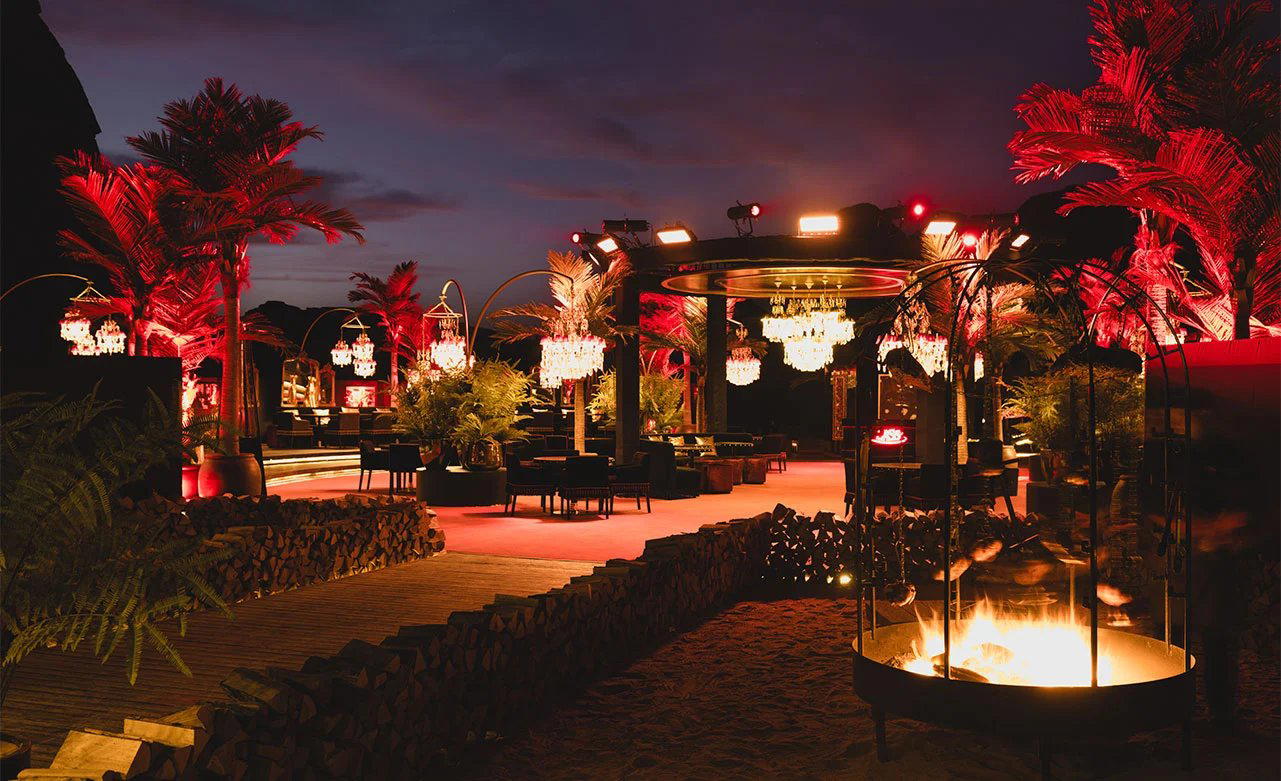
Peaceful and relaxing oasis atmosphere with subtle moonlighting, water features, comfortable cushions, fresh fruits, and lush greenery creating a magical escape in the desert.