kol restaurant
Our verdict
Kol Restaurant sits on Jizan's Corniche Road, facing the Red Sea in one of Saudi Arabia's most geographically distinct coastal cities. The restaurant operates in a region where proximity to some of the kingdom's richest fishing grounds and agricultural highlands shapes what ends up on the plate. For travellers tracing Saudi Arabia's southern dining circuit, Jizan's waterfront addresses offer a different register than the capital's fine-dining corridor.

Pearl is the En Primeur Club membership app — saves, bookings, and concierge access live there. Same editors, same standards.
- Address
- Corniche Rd, Ash Shati, Jazan 82511, Saudi Arabia
- Phone
- +966551330993
- Hours
- Mon–Wed 5:30 AM–12:30 PM, 1 PM–1 AMThu 5:30 AM–12:30 PM, 1 PM–2 AMFri 5:30–10 AM, 1 PM–2 AMSat–Sun 5:30 AM–12:30 PM, 1 PM–1 AM
- Website
- linktr.ee
- Directions
- Get directions
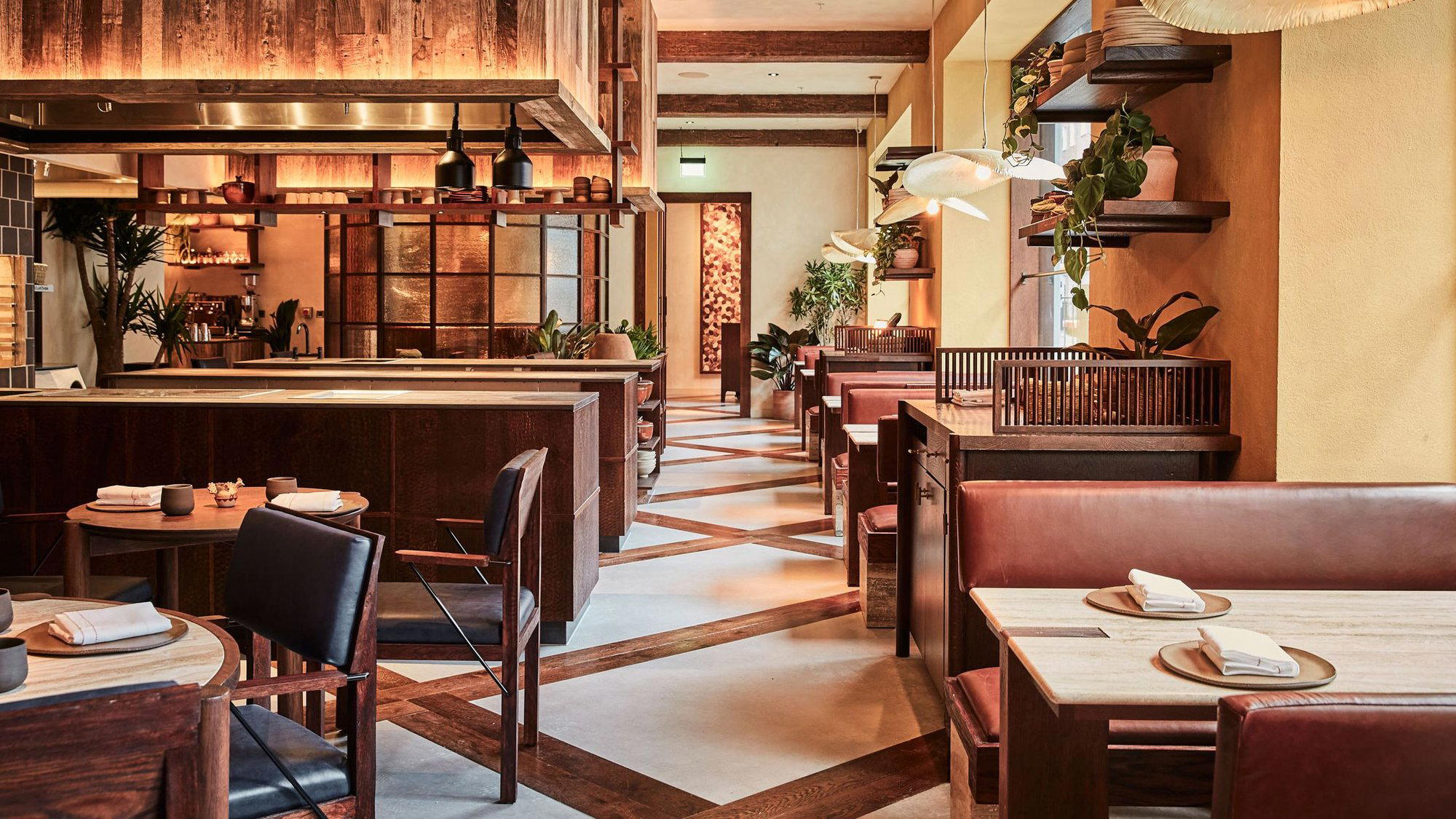
Where the Red Sea Sets the Table
Jizan's Corniche has a different quality than the polished waterfronts of Jeddah or Yanbu. The air carries salt and humidity, the afternoon light off the Red Sea is flat and bright, and the fishing activity visible from shore is not decorative — it is operational. Kol Restaurant occupies an address on Corniche Road in the Ash Shati district, a stretch where the relationship between the water and what appears on plates is less a marketing concept and more a matter of daily logistics. In this part of Saudi Arabia, the sourcing conversation begins before anyone enters a kitchen.
That geographic specificity matters. Jizan sits at the southern tip of the Saudi Red Sea coast, close to the Yemeni border, at a latitude where tropical and subtropical currents meet. The fisheries here yield species and quality that restaurants further north have to work harder to access. For a dining address on this particular stretch of road, proximity to those waters is the foundational ingredient — one that no supply chain decision can replicate for a restaurant operating in Riyadh or Al Khobar. Venues like Aseeb in Riyadh demonstrate how the capital's kitchens have developed sophisticated approaches to regional sourcing, but the structural advantage of a coastline address is categorically different.
Jizan's Sourcing Geography
The region around Jizan is one of the most agriculturally active in Saudi Arabia. The Jizan highlands produce mango, papaya, and coffee, the latter increasingly positioned as a premium regional crop, distinct from the arabica supply chains associated with Ethiopia or Yemen. The coastal strip contributes seafood; the highlands contribute produce and livestock in conditions that differ sharply from the arid interior. This dual geography gives kitchens operating in the city access to a sourcing range that few Saudi addresses can match within a single region.
For context, the challenge facing ambitious restaurants elsewhere in the kingdom is the infrastructure required to source well across climatic zones. A restaurant in Jeddah, such as Kuuru in Jeddah, works within a Red Sea coastal logic but at a scale and urban density that introduces complexity. Jizan's smaller urban footprint and closer proximity to productive agricultural and fishing zones compresses that supply chain considerably. The food that reaches the plate has, in principle, travelled less and waited less.
That principle shapes the character of dining on Jizan's waterfront. The strongest addresses here tend to work within what the surrounding region provides, rather than importing frameworks from Riyadh's fine-dining corridor or Jeddah's internationally inflected restaurant scene. It is a pattern visible elsewhere in the Gulf and wider region: coastal cities where fishing traditions predate modern restaurant culture often develop a more direct, ingredient-led approach to seafood service, precisely because the product itself is difficult to improve upon.
The Corniche Dining Context
Ash Shati, the district where Kol Restaurant's address is registered, is part of Jizan's developed seafront strip. Corniche Road in this zone functions as both a leisure promenade and a commercial dining corridor, the format common to Saudi coastal cities, where evening sea-facing dining carries cultural weight beyond the meal itself. Families, extended groups, and travellers arriving via King Abdullah bin Abdulaziz Airport, located approximately within the Jizan governorate, share the same waterfront territory after dark.
The dining format typical to this kind of address is structured around communal eating, grilled seafood served in quantity, and a pace calibrated to long evenings rather than rapid table turns. That rhythm is materially different from, say, the tasting-menu logic found at Le Bernardin in New York City or the counter-format precision of Atomix in New York City, not inferior, but structured around a different set of values: abundance, sociability, and the logic of shared plates in a seafront setting.
Saudi Arabia's southern coastal corridor remains less covered by international food media than the triangle of Riyadh, Jeddah, and AlUla. Banyan Tree AlUla draws considerable international attention as a destination dining address, and Riyadh's restaurant evolution gets documented extensively. Jizan, by contrast, operates as a domestic destination, popular with Saudi travellers from Asir and the Makkah region during cooler months, but largely below the threshold of international editorial coverage. That gap is as much logistical as editorial: the city's infrastructure for international tourism is still developing, and the dining scene reflects local demand rather than inbound visitor pressure.
Seasonal and Timing Considerations
Jizan's climate is among the most humid in Saudi Arabia. The period between October and March provides materially more comfortable conditions for outdoor and semi-outdoor Corniche dining, when temperatures drop enough for extended evening use of waterfront seating. Summer months, from June through September, shift the pattern: dining moves earlier or later to avoid peak heat, and outdoor Corniche addresses operate differently than they do in the cooler season. Visitors planning specifically around Jizan's seafront dining should weight their timing toward the November-to-February window. For regional comparison, our full Jizan restaurants guide maps additional addresses across the city's dining zones.
Other Saudi coastal dining references worth tracking for comparative context include Baytoti, also operating in Jizan, and for a wider picture of how regional Saudi cuisines are being framed in contemporary restaurant settings, Khayal Restaurant in Jeddah and Takara in Khobar offer useful points of contrast. For those tracking the kingdom's broader restaurant evolution from a food-culture angle, the work being done at yello in Ad Diriyah and Lazy Bear in San Francisco, in terms of sourcing transparency and format discipline, represents the international benchmark that serious Saudi operators are increasingly measured against.
Planning Your Visit
Kol Restaurant's address on Corniche Road, Ash Shati, Jizan places it within the city's primary waterfront dining zone. Travellers are advised to verify current operating status locally or through aggregator platforms before planning a visit. Jizan is served by King Abdullah bin Abdulaziz Airport, with domestic connections from Riyadh, Jeddah, and other Saudi cities. The Corniche is accessible by road from central Jizan, and waterfront addresses in this district are generally walkable from one another once you are in the Ash Shati area.
Frequently asked questions
What part of town is kol restaurant in?
kol restaurant is located at Corniche Rd, Ash Shati, Jazan 82511, Saudi Arabia, Jizan.
Is Kol Restaurant a good option for dining in Jizan during the cooler months?
Jizan ranks among the most humid cities in Saudi Arabia, making the October-to-March window materially more comfortable for outdoor or waterfront dining. Kol Restaurant's address on Corniche Road, Ash Shati places it within the city's main seafront strip, where the cooler season draws the bulk of visitor and resident dining activity. Timing a visit between those months aligns with both the climate and the period when Jizan's agricultural highlands — sources of regional mango, papaya, and coffee — are most actively supplying local kitchens.
What's the best thing to order at kol restaurant?
Given its address on Corniche Road, Ash Shati, Jizan — a city with direct access to Red Sea fishing grounds and highland produce including mango, papaya, and locally grown coffee — dishes drawing on those regional ingredients would be the most grounded choices to pursue when visiting.
Is kol restaurant reservation-only?
Corniche Road addresses in Jizan's Ash Shati district typically serve a mix of walk-in diners and group reservations, so arriving early during peak evening hours is a practical precaution.
What do critics highlight about kol restaurant?
The venue sits within Jizan's primary waterfront dining zone on Corniche Road, a strip that draws attention for its position at the intersection of Red Sea access and one of Saudi Arabia's more agriculturally active highland regions.
How does kol restaurant handle allergies?
No website or phone number is recorded for the venue, which limits advance enquiry options. Visitors with specific dietary requirements should plan to communicate directly with staff on arrival at the Corniche Road, Ash Shati address.
In Context: Similar Options
Comparable venues nearby, for context on price, style, and recognition.
| Venue | Cuisine | Awards | Notes |
|---|---|---|---|
| kol restaurantThis venue — the venue you are viewing | Saudi Arabian Mandi | Not listed | Not listed |
| Baytoti | Chinese Fast-Casual | Not listed | Al Shaatea |
| Khayal Restaurant (مطعم خيال) | Turkish & Middle Eastern Grilled Kebabs | Not listed | Al-Zahrah / Prince Sultan Road |
| Phet Phet | Thai Kitchen | Conde Nast Hot List Restaurants | Takhassusi Road / Al-Takhassusi |
| Bistro Lounge | Coffee Lounge | Not listed | Riyadh |
| Shawarmer | Modern Middle Eastern Shawarma | Not listed | Al Aziziyah |
Continue exploring
More in Jizan
Restaurants in Jizan
Browse all →
Details
- Family
- A La Carte
- Halal
Current opening hours
- Monday
- 5:30 AM–12:30 PM, 1 PM–1 AM
- Tuesday
- 5:30 AM–12:30 PM, 1 PM–1 AM
- Wednesday
- 5:30 AM–12:30 PM, 1 PM–1 AM
- Thursday
- 5:30 AM–12:30 PM, 1 PM–2 AM
- Friday
- 5:30–10 AM, 1 PM–2 AM
- Saturday
- 5:30 AM–12:30 PM, 1 PM–1 AM
- Sunday
- 5:30 AM–12:30 PM, 1 PM–1 AM
Hours can change for holidays and private events. Last verified .