Tabelog 100 #70
Our verdict
A Kagurazaka wagashi stop with Tabelog 100 recognition in Japanese traditional sweets for Tokyo in 2023. The draw is not ceremony or luxury signalling, but the small-scale gift culture around daifuku, dorayaki, and seasonal Japanese sweets in a neighbourhood where dining often moves between old merchant streets and polished evening restaurants.

Pearl is the En Primeur Club membership app, where members save venues, book tables and use the concierge.
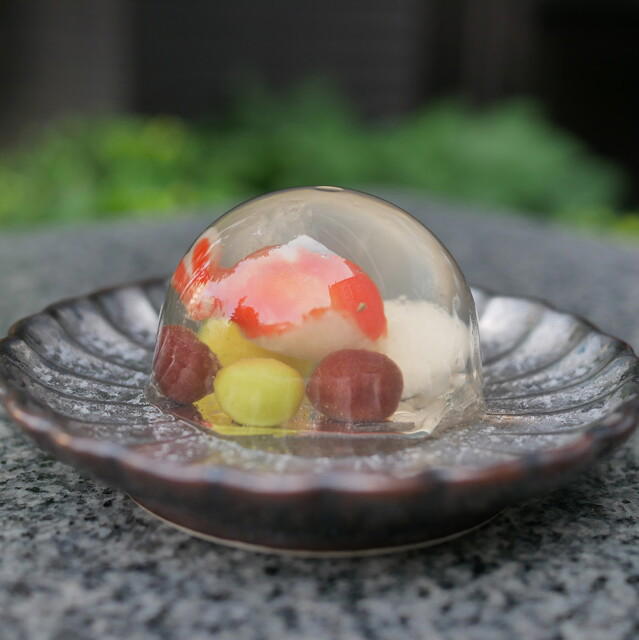
Kagurazaka changes register quickly: stone-paved lanes, temple approaches, French bistros, old ryotei traces, and small counters sit within a few minutes of one another. In that setting, wagashi is not an afterthought after dinner. It is part of the neighbourhood’s social rhythm, bought for home, carried as a visiting gift, or folded into a quiet celebration that does not need a dining room to feel considered.
Tokyo’s high-end occasion dining is often measured in counters, tasting menus, and reservation scarcity. Kagurazaka offers another register: sweets with cultural weight, modest spend, and a strong link to seasonality and gifting. Baika Tei Kagurazaka honten belongs to that second category. Its Tabelog 100 selection for Japanese traditional sweets and Japanese sweets cafes in Tokyo in 2023 places it inside a competitive field where craft is judged through repetition, restraint, and consistency rather than spectacle.
Wagashi as the quieter celebration format in Kagurazaka
For visitors used to framing special occasions around long meals, Japanese confectionery can feel almost too concise. That is the point. Wagashi compresses occasion into format: a box carried to a family gathering, a seasonal sweet bought before tea, dorayaki taken back to a hotel room after lunch nearby. The category rewards timing and intention more than scale.
Kagurazaka is unusually suited to that mode of eating. The district has the density of central Tokyo without the department-store polish of Ginza or Nihonbashi. Its food culture moves between everyday purchases and high-commitment restaurants, which makes a sweets shop with recognised standing especially useful for travellers planning a softer milestone: a birthday afternoon, a parent-friendly stop, or a small gift before dinner.
The listed categories tell the reader where the emphasis sits: Japanese traditional sweets, daifuku, and dorayaki. Those are not fringe forms. Daifuku and dorayaki are foundational Tokyo sweets, judged by balance, texture, bean paste work, and how cleanly sweetness carries across a small portion. A shop recognised in this category is being measured against a city with deep expectations for wagashi, not against casual dessert counters.
Where it sits beside Kagurazaka's restaurant circuit
The useful comparison in Kagurazaka is not only another sweet shop. It is the broader choice between a full meal, a drink-led stop, and a precise edible gift. La Châtaigne sits in a higher-spend restaurant bracket, Kagurazaka Okawaya occupies a more formal dining price band, and Wine Shop Okukagurazaka Shoten points toward the neighbourhood’s wine culture. Against those formats, Baika Tei Kagurazaka honten reads as a low-commitment but high-signal stop: recognised, inexpensive, and easy to pair with the rest of the day.
That matters for occasion planning. A celebratory Tokyo itinerary often fails by overloading the day with reservations. Wagashi gives the schedule a pause without making it feel like a compromise. It can sit before a yakitori dinner, after a café stop, or between museums and shopping, and it carries more local specificity than a generic dessert course.
The Tabelog score of 3.74 adds another signal in a category where small differences matter. In Tokyo sweets, reputation is rarely built on novelty alone. Longevity of demand, neighbourhood repeat traffic, and the ability to execute familiar forms consistently tend to matter more than menu theatrics. That makes the 2023 Tabelog 100 recognition useful: it identifies the shop within a curated Tokyo field rather than relying on broad praise.
How to use it in a special-occasion Tokyo day
The strongest use case is not a destination-only detour. It is a Kagurazaka day built around contrast: old streets, a sweets purchase, then a more structured meal or bar later. Travellers staying elsewhere in Tokyo can treat the stop as a reason to walk the neighbourhood rather than a single-address errand. The nearest rail access is Kagurazaka Station, which makes the plan easier than trying to fold a small shop into a taxi-heavy evening.
For celebrations, the editorial move is to use wagashi as punctuation. A box of traditional sweets says something different from Champagne or a hotel cake: quieter, more local, and easier to share. Families also have a practical advantage here, since children are welcome and the format does not demand a long seated meal.
Payment flexibility helps international travellers, with major credit cards, transport IC cards, and QR payments listed. The shop is non-smoking, private rooms and private use are not part of the format, and parking is unavailable, which fits the neighbourhood’s pedestrian character. Reservations are listed as available, but for most travellers the smarter expectation is to treat this as a planned daytime stop rather than a late-night fallback.
Nearby or thematically useful restaurant reading includes 124. KAGURAZAKA (Yakitori), 12/10 Shinjuku ten, 2D Cafe, 3 Chome no Curry Ya San, and. 鮪と炭火焼き うお炭 秋葉原店.
Further afield, compare how casual formats travel across Japan and beyond through -Grilled beef Sukiyaki- KAMAKURA TANUKIAN 鎌倉 たぬき庵 in Kamakura.cafe in Osaka.know in Kumamoto, (Shoku) Vietnam in Kawasaki, [Curry Senmon Ten] Maruyama Kyoju. in Sapporo, [ki:] in Kyoto, Jōdo Saké Bar in Los Angeles, and Onigiri Time in Pasadena.
Frequently asked questions
What's the address for Baika Tei Kagurazaka honten?
Baika Tei Kagurazaka honten is located in Tokyo.
Is Baika Tei Kagurazaka honten more mid-range or high-end?
Pricing at Baika Tei Kagurazaka honten is listed as - JPY 999 - JPY 999.
What are Baika Tei Kagurazaka honten's hours?
Hours at Baika Tei Kagurazaka honten: Mon: 10 AM–7 PM; Tue: 10 AM–7 PM; Wed: Closed; Thu: 10 AM–7 PM; Fri: 10 AM–7 PM; Sat: 10 AM–7 PM; Sun: 10 AM–7 PM.
What has Baika Tei Kagurazaka honten built its reputation on?
Baika Tei Kagurazaka honten is listed in Tabelog 100 for Tokyo’s Japanese traditional sweets category, which gives it clear external recognition. Its standing rests on wagashi such as daifuku and dorayaki, plus a Kagurazaka address that keeps it in one of Tokyo’s more tradition-minded food districts.
Pricing, Compared
Nearby venues at a similar price tier for orientation.
| Venue | Cuisine | Price | Awards | Notes |
|---|---|---|---|---|
| Baika Tei Kagurazaka hontenThis venue (the venue you are viewing) | Japanese Traditional Sweets | $1–10 | Tabelog 100 #70 | Not listed |
| Hekkelun | Classic Japanese kissaten & pudding café | $1–10 | Tabelog 100 | Toranomon/Shinbashi, Classic Japanese Kissaten |
| レベル | Modern Japanese Fine Dining | Not listed | Not listed | Shinjuku, Modern Japanese Fine Dining |
| SAN TORA | Sapporo-style miso ramen | $10–20 | Tabelog 100 #79 | Shinjuku, Sapporo-style miso ramen |
| Kitchen Nankai Chiyoda kanda jinbou ten | Japanese Yoshoku | $1–10 | Tabelog 100 #88 | Chiyoda, Japanese Yoshoku |
| Kanda Yabu Soba | Edo-Style Soba | $10–20 | Not listed | Chiyoda, Edo-Style Soba |
Recognition history
Dated appearances from independent guides and award organizations, with the underlying list record or original source where available.
Tabelog 100 #70 · No. 70
Tabelog · Tabelog 100 - Japanese traditional sweets / Japanese sweets cafe - TOKYO - 2023