
Tabelog 100 #79
Our verdict
SAN TORA brings Sapporo-trained ramen discipline to Yamabukicho, a quieter Shinjuku pocket better known for daily-neighbourhood eating than destination dining. Its Tabelog Ramen TOKYO 100 selections from 2021 through 2025 place it in Tokyo’s serious ramen conversation, while the compact counter-and-table format keeps the experience closer to a local lunch room than a trophy reservation.

Pearl is the En Primeur Club membership app, where members save venues, book tables and use the concierge.
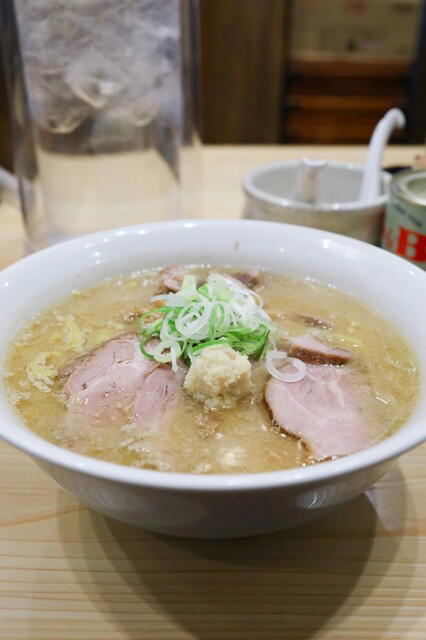
Tokyo does not always announce itself with the glare of station-side dining corridors. The approach can be quieter: office blocks, residential streets, and people eating between errands rather than performing a night out. Here, ramen is not a tasting-menu substitute or tourist spectacle; it is a tightly engineered bowl served at a pace that respects broth, timing, and queue.
SAN TORA belongs to the Tokyo ramen category where restraint tells the story. The shop sits in Tokyo, culturally closer to the city’s working ramen rooms than to polished restaurant clusters built around occasion dining. Its Tabelog Hyakumeiten recognition in 2025 gives the shop a measurable signal in a city where ramen reputation is built through repeat visits, narrow specialisation, and unforgiving comparison.
Ramen grammar in a Tokyo bowl
Tokyo ramen is often discussed through micro-genres, regional references, and shop-by-shop differences. A focused bowl carries its own expectations: depth, heat management, and a design built for momentum as much as delicacy. SAN TORA’s appeal is best understood through that grammar without turning the shop into a personality piece or relying on a backstory the diner cannot verify from the table.
That context places the ramen in a lineage, not a vague “inspired” category. In Tokyo, where familiar formats can be softened for broad appeal, a disciplined style signals structure first, then variation. The menu architecture is therefore the editorial point. A narrow-format ramen shop asks diners to judge execution within a limited frame, not by breadth. That discipline also makes nearby single-speciality rooms compelling, from udon counters such as Kamaage Udon Hatsutomi to casual Tokyo staples like Naniwaya Edogawabashi. The appeal lies in repetition, not reinvention.
The price band keeps the restaurant in ramen’s democratic lane. At JPY 1,000 to JPY 1,999, it sits with everyday specialist dining rather than special-occasion restaurants. In Tokyo, low price does not mean low scrutiny. Ramen audiences compare soup balance, noodle handling, toppings, heat, and service tempo with the seriousness another diner might reserve for other highly exacting formats.
A compact room built for turnover, not lingering
The physical format reinforces the food. Like many Tokyo ramen rooms, SAN TORA is best approached as a focused meal rather than a long social reservation. The rhythm is linear: order, eat while the bowl is at its intended temperature, and make space for the next diner. That cadence is part of the category’s pleasure, especially when the kitchen’s identity is built around a tight format.
Ramen in Tokyo often rewards timing, patience, and attention to the bowl rather than ceremony. SAN TORA does not read like the city’s more formal restaurant appointments, and that is part of its category logic. Compare that with Tori Takuchu, another Tokyo venue in the supplied comparison set: the decision is not merely cuisine, but what kind of meal the diner is buying. One is a different kind of planned dining experience; the other is a focused bowl whose value depends on immediacy.
Tokyo sharpens the case. This is not only the city of department-store basements, late-night towers, and staged destination dining; it is also a network of smaller rooms built into daily routines. For travellers mapping a broader Tokyo eating day, SAN TORA connects naturally with other unnamed dining rooms, cafes, and casual specialists across the city. Treat the area as part of Tokyo’s smaller food circuits, not a single-destination detour.
Why the recognition matters in Tokyo's ramen hierarchy
Tabelog’s Hyakumeiten lists are not casual decorations in Japan’s dining culture. For ramen, the designation sorts a crowded field where many shops are competent and fewer earn sustained attention. SAN TORA’s 2025 recognition indicates a public benchmark in that field. Its listed Tabelog score of 3.81 adds another signal, useful because Tokyo ramen ratings move within narrow margins.
The menu structure also explains why recognition can persist. Specialist ramen rooms do not need long menus; they need a coherent house style and enough consistency that repeat diners understand the reason to return. SAN TORA sits closer to the city’s serious everyday specialists than to concept-heavy restaurants. Shinga, another Tokyo comparison venue, occupies that practical end of dining, where the meal is judged against frequency and value rather than ceremony.
The broader EP Club read is simple: this is a ramen stop for travellers who care about technique and Tokyo dining context, not those chasing a theatrical room. It pairs well with a day treating food as a sequence of precise formats: unnamed casual counters, specialist rooms, and then a ramen bowl carrying disciplined structure into a quieter Tokyo dining rhythm.
For wider planning, use the full Tokyo restaurants guide alongside the full Tokyo hotels guide, full Tokyo bars guide, full Tokyo wineries guide, and full Tokyo experiences guide. Japan itineraries can widen beyond Tokyo through other dining in Japan, while readers tracking Japanese food culture abroad can look at how specific formats travel, adapt, and find new audiences.
Frequently asked questions
What's the pricing like at SAN TORA?
Pricing at SAN TORA is listed as JPY 1,000 - JPY 1,999.
When can I go to SAN TORA?
Current hours for SAN TORA should be checked directly before visiting.
What's SAN TORA's location?
Tokyo.
What is SAN TORA known for?
SAN TORA is known as a Tokyo ramen venue with Tabelog Hyakumeiten recognition in 2025.
Comparable Options
Nearby venues at a similar price tier for orientation.
| Venue | Cuisine | Price | Awards | Notes |
|---|---|---|---|---|
| SAN TORAThis venue (the venue you are viewing) | Sapporo-style miso ramen | $10–20 | Tabelog 100 #79 | Not listed |
| Kamaage Udon Hatsutomi | Not listed | Not listed | Tabelog 100 #66 | JPY 1,000 - JPY 1,999 JPY 1,000 - JPY 1,999 View spending breakdown |
| Naniwaya Edogawabashi | Traditional Japanese taiyaki & obanyaki shop | $1–10 | Tabelog 100 #40 | JPY 999 - JPY 999 View spending breakdown |
| マティーニバーガー | NY-Style American Burgers | $20–30 | Tabelog 100 #48 | Not listed |
| Tori Takuchu | Yakitori Omakase with Free‑Flow Sake | $50–100 | Tabelog 100 #98 | JPY 10,000 - JPY 14,999 |
| Shinga | Classic neighborhood Chinese (Showa‑style) | $10–20 | Tabelog 100 #52 | JPY 1,000 - JPY 1,999 - JPY 999 |
Recognition history
Dated appearances from independent guides and award organizations, with the underlying list record or original source where available.
Tabelog 100 #79 · No. 79
Tabelog · Tabelog 100 - Ramen - TOKYO - 2025
Continue exploring
More in Tokyo
Restaurants in Tokyo
All restaurants in Tokyo →



Bars in Tokyo
All bars in Tokyo →



Details
- Lively
- Cozy
- Solo
- Family
- Casual Hangout
- After Work
- Late Night
- Standalone
- A La Carte
- Counter Dining
Current opening hours
- Monday
- 11 AM–3 PM, 5:30–8 PM
- Tuesday
- 11 AM–3 PM, 5:30–8 PM
- Wednesday
- 11 AM–3 PM, 5:30–8 PM
- Thursday
- 11 AM–3 PM, 5:30–8 PM
- Friday
- 11 AM–3 PM, 5:30–8 PM
- Saturday
- 11 AM–3 PM, 5:30–8 PM
- Sunday
- 11 AM–3 PM, 5:30–8 PM
Hours can change for holidays and private events. Hours as of .
Compact, no-frills ramen shop with counter and a few tables, bright and efficient rather than decorative, packed with ramen fans and a bustling, energetic feel during service.