Baekyangsa Temple for Jeong Kwan
Baekyangsa Temple in South Korea's Jeolla Province is the setting for one of the most discussed temple food practices in contemporary gastronomy, associated with monk Jeong Kwan, whose approach to fermentation and seasonal Buddhist cuisine drew international attention following a Chef's Table profile. The experience operates outside conventional restaurant frameworks, closer to a pilgrimage than a dining reservation.

Pearl is the En Primeur Club membership app — saves, bookings, and concierge access live there. Same editors, same standards.
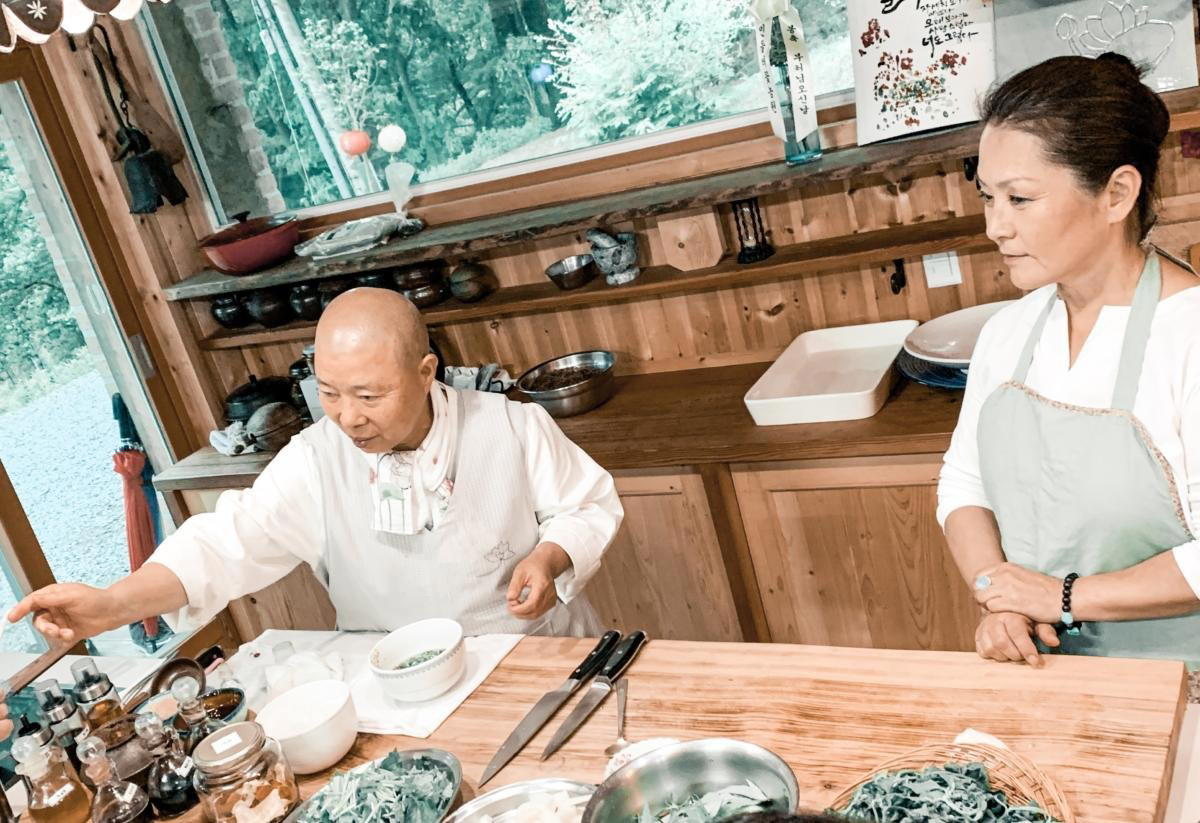
Where the Meal Is the Practice
The approach to Baekyangsa requires a mental reset before you arrive. This is not a restaurant with a chef's counter and a tasting menu paced by a sommelier. The 9th-century Jogye Order Buddhist temple sits in the foothills of Naejangsan in South Jeolla Province, roughly three hours from Seoul by KTX and road transfer. What happens in the kitchen there operates according to monastic time, not service windows. The ritual of eating here is inseparable from the rhythm of the temple itself: prayer, silence, seasonal work, and the slow patience that fermentation demands.
Temple food (사찰음식, sachal eumsik) as a culinary category has gained significant traction globally over the past decade. Korean Buddhist cuisine excludes the five pungent vegetables — garlic, green onions, wild chives, leeks, and asafoetida — alongside meat and fish, a discipline rooted in the belief that these ingredients agitate the mind. What remains is a cuisine built almost entirely on fermentation, wild forage, drying, and the accumulated knowledge of centuries of monastic practice. The food at Baekyangsa is one concentrated expression of that tradition.
The Ritual Architecture of the Meal
Eating at a Korean Buddhist temple follows a structure that bears little resemblance to fine dining in Seoul's Gangnam corridor or the tasting menus at contemporary venues like Mingles or Jungsik. The meal format descends from the beupgong, the formal monastic eating ceremony, in which each component arrives in its proper order and waste is considered a failure of attention rather than a minor inconvenience. Bowls are wiped clean with radish and water before they leave the table. Silence or near-silence is the expected register.
The pacing is slow by design. Dishes arrive in the order that reflects their preparation, items that have been fermenting for months precede those that are fresh and immediate. A jar of doenjang aged over several winters carries different weight than a bowl of sautéed mountain greens picked that morning, and the sequencing reflects that. For a dining culture that has produced technically precise contemporary formats at venues like Kwonsooksoo and Soigné, the temple meal operates as something of a counter-argument: that depth of flavor is a function of time and restraint, not technique deployed at speed.
The vegetables and fermented preparations that form the core of the table here draw directly from the temple's own cultivation and its storeroom of aging crocks. This is the material reality behind the philosophical framework: the doenjang, ganjang, and gochujang used have been produced in-house across multiple seasons, and the seasonal greens and mountain herbs shift with the calendar. Spring brings wild garlic substitutes and fresh fern shoots; autumn leans into mushrooms, dried persimmon preparations, and the preserved vegetables that have been conditioning since summer.
Jeong Kwan and the Global Attention
Monk whose practice brought Baekyangsa to international attention entered the public record decisively in 2017, when the Netflix series Chef's Table dedicated an episode to her work. That documentary positioned her alongside figures like Le Bernardin's Eric Ripert and Atomix's Junghyun Park in a broader global conversation about what cooking at the highest level actually means. The recognition was notable precisely because it operated entirely outside the Michelin framework and the conventional restaurant economy.
Since that exposure, interest in temple food as a category has grown considerably in South Korea and beyond. Seoul now has dedicated temple food restaurants and certified practitioners, but the source remains at Baekyangsa. The distinction matters: what visitors encounter at the temple is not a curated interpretation of sachal eumsik for a metropolitan audience, but the practice itself, operating on monastic terms. For those familiar with contemporary Korean fine dining at alla prima or the innovation-led formats proliferating across the city, the temple context offers a different kind of credential: longevity, specificity, and an absence of commercial mediation.
Getting There and What to Expect
Baekyangsa sits outside the Seoul metropolitan orbit. KTX from Seoul to Jangseong or Baekyang takes approximately two hours, with a further road transfer to the temple grounds. Most visitors who make the journey do so as part of a temple stay (템플스테이) program, a nationally recognized cultural initiative that allows overnight immersion in Buddhist monastic life. The temple stay format includes meditation sessions, formal meals, morning chanting, and in some programs, direct participation in fermentation or food preparation. These are not luxury retreats in the resort sense; accommodation is sparse and shared, and the schedule is governed by the temple bell rather than personal preference.
Those interested in the food dimension specifically should research whether access to the kitchen or any arranged meal experience is available at the time of their visit, as the terms vary and the temple's primary function remains religious rather than hospitality-facing. Advance planning is essential: the program operates through the Korean Temple Food Cultural Center and Jogye Order channels, with bookings typically made weeks or months ahead. There is no walk-in option.
For travelers building a broader itinerary across South Korea's food culture, the temple can serve as a counterpoint to the range of dining available elsewhere: the fermented fish and raw seafood of Mori in Busan, the heritage baked goods at Hwangnam Bread and Busan Steamed Bun in Gyeongju, or the Jeju-specific ingredients at Badang Lounge in Jeju. Seoul's own contemporary scene, covered in our full Seoul restaurants guide, represents the other pole of this culinary range. The temple meal earns its place precisely by being the furthest thing from any of that.
Cost Snapshot
A compact comparison to help you place this venue among nearby peers.
| Venue | Cuisine | Price | Awards |
|---|---|---|---|
| Baekyangsa Temple for Jeong KwanThis venue — the venue you are viewing | Not listed | Not listed | Not listed |
| 7th Door | Korean, Contemporary | ₩₩₩₩ | Michelin 1 Star |
| Eatanic Garden | Contemporary | ₩₩₩₩ | Michelin 1 Star |
| Onjium | Korean | ₩₩₩₩ | Michelin 1 Star |
| L'Amitié | French | ₩₩₩ | Michelin 1 Star |
| Zero Complex | Korean-French, Innovative | ₩₩₩₩ | Michelin 1 Star |
Continue exploring
More in Seoul
Restaurants in Seoul
Browse all →
At a Glance
- Quiet
- Scenic
- Rustic
- Solo
- Special Occasion
- Historic Building
- Local Sourcing
- Mountain
- Garden
Serene and spiritual temple atmosphere amid mountains with natural lighting and peaceful monastic setting.