원조할매국밥
Our verdict
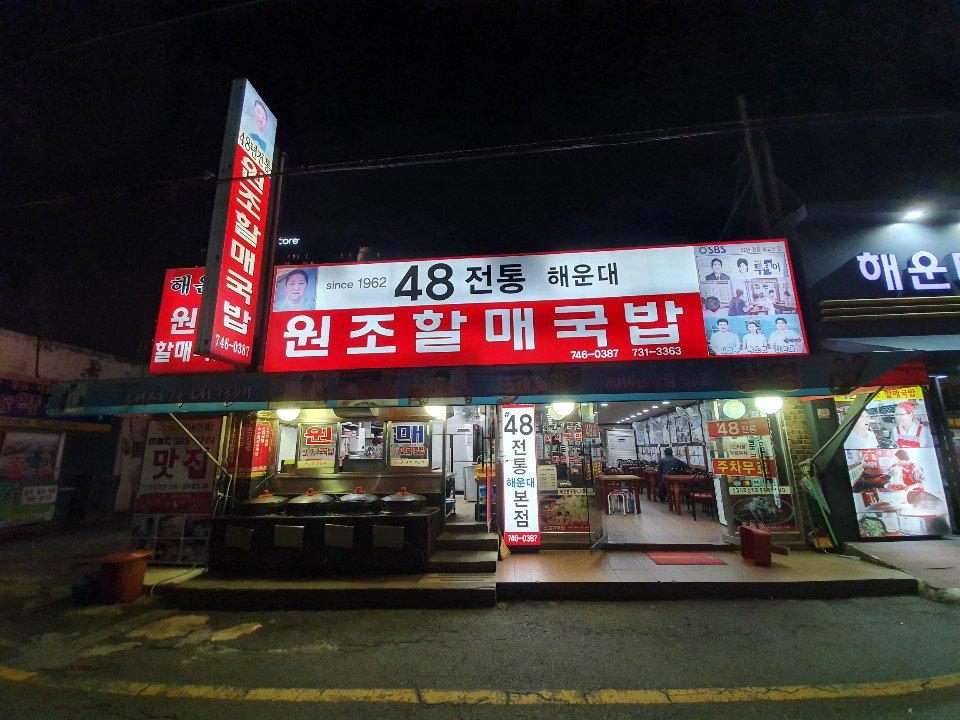
원조할매국밥 sits in Haeundae's backstreet network, serving the kind of pork bone soup that defines Busan's working-class food identity. The address, 구남로21번길 33, places it steps from one of Korea's most visited beach districts, yet the format belongs to a much older eating tradition. For visitors calibrating between beach-town convenience and genuine local eating, it anchors the neighbourhood's gukbap culture.

Pearl is the En Primeur Club membership app, where members save venues, book tables and use the concierge.
The menu
What to order
- 소고기국밥
- 선지국밥
Haeundae's Backstreet Soup Culture
Busan's relationship with gukbap, rice served in or alongside a bone broth, assembled at the table and eaten fast, predates the city's modern beach-resort identity by several decades. The dish emerged from post-war scarcity, when pork bones that wealthier tables discarded became the base for something surprisingly deep: a cloudy, mineral-rich broth that rewards long simmering and tolerates no shortcut. That backstory still shapes how the dish is eaten in Busan today. You sit down, the soup arrives hot, you season it yourself, and you finish it quickly. There is no lingering ceremony.
원조할매국밥 operates inside this tradition from an address on 구남로21번길 33 in Haeundae-gu, a short walk from one of Korea's most commercially developed coastlines. The contrast is part of the point. Haeundae's main drag runs toward resort hotels and seafood restaurants priced for summer tourists; the side streets behind it hold a different register of eating, one where the customer base is local, the format is fixed, and the price stays low regardless of the season outside. Gukbap houses on these backstreets belong to a category of Korean dining that functions almost independently of the tourism economy surrounding them.
What the Format Tells You
Korean gukbap restaurants divide broadly into two types: dwaeji-gukbap houses, which build their broth from pork bones and organs, and seolleongtang-style operations, which lean toward beef. Busan has historically claimed the pork version as its own, and the city's gukbap identity is distinct enough that it draws comparison to Lyon's bouchons or Istanbul's işkembe çorbacısı, places where a single dish, made from humble cuts, becomes the expression of a city's culinary self-respect. Venues like 100.1. Pyeongnaeng and 1969 Buwondong Kalguksu operate in an adjacent register, affordable, format-driven, deeply local, though each works within a different noodle or soup tradition.
The name 원조할매국밥 signals something specific to Korean diners: 원조 (original, or the source) and 할매 (grandmother, in the Busan dialect) together imply generational continuity. This naming convention is common in Korean food culture and carries its own form of credibility, not a Michelin star or a critic's endorsement, but the claim of an unbroken line. Whether that claim is historical or rhetorical, it sets an expectation the kitchen must answer every service.
The Sensory Register of a Gukbap House
Walking into a working gukbap restaurant in Busan involves a specific sequence of signals. The smell arrives before the room does: pork bone broth at a long simmer produces a dense, slightly savoury fog that clings to the entryway. The sound is clatter and brevity, ceramic bowls on formica, the metal spoon against the bowl's interior, conversation at a practical volume rather than a social one. The light tends toward functional. None of this is accidental or rustic affectation; it reflects a format optimised for throughput and value over atmosphere. The eating is the atmosphere.
Gukbap is typically seasoned at the table with fermented shrimp paste (saeujeot), salted vegetables, or kimchi brought out alongside the soup. This self-assembly element means the dish is never identical between two diners sitting side by side, and it is this personalisation within a fixed format that gives the category much of its appeal to regulars. The broth itself, when properly made, carries enough body from collagen to coat a spoon without thickening into heaviness, a balance that takes consistent technique to maintain across a full service.
Where 원조할매국밥 Sits in Busan's Eating Map
Busan's restaurant scene has broadened considerably in the past decade. Venues like Palate operate in the contemporary bracket, while Mori and Born and Bred anchor the Japanese and premium steakhouse categories respectively. These venues address a different need and a different price point. Gukbap houses like 원조할매국밥 operate at the opposite end of that spectrum, in a tier where the meal costs a fraction of a contemporary tasting course and where the expertise on display is not plating or sourcing narrative but the consistency of a broth made to the same specification daily.
That consistency, at volume, is its own discipline. Korean food culture has produced fine-dining expressions that international audiences now recognise, Mingles in Seoul being one well-documented example, but the undergrowth of that culture remains the category of humble, format-locked restaurants where a single dish, executed without variation, carries a place's reputation across generations. Across Korea, similar dynamics play out at spots like Gyeongju Wonjo Kongguk, where a bean-based soup follows the same logic, or Doosoogobang in Suwon, where a fixed regional format defines the restaurant's entire identity.
For visitors who have been eating through Busan's more polished options, a gukbap stop provides useful recalibration. The city's food confidence does not reside exclusively in its upscale or internationally facing venues. It also lives here, in a bowl of pork bone soup on a side street behind the beach. Our full Busan restaurants guide maps both registers in more detail.
Planning Your Visit
원조할매국밥 is located at 구남로21번길 33 in Haeundae-gu, reachable from Haeundae station on Busan Metro Line 2 in under ten minutes on foot. Haeundae is one of Busan's most visited districts, and the side streets near this address see steady foot traffic from both residents and visitors. No booking infrastructure is expected at this format level; the meal is walk-in, first-served, and brief by design.
For context on how this fits into a broader Korea itinerary, comparable single-dish experiences exist at places like 88돼지 in Jeju and Black Pork BBQ in Seogwipo, both of which work within the pork-centred eating tradition that runs through Korean food culture beyond Busan.
Frequently asked questions
Where exactly is 원조할매국밥?
원조할매국밥 is located at 해운대구 구남로21번길 33, 해운대구, 부산광역시, 48095, Busan.
Where is 원조할매국밥 located and how do I get there from central Haeundae?
원조할매국밥 is at 구남로21번길 33 in Haeundae-gu, Busan (postcode 48095). Haeundae station on Metro Line 2 puts you within a ten-minute walk, making it one of the more accessible traditional soup houses in the district. The street sits inland from the beach strip, away from the tourist-facing restaurant cluster along the waterfront.
What's the signature dish at 원조할매국밥?
The restaurant is built around gukbap, specifically the Busan tradition of serving rice in or alongside a long-simmered pork bone broth. In Haeundae, the dominant format is dwaeji-gukbap, where pork bones and offal form the base. Diners season at the table with fermented shrimp paste, salted chives, or doenjang according to preference.
What's the best way to book 원조할매국밥?
No booking details are publicly listed for 원조할매국밥. Gukbap houses in Busan's Haeundae district typically operate on a walk-in basis, with turnover fast enough that queues move quickly even at peak hours. Arriving outside the standard lunch rush, before noon or after 1:30 p.m., reduces wait time at busy Haeundae-gu spots.
What has 원조할매국밥 built its reputation on?
The name itself signals positioning: '원조' means 'originator' or 'the real one,' a common marker in Korean food culture for establishments claiming primacy in a dish or neighbourhood. Located on 구남로21번길 in Haeundae-gu, the restaurant operates within a Busan tradition of grandmotherly (할매) gukbap houses whose credibility rests on longevity and consistency rather than critical awards.
How does 원조할매국밥 handle allergies?
No allergy policy is documented. Gukbap by format centres heavily on pork, bones, organs, and rendered fat, making it unsuitable for those avoiding pork or animal products. Diners with specific dietary requirements should communicate directly on arrival, though the menu format at traditional Busan gukbap houses offers limited substitution.
Is 원조할매국밥 worth it?
For anyone in Haeundae-gu who wants to eat the way most Busan residents do, quickly, cheaply, and without ceremony, a gukbap house on 구남로21번길 is the right call. The '원조할매' framing positions this as a neighbourhood reference point rather than a destination restaurant, which is precisely the point. It belongs to a different category than Busan's contemporary dining venues and should be judged on those terms.
Reputation First
A short peer table to compare basics side-by-side.
| Venue | Cuisine | Price | Awards | Notes |
|---|---|---|---|---|
| 원조할매국밥This venue (the venue you are viewing) | Traditional Korean Beef Gukbap | $1–10 | Not listed | Not listed |
| Palate | Contemporary French with Korean Fusion | $150–200 | 1 Michelin Star · La Liste Top Restaurants | Contemporary |
| Mori | Japanese Kaiseki | $200–300 | 1 Michelin Star | Japanese |
| Born and Bred | Modern Hanwoo Beef Omakase Steakhouse | $100–150 | Michelin Plate · World's 50 Best #51 | Steakhouse |
| 100.1. Pyeongnaeng | Pyongyang-style Naengmyeon | $10–20 | Michelin Bib Gourmand | Naengmyeon |
| Anmok | Modern Korean Dwaeji-Gukbap | $10–20 | Michelin Bib Gourmand | Dwaeji-gukbap |